
Oven-Braised Cabbage with Apples and Caraway
FORTISVEX · RECIPES
Tender cabbage wedges, soft apples and a little caraway turn a sturdy head of cabbage into a warm, spoonable side.
A covered pan does most of the work here. The cabbage cooks in a shallow layer of broth, while onion and apple soften around it. Removing the lid near the end lets some of that liquid evaporate and gives the exposed leaves a chance to color. A small splash of cider vinegar at the table keeps the sweet vegetables from tasting flat.
Keep the wedges intact when you lift them from the pan, but do not expect a crisp roasted texture. This is a braise: the leaves should yield easily to a fork, and the apples may partly melt into the juices. Serve one wedge per person alongside a main dish, or divide two wedges each among four plates with potatoes and cooked beans.
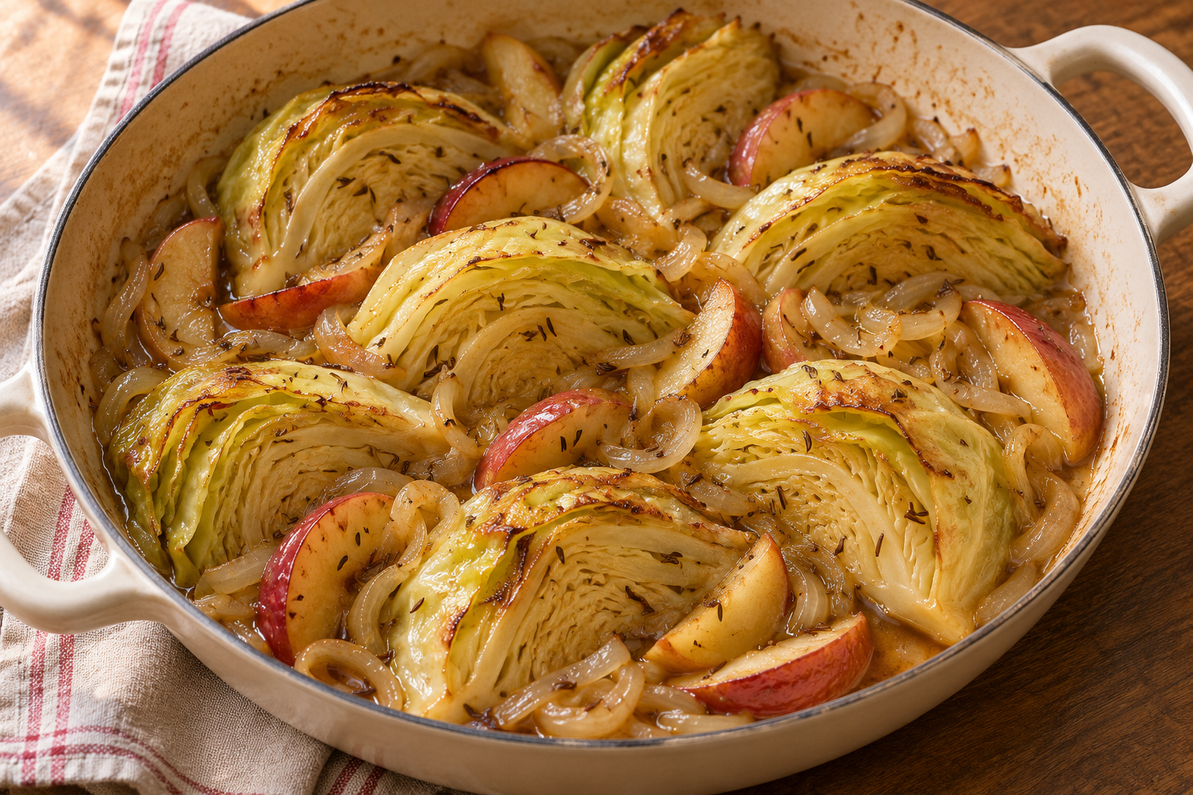
Soft cabbage leaves and apples share a small amount of cooking liquid.
Yield: 8 side-dish servings, one cabbage wedge each
Preparation: about 20 minutes · Stovetop: about 8 minutes · Oven: 65–85 minutes · Rest: 5 minutes
Total: about 1 hour 40 minutes to 2 hours; a dense head may need longer.
Times are estimates. Use the tenderness and liquid checks below rather than treating the clock as a guarantee.
Equipment and ingredients
Use a wide, shallow, approximately 4-quart braiser with a 12-inch cooking surface and a tight-fitting lid, both rated for a 350°F oven. A deep, narrow pot will stack the wedges and change the cooking time. You will also need a cutting board, knife, measuring tools, tongs, a broad spatula and dry oven mitts. Measurements use US cups and spoons.
- 1 small green cabbage, about 2 pounds (900 g) before trimming
- 2 medium firm apples, about 12 ounces (340 g) total, such as Braeburn or Pink Lady
- 1 medium yellow onion, about 8 ounces (225 g), peeled
- 2 tablespoons olive oil
- 1 teaspoon caraway seeds
- ¾ teaspoon fine table salt, divided, plus more only after tasting
- ¼ teaspoon freshly ground black pepper
- ¾ cup (180 ml) low-sodium vegetable broth, plus 2–4 tablespoons if the pan dries during cooking
- 1 tablespoon apple-cider vinegar, plus up to 1 teaspoon more to taste
Prepare the wedges
Heat the oven to 350°F (175°C), with a rack in the middle. Wash your hands and use clean utensils. Remove damaged cabbage leaves, then rinse the cabbage and apples under running water before cutting. Do not wash produce with soap. Keep the preparation area separate from raw meat and its juices.
Trim the dry bottom of the cabbage stem. Cut the head through its core into quarters, then cut each quarter in half to make eight wedges. Leave a thin strip of core attached to each wedge so its leaves stay together; trim away only the thick, projecting portion. Core the apples and cut them, with their skins on, into pieces about ¾ inch thick. Slice the onion about ¼ inch thick.
Cook gently, then uncover
- Soften the onion. Set the braiser over medium heat and add the oil. Add the onion and ¼ teaspoon of the salt. Cook for about 5–6 minutes, stirring, until the onion begins to soften. Lower the heat if it browns rapidly. Stir in the caraway for about 30 seconds, just until fragrant.
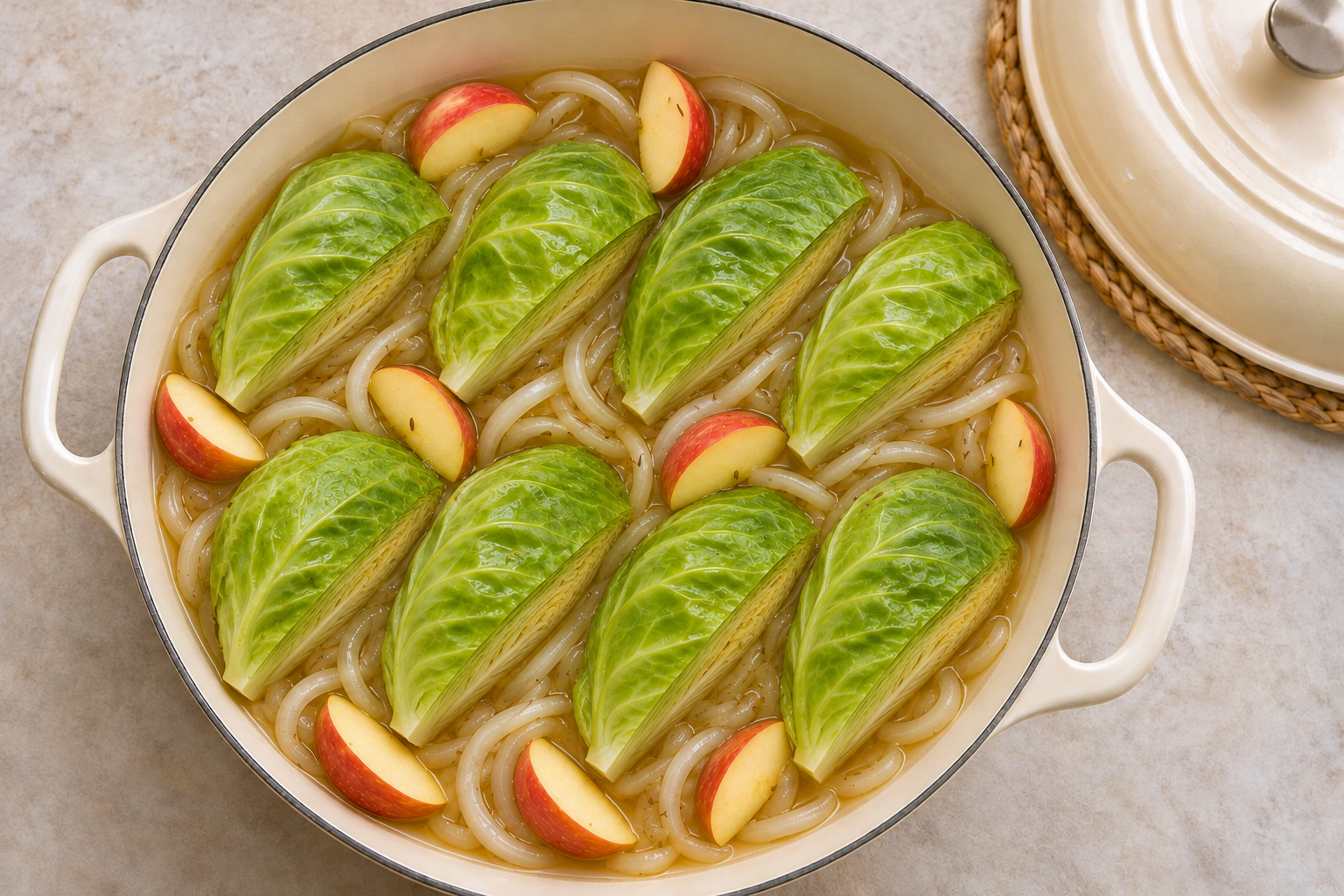
- Arrange the braise. Spread the onion across the bottom. Add the cabbage wedges in a single snug layer, resting on their cut sides, and tuck the apple pieces between them. Sprinkle with the remaining ½ teaspoon salt and the pepper. Pour the ¾ cup broth around the wedges. Bring the visible liquid to a gentle simmer, about 1–2 minutes, then cover tightly.
- Braise covered. Transfer the covered pan to the oven with dry mitts. Cook for 50–65 minutes, beginning the first tenderness check at 50 minutes. Open the lid away from your face. Push a small knife or fork through the thick base of a wedge: it should enter with little resistance. If the base is still firm, replace the lid and cook in 10-minute increments. If no liquid remains and the bottom is beginning to catch, add 2 tablespoons broth before covering again.
- Reduce the juices. Once the cabbage is tender, remove the lid and spoon a little pan liquid over the wedges. Bake uncovered for 15–20 minutes, until the juices have reduced and some leaf edges are golden. Deep browning is optional; do not dry out tender cabbage trying to match a picture. If the edges darken before the liquid reduces, take the pan out and serve the juices as they are.
- Finish and serve. Set the pan on a heatproof surface and remember that its handles remain hot. Drizzle the tablespoon of vinegar over the vegetables. Rest for 5 minutes, then taste an apple piece with some cabbage and broth. Add the extra teaspoon of vinegar only if needed. Lift each wedge with a broad spatula, supporting it with tongs, and spoon the apples, onion and juices alongside.
Adjust the texture, not just the timer
Firm centers: Keep cooking covered. The outer leaves can look done while the core is still resistant. Wedge thickness, cabbage density and the lid's seal all affect the time. Do not rush this stage by letting the liquid boil away.
Too much liquid: The uncovered finish is meant to leave a shallow sauce, not a dry pan. If the cabbage is already very soft, lift it to a warm serving dish and simmer the remaining juices on the stovetop for a few minutes. Watch closely, then spoon them over the cabbage.
Very soft apples: Some varieties break down even when cut thickly. Fold those pieces gently into the juices and serve them as part of the sauce. For more distinct pieces next time, choose firm apples and avoid thin slices. Do not promise identical timing for red, savoy or napa cabbage; this recipe specifies green cabbage.
Make it fit the meal
This warm vegetable side can accompany eggplant and ricotta lasagna. Plan the pans and finishing times separately rather than crowding the oven. For a vegetable with a firmer bite on another occasion, try lemon-parsley green beans; their hotter roasting method is different from this covered braise.
Caraway has a distinct flavor. For a gentler first batch, use ½ teaspoon; omitting it changes the dish but does not change the liquid requirement. Use water instead of broth if necessary, then season the finished juices carefully. Check broth labels for allergens and dietary suitability. No dairy is required, and the recipe uses vegetable broth; do not assume a packaged broth is free of wheat, soy or other allergens.
If you are planning a separate stovetop dinner for the week, tofu and broccoli rice bowls offer a different vegetable-centered method. Follow that recipe's own ingredient and rice-handling guidance.
Cool, store and reheat
Divide leftovers into shallow containers and refrigerate promptly at 40°F (4°C) or below. Refrigerate within 2 hours of cooking, or within 1 hour when the surrounding temperature exceeds 90°F (32°C). Do not leave the covered braiser on the counter until it is cold. Use safely refrigerated leftovers within 3–4 days and label them with the cooking date.
Reheat only the portion needed in a covered skillet with a small splash of water, or in a vented microwave-safe covered dish. Turn or stir gently for even heating. Check several places with a food thermometer: leftovers should reach 165°F (74°C). Follow the microwave's standing-time instructions. Discard food left out beyond safe limits; reheating cannot make it safe again.
Method and handling references
The American Diabetes Association's cabbage-and-apple braise supports the ingredient pairing and a covered, moist-heat approach. This article uses a separately developed oven-wedge formula, not that source's quantities, timing or nutrition information. FDA guidance covers washing and preparing produce; FoodSafety.gov guidance covers cooling and leftover storage and safe reheating temperatures.
Recent Posts
-
Replacing a Kansas Flag: Match Size and Attachment
A replacement Kansas flag should match more than the state design. Before ordering, record the flag …Nov 8th 2026 -
Replacing a Storm-Warning Flag: Match the Piece and Dimensions
A missing or worn storm-warning flag does not necessarily call for a whole new collection. The firs …Nov 8th 2026 -
Oven-Braised Cabbage with Apples and Caraway
FORTISVEX · RECIPES Tender cabbage wedges, soft apples and a little caraway turn a sturdy head of c …Nov 8th 2026