
Tofu and Broccoli Rice Bowls with Ginger-Garlic Sauce
FORTISVEX · RECIPES
A good tofu bowl has more than one texture: golden edges on the tofu, broccoli that still has a little bite, and rice that catches the sauce without disappearing beneath it. This version uses ginger and garlic for warmth, a small amount of vinegar for brightness, and a lightly thickened sauce that brings everything together.
Cook the rice first and prepare the skillet ingredients while it simmers. The tofu and broccoli take turns in the pan, which gives each enough room to cook well. For a different meatless dinner built around rice, try our smoky black bean and rice stuffed peppers; the carved faces are optional outside Halloween.
Jump to the recipe · Texture tips · Allergens and substitutions · Leftovers
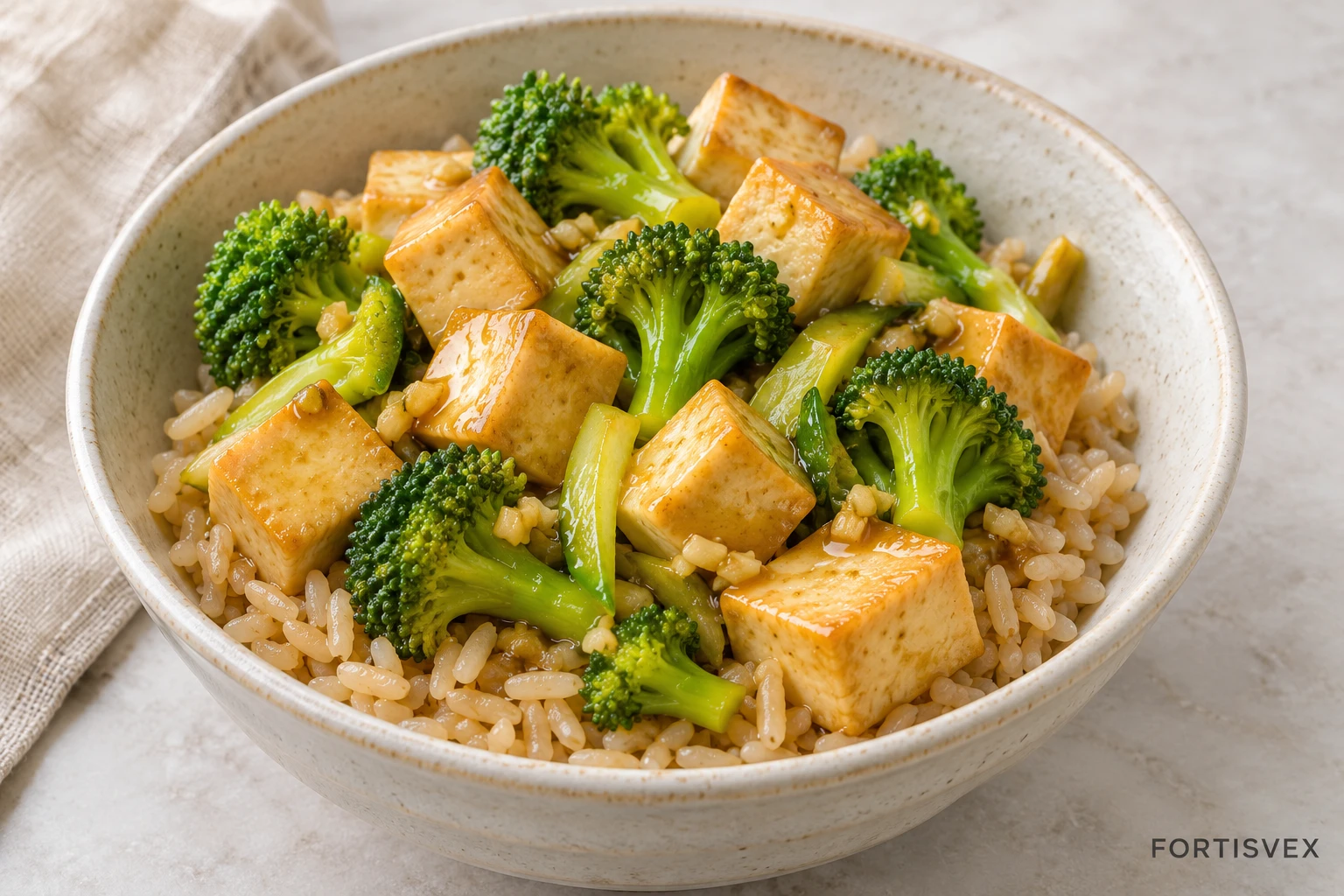
Tofu and Broccoli Rice Bowls
Serves: 4
Preparation: about 20 minutes
Skillet cooking: about 18–22 minutes
Total: about 50–65 minutes when the rice cooks alongside the preparation and skillet work. Follow your rice package’s cooking and resting times; some varieties take longer.
Inspired by home-style stir-fries. Yields and timings are estimates—use the texture and temperature checks in the instructions.
Equipment
- A saucepan with a lid, sized for your rice package’s instructions
- A wide, heavy skillet, ideally 12 inches across, with a lid
- A cutting board, knife, clean towels, small bowl, whisk, spatula and measuring tools
- A food thermometer for checking reheated leftovers
Ingredients
For the rice and skillet
- 1 cup dry long-grain brown rice, plus the water specified on its package
- 1 package plain extra-firm water-packed tofu, 16 ounces (454 grams), drained
- 12 ounces (340 grams) trimmed broccoli, including florets and tender stem portions
- 2 tablespoons neutral cooking oil, such as canola, divided
- 2 tablespoons water, for cooking the broccoli
- 2 garlic cloves, finely chopped
- 1 tablespoon finely grated fresh ginger
For the sauce
- ½ cup water
- 3 tablespoons reduced-sodium soy sauce
- 1 tablespoon unseasoned rice vinegar
- 2 teaspoons packed light brown sugar
- 2 teaspoons cornstarch
Instructions
- Start the rice. Wash your hands with soap and water. Cook the rice with the water and method on its package, including any resting time. Keep the cooked rice covered and serve it promptly with the finished skillet. Do not add dry rice directly to the tofu pan; the sauce does not contain enough liquid to cook it.
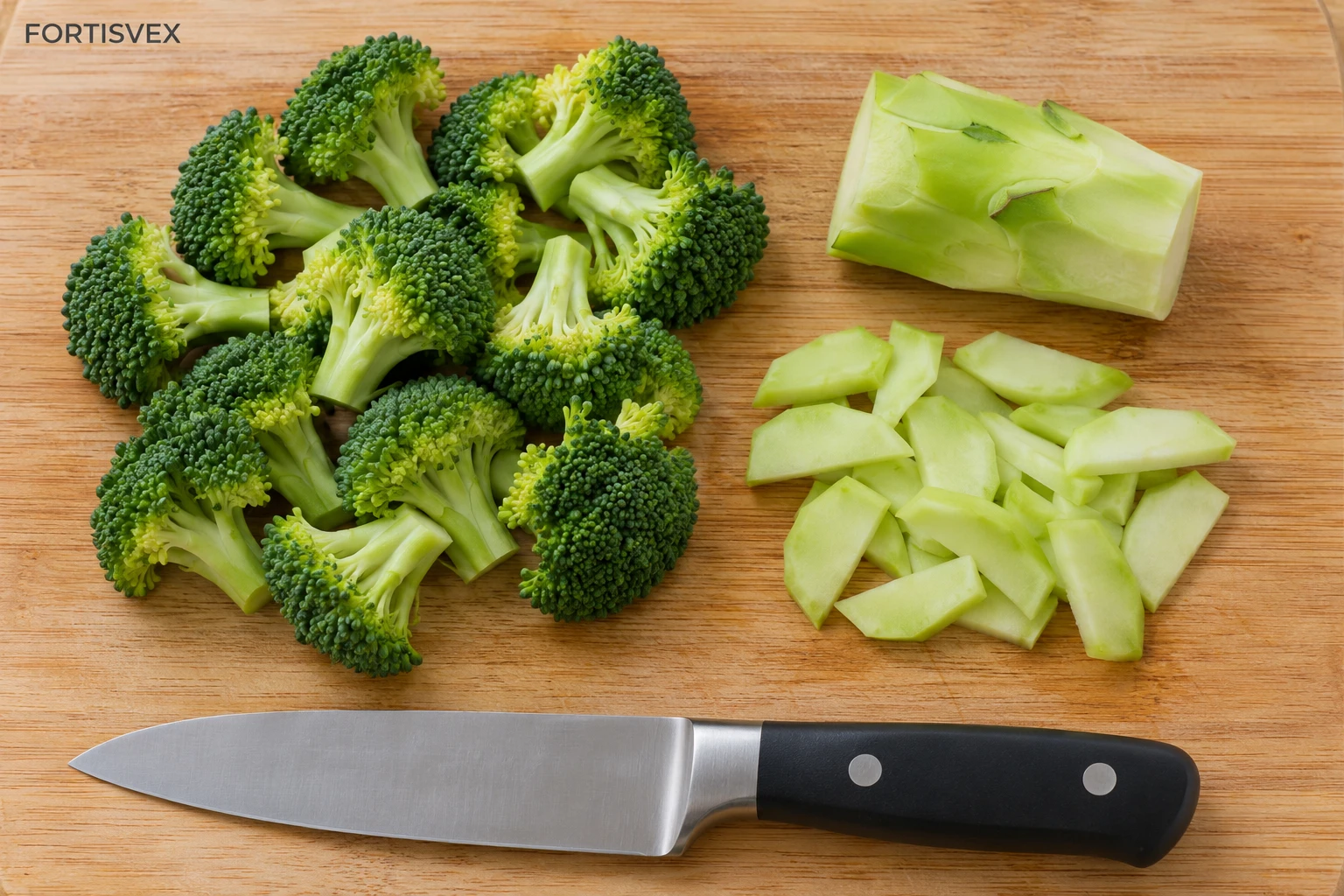
- Prepare the tofu and broccoli. Drain the tofu and pat its broad surfaces dry with a clean towel. Cut it into cubes about ¾ inch across, then blot the cut surfaces gently. Rinse the broccoli under running water. Cut the florets into similar bite-size pieces. Peel any tough outer layer from the stems and slice the tender centers about ¼ inch thick so they can cook alongside the florets.
- Whisk the sauce. Combine the sauce water, soy sauce, rice vinegar, sugar and cornstarch in a small bowl. Whisk until no dry starch remains. Keep the bowl beside the stove; whisk again immediately before pouring because the starch can settle.
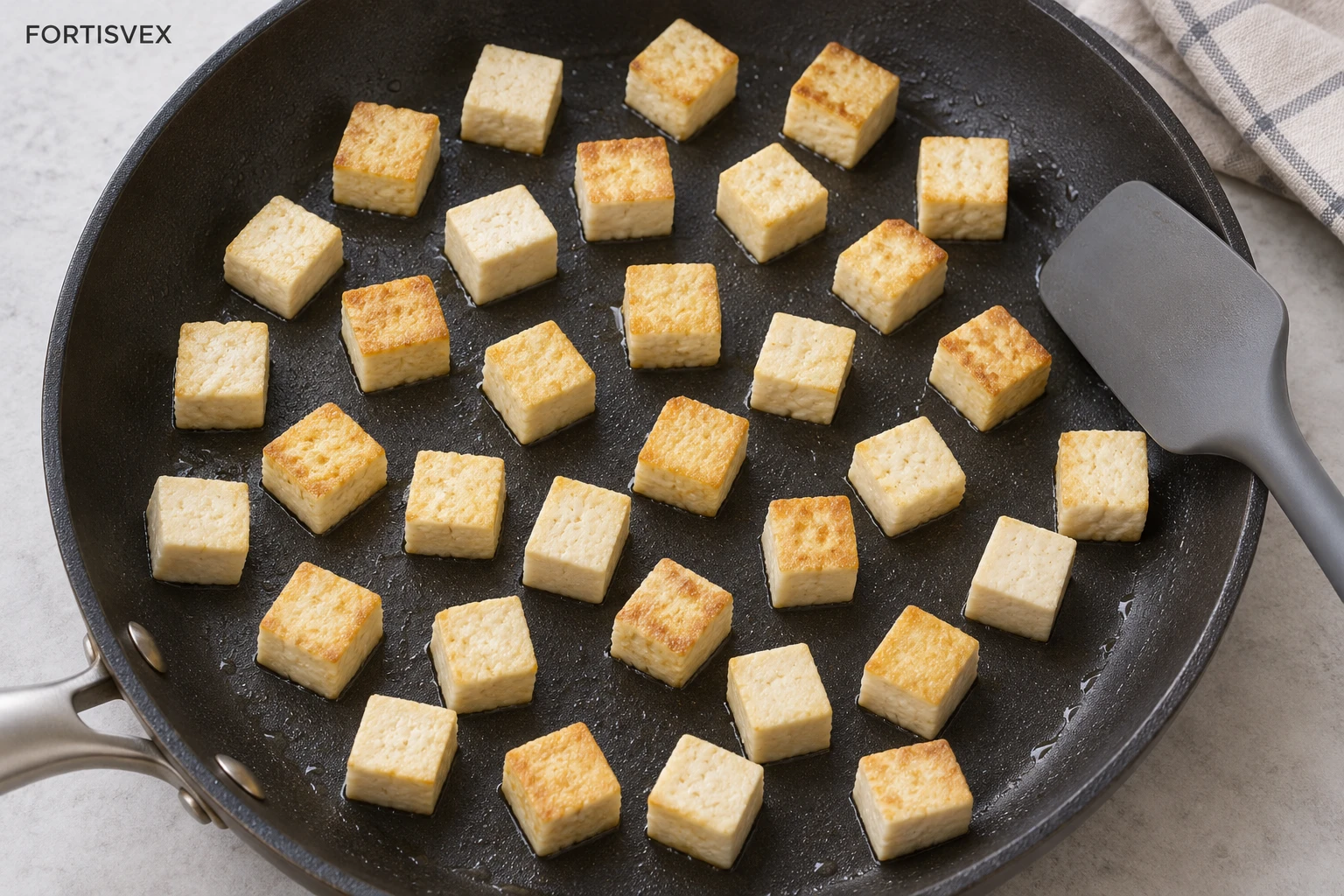
- Brown the tofu. Heat the skillet over medium-high heat, then add 1 tablespoon oil. Add the tofu in one layer, leaving small spaces between pieces. Cook for about 8–10 minutes, turning gently after the underside develops golden patches and releases from the pan. Aim for two or three browned sides rather than repeatedly stirring. Reduce the heat if the oil smokes or the surfaces darken quickly. Transfer the tofu to a clean plate.
- Cook the broccoli. Add the remaining tablespoon oil to the skillet. Add the sliced stems and cook for about 1 minute, stirring. Add the florets and the 2 tablespoons water, then cover for about 2 minutes. Lift the lid away from your face. Uncover and cook for another 2–3 minutes, stirring, until a stem piece is tender enough to bite but still offers a little resistance. Let excess water evaporate. If the broccoli is too firm and the pan is dry, add another tablespoon water, cover briefly and check again.
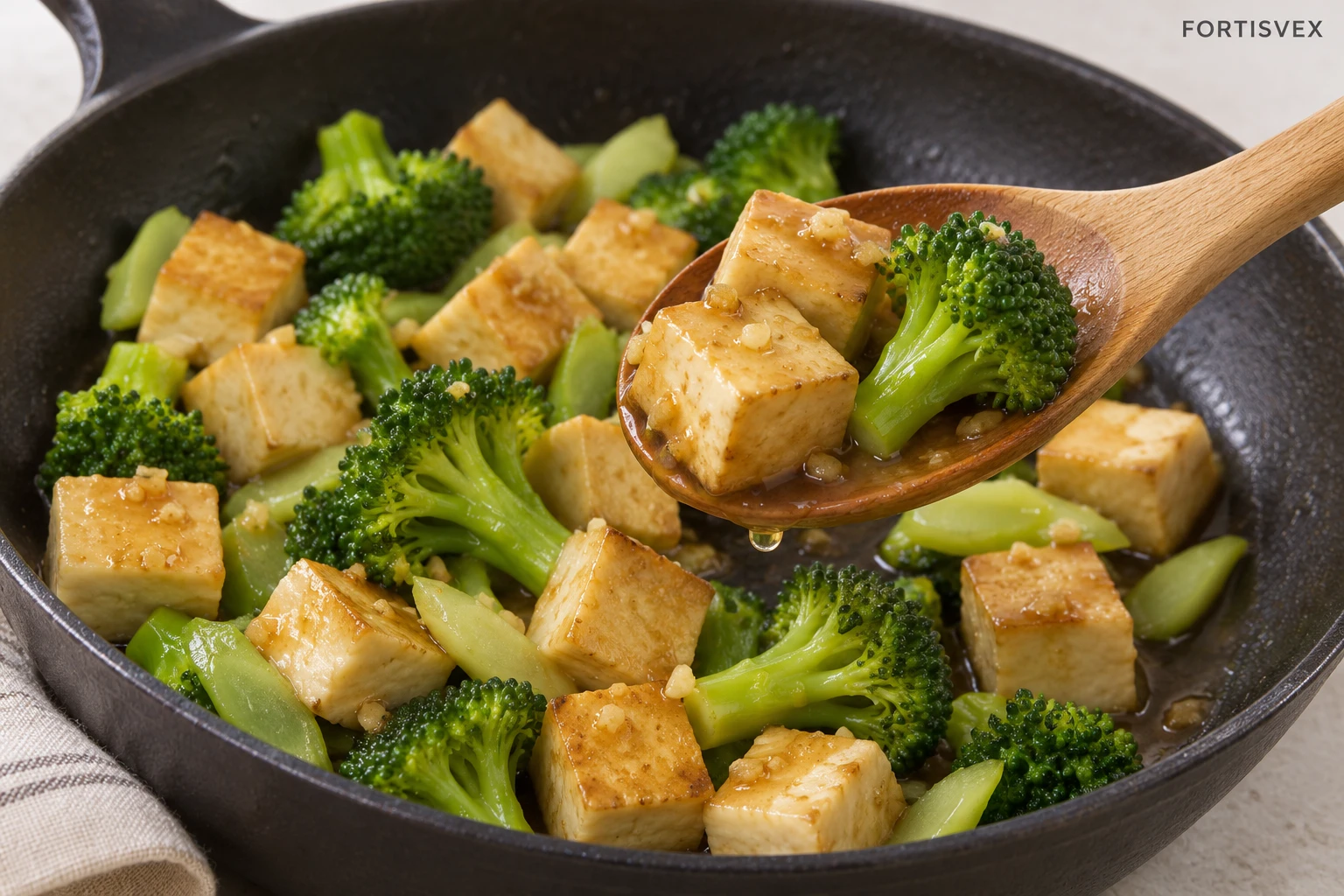
- Finish the skillet. Reduce the heat to medium. Add the garlic and ginger to the broccoli and stir for about 30 seconds, keeping them from scorching. Return the tofu. Whisk the sauce again, pour it into the skillet and fold gently to coat. Bring the sauce to a gentle simmer and cook for about 1–2 minutes, until it turns glossy and coats the pieces. If it becomes too thick, loosen it with water a tablespoon at a time. The tofu should be hot throughout.
- Build the bowls. Divide the rice among four bowls, then divide the tofu, broccoli and sauce over it. Rice yields vary, so divide the finished pot rather than relying on an exact cup measure per bowl. Serve while hot.
Three details that improve the texture
Dry the tofu, then give it space. Water left on the surface must evaporate before that surface can brown. Blotting helps, but so does a pan with room between the cubes. In a smaller skillet, brown the tofu in two batches, dividing the first tablespoon of oil between them; allow extra cooking time. Golden patches are the goal here, not a deep-fried crust.
Use the broccoli stems. The peeled centers belong in the dish, but thick slices take longer than florets. Cutting them thinly and giving them a short head start keeps the florets from becoming soft while you wait. If you enjoy vegetables with a crisp-tender finish, our lemon-parsley green beans use another simple finishing approach for a separate side dish.
Finish with sauce, rather than simmering everything in it. The short final simmer thickens the starch and warms the components together. Letting the broccoli sit in a deep pool of sauce for a long time softens it. Add water gradually if the sauce tightens; avoid adding more soy sauce simply to make it thinner, which can make the bowl unnecessarily salty.
Allergens and practical substitutions
This recipe contains soy. Tofu is made from soybeans, and the sauce also uses soy sauce. Check the sauce label for wheat and other allergens. For someone avoiding gluten, select a sauce specifically labeled gluten-free, check the remaining packaged ingredients and prevent cross-contact. Do not assume every tamari is gluten-free. Changing the sauce alone does not make a tofu dish suitable for someone with a soy allergy.
No sesame, peanuts or nuts are called for. If you add sesame oil, seeds, chopped peanuts or another topping, tell diners and account for those ingredients separately. A recipe without an intentional ingredient is not a guarantee against cross-contact in a particular kitchen or packaged product.
White rice: You can serve the same skillet over freshly cooked white rice. Follow that rice’s package directions and start it at a time that lets it finish with the vegetables. Do not use the brown-rice water ratio or timing automatically.
Tofu choice: Plain firm tofu can work, but it is more delicate. Handle it gently and expect a softer result. Silken tofu is not a direct swap for these cubes. If your package gives preparation instructions, follow them.
Heat and seasoning: Keep the skillet mild and offer a labeled chili sauce separately. Reduced-sodium soy sauces still differ in saltiness; taste a small assembled bite with rice before adding extra seasoning. Avoid replacing the soy sauce volume-for-volume with a very concentrated seasoning product.
Cool, store and reheat safely
Divide leftover rice and skillet mixture into shallow containers and refrigerate promptly. Keep the refrigerator at 40°F (4°C) or below. Refrigerate perishable food within 2 hours, or within 1 hour when the surrounding temperature is above 90°F (32°C). Do not leave a deep pot of rice on the counter for hours to cool. If food must wait before serving, suitable warming equipment should keep it at 140°F (60°C) or hotter.
Use safely refrigerated leftovers within 3–4 days. If you prepare the meal with previously cooked rice, keep its original cooking date in mind; combining it with fresh vegetables does not give older rice a new storage period. Store the rice separately from the tofu mixture if convenient, which lets you add a little water to the rice without diluting the sauce.
Reheat only the portions needed. In a microwave-safe dish, add a small splash of water, cover with a vented microwave-safe cover, and heat in short intervals, stirring and checking several places. Or warm the mixture in a covered skillet over moderate heat with a little water, stirring as needed. With either method, leftovers should reach 165°F (74°C), measured with a food thermometer. Follow any appliance standing-time instructions. Reheating cannot make food safe again after it has been left out beyond safe limits.
Finish the meal without adding another complicated dish
The rice, tofu and broccoli can stand on their own as dinner. For guests who want a sweet finish, our cinnamon apple-oat crisp can be planned separately so the oven and skillet do not compete for attention. Check that dessert’s ingredients against your guests’ dietary needs; this bowl’s allergen notes do not cover another recipe.
Recent Posts
-
Tofu and Broccoli Rice Bowls with Ginger-Garlic Sauce
FORTISVEX · RECIPES A good tofu bowl has more than one texture: golden edges on the tofu, broccoli …Nov 4th 2026 -
Placing an Indoor Flag Display: A Venue-Review Worksheet
An indoor flag display can fit its stand and still be poorly placed in a room. The base occupies on …Nov 4th 2026 -
Charcoal Weber Kettle Cauliflower Steaks with Lemon-Caper Dressing
A cauliflower steak needs two things: enough of the central stalk to hold together and enough cooki …Nov 4th 2026