
Lemon-Parsley Green Beans with a Crisp-Tender Finish
A lemon finish gives green beans a clear role among richer Thanksgiving sides. Roast them in a roomy layer, then add the juice and parsley after they leave the oven. This version uses no breading, cream sauce or nuts, so the beans remain the center of the dish.
Original recipe formulation inspired by Thanksgiving side dishes. Yields and timings are estimates—use the texture and temperature checks in the instructions.

- Yield
- 8 side-dish servings; approximately 6 cups
- Preparation
- 15 minutes
- Cooking
- 15–20 minutes
- Total
- 30–35 minutes
What you will need
Two rimmed sheet pans, large bowl, tongs, fine grater. Use US measuring cups and spoons.
Ingredients
- 2 pounds fresh green beans, stem ends trimmed, rinsed and dried well
- 2 tablespoons olive oil
- 1/2 teaspoon fine table salt
- 1/4 teaspoon ground black pepper
- 1 teaspoon finely grated lemon zest
- 1 tablespoon fresh lemon juice, plus up to 1 tablespoon more to taste
- 2 tablespoons chopped fresh flat-leaf parsley
Method
Start with clean hands, utensils and rinsed produce. Keep preparation separate from raw turkey and its juices.
- Heat the oven to 425°F. Place racks in the upper and lower thirds. Dry the rinsed beans with a clean towel; wet surfaces make it harder to get a roasted finish.
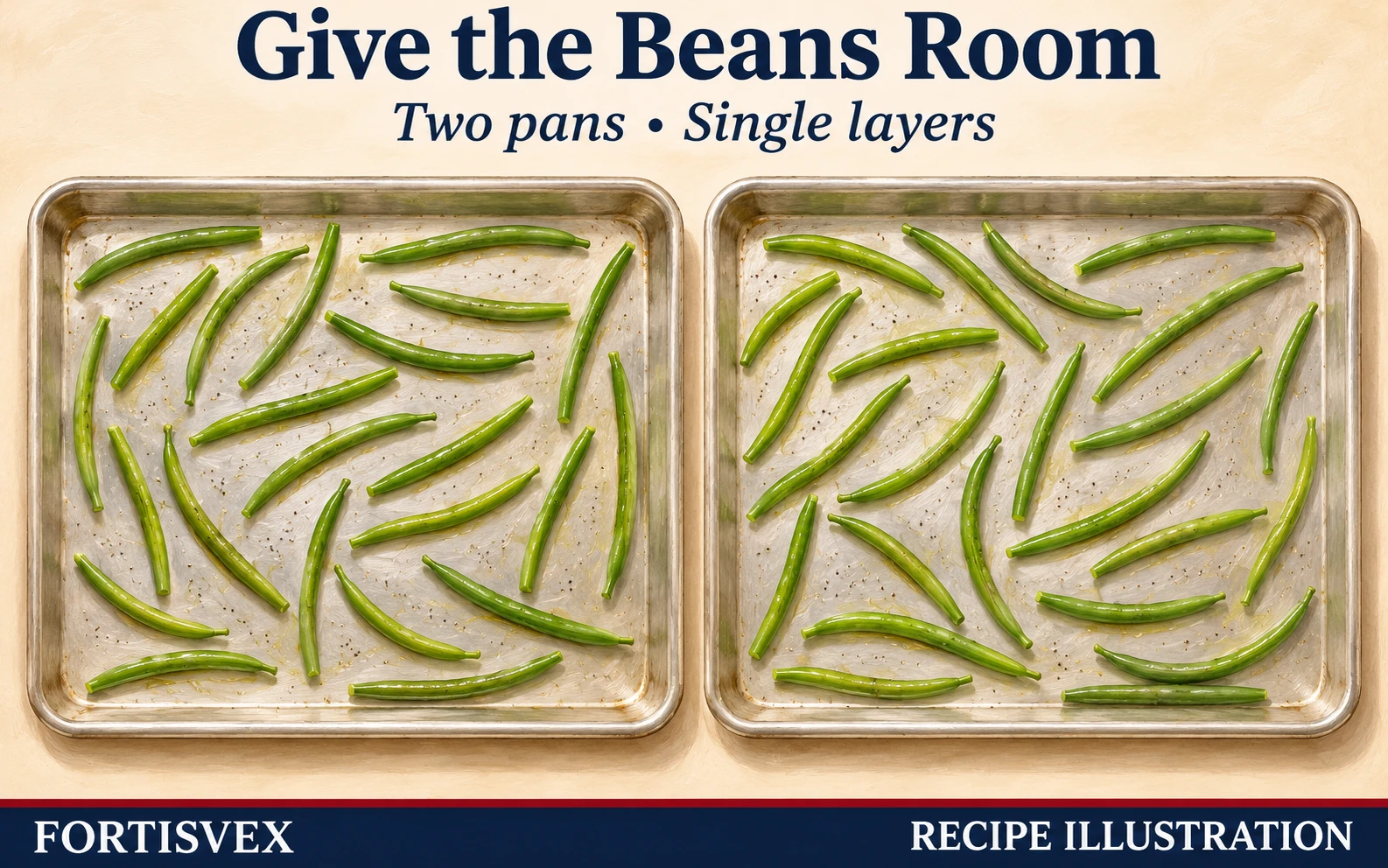
- Toss the beans with the oil, salt and pepper in the bowl. Divide between two rimmed sheet pans, spreading them into single layers with room between most beans. Do not mound them in the middle.
- Roast for 15–20 minutes, stirring and exchanging the pans’ rack positions halfway through. Begin checking at 15 minutes. The beans should be tender enough to bite comfortably, with some browned spots and a little remaining firmness. Thickness and oven behavior affect timing.
- Transfer the hot beans to the clean bowl. Add the zest, first tablespoon of lemon juice and parsley; toss gently. Taste a bean and add the remaining juice only if you want a sharper finish.
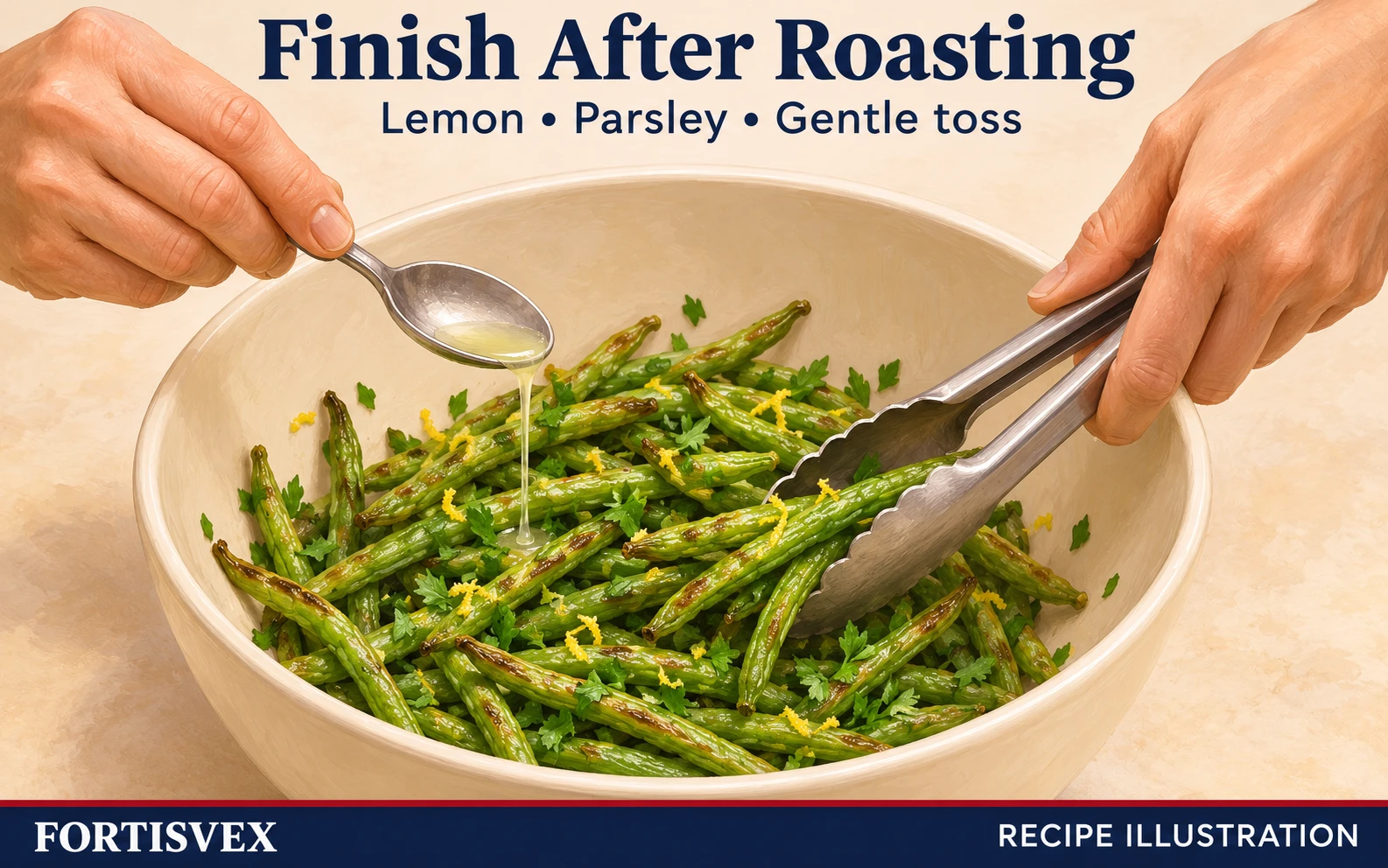
Add lemon juice, zest and parsley after roasting, then toss gently. Recipe illustration; quantities are not measured in the image. - Serve at once on a platter. If other dishes need the oven, schedule these for the final roasting slot rather than leaving them on the counter while the rest of dinner finishes.
Timing and texture
Crowding is the main obstacle to a roasted rather than steamed texture. Two pans are intentional. For a half batch, use one pan but start checking at the same early time. Frozen beans release different amounts of water; this manuscript specifies fresh beans and does not promise the same result with a direct frozen substitution.
Planning the Thanksgiving table
Keep the serving platter on the dining table and the seasonal decoration at the entrance. FORTISVEX’s decorative-flags collection is a separate place to plan that welcome, without using a flag as a food liner or table covering. For a smaller outdoor display, compare 18-by-12-inch garden flags. Before selecting hardware, read the garden-holder sizing guidance and check the flag sleeve and holder dimensions; the guidance is not a promise of current hardware availability.
Storage and ingredient notes
Refrigerate promptly in shallow containers, within 2 hours (1 hour above 90°F), at 40°F or colder. Use within 3 days. Reheat leftovers to 165°F.
No milk, egg, wheat or nuts are intentionally added; check labels and kitchen cross-contact rather than promising allergen-free food.
Recent Posts
-
Death of Shimon Peres: Historical Half-Staff Archive
Death of Shimon Peres: Historical Half-Staff Archive Historical record — not a current half-staff n …Nov 4th 2026 -
Patriot Day and National Day of Service and Remembrance, 2016
Historical presidential archive · 2016 Patriot Day and National Day of Service and Remembrance, 201 …Nov 4th 2026 -
Honoring the Victims of the Attack in Baton Rouge, Louisiana
Historical presidential archive · 2016 Honoring the Victims of the Attack in Baton Rouge, Louisiana …Nov 4th 2026