
Eggplant and Ricotta Lasagna
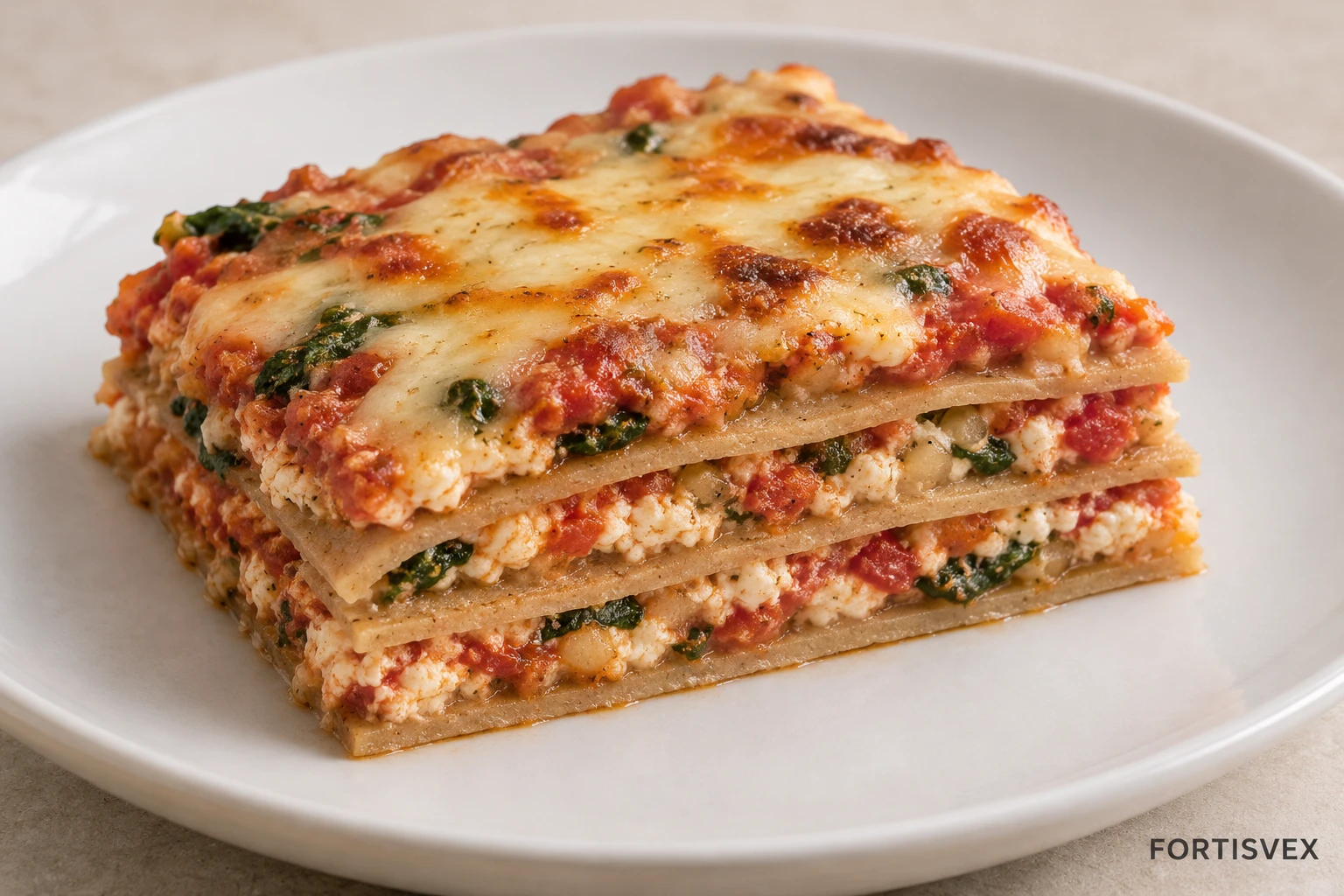
Finely chopped eggplant softens into the tomato sauce in this lasagna, while cooked pasta gives each serving its layers. Ricotta adds a soft middle and shredded cheeses finish the top. Cook the eggplant until tender before assembling: the oven step heats the casserole and brings the layers together rather than rescuing firm pieces of vegetable.
This is a pasta lasagna, not a stack of eggplant slices. Prepare the sauce while the noodles cook, then divide the fillings before building the three layers so the last layer gets its share.
At a Glance
- Yield: approximately 12 portions; divide the pan into three rows and four columns
- Preparation and stovetop cooking: about 35-45 minutes
- Baking: begin checking at 35 minutes; allow about 35-45 minutes or longer to reach the center temperature
- Rest before serving: 10 minutes
- Total estimate: about 1 hour 20 minutes to 1 hour 40 minutes, plus any extra heat-up or cooking time
Timing depends on the vegetables, pasta and oven. Use tender eggplant and a thermometer-confirmed casserole center as the checks that matter.
Equipment
A 9-by-13-inch baking dish at least 2 inches deep and rated for at least 3 quarts, a large pot and colander for the pasta, a wide deep skillet, cutting board, knife, measuring tools, spatula, food thermometer, foil and a rimmed baking sheet. Check the dish manufacturer's oven instructions. Use U.S. measuring cups and spoons.
Ingredients
- 9 regular whole-grain lasagna noodles requiring boiling, not oven-ready noodles
- 1/2 teaspoon vegetable oil for the skillet, plus 1 teaspoon for greasing the baking dish
- 1 medium onion, chopped, about 1 cup
- 2 garlic cloves, finely chopped
- 1 pound whole globe eggplant, weighed before peeling and trimming, then peeled and cut into roughly 1/4-inch pieces
- 3 cups chopped fresh spinach
- 1 can Italian-seasoned diced tomatoes, 14.5 ounces, with their liquid
- 1 jar lower-sodium marinara sauce, 24 ounces
- 1/2 teaspoon dried basil
- 1/2 teaspoon dried oregano
- 1/8 teaspoon crushed red pepper flakes
- 1/8 teaspoon fine salt
- 1/8 teaspoon ground black pepper
- 1 container part-skim ricotta, 15 ounces, made from pasteurized milk
- 1 3/4 cups shredded mozzarella made from pasteurized milk
- 1 3/4 cups shredded reduced-fat cheddar made from pasteurized milk
Follow the noodle package's boiling directions. No-boil pasta needs a different liquid plan and is not a direct substitution here. If your diet requires cheese made without animal rennet, check the cheese labels rather than assuming every variety qualifies.
Cook the Components
- Prepare safely. Wash hands and clean the work area. Rinse the eggplant before peeling and rinse spinach unless its label says it is prewashed and ready to eat. Keep produce and cooked pasta separate from raw meat and eggs. Heat the oven to 350 degrees Fahrenheit and grease the baking dish with the separate teaspoon of oil.
- Boil the noodles. Cook them in a large pot of water following the package directions, stopping when tender but still slightly firm. Drain carefully and lay them separately on a clean tray so they do not stick into a bundle. If the package calls for rinsing, follow it. These noodles should already be cooked before layering.
- Soften the vegetables. Heat the skillet over medium heat and spread the 1/2 teaspoon oil across its surface. Add onion and cook, stirring, until softened, about 4-6 minutes. Add garlic and stir for about 30 seconds. Add chopped eggplant and continue cooking, stirring frequently, until the pieces are very soft, approximately 10-15 minutes. Reduce the heat if the bottom browns too quickly. If necessary, add water 1 tablespoon at a time just to prevent sticking; let excess water evaporate. Test a piece with a fork before proceeding.
- Finish the sauce. Stir in spinach until wilted. Add tomatoes with their liquid, marinara, basil, oregano, red pepper flakes, salt and black pepper. Simmer gently for about 5 minutes, stirring. The sauce should be spoonable, with tender vegetables and no deep pool of watery liquid. Remove from the heat.
Build Three Layers
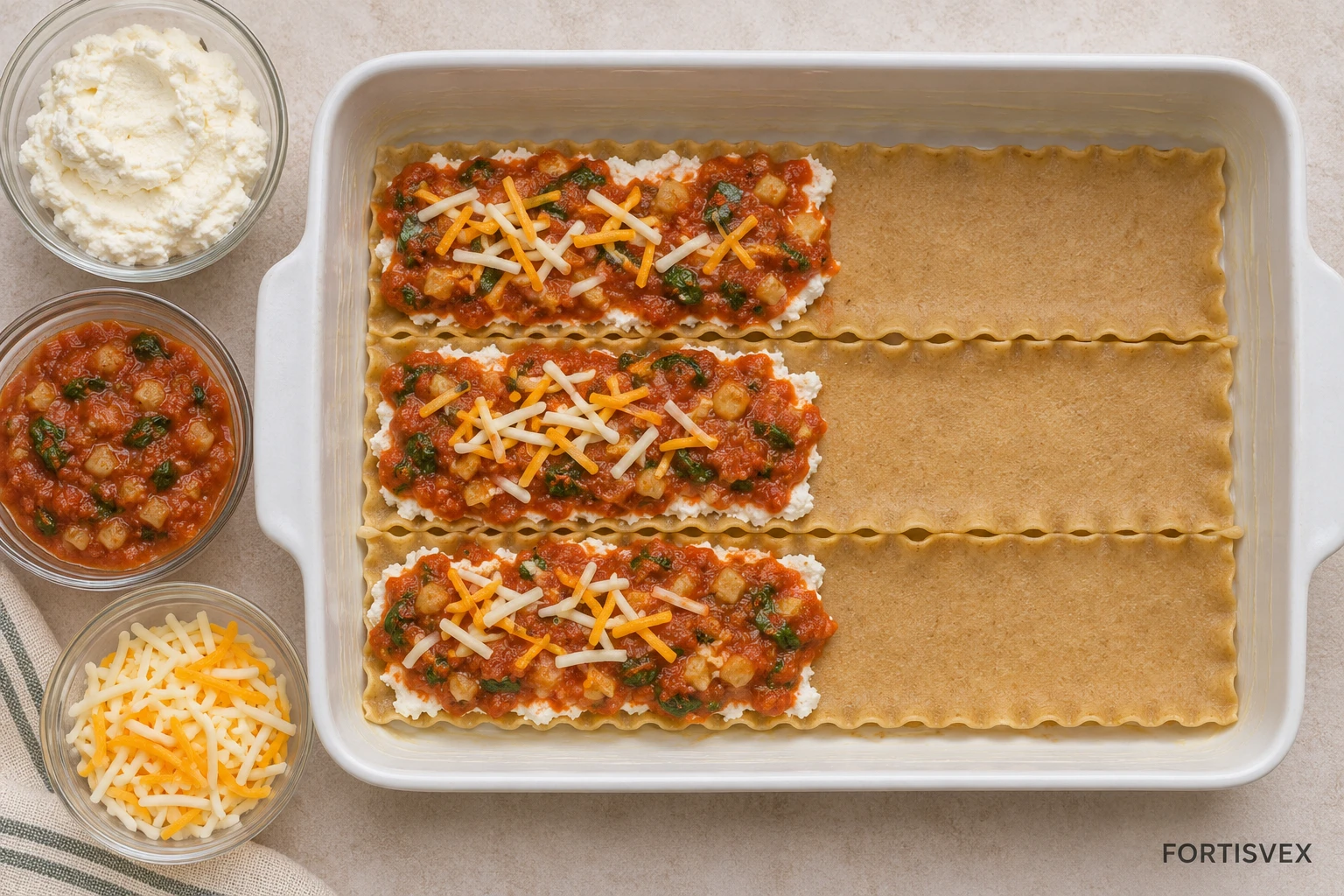
Divide the ricotta into three roughly equal portions. Do the same with the vegetable sauce, mozzarella and cheddar. Use one portion of each for every layer; each shredded-cheese portion is approximately a scant 2/3 cup.
- Place three cooked noodles across the bottom of the greased dish, trimming to fit if necessary. Spread one-third of the ricotta over them, spoon on one-third of the sauce, and scatter over one-third each of the mozzarella and cheddar.
- Repeat that sequence twice more, using the remaining six noodles and all the divided fillings. Finish with the final cheese portion. Keep the food below the dish rim with room for bubbling; do not mound it above the rim. If your dish cannot hold the layers safely, stop and use a larger oven-safe dish rather than overfilling.
- Set the dish on a rimmed baking sheet and bake uncovered. Begin checking after about 35 minutes. Insert a clean food thermometer into the center without touching the bottom; the casserole must reach 165 degrees Fahrenheit (74 degrees Celsius). Check another central spot as well. Continue baking if needed. If the cheese browns before the middle reaches temperature, loosely cover with foil and continue checking.
- After reaching 165 degrees Fahrenheit, rest the dish on a heat-safe surface for 10 minutes before cutting. This pause helps serving; it does not replace the temperature check. Divide into approximately 12 portions and serve promptly.
Keep the Layers Useful
Small eggplant pieces belong in the sauce, not in a separate layer. If they resist a fork before the tomatoes go in, keep cooking them. Spread the sauce to the pasta edges so the top noodles do not remain exposed and dry. Portion the cheese first instead of using most of it in the first two layers.
The pan size and stated portions are a practical starting point. Pasta widths and cooked vegetable volume vary. Do not double the recipe in the same dish or assume a deeper casserole will finish on the same schedule.
Cool, Store and Reheat
Divide leftovers into small portions in shallow covered containers and refrigerate promptly at 40 degrees Fahrenheit (4 degrees Celsius) or below. Refrigerate within 2 hours, or within 1 hour if exposed to temperatures above 90 degrees Fahrenheit (32 degrees Celsius). Do not leave the full dish on the counter until cold.
Label with the cooking date and use safely refrigerated leftovers within 3-4 days. Reheat only the portions needed to 165 degrees Fahrenheit (74 degrees Celsius), checking the center with a thermometer. In a microwave, use a microwave-safe covered dish with a vent, rotate as needed and follow the appliance's standing-time instructions. Safe reheating does not rescue food that was left out too long.
Allergens and Meal Planning
Contains wheat and milk. Pasta may also contain egg; check its label along with the sauces and cheeses. No egg is added to the ricotta filling. Account for cross-contact and other packaged-ingredient allergens separately.
For a separate vegetable side, lemon-parsley green beans use a hotter, 425-degree oven. Give them their own oven slot rather than raising the temperature while the lasagna is still cooking.
If you want dessert, cinnamon apple-oat crisp also uses a 350-degree oven, but its baking and resting schedule is different. Plan each dish separately and check its wheat and milk ingredients; matching oven temperatures do not guarantee that both dishes finish together.
For another day when you prefer stovetop cooking, tofu and broccoli rice bowls offer a different main-course method. Follow their separate soy, possible wheat and cooked-rice handling guidance.
Method and Safety References
The pasta, chopped-vegetable sauce and three-layer approach are adapted from University of Kentucky Extension's Eggplant Lasagna. This version specifies an eggplant weight and preparation details to make the shopping and assembly steps clearer.
Use the federal casserole and leftover temperature chart, clean, separate, cook and chill guidance, and Illinois Extension's leftover-storage guidance for the safety checks used here.
Recent Posts
-
Stovetop-Steamed Artichokes with Lemon-Basil Yogurt Dip
A whole globe artichoke is a vegetable to eat slowly: pull away a leaf, scrape the tender flesh fro …Nov 5th 2026 -
Baked Almond-Milk Vanilla Custard Cups
These gently baked custards combine unsweetened vanilla almond milk, eggs and a little honey. A wat …Nov 5th 2026 -
Thunder During a Flag Ceremony: Plan the Stop Before the Event
An outdoor flag ceremony needs a way to stop, not just a polished opening. Decide before guests arr …Nov 5th 2026