
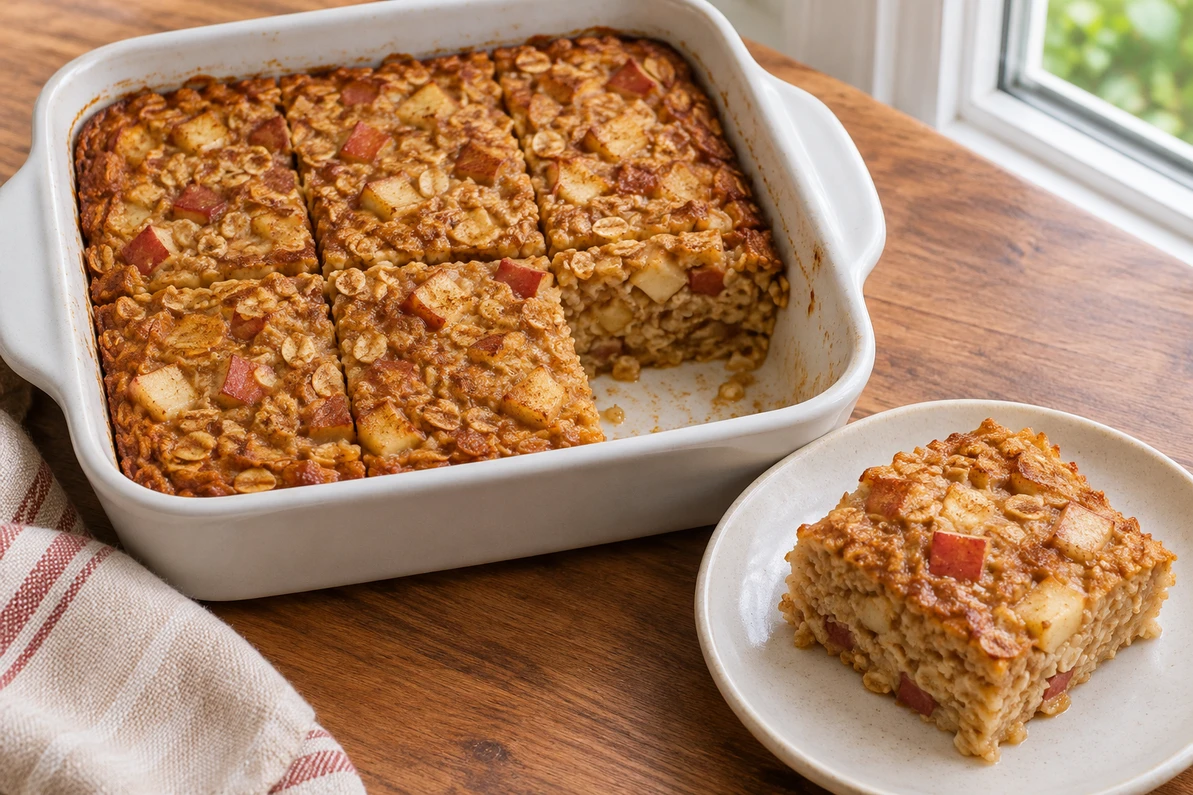
Apple-Cinnamon Baked Oatmeal
FORTISVEX · RECIPES
Tender apple pieces, warm cinnamon and rolled oats baked into a breakfast you can portion for the days ahead.
A pan of baked oatmeal is useful when breakfast needs to be ready before everyone reaches the table. The oats absorb a lightly sweetened mixture of milk and eggs, while small apple pieces soften throughout. The edges become lightly golden; the center stays moist enough to eat with a spoon.
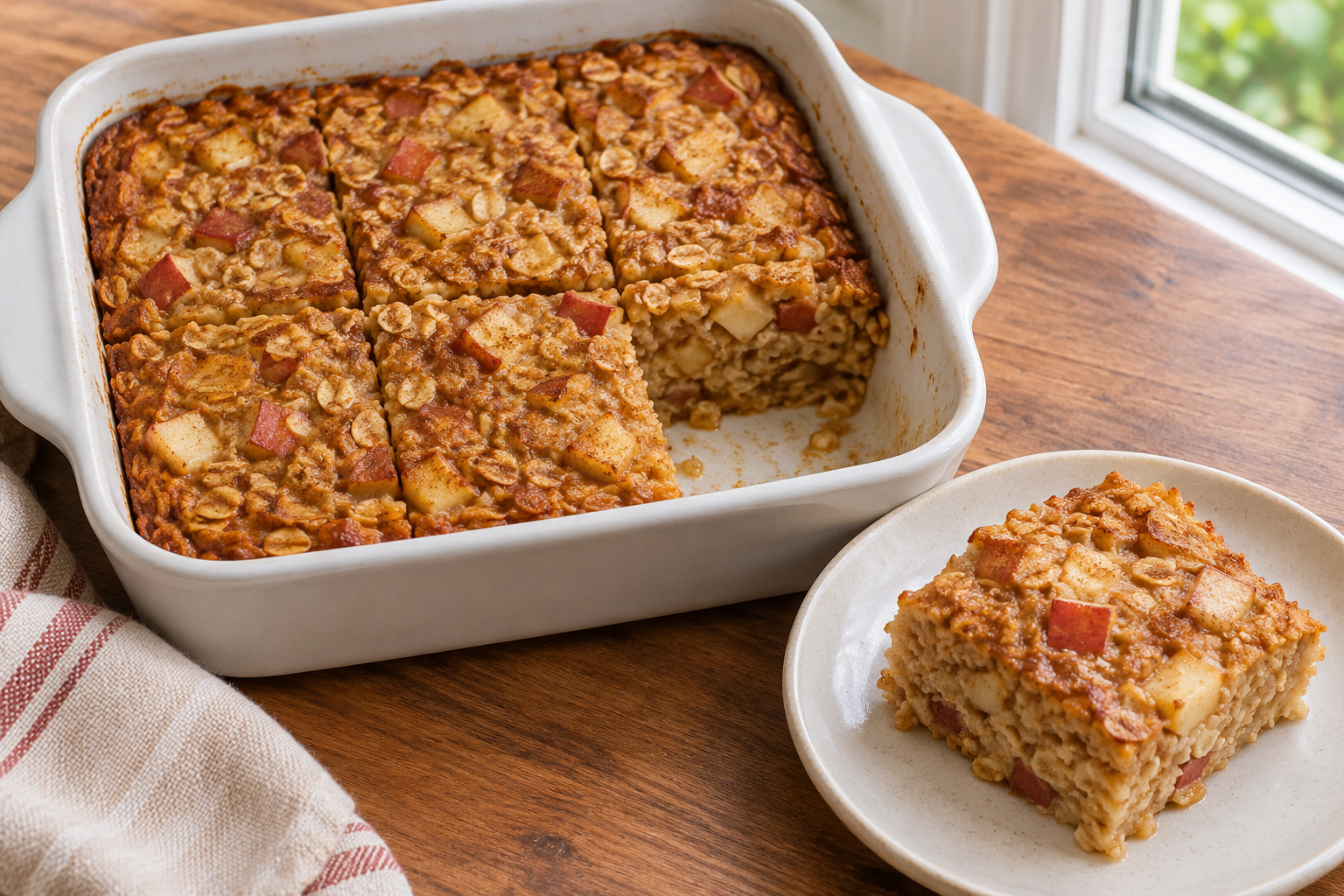
This is a breakfast bake, with oats and fruit mixed together, rather than an apple dessert under a separate crumb topping. Cut it after a short rest for tidy portions, or spoon it into bowls while warm. A splash of milk at the table loosens the texture without changing the whole batch.
Use the texture and thermometer checks below to judge doneness; baking time can vary.
Apple pieces run through the oatmeal rather than sitting beneath a crumb topping. View the full-size baked oatmeal illustration.
Apple-Cinnamon Baked Oatmeal
Serves
6 breakfast portions
Prep
15 minutes
Bake
35–45 minutes
Total
60–70 minutes, including a 10-minute rest
Oven: 375°F (190°C), conventional. Preheat while preparing the ingredients. The total assumes the oven is hot when the pan is ready.
Equipment
An 8-inch-square baking dish at least 2 inches deep, two mixing bowls, whisk, spatula, knife, cutting board, measuring cups and spoons, oven mitts and an instant-read food thermometer. Use US cups and spoons; weights are approximate.
Ingredients
- 2 tablespoons (28 g) unsalted butter, melted and cooled slightly, plus a little for the dish
- 2 cups (180 g) old-fashioned rolled oats
- 1½ teaspoons ground cinnamon
- 1 teaspoon baking powder
- ¼ teaspoon fine salt
- 2 large eggs
- 1¾ cups (420 ml) milk
- ¼ cup (80 g) pure maple syrup
- 1 teaspoon vanilla extract
- 2 cups (about 250 g) cored apples cut into ½-inch dice, skin on; usually about 2 medium apples
- Optional for serving: a little milk or plain yogurt, kept refrigerated until needed
Method
- Prepare the pan and apples. Heat the oven to 375°F (190°C), with a rack in the middle. Lightly butter the baking dish. Wash your hands and rinse the apples under running water before coring and dicing. Aim for similar-size pieces so they soften at a similar rate.
- Mix the dry ingredients. Stir the oats, cinnamon, baking powder and salt together in a large bowl. Break up any spice or baking-powder clumps before adding liquid.
- Combine the wet ingredients. In the second bowl, whisk the eggs until blended, then whisk in the milk, maple syrup, vanilla and slightly cooled melted butter. Hot butter can begin cooking the eggs, so let it cool until warm rather than hot.
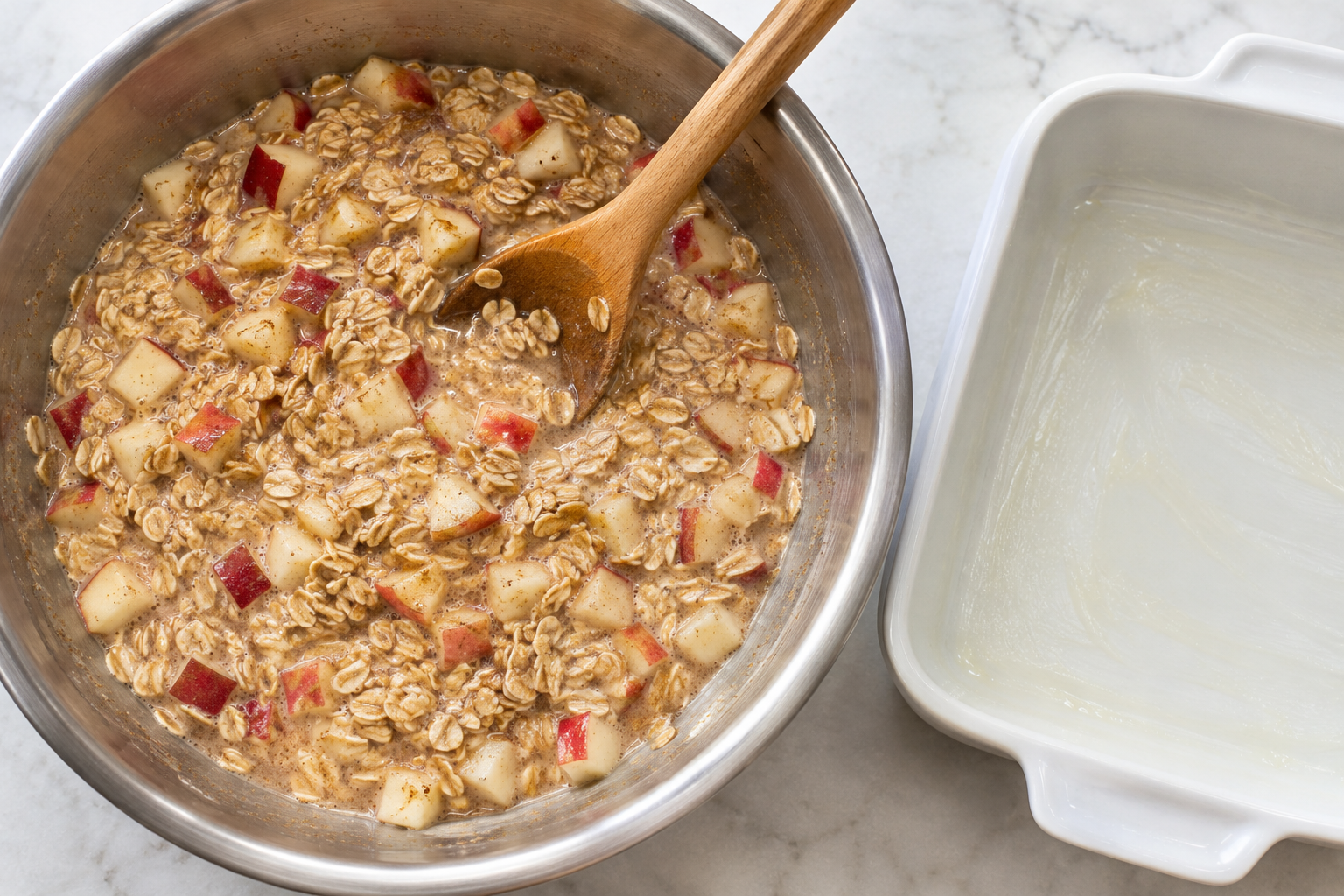
- Fold and spread. Pour the wet mixture over the oats and stir thoroughly. Fold in the apple dice, scraping the bottom of the bowl to moisten all the oats. The mixture should be loose, with liquid visible between the flakes. Transfer to the prepared dish and spread evenly, distributing apples into the corners. Bake promptly; do not taste the raw egg mixture.
- Bake until set. Bake for about 35–45 minutes, checking from 35 minutes. The surface should be lightly golden, the middle set rather than sloshing, and the apple pieces tender when pierced. Check the center in more than one spot with a food thermometer, without touching the dish: use 165°F (74°C) as the safety endpoint for this breakfast casserole. If the top is browning before the middle is ready, loosely tent with foil and continue in 5-minute intervals. Time or browning alone does not establish safety.
- Rest and portion. Set the hot dish on a heat-safe surface for 10 minutes. Cut into six portions or scoop into bowls. Serve with a small splash of milk or a spoonful of plain yogurt if you like. Use clean serving utensils.
Keep the oats tender and the apples distinct
Choose rolled oats. Old-fashioned rolled oats keep recognizable flakes in the finished bake. Steel-cut oats need a different cooking and hydration schedule; do not substitute them in this recipe. Instant oats produce a softer result and are not the intended choice.
Measure the prepared apples. Apples vary in size, so use the diced volume or weight after coring. A firm sweet-tart apple, such as Honeycrisp or Braeburn, gives a pleasant contrast to the maple syrup. Leaving the skin on adds color; peel if preferred, then measure the prepared fruit. Large wedges take longer to soften than the specified dice.
Let the pan settle. A brief rest helps the portions hold together. Freshly baked oatmeal is still soft; do not expect a dry snack bar. If you want it looser, add milk to the individual bowl. Do not add more liquid to the entire pan before checking whether the center has finished baking.
Allergens and changes
The base recipe contains milk and eggs. Oats can have cross-contact with wheat; this is not a gluten-free or allergy-free claim. Check every packaged ingredient and serving addition for the needs of your guests. A different milk or an egg replacement can change the texture and baking behavior; those variations have not been developed for this formulation.
Make breakfast ahead, then reheat only what you need
For a head start, bake the oatmeal rather than leaving an untested overnight raw mixture in the dish. After the serving rest, divide leftovers into shallow containers and refrigerate promptly at 40°F (4°C) or colder. Do not wait for the whole pan to cool on the counter. Refrigerate within 2 hours of cooking, or within 1 hour if the surrounding temperature is above 90°F (32°C). Discard portions that exceed those limits.
Use refrigerated portions within 3–4 days, or freeze for longer storage. Label the container with the preparation date. Thaw frozen portions in the refrigerator.
To reheat, put one portion in a microwave-safe bowl with a tablespoon of milk. Cover loosely, heat in short intervals, and rotate or break up the portion for even heating. Let it stand briefly, then check several spots: leftovers must reach 165°F (74°C) throughout. Microwave power and portion size vary, so do not rely on a fixed number of seconds. Add cold yogurt only after reheating.
Plan the rest of the day
Once breakfast is portioned, choose a different texture for the next meal. Our tofu and broccoli rice bowls bring a savory skillet meal into the weekly plan. For a warm lunch, try creamy corn and white bean chowder. If a roast or other main is already planned for dinner, cranberry-orange roasted carrots offer a vegetable side with a tart fruit note.
Method and food-safety references
The baked-oatmeal approach is informed by Oregon State University Food Hero; this formulation uses different quantities and a single oven bake. Safety checkpoints follow FoodSafety.gov’s temperature chart, cold food storage chart and safe handling guidance, plus leftover storage and reheating tips. No source photographs or nutrition values are reproduced.
Recent Posts
-
West Virginia Half-Staff Order Honors Jay Rockefeller Through November 13, 2026
Governor Patrick Morrisey issued a November 6, 2026 order lowering the U.S. and West Virginia flags …Nov 8th 2026 -
Replacing a Kansas Flag: Match Size and Attachment
A replacement Kansas flag should match more than the state design. Before ordering, record the flag …Nov 8th 2026 -
Replacing a Storm-Warning Flag: Match the Piece and Dimensions
A missing or worn storm-warning flag does not necessarily call for a whole new collection. The firs …Nov 8th 2026