
Creamy Corn and White Bean Chowder
FORTISVEX · HOLIDAY RECIPES
A pot of corn and white bean chowder makes a welcoming meal when the evening calls for warm bowls and an unhurried table. Sweet corn, tender potato cubes and creamy cannellini beans share a milk-based broth seasoned with thyme, garlic and a little smoked paprika. Mashing some of the beans gives the soup body without making a flour-thickened sauce.
This is an original menu idea for a Veterans Day thank-you supper, a community gathering or an ordinary cool-weather dinner. It is not presented as a military tradition or an endorsed veterans’ recipe. If you are hosting someone in appreciation of their service, ask what they enjoy and what dietary needs to accommodate; the hospitality matters more than a themed garnish.
Jump to the recipe · Pairings · Make ahead and storage
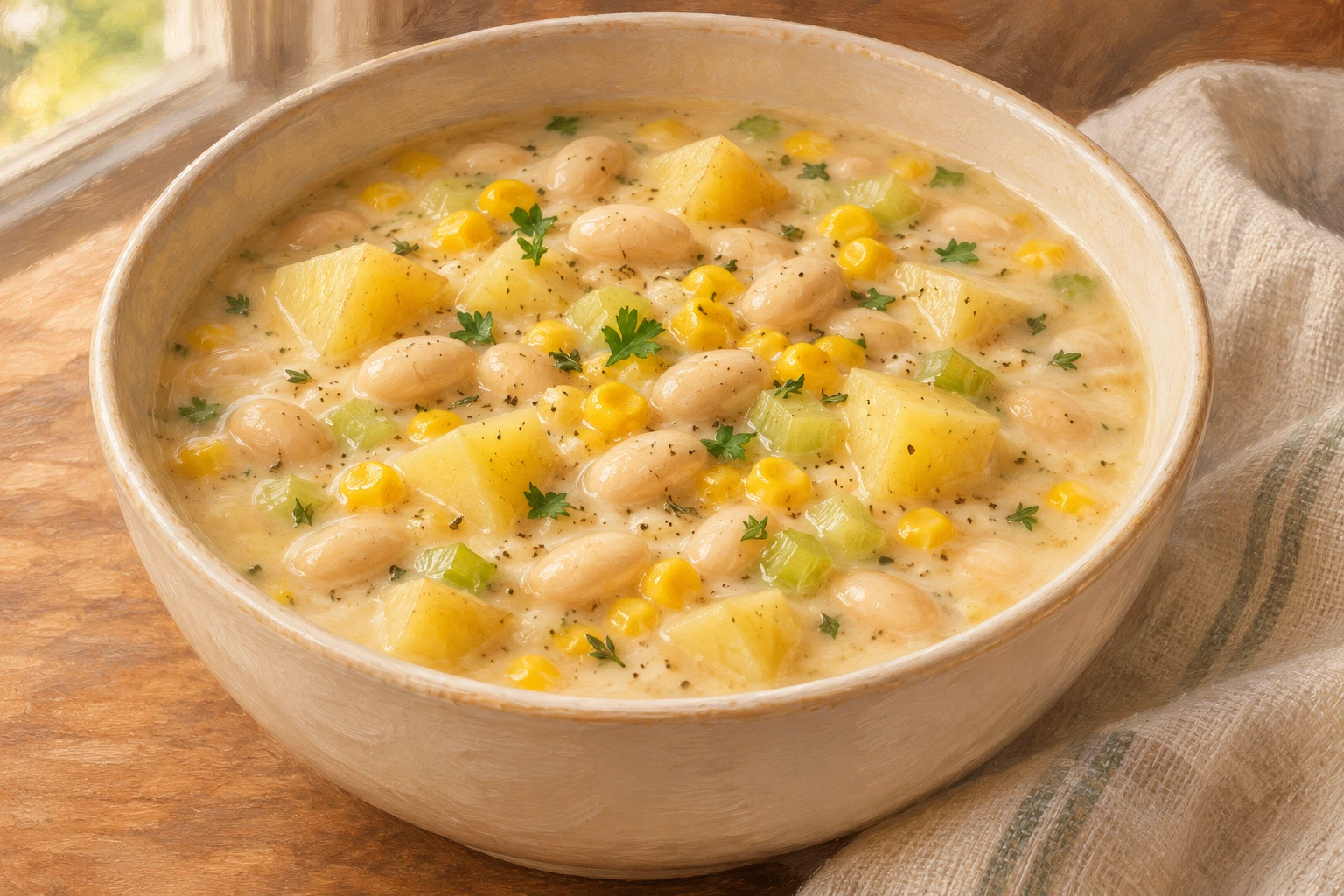
A creamy soup with several textures
The corn provides sweetness, but the broth should still taste savory. Onion and celery give it an aromatic base, thyme adds a quiet herbal note, and smoked paprika supplies a small amount of warmth and smoke rather than a strong chili flavor. Black pepper keeps the finish from feeling flat.
Cannellini beans have two jobs here. One can is mashed into the milk to thicken the broth; the other stays whole. Yukon Gold potatoes soften into creamy cubes while keeping a recognizable shape. The result should flow off a ladle easily, not stand up like mashed potatoes. Whole milk adds roundness without the heaviness of a cream-only base.
Why the preparation order matters
Cut the potatoes into fairly even ½-inch (1.25-centimeter) cubes so they finish together. Cook them in broth before adding the milk. This allows a steady simmer while they become tender, then gentler heating once the dairy enters the pot. Scrape the bottom as you stir: mashed beans and milk can settle and catch if the heat is too high.
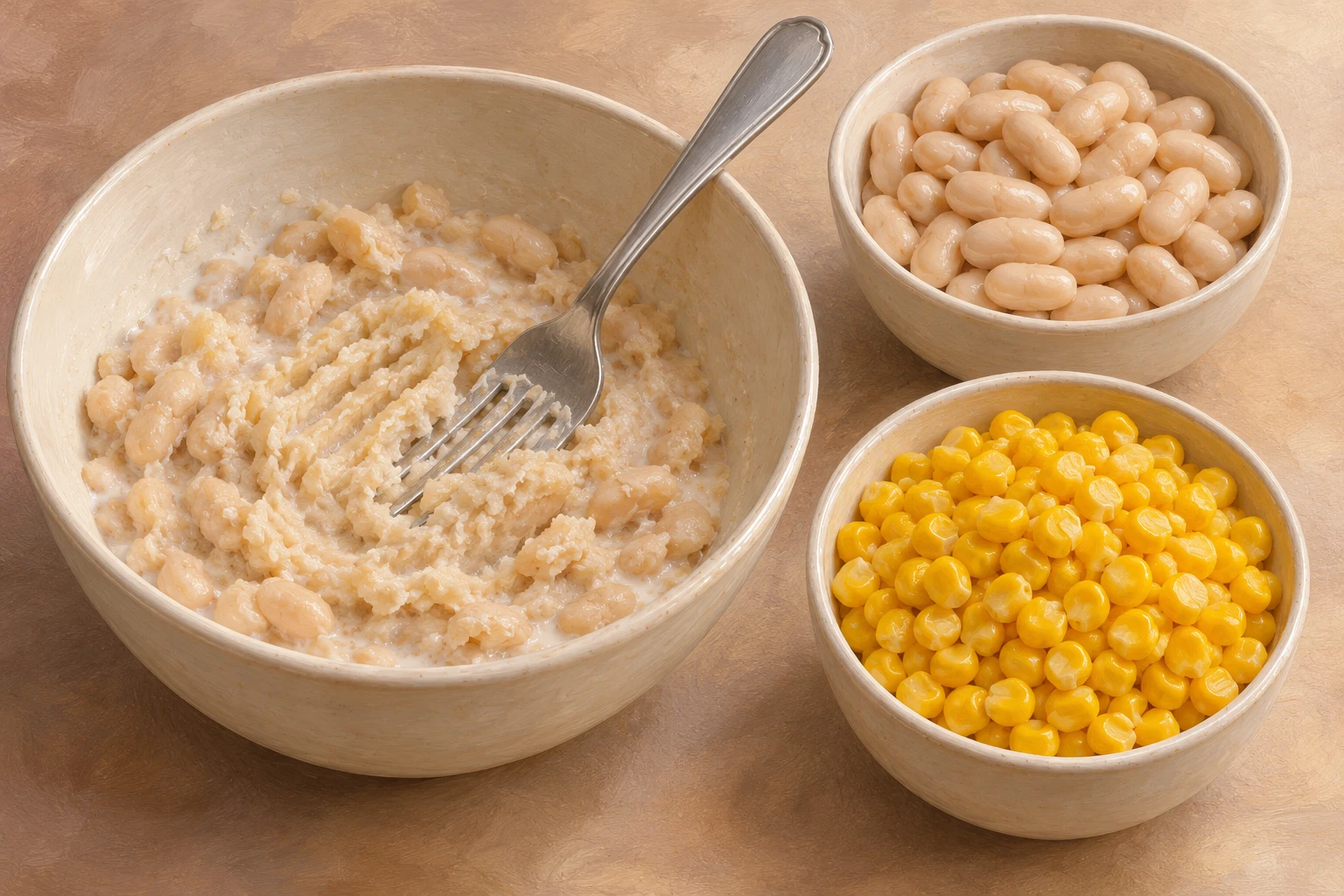
The bean mash needs only a fork. It can be a little rustic; small bean fragments are welcome. This avoids moving hot soup into a blender, and it leaves the corn kernels and the second can of beans intact.
Creamy Corn and White Bean Chowder
Yield: about 9 cups (2.1 liters); 6 servings of about 1½ cups (355 milliliters)
Prep: 15 minutes · Cook: about 35 minutes · Total: about 50 minutes
Method: stovetop
Times and finished volume are estimates. Potato size, evaporation and the amount of thinning liquid affect the result. The potatoes should be fully tender and the finished chowder hot throughout.
Equipment
- Large heavy-bottomed pot, at least 5 quarts (4.7 liters)
- Cutting board, knife, vegetable peeler and colander
- Medium bowl, fork, measuring cups and spoons, and kitchen scale if using weights
- Wooden spoon or heatproof spatula, ladle and instant-read food thermometer
Ingredients
- 2 cans cannellini beans, 15 ounces (425 grams) each, rinsed and drained; about 3 cups (510 grams) drained beans total, divided equally
- 1½ cups (360 milliliters) whole milk, divided: ½ cup (120 milliliters) for mashing and 1 cup (240 milliliters) for the pot
- 2 tablespoons (28 grams) unsalted butter
- 1 cup (150 grams) finely diced yellow onion
- ½ cup (65 grams) finely diced celery
- 3 medium garlic cloves, minced, about 1 tablespoon (9 grams)
- 1 teaspoon (1 gram) dried thyme
- ½ teaspoon (1 gram) smoked paprika
- ½ teaspoon (3 grams) fine salt
- ¼ teaspoon (0.5 gram) ground black pepper
- 3 cups (720 milliliters) low-sodium vegetable broth, plus up to 1 cup (240 milliliters) more if needed to thin
- 12 ounces (340 grams) peeled Yukon Gold potatoes, cut into ½-inch (1.25-centimeter) cubes
- 2 cups (300 grams) frozen corn kernels
- 2 tablespoons (8 grams) finely chopped fresh parsley, optional, for serving
Ingredient note: The potato weight is after peeling. Drained bean yields and broth salt levels vary; use the listed drained weight when measuring from a larger batch. Keep the milk refrigerated until needed.
Instructions
- Prepare the vegetables and bean mash. Rinse the potatoes, celery and parsley under running water before peeling or cutting. Drain and rinse the beans. In a medium bowl, mash half the beans, about 1½ cups (255 grams), with ½ cup (120 milliliters) milk using a fork. Aim for a coarse creamy paste with a few bean pieces remaining. Set aside briefly while you start the pot; refrigerate if your preparation is interrupted.
- Soften the aromatic vegetables. Melt the butter in the pot over medium heat. Add the onion and celery and cook for 6 to 7 minutes, stirring often, until softened. They should look glossy and the onion should become translucent, without dark browning. Stir in the garlic, thyme, smoked paprika, salt and black pepper for about 30 seconds, just until fragrant.
- Simmer the potatoes. Add 3 cups (720 milliliters) broth and the potato cubes. Bring to a boil, then lower the heat to a steady gentle simmer. Cook uncovered for 15 to 18 minutes, stirring occasionally, until a fork slips easily into the largest potato pieces. If the liquid reduces so much that the potatoes are no longer mostly covered, add a little of the extra broth.
- Add the corn, beans and milk. Stir in the frozen corn, the remaining whole beans, the bean-milk mash and the remaining 1 cup (240 milliliters) milk. Warm over medium-low heat for about 5 to 7 minutes, stirring frequently along the bottom, until the corn is cooked and the chowder is hot throughout. Follow any longer cooking requirement printed on the frozen corn package. Check that the chowder reaches at least 165°F (74°C) after stirring; avoid a prolonged hard boil, which can scorch the milk and break up the potatoes.
- Adjust the consistency. The chowder should lightly coat a spoon but still pour from a ladle. If too thick, add extra broth a little at a time, up to the remaining amount, and heat through again. For a thicker texture, gently mash a few potato cubes against the side of the pot, then stir. Taste only after the chowder is fully cooked; add additional salt or pepper only if your broth and preference call for it.
- Serve. Ladle into six bowls and sprinkle with the parsley if using. Stir the pot between servings so the corn, potatoes and whole beans are shared evenly. Serve promptly, or follow the hot-holding and cooling guidance below.
What to serve with corn and white bean chowder
Something crisp and tart: A green salad with sliced apple and a cider vinaigrette balances the creamy broth. A vinegar-dressed cabbage slaw also works, particularly if the chowder is part of a casual buffet. Keep the salad dressing brighter than the soup rather than adding another creamy side.
Bread for the bowl: Cornbread echoes the kernels in the chowder; a crusty roll provides a firmer contrast. Corn-scallion cakes are another corn-based side. None of these sides needs a heavy cheese topping. For a smaller lunch, serve half a roll alongside a bowl rather than building a second main course.
A simple finish: Baked apples or sliced pears keep dessert in the autumn mood; apple crisp is a richer option. If serving a richer dessert, offer a smaller chowder portion first. Unsweetened iced tea, hot tea or sparkling water with lemon are easy drink options.
Substitutions and allergen notes
- Great Northern beans: Substitute the same drained weight for cannellini beans. Mash half and keep half whole. Do not substitute dry beans directly; they must be fully cooked first.
- Canned corn: Use 2 cups (about 300 grams) well-drained kernels. The final heating step remains necessary, even though the corn is already cooked.
- Different potatoes: Red potatoes can be used in the same-sized cubes for a firmer result. Russet potatoes break down more readily, making the chowder thicker and less chunky.
- Dairy-free: Replace the butter with 2 tablespoons (30 milliliters) olive oil and use an unsweetened, unflavored plant-based milk you enjoy in savory dishes. Texture and flavor will differ. Check its label for soy, nuts or other allergens.
- More smoke or heat: Increase smoked paprika cautiously or offer hot sauce at the table. Avoid overwhelming the corn with a large amount of spice.
- Allergens: The base recipe contains milk. No wheat flour is used, but broth, seasonings and substitutions still need label checks and cross-contact controls before serving someone who must avoid gluten. Vegetable broth is required for the meatless version.
Make ahead, hold and reheat safely
One-day head start: Make the chowder, promptly divide it into shallow containers and refrigerate. It thickens as it stands, so plan to loosen it with a little broth when reheating. For a fresher finish, leave off the parsley until serving.
At the gathering: Keep hot chowder at 140°F (60°C) or above using suitable warming equipment and stir periodically. Otherwise refrigerate before it has spent 2 hours total outside safe hot or cold holding, or 1 hour total when the surrounding temperature is above 90°F (32°C). Serving or briefly returning it to refrigeration does not restart that clock. Keep the refrigerator at 40°F (4°C) or below and use shallow containers rather than cooling a full deep pot on the counter. These handling limits follow FoodSafety.gov guidance.
Refrigerated leftovers: Use safely cooled chowder within 3 to 4 days, consistent with federal leftover guidance. If using previously cooked ingredients instead of newly opened cans, count their earlier storage time too; turning them into soup does not reset that clock.
Reheat: Put only the portion you need in a saucepan, add a splash of broth if thick, and bring to a rolling boil while stirring frequently, then confirm it is hot throughout and at least 165°F (74°C). Reduce the heat promptly after boiling to limit scorching and separation. Check after stirring so you are not measuring only one hot spot. For the microwave, cover loosely, heat in short intervals and stir thoroughly between them, then check the temperature. The federal target for reheated leftovers is 165°F (74°C).
Freezing: For this recipe, aim to use frozen portions within 2 months for quality. Freeze only after prompt cooling, in sealed freezer-safe containers with room for expansion. Thaw in the refrigerator. Milk-based chowder can separate and potatoes can soften after freezing; stirring during gentle reheating helps bring the texture together, but it will not be identical to a fresh pot.
How to keep the texture right
Too thin: Mash a few cooked potato pieces or beans against the side of the pot. Give the soup a few minutes of gentle heat and stirring before deciding to thicken it further. Avoid dumping dry flour into the finished soup.
Too thick: Add broth in small amounts. A chowder that is loose enough in the pot will thicken slightly as it sits in the bowl, so stop before it becomes a dense puree.
Potatoes still firm: Continue the broth-only simmer before adding dairy. The shape and size of the cubes matter more than a stopwatch. Do not assume the corn-and-milk stage will finish large undercooked pieces.
Serving a larger group: Double the ingredients only if your pot safely accommodates the batch with room for stirring. Otherwise use two pots. Allow extra time to come to temperature, and cool leftovers in several shallow containers rather than one oversized vessel.
Keep the table simple: warm bowls, a crisp side and bread for anyone who wants it. The sweet corn and creamy beans give the soup its comfort; a thoughtful welcome gives the gathering its meaning.
Recent Posts
-
Standard vs. Deluxe Pulley-and-Eyebolt Assemblies: Threads and Rope Size
Standard and Deluxe pulley-and-eyebolt assemblies differ in more than their names. These two models …Nov 8th 2026 -
West Virginia Half-Staff Order Honors Jay Rockefeller Through November 13, 2026
Governor Patrick Morrisey issued a November 6, 2026 order lowering the U.S. and West Virginia flags …Nov 8th 2026 -
Replacing a Kansas Flag: Match Size and Attachment
A replacement Kansas flag should match more than the state design. Before ordering, record the flag …Nov 8th 2026