
Corn-Scallion Skillet Cakes
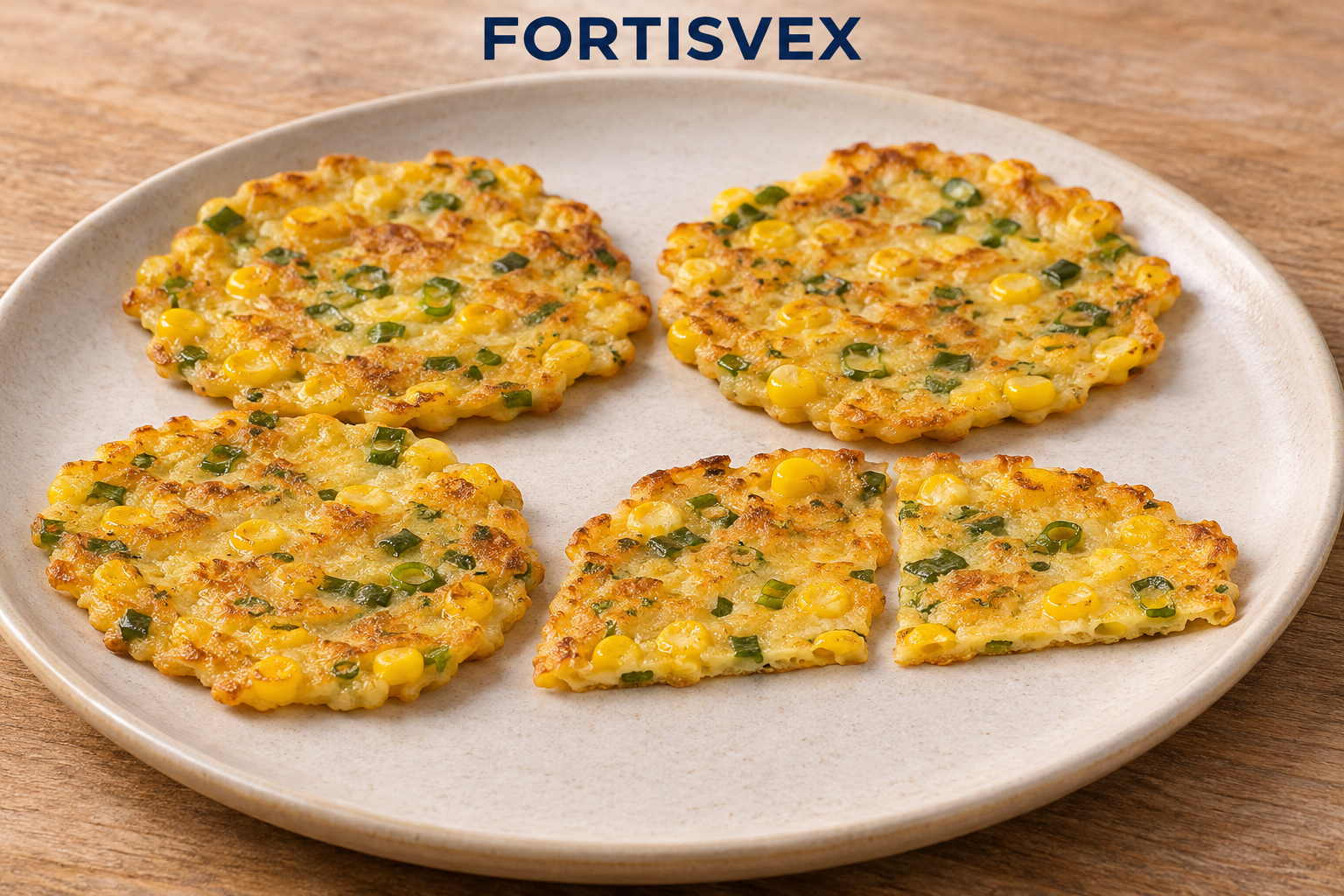
Sweet corn and sliced scallions give these small savory cakes a little texture in every bite. Cornmeal adds a gentle graininess, while flour and eggs hold the batter together. Cook them in shallow batches so there is room to slide a spatula underneath each cake.
Serve them warm alongside a salad or a bowl of soup. A small cake is easier to turn and check for doneness than a pan-sized pancake.
For a main-course option, consider our tofu and broccoli rice bowls with ginger-garlic sauce and serve a small portion of these cakes alongside. Both recipes need skillet time, so plan the batches to serve the food promptly. Check each recipe’s ingredients and allergen notes, and follow its own cooling and storage instructions.
For another vegetable dish on the table, consider lemon-parsley green beans. If you are planning dessert too, cinnamon apple-oat crisp offers a separate fruit-and-oat baking project. Plan those oven dishes separately from the skillet batches so the cakes can be served promptly.
Recipe at a Glance
- Yield: about 12 small cakes; 4 side-dish servings
- Preparation: about 15 minutes, plus any time needed to cook and cool the corn
- Cooking: approximately 20–30 minutes in batches
- Equipment: a 12-inch skillet, mixing bowls, spatula and a thin-tip food thermometer
Timing depends on the skillet and batch size. Use the cooking checks below rather than the clock alone.
Ingredients
- 1/2 cup all-purpose flour
- 1/2 cup fine cornmeal
- 1 1/2 teaspoons baking powder
- 1/2 teaspoon fine salt
- 1/4 teaspoon ground black pepper
- 2 large eggs
- 1/2 cup milk
- 1 1/2 cups cooked corn kernels, cooled and well drained
- 1/2 cup thinly sliced scallions, white and green parts
- 2 tablespoons neutral cooking oil, divided among batches
For canned corn, drain it thoroughly before measuring. For frozen or fresh corn, cook it according to its package directions or usual cooking instructions, then cool and drain before measuring. Do not assume frozen corn is ready to eat straight from the bag.
Allergens: Contains wheat, eggs and milk. Check packaged ingredients for additional allergen information. The cornmeal does not make this recipe gluten-free.
Make the Cakes
- Prepare the ingredients. Wash your hands and rinse the scallions under running water before slicing. Drain the cooked corn so excess liquid does not thin the batter.
- Mix the batter. Combine the flour, cornmeal, baking powder, salt and pepper in one bowl. In another, whisk the eggs with the milk, then stir in the corn and scallions. Fold the wet mixture into the dry mixture just until no pockets of dry flour remain. The batter should be spoonable, with visible kernels. Do not taste it raw.
- Warm the skillet. Heat the skillet over medium heat. Add 2 teaspoons of the oil and spread it across the cooking surface. The oil should be hot but not smoking.
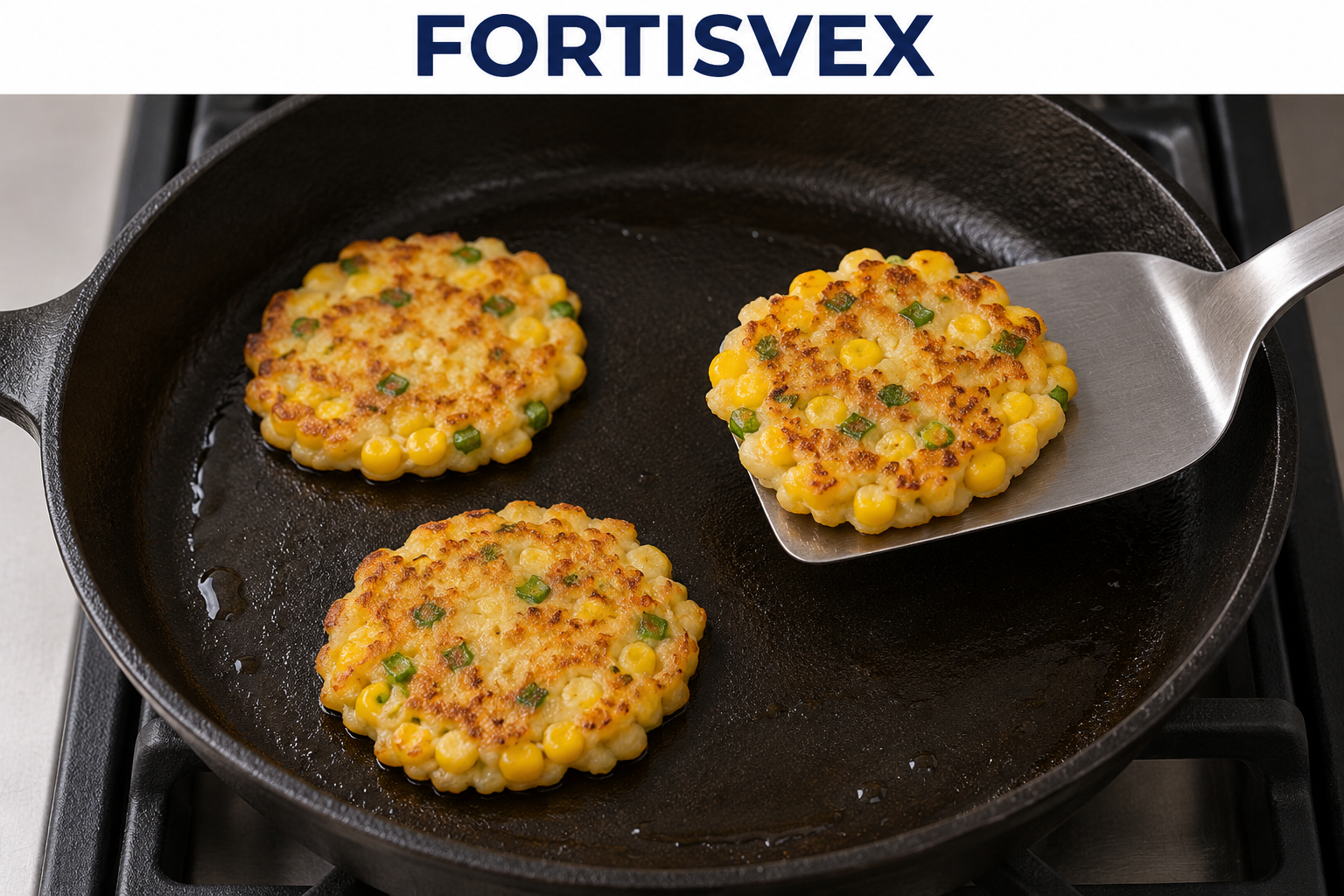
- Portion and cook. Scoop a scant 1/4 cup of batter for each cake. Gently spread each portion to roughly 3 inches across, keeping space between cakes. Start with three or four cakes per batch, depending on how much room your skillet provides. Cook for approximately 3–4 minutes, until the underside is golden and the cake holds together when lifted. Turn carefully and cook the other side for approximately 2–3 minutes.
- Check the center. Continue cooking until the center reaches at least 160°F. Insert a thin-tip thermometer from the side into the center without touching the skillet. The interior should be set, with no wet batter. Browning alone does not establish doneness. If the outside darkens before the center cooks, lower the heat and continue cooking.
- Finish in batches. Transfer cooked cakes to a clean plate and serve promptly. Divide the remaining 4 teaspoons of oil among the later batches as needed. Stir the batter gently before portioning so the corn stays distributed. Keep the remaining batter refrigerated if cooking is interrupted.
Getting the Texture Right
Well-drained corn helps keep the batter consistent. Avoid crowding the skillet or pressing hard on a cake while it cooks. If a cake resists lifting or breaks as you try to turn it, allow its base to set a little longer before sliding the spatula fully underneath. Lower the heat if the surface is becoming too dark.
The yield is approximate: kernels, scoop size and spreading affect the number of cakes. Keep later portions similar to the first batch so they cook at a comparable pace, while checking each batch for doneness.
Food Safety and Leftovers
Raw flour and eggs can carry harmful germs. Keep uncooked batter away from ready-to-eat food, and wash hands, bowls, utensils and surfaces after handling it. The CDC explains why raw batter should not be tasted.
The federal minimum-temperature chart specifies 160°F for egg dishes and 165°F for reheated leftovers. Refrigerate leftover cakes promptly in shallow containers within two hours, or within one hour when exposed to temperatures above 90°F. Keep the refrigerator at 40°F or below. Reheat the cakes to 165°F before serving.
Method Reference
The cornmeal-and-flour skillet method draws on Oregon State University Extension's Food Hero corn pancakes. This version adds scallions and uses its own ingredient proportions and batch instructions.
Recent Posts
-
Standard vs. Deluxe Pulley-and-Eyebolt Assemblies: Threads and Rope Size
Standard and Deluxe pulley-and-eyebolt assemblies differ in more than their names. These two models …Nov 8th 2026 -
West Virginia Half-Staff Order Honors Jay Rockefeller Through November 13, 2026
Governor Patrick Morrisey issued a November 6, 2026 order lowering the U.S. and West Virginia flags …Nov 8th 2026 -
Replacing a Kansas Flag: Match Size and Attachment
A replacement Kansas flag should match more than the state design. Before ordering, record the flag …Nov 8th 2026