

Smoky Black-Eyed Peas and Rice for a Relaxed New Year’s Gathering
Smoky Black-Eyed Peas and Rice for a Relaxed New Year’s Gathering
Start a New Year’s meal with a warm bowl of black-eyed peas, tender peppers and fluffy rice. Smoked paprika brings a gentle smoky flavor without meat, while a little cider vinegar brightens the peas just before serving. The rice cooks separately, so you can adjust its texture without overcooking the vegetables.
This is a practical pantry-friendly recipe for a casual lunch or buffet. It uses canned black-eyed peas rather than dried peas, and it keeps the heat optional so guests can add hot sauce at the table. It is not intended as a definitive version of any regional dish.
Recipe at a glance
- Yield: 4 main-dish servings
- Preparation: about 15 minutes
- Cooking: about 30 minutes, with rice and peas cooking at the same time
- Total: about 45 minutes; the rice package’s cooking time may change this estimate
- Equipment: covered saucepan for rice, wide 3-quart saucepan or deep skillet, colander, knife, cutting board, measuring cups and spoons; food thermometer for reheating
Ingredients
- 1 cup (185 g) uncooked regular long-grain white rice, plus water as directed on its package
- 2 tablespoons (30 mL) olive oil
- 1 medium yellow onion, diced, about 1 cup (150 g)
- 1 medium green bell pepper, seeded and diced, about 1 cup (150 g)
- 2 celery stalks, diced, about ¾ cup (90 g)
- 3 garlic cloves, finely chopped
- 1 teaspoon smoked paprika
- ½ teaspoon dried thyme
- ¼ teaspoon freshly ground black pepper
- 2 cans black-eyed peas, 15 ounces (425 g) each, drained and rinsed; can weights include liquid
- 1 cup (240 mL) low-sodium vegetable broth, plus a splash more if needed
- 1 bay leaf
- 1 tablespoon (15 mL) apple cider vinegar, with another teaspoon if desired
- ¼ teaspoon fine salt, then more only if needed after tasting
- 2 scallions, thinly sliced
- Optional: hot sauce for serving
Use plain canned peas without added meat. Broth, canned peas and hot sauce differ in salt content, so season lightly until the end. Approximate produce weights are preparation guides, not an exact shopping specification.
How to make it
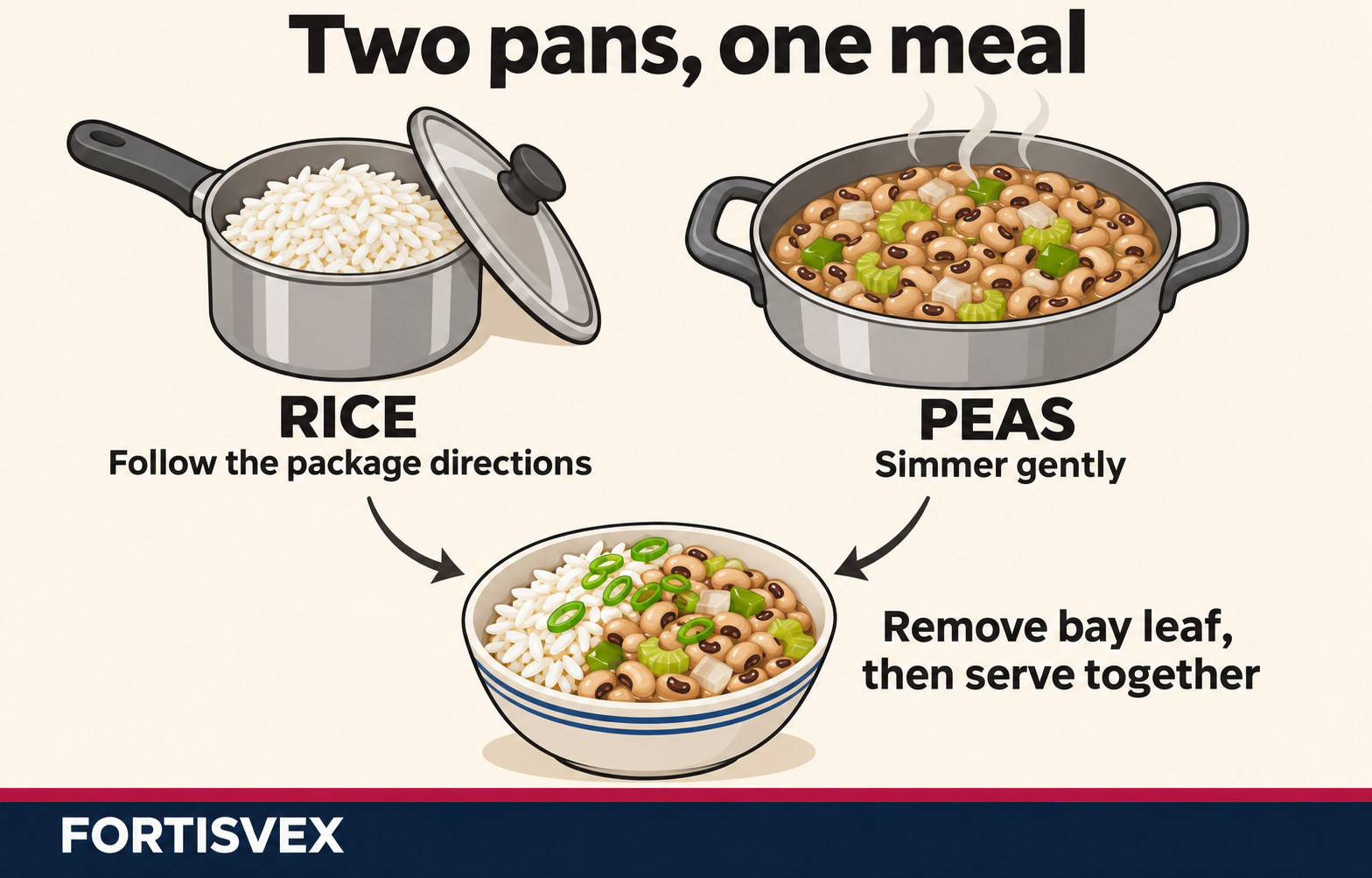
- Prepare the rice. Wash your hands with soap and water for at least 20 seconds. Rinse the whole vegetables and scallions under running water before cutting, and prepare them on a clean surface. Cook the rice in its own covered saucepan using the package’s water quantity and timing. Regular white rice is the intended choice; instant rice is not a direct time-for-time substitute. When the rice is tender, let it stand covered as directed, then fluff with a fork.
- Soften the vegetables. Meanwhile, warm the olive oil in the wide pan over medium heat. Add onion, bell pepper and celery. Cook for 8–10 minutes, stirring regularly, until softened and the onion looks translucent. Reduce the heat if the edges begin to scorch.
- Add the seasoning. Stir in garlic, paprika, thyme and black pepper. Cook for about 30 seconds, stirring, just until fragrant. Do not let the garlic or paprika burn.
- Simmer the peas. Add the drained peas, broth and bay leaf. Bring to a gentle simmer, then reduce the heat and simmer partially covered for 12–15 minutes. Stir gently once or twice. The canned peas should be hot throughout and tender but mostly intact; this is not a method for cooking raw dried peas.
- Adjust the texture. For a thicker spoonable sauce, mash a small spoonful of peas against the pan and stir it back in. If the pan looks dry, add broth a tablespoon at a time. If it is too watery, simmer uncovered for a few minutes. Aim for moist peas with a little broth to spoon over the rice, not a soup.
- Finish and serve. Remove the bay leaf. Stir in the vinegar and ¼ teaspoon salt, then taste before adding more. Divide the rice and peas among four bowls. Scatter scallions over the top and pass hot sauce separately.
Flavor, texture and useful substitutions
The peas supply a creamy center, the vegetables give a soft bite, and separately cooked rice provides contrast. Vinegar balances the earthy peas and smoky seasoning; add it in small amounts rather than making the dish sharply sour.
Red bell pepper can replace green for a sweeter flavor. Regular paprika can replace smoked paprika, but the dish will lose its smoky note. Cook brown rice separately according to its own package, starting it earlier because it may take longer. Do not put dried or frozen black-eyed peas directly into this canned-pea method: their cooking needs differ.
For dietary needs, inspect every packaged ingredient. Broth and sauces can contain wheat, soy or other allergens, and ingredient formulations vary. The ingredient list does not intentionally include dairy, eggs, nuts, fish or shellfish, but that is not an allergy or cross-contact guarantee. Choose appropriate products and clean equipment for the people you are serving.
Serving a relaxed holiday meal
Serve the bowls with a crisp green salad or roasted vegetables. For another vegetable side, consider cranberry-orange roasted carrots. Keep garnishes and hot sauce separate so each guest can choose a mild or brighter bowl.
For a longer gathering, a small cup of corn and white bean chowder can be an alternative for guests who prefer soup rather than an additional full main course. Hosting breakfast the next morning? Plan a separate batch of cranberry-orange breakfast scones rather than relying on a crowded same-day cooking schedule.
For a buffet, keep both rice and peas hot at 140°F (60°C) or above. Otherwise, follow the two-hour or one-hour limit below. Set out smaller portions and replenish as needed rather than leaving a large batch at room temperature.
Make-ahead, storage and reheating
Chop the vegetables ahead and refrigerate them in a covered container. The pea mixture can also be cooked ahead; keep it separate from the rice so the rice does not absorb all the sauce. Treat cooked rice and peas as perishable leftovers.
Following FoodSafety.gov safe-handling guidance, divide cooked food into shallow containers and refrigerate promptly at 40°F (4°C) or below. Do not leave it out longer than two hours, or one hour when the surrounding temperature is above 90°F (32°C). Use refrigerated leftovers within 3–4 days. Freeze promptly if you will not use them in that window; thaw in the refrigerator before reheating.
Reheat only the portions you need. Add a splash of water to rice and a little broth to peas, cover loosely as appropriate for the method, and stir for even heating. FoodSafety.gov recommends reheating leftovers to 165°F (74°C); check several places with a food thermometer. Reheating does not make food safe after improper storage, so discard portions left out too long.
Recent Posts
-

Poland and Indonesia: Check the Top Band Before the Size
Poland and Indonesia both use red and white in two equal horizontal bands. The quickest distinction …Nov 18th 2026 -

Sweden and Finland: Compare the Crosses at the Same Height
Sweden’s yellow cross on blue and Finland’s blue cross on white share a familiar arrangement: the up …Nov 18th 2026 -
Charcoal-Kettle Savoy Cabbage Wedges with Mustard Vinaigrette
Savoy cabbage’s crinkled leaves catch a little oil and brown at their edges, while the thicker base …Nov 18th 2026