
Oven-Roasted Brussels Sprouts with Lemon
Brussels sprouts make a useful vegetable side when you want something warm and savory without another sauce to prepare. This version uses a simple oven roast and a small lemon finish. The important preparation choice is giving the sprouts room on the pan rather than turning the tray into a deep pile.
Use it beside a main dish, or build a vegetable-focused spread with a contrasting side. For a different flavor alongside it, consider cranberry-orange roasted carrots. Read both oven schedules before starting; sharing an oven does not mean two recipes will finish at the same time.
Oven-Roasted Brussels Sprouts with Lemon
Yield: 6 side servings. Planning time: about 10 minutes preparation, 20–30 minutes roasting, plus oven preheating. These are planning estimates; use the tenderness and browning checks below.
Ingredients
- 6 cups Brussels sprouts
- 1 tablespoon vegetable oil
- ⅛ teaspoon salt
- ⅛ teaspoon ground black pepper
- 1 teaspoon lemon juice
Method
- Wash your hands. Heat the oven to 400°F. Rinse the sprouts, trim their stem ends and remove damaged outer leaves. Halve large sprouts from stem to top; small sprouts can stay whole.
- Toss the sprouts with the oil, salt and pepper. Spread them in one layer on a large rimmed baking sheet.
- Roast for 20–30 minutes, stirring after 10–15 minutes. Check for browned surfaces and a tender center before removing the pan.
- Drizzle with the lemon juice, toss gently and serve warm.
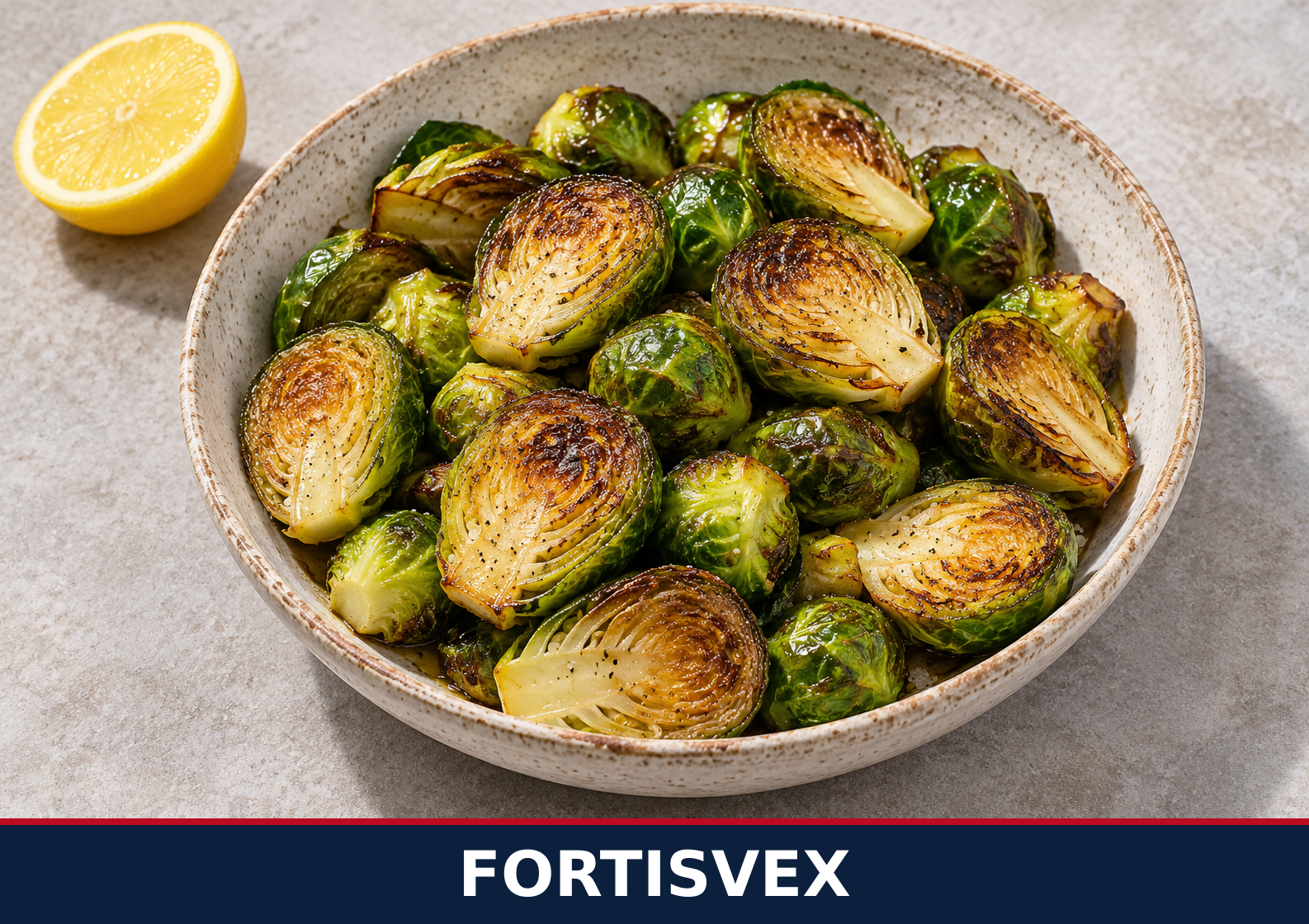
The basic quantities and roasting method follow the Nutrition.gov Brussels sprouts recipe. The notes below focus on pan space, size differences and serving the side alongside a main dish.
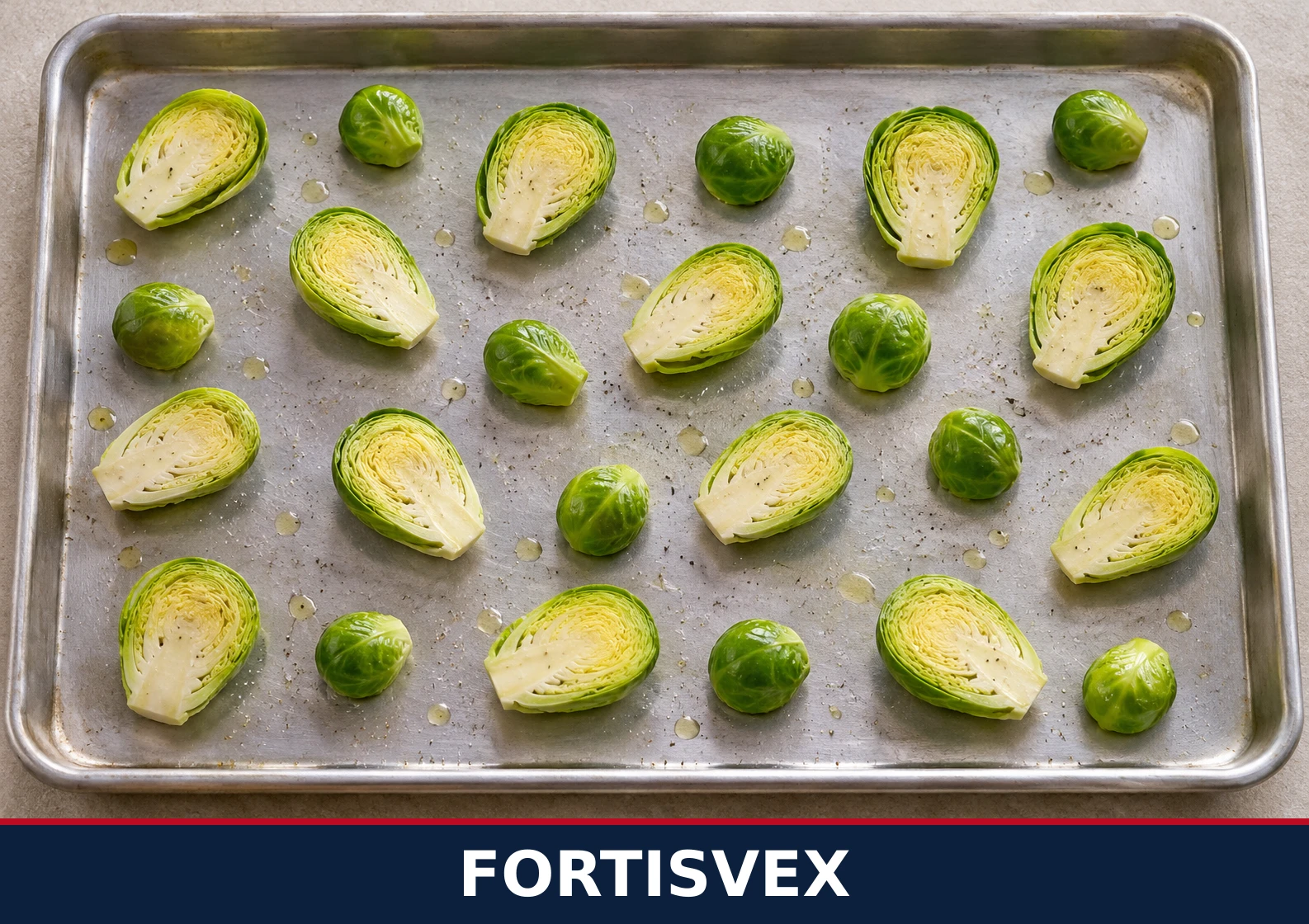
Make the preparation work for the sprouts you have
Look at the size differences before cutting. A bag can contain both small and much larger sprouts, so “halve every piece” is not the rule in this recipe. Keep the small ones whole and halve the larger ones as directed. Trim only what needs removing rather than cutting away so much of the base that the entire sprout separates.
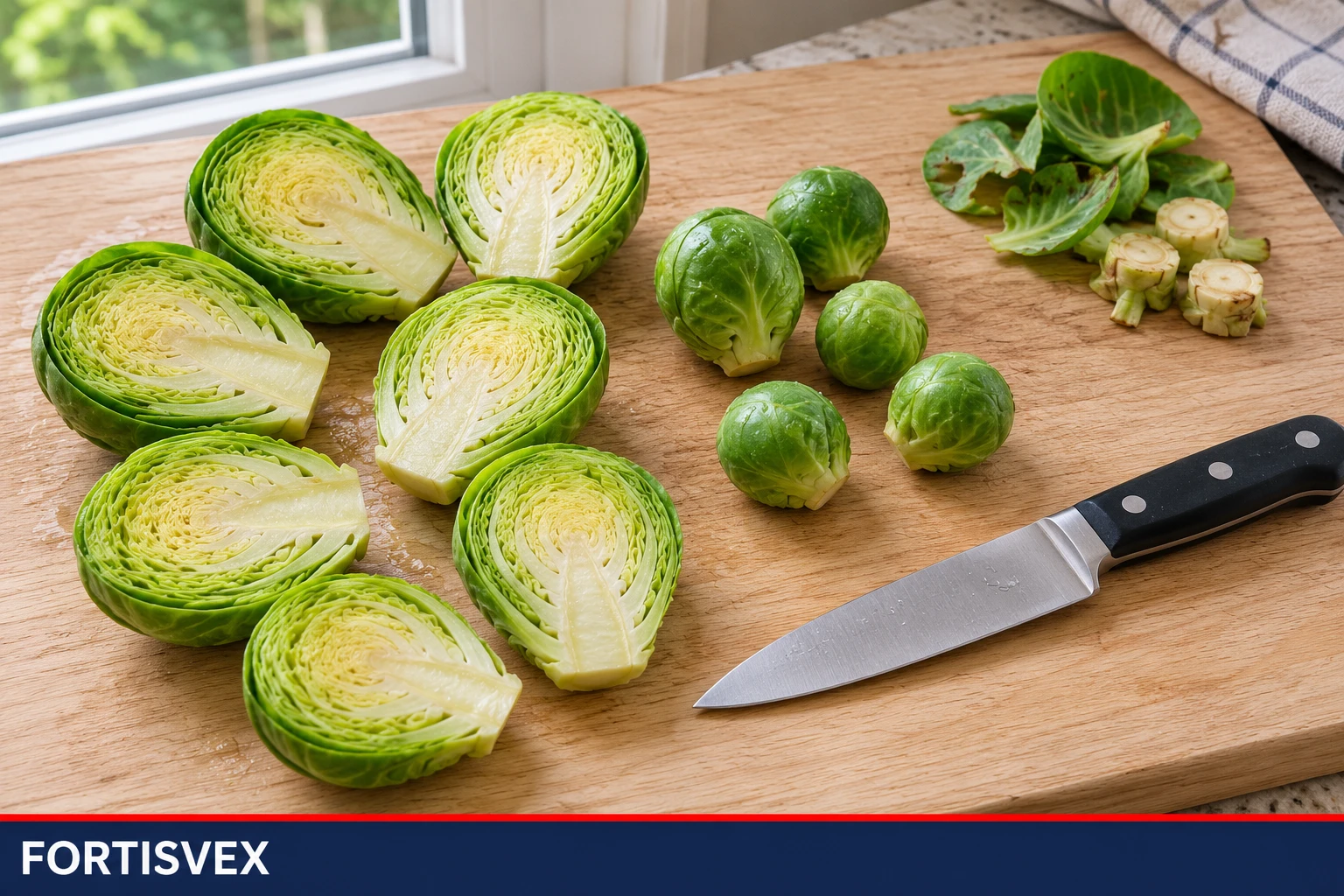
Use the first stir as a checkpoint, not an automatic signal that cooking is nearly finished. Turn a few pieces, look at their surfaces and continue until the centers are tender. If a fork meets a firm center, the browned exterior alone is not the endpoint. Oven performance, pan size and the sprouts themselves can change the timing.
Plan a meal, not just one tray
For a more substantial vegetable-and-legume option at another meal, the butternut squash and chickpea bowls offer a different preparation and sauce. Keep that recipe separate rather than combining its ingredients with this pan and assuming the instructions still apply.
If you are serving the sprouts with Weber charcoal-kettle shrimp with lemon and parsley, keep the vegetables in this oven method and follow the shrimp’s own cooking and food-safety instructions. Use separate clean utensils and preparation surfaces for produce and raw seafood. Neither dish’s timing is a substitute for checking the other.
Store and reheat safely
Put leftovers into shallow containers and refrigerate promptly, within two hours or within one hour when the surrounding temperature exceeds 90°F. Keep the refrigerator at 40°F or below. Use refrigerated leftovers within three to four days, and reheat them to 165°F. If holding cooked food hot for service, keep it at 140°F or above. These limits come from FoodSafety.gov’s serving and leftover guidance.
Store the sprouts separately from a main dish when that makes portions easier to manage. Label the container with the preparation date instead of relying on memory. Reheat only the portion you intend to serve, and expect leftover vegetables to have a different texture from the freshly roasted batch.
Recent Posts
-

Poland and Indonesia: Check the Top Band Before the Size
Poland and Indonesia both use red and white in two equal horizontal bands. The quickest distinction …Nov 18th 2026 -

Sweden and Finland: Compare the Crosses at the Same Height
Sweden’s yellow cross on blue and Finland’s blue cross on white share a familiar arrangement: the up …Nov 18th 2026 -

Charcoal-Kettle Savoy Cabbage Wedges with Mustard Vinaigrette
Savoy cabbage’s crinkled leaves catch a little oil and brown at their edges, while the thicker base …Nov 18th 2026