
Weber Charcoal Kettle Shrimp Skewers with Lemon-Parsley Dressing
A hot kettle can turn a tray of shrimp into dinner in minutes, but the preparation needs to happen before the skewers reach the grate. This recipe keeps the shrimp together on metal skewers, cooks them over direct heat, and adds a fresh lemon-parsley dressing on a clean serving platter. There is no long marinade or sugary glaze to manage over the coals.
For a cookout with several courses, these quick skewers can follow a longer cook such as FORTISVEX’s kettle pulled pork with mustard-cider dressing. Establish a fresh, hot cooking zone before starting the shrimp; the fire left after a long smoke may be too weak.
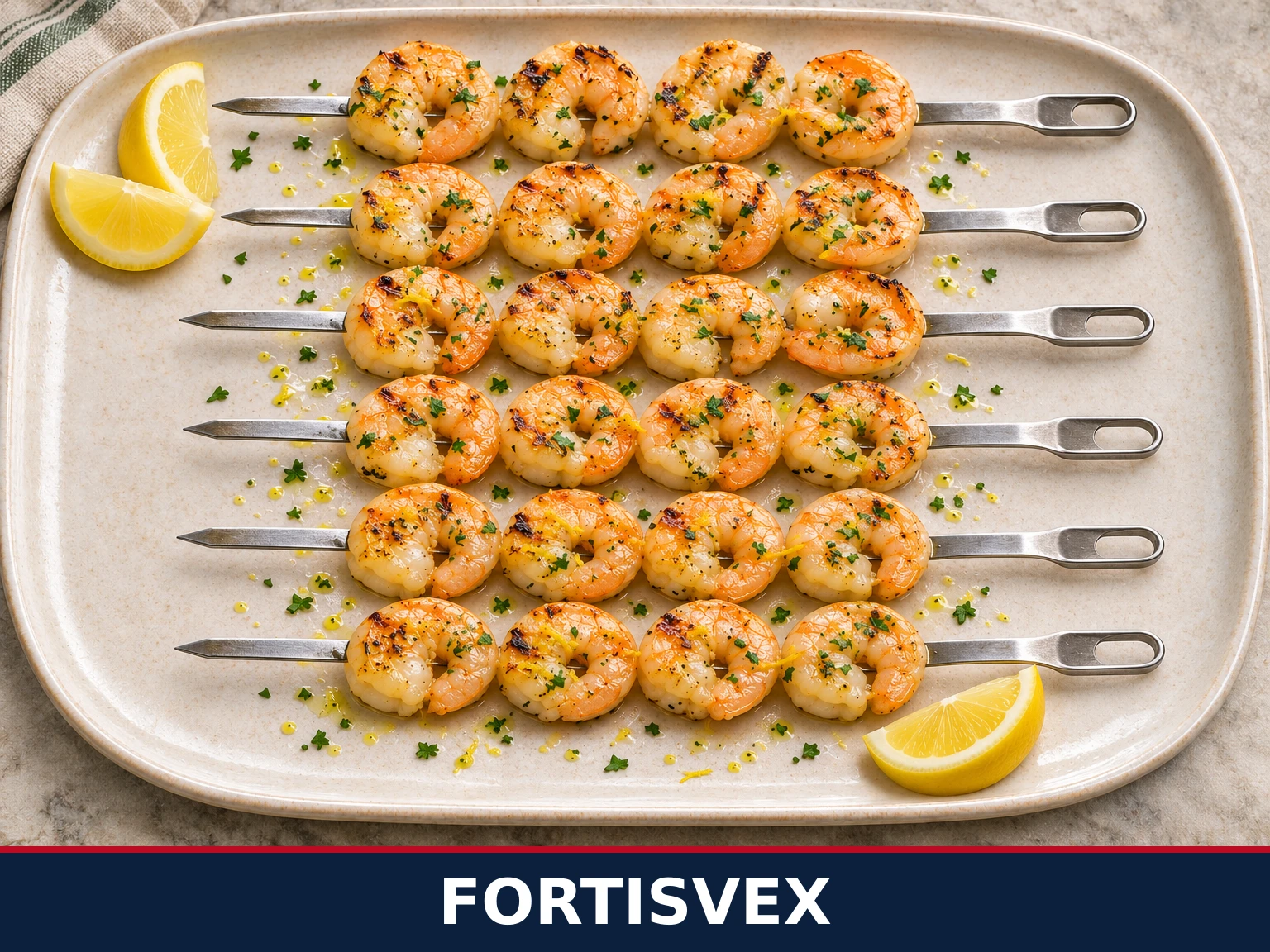
Recipe at a glance
Serves 4 as a main with sides. Preparation: about 20 minutes. Fire lighting and preheating: allow 25–35 minutes, overlapping preparation. Grilling: approximately 3–5 minutes per batch, with doneness taking priority over the clock. Allow about 45 minutes overall, excluding thawing; a second batch adds time.
Ingredients
- 1 1/2 pounds raw shrimp, 16–20 count per pound, peeled and deveined, tails removed; use the prepared shrimp weight
- 3 tablespoons olive oil, divided
- 1 teaspoon finely grated lemon zest
- 2 tablespoons fresh lemon juice
- 2 tablespoons finely chopped flat-leaf parsley
- 1 small garlic clove, finely grated
- 3/4 teaspoon fine salt, divided, or less if the shrimp package lists added salt
- 1/4 teaspoon freshly ground black pepper
- 1 lemon, cut into wedges, for serving
The specified size gives roughly 24–30 shrimp. Buy by the package’s count range rather than a label such as “jumbo.” Smaller shrimp need earlier checks; much larger shrimp may take longer. Do not substitute cooked shrimp into these raw-shrimp instructions.
Equipment and setup
Use a Weber charcoal kettle, charcoal and a chimney starter suited to its instructions, long tongs, heat-resistant grill gloves, 6–8 flat metal skewers, and a thin-tip instant-read thermometer. Have a clean serving platter and a separate tray for the raw skewers. Metal handles become hot; leave room to lift them with tongs or protected hands.
Light the charcoal outdoors in a clear, ventilated area, following the kettle and starter instructions. When ready, arrange the burning coals beneath roughly half to two-thirds of the charcoal grate, leaving an area without coals. Fit the cooking grate, close the lid, and preheat. Aim for direct high heat, roughly 450–550°F; the lid gauge is an estimate of the chamber, not a reading of the shrimp. Clean the cooking grate before adding food.
This is a short direct-heat cook. The empty side gives you somewhere to move a skewer if dripping oil causes a flare-up. Do not copy the low-and-slow schedule in the FORTISVEX kettle brisket guide; thick cuts and small shellfish need different handling.
Prepare everything before grilling
- Thaw frozen shrimp overnight in the refrigerator. For faster thawing, use a sealed bag in cold water and cook promptly. Keep the shrimp at 40°F or below until preparation. Pat them dry and return them to the refrigerator while making the dressing.
- In a clean bowl, mix 2 tablespoons olive oil with the lemon zest, lemon juice, parsley, garlic, and 1/4 teaspoon salt. Set this dressing aside, protected from raw seafood and its utensils. It is a finishing dressing, not a marinade.
- Toss the shrimp with the remaining tablespoon of oil, remaining 1/2 teaspoon salt, and the pepper. Thread them through the thick body and near the tail end onto the flat skewers, without squeezing them tightly together. Divide the shrimp evenly among enough skewers to fit your grate.
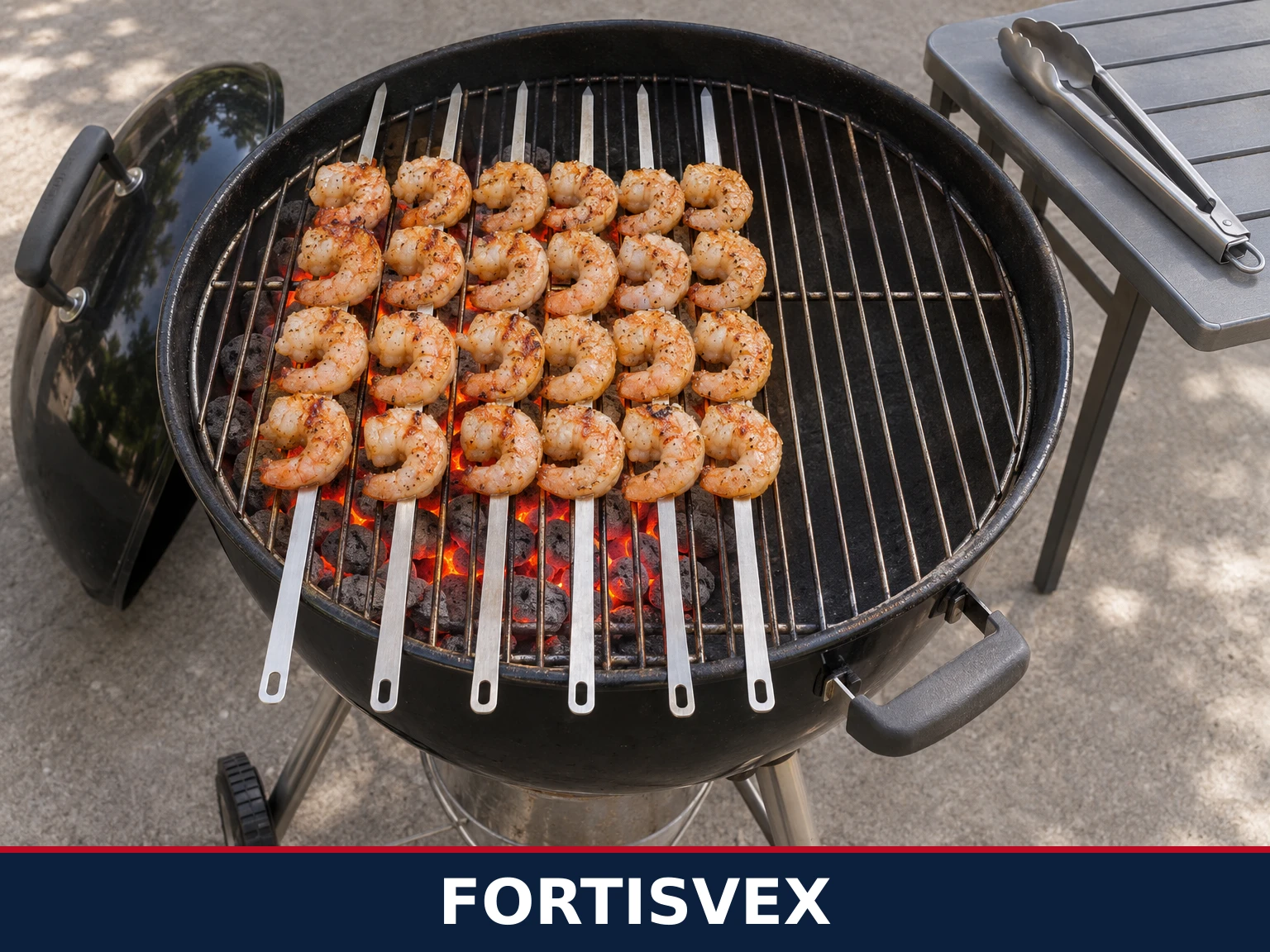
Grill, check, and dress
- Lay the skewers over the coals in one layer. Close the lid between checks. Turn once after about 2 minutes, using tongs; start checking smaller pieces earlier. Expect roughly 3–5 minutes total, but do not remove shrimp solely because the timer rings.
- Check the thickest shrimp with a thin-tip thermometer, inserting it into the center without touching the metal skewer. Cook to at least 145°F. The flesh should also be firm, pearly, and opaque through the center. Check more than one skewer, especially across hotter and cooler parts of the grate. Move pieces away from flare-ups and continue cooking any translucent centers.
- Transfer finished skewers to the clean platter. Spoon the reserved dressing over the cooked shrimp and serve immediately with lemon wedges. If cooking in batches, keep raw skewers refrigerated until their turn and use clean utensils for the finished food.
Make it a meal
Serve with bread and a tomato-cucumber salad, or with rice prepared separately. Put those sides on the table before grilling: shrimp lose heat quickly, and leaving them over the coals while arranging the rest of dinner can make them tough. For another menu, browse the FORTISVEX blog for more cooking and gathering ideas.
Small adjustments that help
If the exterior colors before the center is done, move the affected skewers to the area without coals, close the lid, and continue checking. If the shrimp stick at the first turn, ease them loose with tongs rather than tearing them away. Avoid adding extra oil directly over the fire. Keep the lemon dressing off the raw-seafood tray so none needs to be recovered or reused after contact.
For a milder dressing, use half the garlic; for more lemon flavor, add zest rather than leaving raw shrimp in acid for an extended period. These changes affect seasoning, not the cooking endpoint.
Safe handling and leftovers
Wash hands and clean utensils and surfaces after handling raw seafood. Refrigerate leftovers in shallow containers within 2 hours, or within 1 hour when the air temperature exceeds 90°F. Reheat leftovers to 165°F. This recipe contains crustacean shellfish; check all packaged ingredients for other allergens.
Technique and safety references
The direct-heat skewer method and approximate grilling window are informed by Weber’s shrimp-skewer technique. The dressing, quantities, and article are original editorial development. Seafood storage, thawing, separation, and doneness guidance follows the FDA seafood safety guidance. Reheating follows FoodSafety.gov’s temperature chart.
Recent Posts
-
Poland and Indonesia: Check the Top Band Before the Size
Poland and Indonesia both use red and white in two equal horizontal bands. The quickest distinction …Nov 18th 2026 -

Sweden and Finland: Compare the Crosses at the Same Height
Sweden’s yellow cross on blue and Finland’s blue cross on white share a familiar arrangement: the up …Nov 18th 2026 -
Charcoal-Kettle Savoy Cabbage Wedges with Mustard Vinaigrette
Savoy cabbage’s crinkled leaves catch a little oil and brown at their edges, while the thicker base …Nov 18th 2026