
Charcoal Weber Kettle Brisket Flat with Pepper-Coriander Bark
A brisket flat is easier to fit on a kettle than a large whole packer, but its lean edges need attention. This version builds bark first, then uses a foil wrap with a small amount of stock to finish gently. Serves 8–10. Allow 30 minutes preparation and a broad 7–11-hour cooking window, followed by a monitored 30–45-minute rest. This is a planning allowance, not a promised finish time.
An original FORTISVEX recipe formulation informed by published Weber charcoal methods and USDA safety guidance. This recipe is inspired by charcoal-kettle barbecue. Timing is an estimate and a thermometer governs doneness.
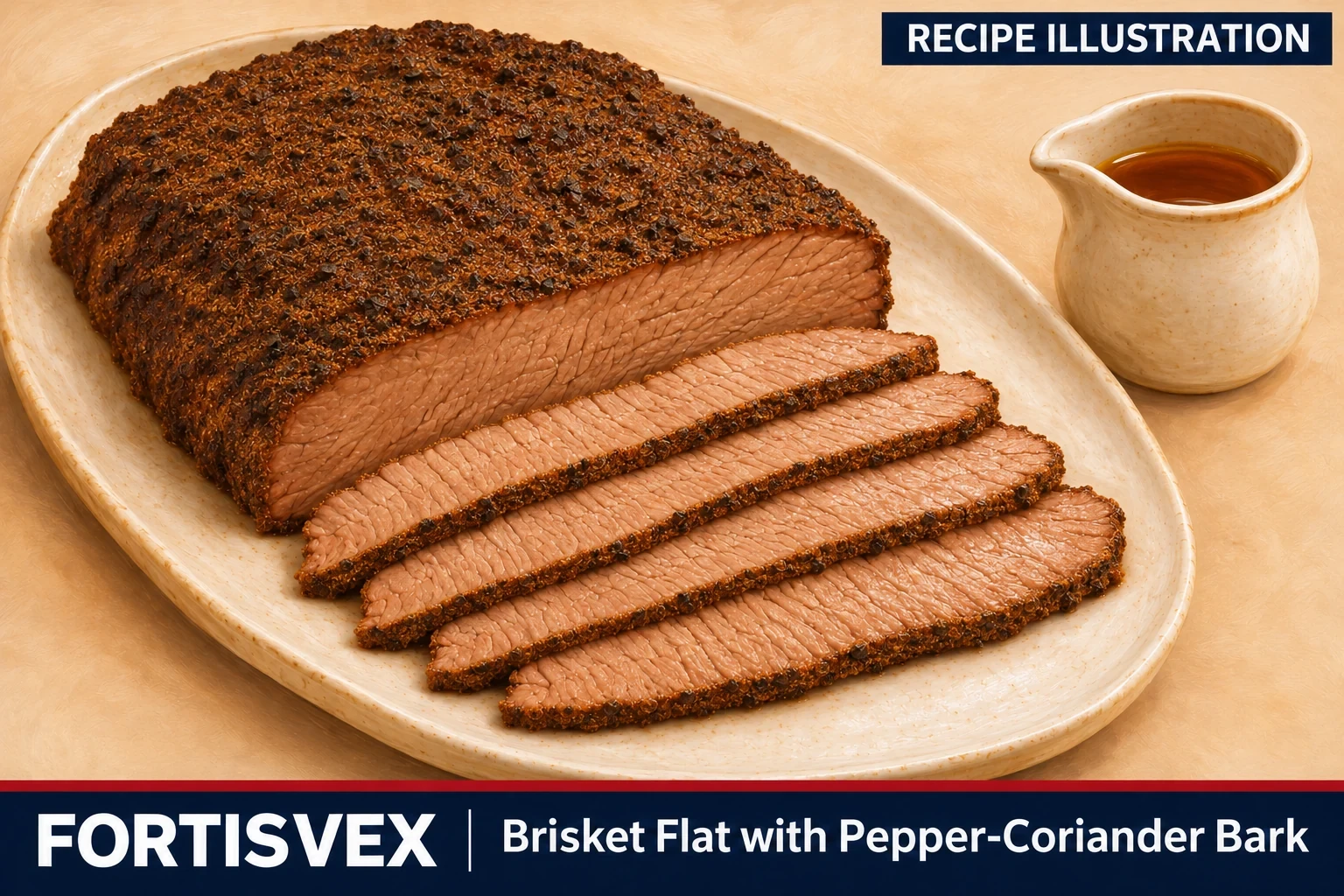
Ingredients
- One 5–6 lb beef brisket flat with an even thickness where possible
- 18 g kosher salt
- 2 tbsp coarse black pepper
- 2 tsp ground coriander
- 1 tsp garlic powder
- 1 tbsp neutral oil
- ½ cup unsalted beef stock
- Charcoal briquettes and two small food-smoking oak or hickory chunks
Equipment
Charcoal Weber kettle large enough for the stated indirect area; charcoal and chimney starter; grate-level grill thermometer; instant-read food thermometer; long tongs; heatproof gloves; clean tray and board. Add a drip pan, foil and small grill-safe saucepan where the instructions call for them. All temperatures below are Fahrenheit.
Method
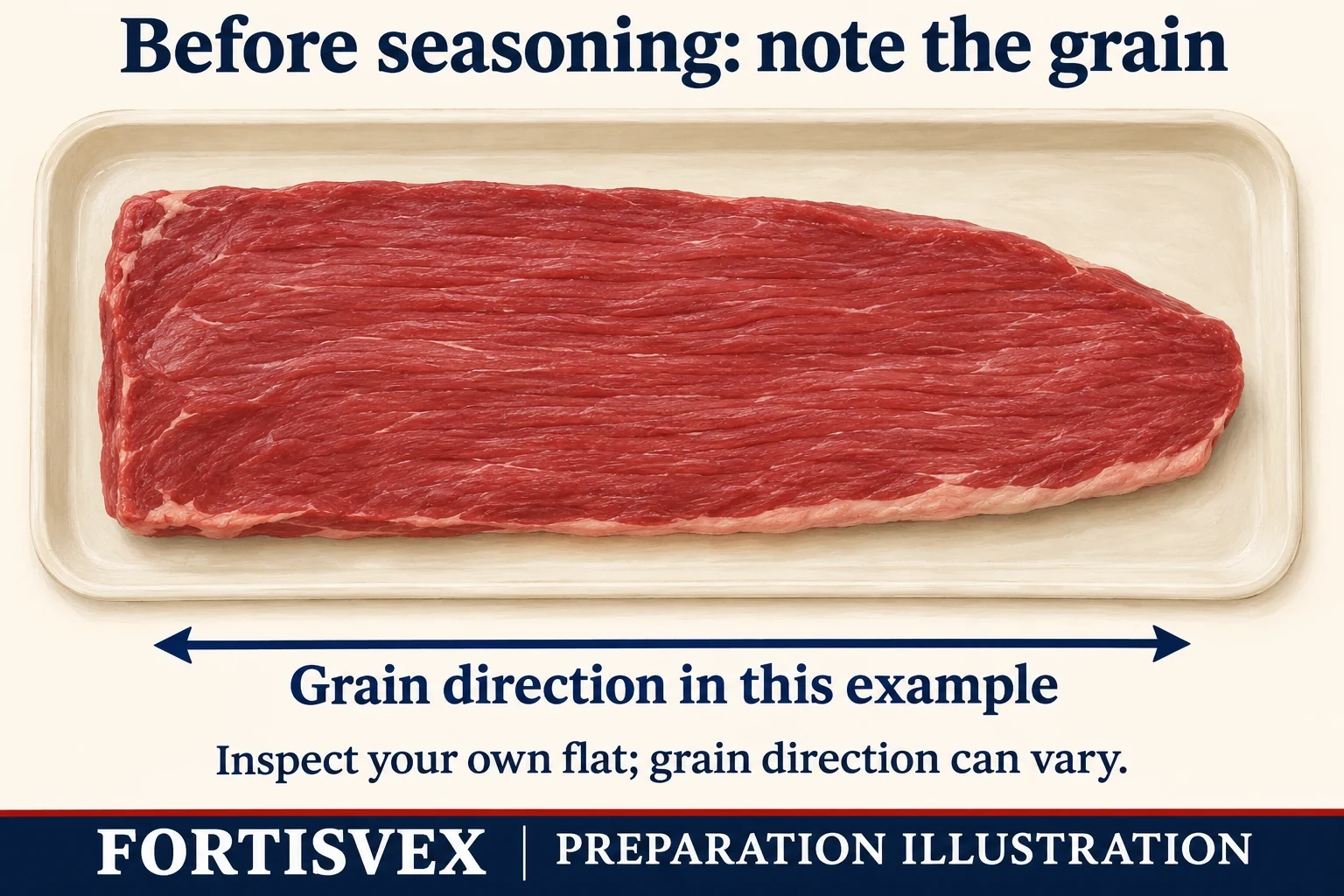
- Trim and note the grain. Remove hard lumps of fat and loose thin flaps, keeping a modest, even fat cover rather than cutting into the meat. Before seasoning, note which direction the grain runs; a small photograph can help when the bark later obscures it. Combine the salt and spices, oil the brisket lightly and coat it evenly. Refrigerate until the kettle is ready.
Note the grain before seasoning; inspect your own brisket because its grain direction can vary. - Prepare a sustained indirect fire. Use a charcoal snake around part of the kettle perimeter, with the two ends separated so the fire cannot shortcut. Put a drip pan in the center and leave the meat clear of burning coals. Light one end with a small group of fully lit briquettes, following your kettle manual. Place the smoking chunks near the early part of the fuel path. Stabilize the cooking area near 250–275°F with a grate-level probe; adjust vents in small increments rather than assuming one fixed setting fits all weather.
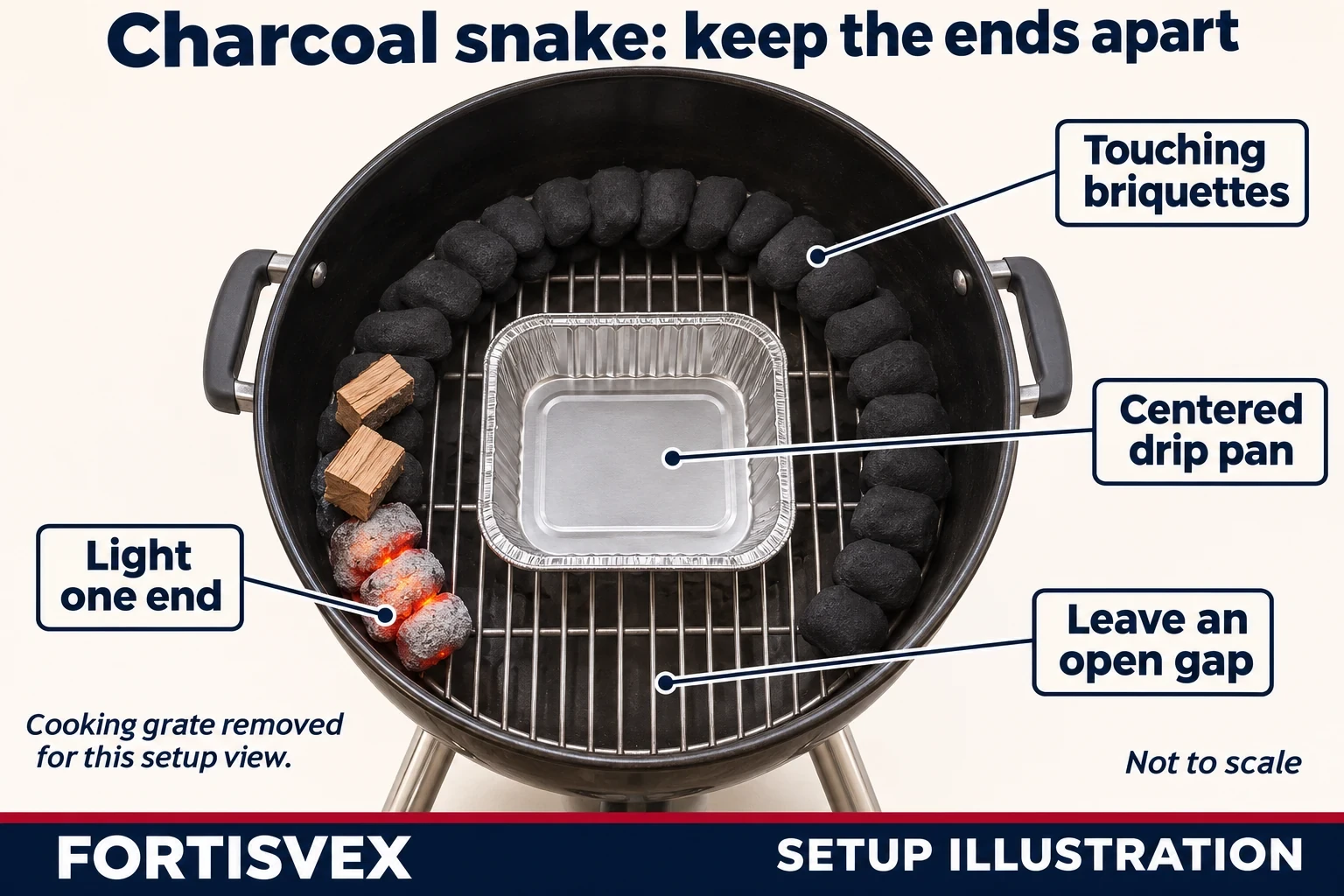
Keep the fuel path continuous but its ends apart. Setup illustration with the cooking grate removed; follow your kettle manual for lighting and cooking. - Cook until the bark is established. Place the flat over the pan. Keep the lid closed between necessary checks. Watch the grate temperature and replenish fuel safely before the fire dies. Rotate the meat away from a nearby burning section if one edge is darkening much faster. A slowing internal-temperature rise is not permission to leave the cook unattended or stop and resume it tomorrow.
- Wrap when the surface is ready. When the seasoning has formed a firm bark that does not wipe away readily, often around 165–175°F internally, place the meat on two overlapping sheets of heavy foil. Add the stock around—not over—the bark and seal the packet. Return it to indirect heat. Use gloves and a rimmed tray to contain hot liquid; keep foil away from direct flame.
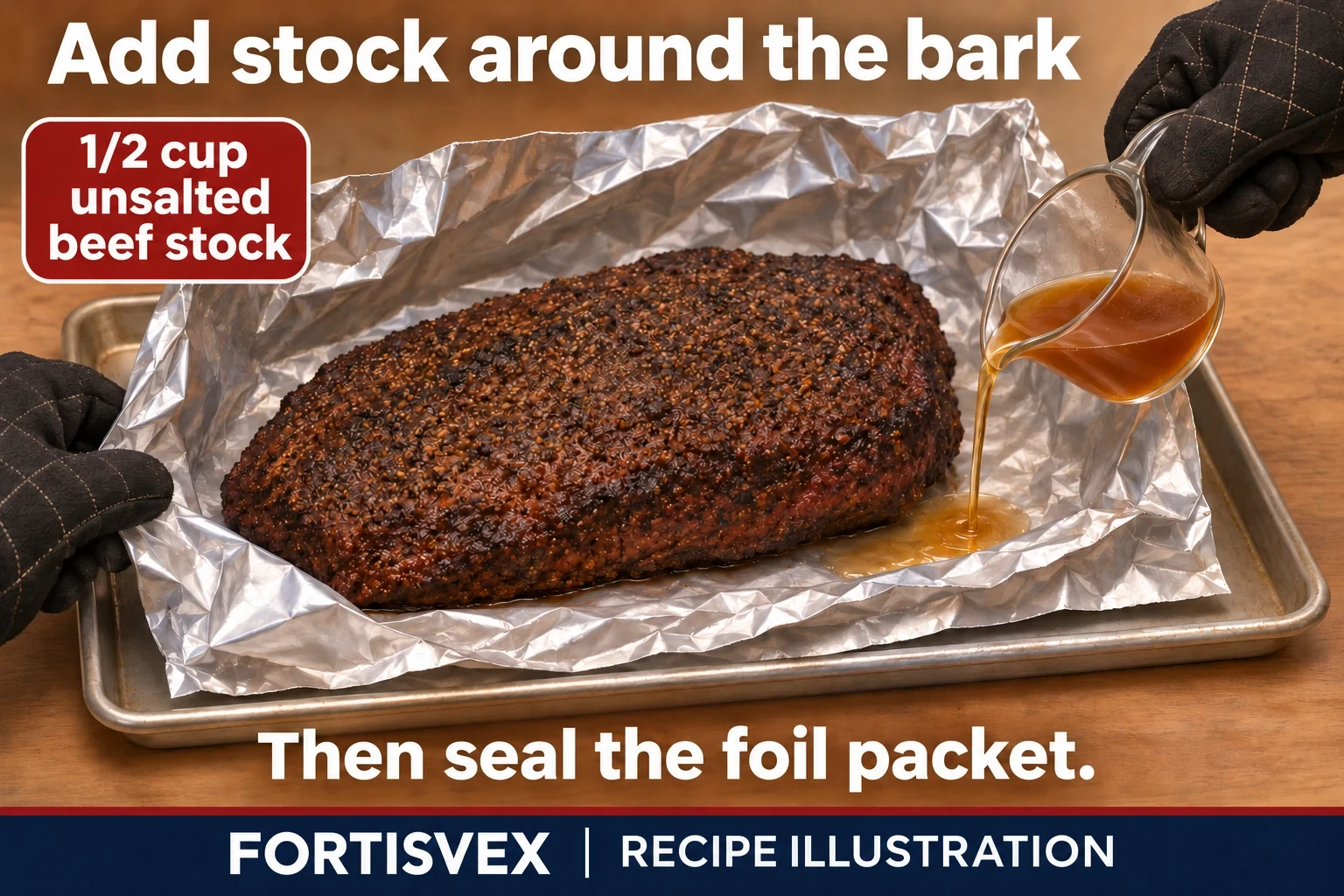
Add the recipe's half cup of unsalted beef stock around the brisket, not over the bark, then seal the foil packet. - Separate safety from tenderness. The USDA minimum for a whole beef roast is 145°F followed by a 3-minute rest, but brisket usually remains tough there. For this recipe, begin probing for tenderness around 195°F. Continue until a probe enters several lean areas with little resistance, commonly around 200–207°F. That higher range is a texture guide, not a separate safety standard or an automatic stop at one number.
- Rest, carve and retain the juices. Rest the wrapped brisket for 30–45 minutes, monitoring it and serving while hot. For a longer delay, use a controlled hot-holding setup that keeps food at least 140°F; an unmonitored cooler is not a guaranteed safe hold. Open carefully, reserve the juices and slice the flat across the grain. Spoon defatted juices onto the slices. Slice only what you will serve immediately to reduce exposed drying surfaces.
What to Watch For
A flat that is thin at one end may finish unevenly; check the thick center and thinner portion separately. If the meat is still resistant at the nominal temperature, continue gently and recheck rather than forcing thick slices from a tough roast. This smaller-flat formulation and coriander blend are original editorial choices, not Weber’s published packer-brisket recipe. Serve with pickles and a sharp slaw rather than relying on heavy sauce to hide dryness.
Leftovers
Refrigerate promptly in shallow containers: within 2 hours, or 1 hour above 90°F. Reheat leftovers to 165°F. Do not leave the serving platter outside throughout the gathering.
Plan the Gathering
If this cookout marks a statehood anniversary, use the FORTISVEX state-birthday calendar to check the date. Set up any display separately from the cooking area; a celebration does not change charcoal safety clearances.
For that state-themed gathering, browse FORTISVEX state flag collections, or choose your state on the shopping map. These are display-planning resources, not cooking instructions.
FDA outdoor serving and handling guidance.
Method and Safety References
For the charcoal fuel arrangement, see Weber’s kettle snake and low-and-slow setup guidance. The portions and timing here are this recipe’s estimates, not the source recipe’s packer-brisket or hotter pork schedule.
- Weber method reference (method evidence, not a claim of Weber endorsement).
- USDA safe internal temperatures.
- USDA time and temperature guidance.
Recent Posts
-
Tofu and Broccoli Rice Bowls with Ginger-Garlic Sauce
FORTISVEX · RECIPES A good tofu bowl has more than one texture: golden edges on the tofu, broccoli …Nov 4th 2026 -
Placing an Indoor Flag Display: A Venue-Review Worksheet
An indoor flag display can fit its stand and still be poorly placed in a room. The base occupies on …Nov 4th 2026 -
Charcoal Weber Kettle Cauliflower Steaks with Lemon-Caper Dressing
A cauliflower steak needs two things: enough of the central stalk to hold together and enough cooki …Nov 4th 2026