
Charcoal Weber Kettle Pulled Pork with Mustard-Cider Dressing
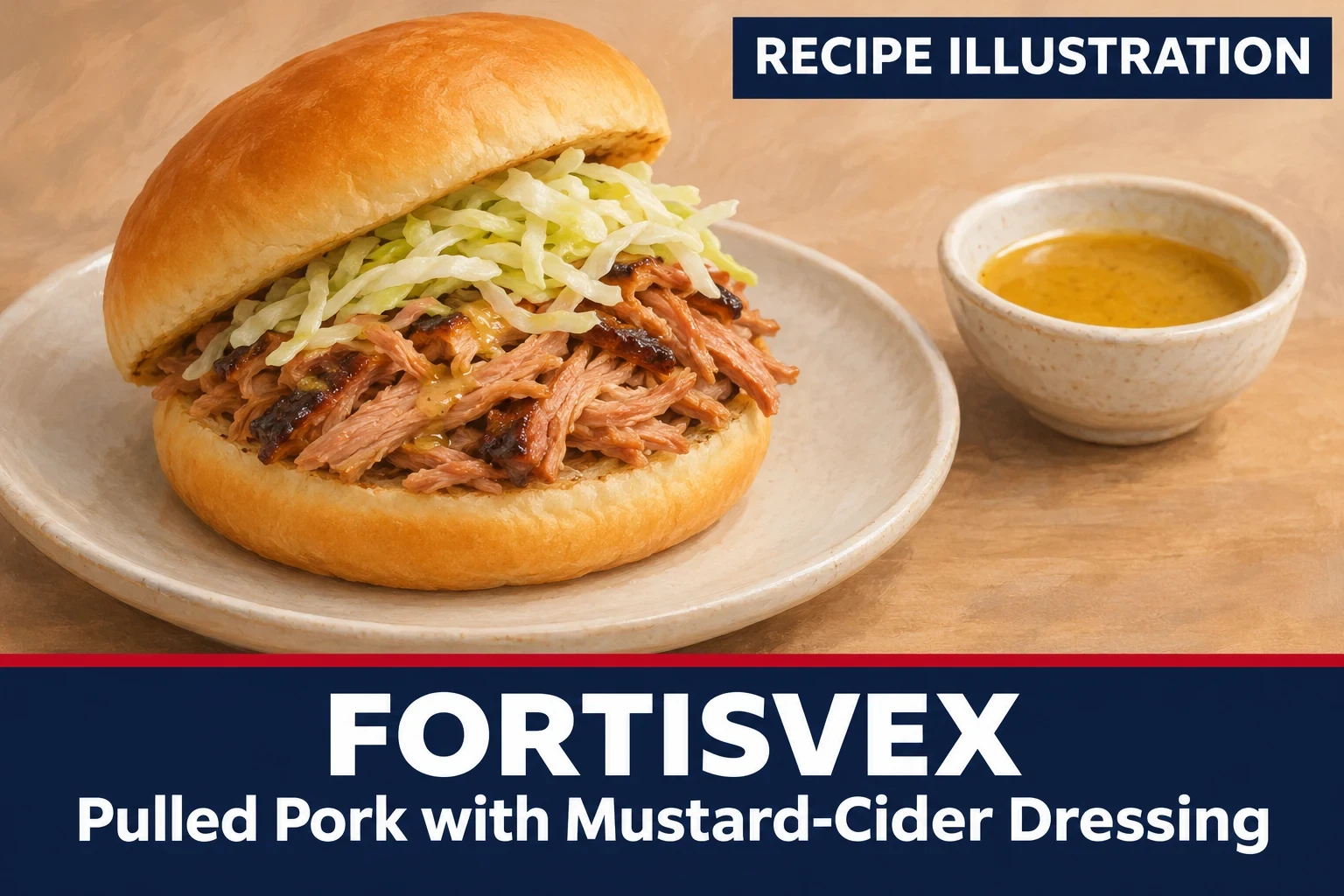
Pork shoulder rewards a steady fire and a texture check. This version uses paprika and fennel in the rub, then a small amount of mustard-cider dressing after shredding. Serves 8–10. Plan on 25 minutes preparation, approximately 7–10 hours cooking and 30 minutes resting, with extra schedule room if the roast runs slowly.
An original FORTISVEX recipe formulation informed by published Weber charcoal methods and USDA safety guidance. This recipe is inspired by charcoal-kettle barbecue. Timing is an estimate and a thermometer governs doneness.
Ingredients
- One 5–6 lb bone-in pork shoulder/Boston butt, not a whole picnic shoulder
- 18 g kosher salt
- 1 tbsp sweet paprika
- 2 tsp coarsely ground black pepper
- 1 tsp crushed fennel seed
- 1 tsp garlic powder
- 1 tbsp yellow mustard for the surface
- ¼ cup unsalted chicken stock for the wrap
- Dressing: ¼ cup cider vinegar, 2 tbsp yellow mustard, 2 tbsp water and 1 tbsp honey
- Optional serving: 8–10 buns and prepared slaw
Equipment
Charcoal Weber kettle large enough for the stated indirect area; charcoal and chimney starter; grate-level grill thermometer; instant-read food thermometer; long tongs; heatproof gloves; clean tray and board. Add a drip pan, foil and small grill-safe saucepan where the instructions call for them. All temperatures below are Fahrenheit.
Method
- Season the shoulder. Pat the pork dry and remove loose hanging pieces of fat without excavating its internal fat seams. Mix salt, paprika, pepper, fennel and garlic. Spread a thin layer of mustard over the surface and apply the rub. Keep the pork refrigerated while preparing the grill.
- Build a low indirect charcoal fire. Arrange a separated-end snake of briquettes around part of the Weber kettle and a drip pan in the center. Light one end according to the kettle manual. Stabilize the grate area at 250–275°F. The roast must sit over the pan, not over the burning portion. Use a grill thermometer as well as a food thermometer; the two answer different questions.
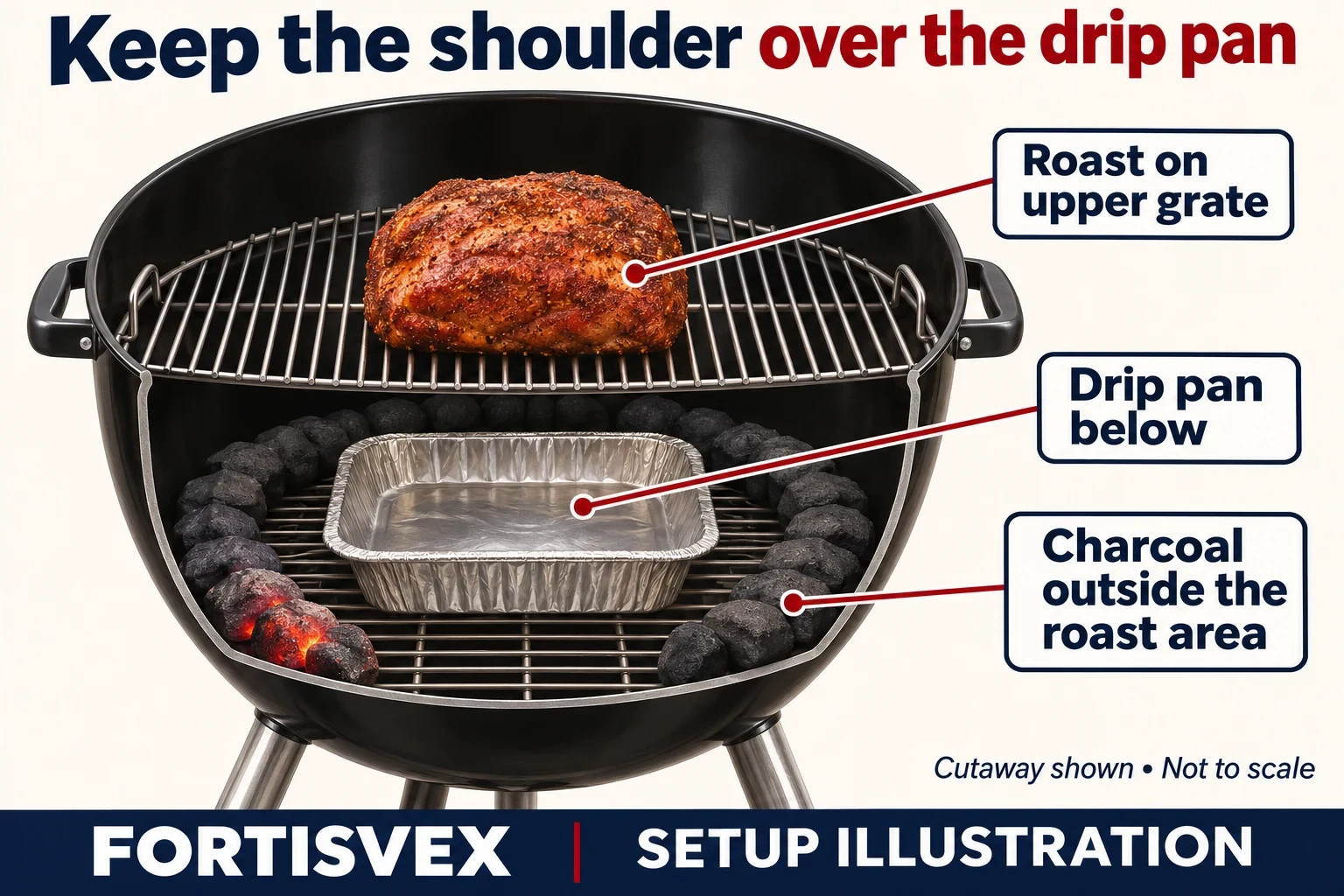
Position the shoulder over the drip pan, clear of burning charcoal. Setup illustration; cutaway is not to scale. - Develop the crust. Place the pork on the indirect area and close the lid. Keep track of fuel and temperature, opening only when needed. Turn the roast if one side is taking substantially more heat. Do not expect its internal temperature to climb at a constant rate. Time is a planning tool, not the decision to serve.
- Wrap and finish. When the rub has set into a dark crust, commonly around 165–175°F inside, transfer the roast to heavy foil. Add the ¼ cup stock, seal and return to indirect heat. Continue until the meat separates easily with a fork and a probe enters the thickest lean areas with little resistance; begin checking around 195°F. Approximately 195–205°F is a useful tenderness range, not a mandatory number for every roast.
- Check the safety distinction. Whole-cut pork needs at least 145°F and a 3-minute rest for USDA’s minimum. This shoulder cooks well beyond that to become pullable. Measure away from the bone; neither a loose bone nor dark bark replaces a thermometer. Rest the cooked packet for 30 minutes, then open carefully to avoid steam burns. For delayed serving, maintain at least 140°F with monitored hot holding. Otherwise count rest and serving time toward the 2-hour limit, shortened to 1 hour when outdoor temperatures exceed 90°F; do not restart the clock after resting.
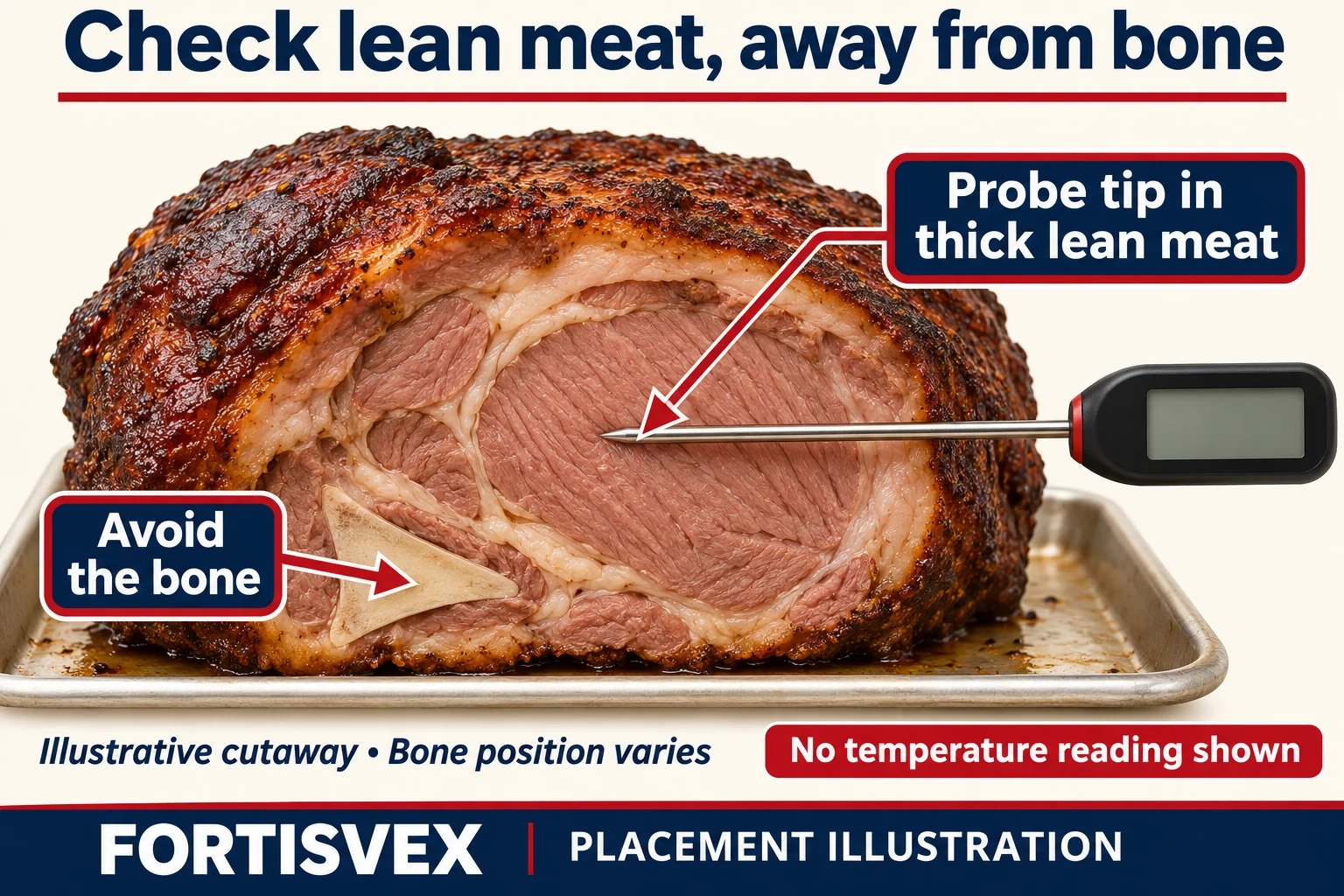
Check thick lean areas away from bone. Illustrative cutaway; bone position varies and no actual temperature is shown. - Dress after pulling. Whisk the four dressing ingredients until combined. Remove the bone and large unrendered pieces of fat. Shred the meat with clean forks, keeping some bark in the mixture. Add half the dressing and toss; offer the rest separately so guests can choose the acidity. Add a little defatted cooking juice if the meat needs moisture. Serve in buns with slaw or as a plate with beans.
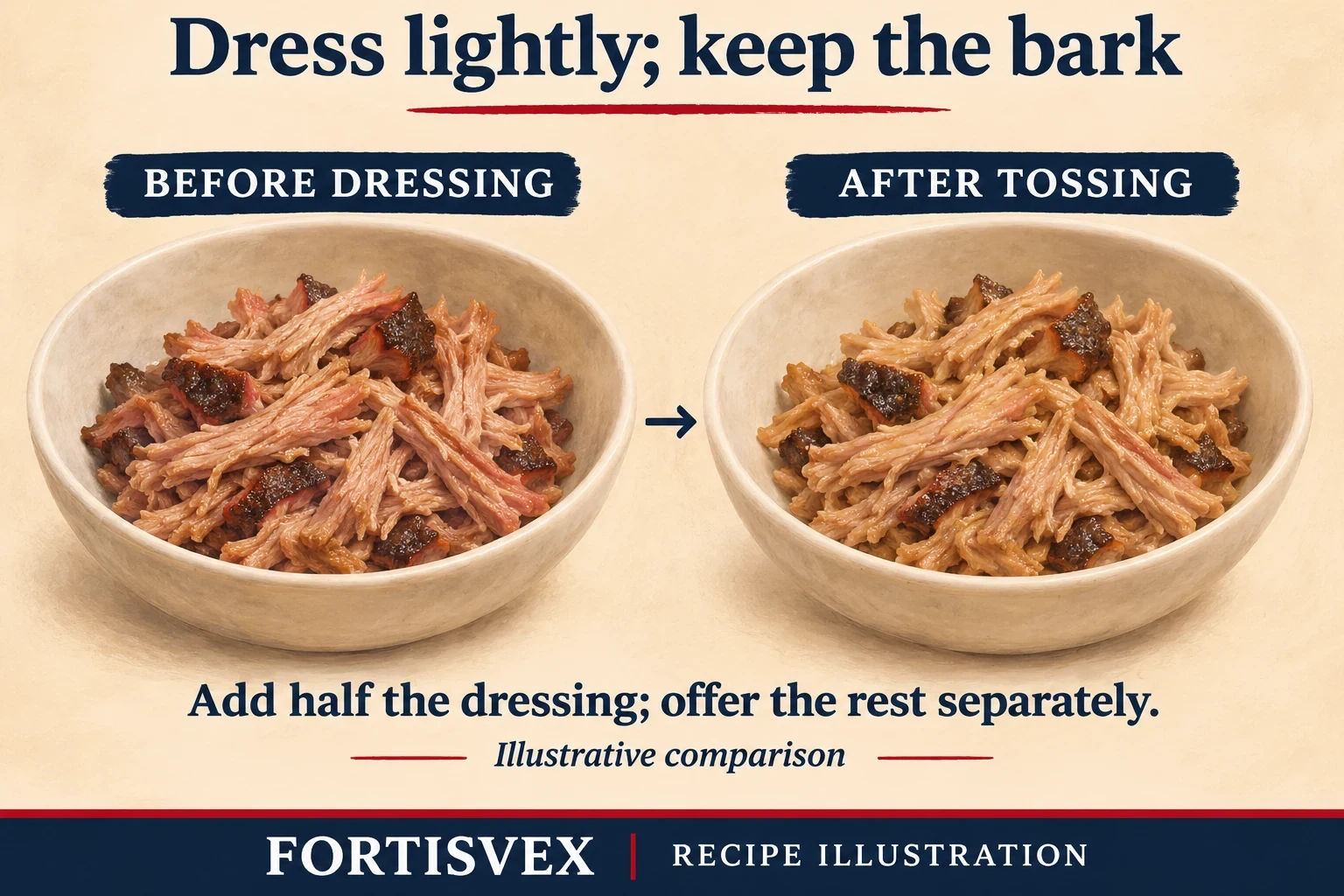
Add half the mustard-cider dressing and toss; offer the rest separately. Illustrative comparison.
What to Watch For
Do not substitute pork loin and expect the same result: this recipe depends on shoulder’s structure and a long cook. If the surface is ready but the interior remains tough, keep cooking indirectly rather than adding more smoke. Mustard and buns can introduce allergens; check all packaged ingredients. Have serving dishes ready before unwrapping so the finished pork does not sit while the rest of the meal is organized.
Leftovers
Refrigerate promptly in shallow containers: within 2 hours, or 1 hour above 90°F. Reheat leftovers to 165°F. Do not leave the serving platter outside throughout the gathering.
Beyond the Table
For a state-themed gathering, browse the FORTISVEX state flag collections after planning the meal. Choose the display location away from the kettle and compare the actual flag size and attachment details with your setup.
If your gathering marks a statehood anniversary, check the FORTISVEX state-birthday calendar. You can also choose your state on the flag-shopping map. These links help plan the occasion and display, not the cooking method.
FDA outdoor serving and handling guidance.
Method and Safety References
For the charcoal fuel arrangement, see Weber’s kettle snake and low-and-slow setup guidance. The portions and timing here are this recipe’s estimates, not the source recipe’s packer-brisket or hotter pork schedule.
- Weber method reference (method evidence, not a claim of Weber endorsement).
- USDA safe internal temperatures.
- USDA time and temperature guidance.
Recent Posts
-
Charcoal Weber Kettle Ribeye with Lemon-Chive Butter
Ribeye needs a hot searing area and a clear place to escape flare-ups. This recipe keeps the season …Nov 4th 2026 -
Charcoal Weber Kettle Pulled Pork with Mustard-Cider Dressing
Pork shoulder rewards a steady fire and a texture check. This version uses paprika and fennel in th …Nov 4th 2026 -
Ginger Cranberry-Pear Sauce for Thanksgiving
This sauce pairs tart cranberries with mellow pear, leaving the fruit flavors clear and the ginger …Nov 4th 2026