
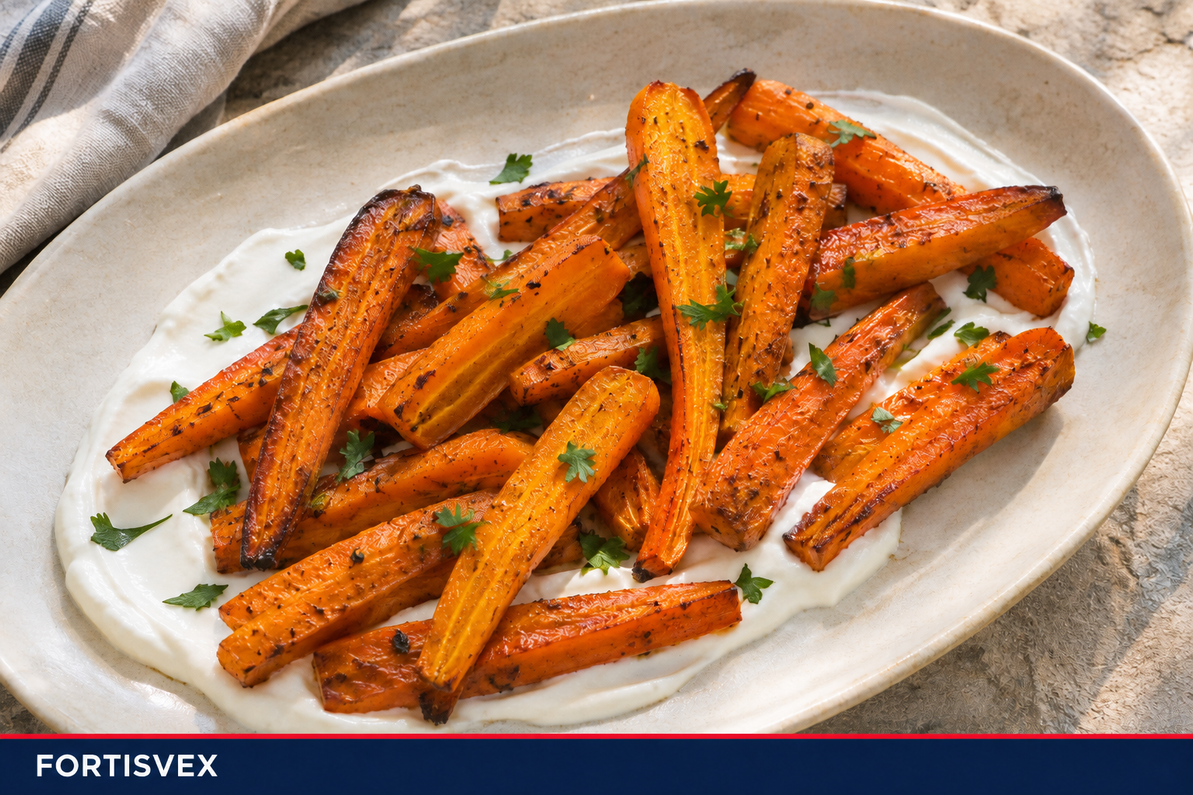
Weber Charcoal Kettle Carrots With Cumin and Lemon Yogurt
The hardest part about grilling carrots is not finding enough heat. It is keeping the thin ends from scorching before the thick ones turn tender. Cut them so the pieces cook together, put them over indirect heat, and keep the cool lemon yogurt off the grill. You get browned edges, a soft center, and a bright sauce that does not have to compete with a sweet glaze.
This recipe is designed for a Weber charcoal kettle with a heat-safe cast-iron skillet. The skillet keeps the pieces from falling through the grate and makes the transition from cooking to serving simpler. If the pan will not sit securely on a level grate with the lid closed, choose a different suitable pan or cook the carrots in the oven instead.
Serves: 4 as a side. Prep: 15 minutes. Cook: roughly 25–35 minutes, once the kettle is hot. Use the tenderness cues rather than the clock alone.
Ingredients
Carrots
- 1½ pounds medium carrots, scrubbed or peeled
- 1 tablespoon olive oil
- 1 teaspoon ground cumin
- ½ teaspoon kosher salt, plus more to taste
- ¼ teaspoon black pepper
Lemon yogurt
- ¾ cup plain unsweetened Greek yogurt
- 1 tablespoon fresh lemon juice
- ½ teaspoon finely grated lemon zest
- 1 tablespoon water, plus more a teaspoon at a time if needed
- Pinch of kosher salt
- 2 tablespoons chopped flat-leaf parsley, to finish
Arrange the kettle
Set up the grill outdoors, away from structures and anything combustible. Never burn charcoal indoors, in a garage, or in another enclosed or partly enclosed area. The U.S. Consumer Product Safety Commission’s charcoal safety guidance explains why even coals that appear to be going out are still an indoor hazard.
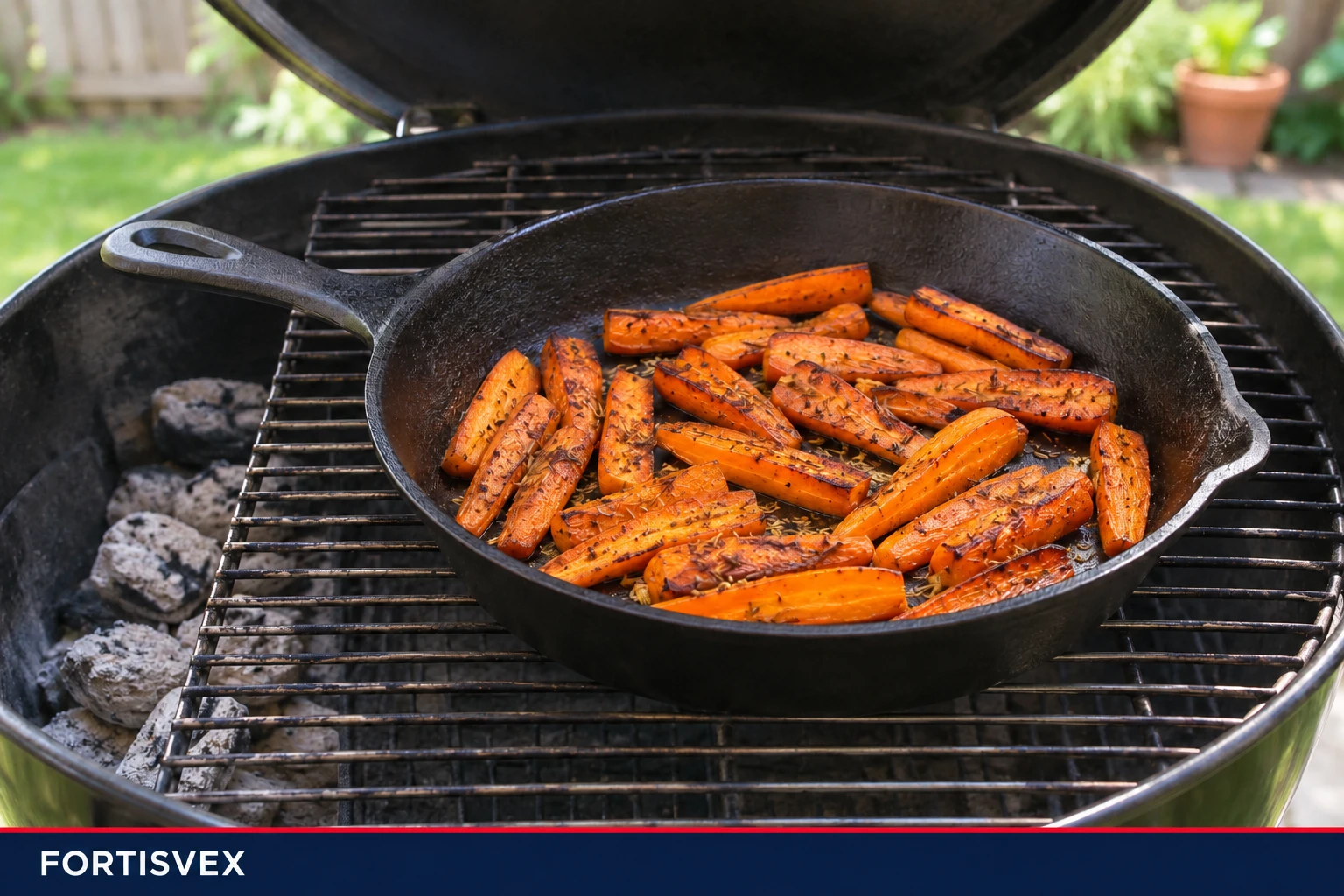
Arrange the prepared coals on one side of the kettle, leaving a space with no charcoal directly beneath the skillet. Set the cooking grate in place and preheat with the lid on, aiming for a moderate roasting environment, roughly 375–425°F. Dome temperature is a guide, not a reading of the pan or the food. A gusty or cold day can change your timing. Place the skillet securely on the no-coal side and keep a clear, heatproof spot ready to set it down. Cast iron stays hot long after the food comes off.
Roast, then dress the carrots
- Cut the carrots into pieces about 3 inches long. Halve thick pieces lengthwise, quarter particularly thick ones, and leave thin tips whole. Aim for comparable thickness, not identical length.
- Toss the carrots with the oil, cumin, salt and pepper. Arrange them in one layer in the skillet. If they overlap heavily, work in two batches rather than crowding the pan. A single layer produces more browned surfaces.
- Close the lid and cook over indirect heat. After about 15 minutes, open carefully and turn the carrots. Rotate the pan with a dry grill mitt if the ones nearest the coals are browning faster. Close the lid again and continue until a fork slides into the thickest pieces with little resistance, usually another 10–20 minutes.
- While the carrots cook, whisk the yogurt, lemon juice, zest, water and salt until smooth. A spoon should leave a soft trail in the sauce. Add water a teaspoon at a time if it is too thick to spread. Keep it chilled until serving.
- Set the skillet on your heatproof surface. Spread some yogurt on a platter, lay the warm carrots over it, and finish with parsley. Serve the rest of the sauce on the side. The sauce is there to balance the cumin and browned edges, not to drown them.
Practical tip: If the carrot tips are already dark and the thick pieces are still firm, spread the pieces farther from the fire and give them more time with the lid closed. Do not solve a firm center with a hotter grate. Next time, split the thickest pieces one more time before seasoning.
What to serve with them
The cumin and lemon make a good partner for charcoal kettle portobello sandwiches. Finish the carrots first while the kettle is set for indirect heat, then adjust it for the sandwich recipe rather than trying to cook both at once on a busy grate. If you are building a mixed vegetable spread, charcoal kettle green beans with cider and pepitas offer a snappier texture.
For an indoor main and an outdoor side, pair them with pressure-cooker lemon chicken and rice. Put the yogurt on the table separately so each person can decide how much lemon they want with the chicken.
Leftovers and an oven alternative
Refrigerate carrots and sauce separately in shallow containers within two hours, or within one hour if the outdoor temperature is above 90°F. Follow federal guidance on chilling leftovers and use the carrots within three to four days or freeze them. Reheat leftover carrots to 165°F. Serve the chilled sauce separately; do not heat the sauce in the skillet.
For an oven version, spread the seasoned carrots on a rimmed baking sheet and roast at 425°F. Start checking at 20 minutes, turn once, and take them out when the thickest pieces are fork-tender. That is a different method, not a reason to bring the charcoal grill inside.
Recent Posts
-

Will a Vinyl Flagpole Snap Cover Fit? Check More Than Length
A vinyl flagpole snap cover can be shorter than the snap it is paired with. The cover sits over the …Nov 25th 2026 -
West Virginia Flags at Half-Staff for Beckstrom and Wolfe, November 26–27, 2026
West Virginia will lower the U.S. and West Virginia flags at the State Capitol Complex and at all st …Nov 25th 2026 -

Weber Charcoal Kettle Carrots With Cumin and Lemon Yogurt
The hardest part about grilling carrots is not finding enough heat. It is keeping the thin ends from …Nov 25th 2026