
Charcoal Weber Kettle Grilled Pineapple with Lime and Mint
A pineapple ring gives you a broad surface to brown and enough structure to turn with a spatula. The trick is to keep the fruit from becoming a sugary coating stuck to the grate. This version grills the pineapple with a light film of oil, then adds lime, a little brown sugar and fresh mint off the heat.
This recipe is inspired by charcoal-kettle barbecue.
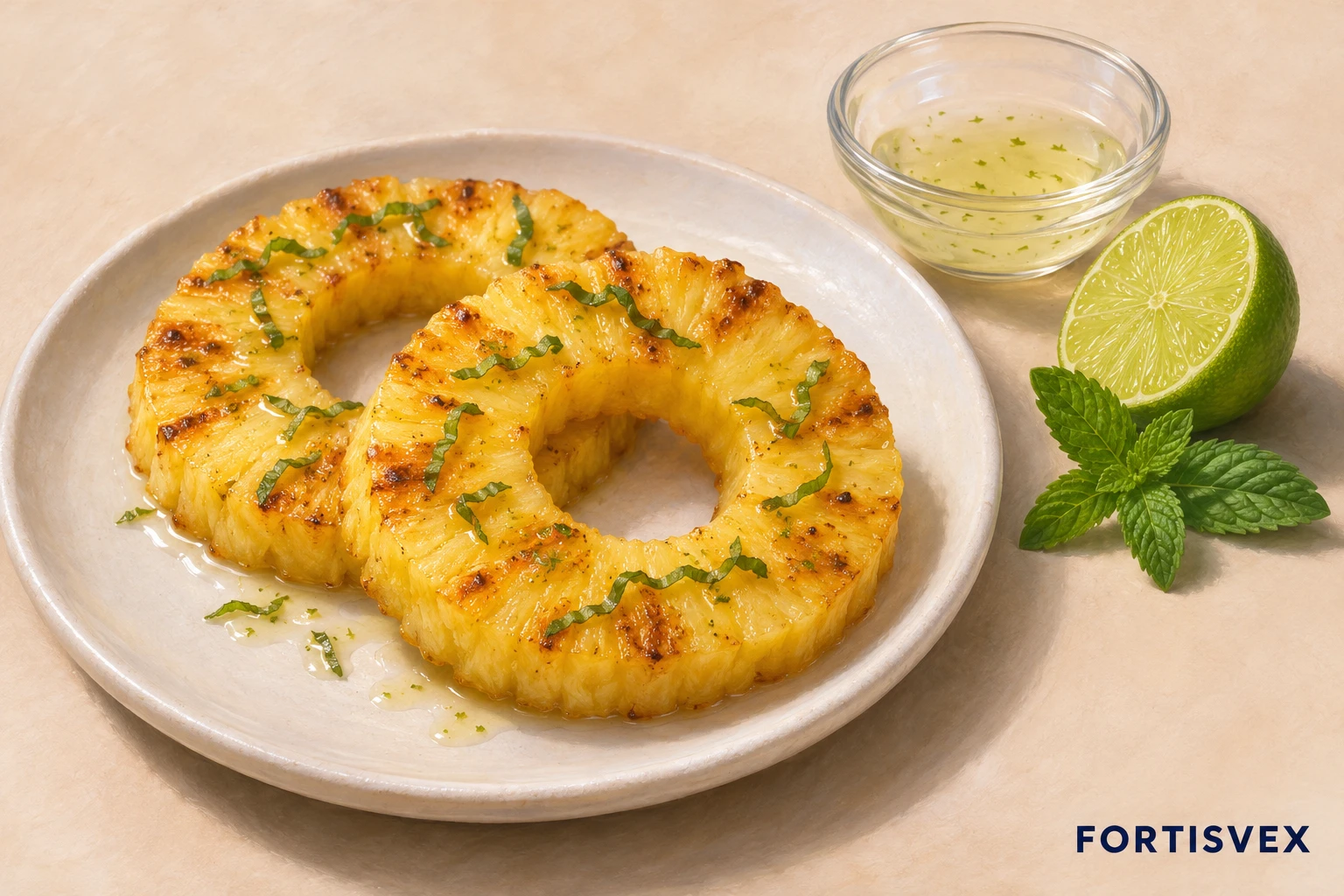
Ingredients
- 8 fresh pineapple rings, peeled, eyes removed and cored, about 1/2 inch thick; start with 1 large pineapple and reserve any extra fruit
- 2 teaspoons neutral cooking oil, such as canola or sunflower oil
- 1 tablespoon fresh lime juice
- 1 teaspoon finely grated lime zest, green part only
- 2 teaspoons packed light brown sugar
- 1 tablespoon finely sliced fresh mint leaves
Use US measuring spoons. You may need a second pineapple if the first is small or has damaged areas to trim. The measured recipe starts with the eight prepared rings, rather than assuming every whole fruit gives the same yield. Refrigerated precut fresh rings are another option; choose pieces of similar thickness. Canned pineapple has a different texture and liquid content and is not the basis for these timing estimates.
Equipment and meal planning
Use a charcoal Weber kettle with its lid, charcoal and the lighting equipment specified in its instructions, barbecue mitts, a grill-temperature thermometer, a wide metal spatula, a stable cutting board, a sharp knife, a small bowl and a clean serving platter. A small round cutter can help remove the core, but it is not essential. Follow the kettle manual for fuel, placement and clearance; this recipe does not prescribe a universal chimney load.
For a steak meal, pair the dessert with our ribeye with lemon-chive butter. Finish and serve the main course separately, then check the kettle temperature again before grilling fruit. A fire suitable for searing steak may be too hot for pineapple.
Prepare and grill
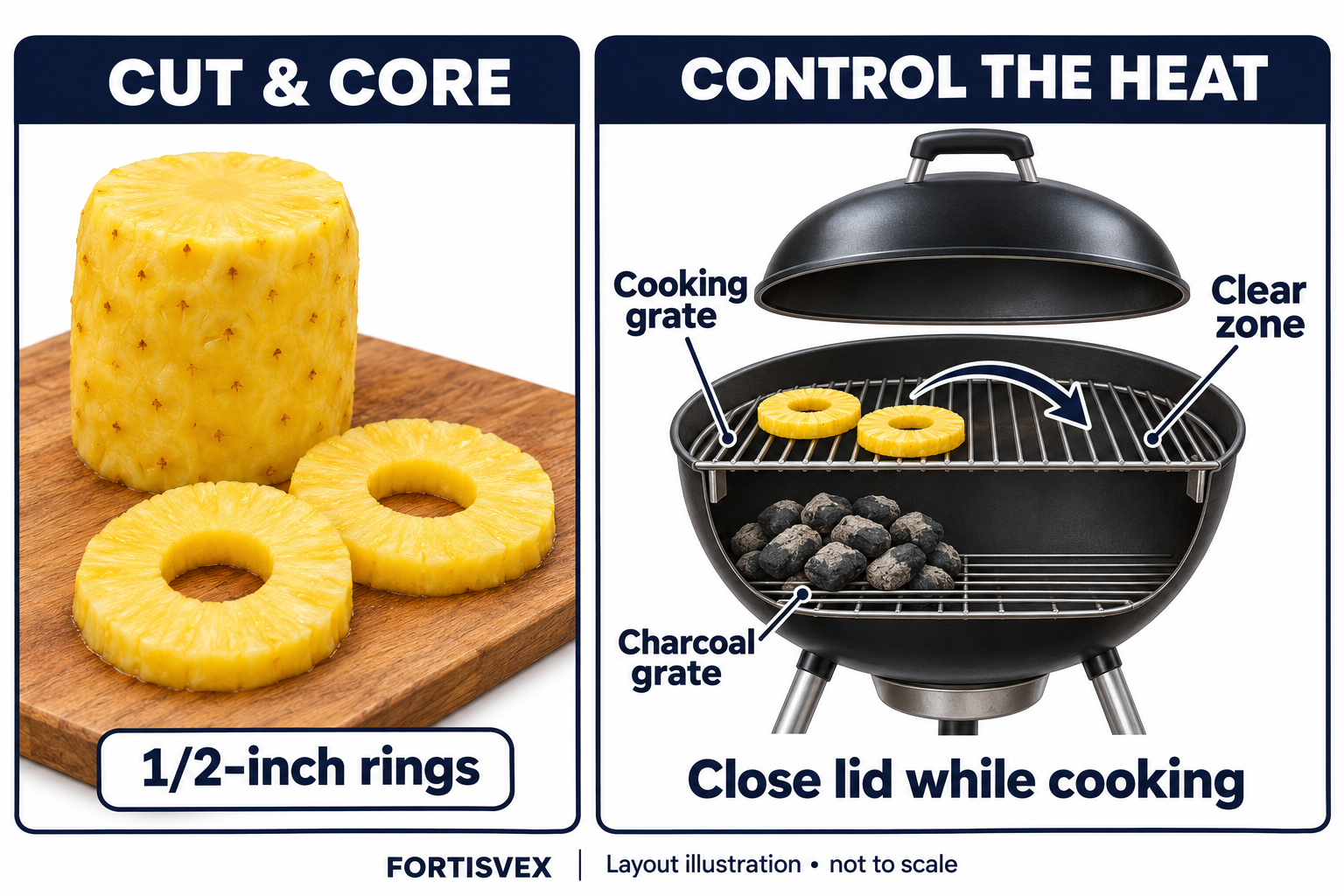
- Wash before cutting. Wash your hands and rinse the pineapple, lime and mint under running water; do not use soap on produce. Dry them. Trim the pineapple crown and base, stand the fruit on a flat cut end, and remove the skin in downward strips on a stable board. Trim away the eyes and any bruised areas; discard rotten fruit. Lay the peeled fruit on its side and cut rings about 1/2 inch thick. With each ring flat on the board, remove the tough center using a small cutter or careful cuts with a paring knife. Keep fingers away from the cutting path. A ring that breaks can still be cooked in large pieces; do not balance tiny scraps across grate gaps.
- Set up a controllable fire. Arrange lit charcoal on the lower charcoal grate beneath part of the upper cooking grate, leaving a clear area without coals directly below it. Follow the kettle's lighting instructions. Preheat with the lid closed for direct medium cooking, approximately 350–450°F. Clean the cooking grate with a suitable tool and check for loose debris. Keep the clear area available for moving fruit that browns too fast; it is still hot.
- Mix the finish. Stir the lime juice, zest and brown sugar in the small bowl until the sugar is mostly dissolved. Keep it covered and refrigerated while you grill. Reserve the sliced mint separately in the refrigerator and add it just before serving. This keeps the fresh leaves away from the fire.
- Oil the fruit lightly. Pat the rings dry and brush both faces with the measured oil. Arrange them over the direct zone in a single layer with room to lift each piece. Work in batches if needed; do not crowd the grate or occupy the clear area. Close the lid.
- Turn when the first face browns. Begin checking after about 3 minutes. Slide the wide spatula beneath a ring and lift gently. If it sticks and is not burning, give it a little more time instead of pulling it apart. Turn once the underside has browned patches, then close the lid and cook the second face. Start checking again after about 3 minutes. Expect roughly 6–10 minutes total per batch, but move pieces to the clear side sooner if they darken rapidly.
- Check texture, then finish off the fire. The rings should be warm throughout, lightly softened and still firm enough to lift, with browned areas rather than an all-over black crust. Test a piece with the tip of a small knife on the platter if needed. These are eating-quality checks, not proof that contaminated food is safe. Transfer with clean utensils to the clean platter. Stir the mint into the lime mixture and spoon it over the fruit. Serve two rings per person, offering any dressing left in the bowl separately.
Keep the fruit in control
If a ring is blackening before it warms through, move it away from the coals rather than waiting for the timer. Check the fire temperature and ring thickness before the next batch. Apply the lime-sugar finish only after grilling; pouring it over the fire creates drips and gives the sugar another opportunity to scorch.
After a long cook such as pulled pork with mustard-cider dressing, do not assume the remaining fire is ready for dessert. Recheck the measured heat, follow the manual if more fuel is needed, and use clean tools and a clean platter for the fruit. Keep the pork's own serving and holding schedule separate.
Outdoor cooking and safe serving
Burn charcoal outdoors only, never in a garage, tent or other enclosed space. Carbon monoxide can be fatal. Set the kettle on a stable suitable surface, follow its required clearances and keep people, fabric and decorations away from heat and sparks. Supervise the fire. If weather makes outdoor grilling unsuitable, leave the kettle outside and choose an indoor dessert such as cinnamon apple-oat crisp; allow for that recipe's longer baking and resting time.
Keep prepared fruit and the lime-mint mixture refrigerated at 40°F or below until needed. Use utensils and boards separate from raw meat, poultry, seafood and eggs, and wash raw-contact equipment thoroughly before reuse. Lime juice does not preserve the dressing or make cross-contaminated fruit safe.
Leftovers and ingredient notes
Refrigerate leftovers promptly in shallow covered containers, within 2 hours, or within 1 hour when the temperature is above 90°F. Count preparation and serving time out of refrigeration together; do not start a new allowance when dessert reaches the table. Plan to enjoy the refrigerated fruit the following day, when its texture is likely to be better than after longer storage. That is a quality plan, not an extension of the safe-handling limits.
Serve properly chilled leftovers cold, or reheat the portion you want in a microwave-safe covered dish, following the appliance's instructions, until it reaches 165°F. Turn or rearrange the pieces and check more than one spot with a food thermometer. Reheated mint will lose some of its fresh character; add freshly washed mint afterward if desired. Do not reheat food to rescue it after excessive time unrefrigerated.
The listed ingredients contain no added milk, egg, wheat, soy, peanut, tree nut, fish, shellfish or sesame ingredients, but that is not an allergen-free guarantee. Check the oil and other package labels and account for shared utensils and grill surfaces. Pineapple, citrus and mint can also matter to individual diners; ask about their needs before serving.
Recent Posts
-

Will a Vinyl Flagpole Snap Cover Fit? Check More Than Length
A vinyl flagpole snap cover can be shorter than the snap it is paired with. The cover sits over the …Nov 25th 2026 -
West Virginia Flags at Half-Staff for Beckstrom and Wolfe, November 26–27, 2026
West Virginia will lower the U.S. and West Virginia flags at the State Capitol Complex and at all st …Nov 25th 2026 -
Weber Charcoal Kettle Carrots With Cumin and Lemon Yogurt
The hardest part about grilling carrots is not finding enough heat. It is keeping the thin ends from …Nov 25th 2026