
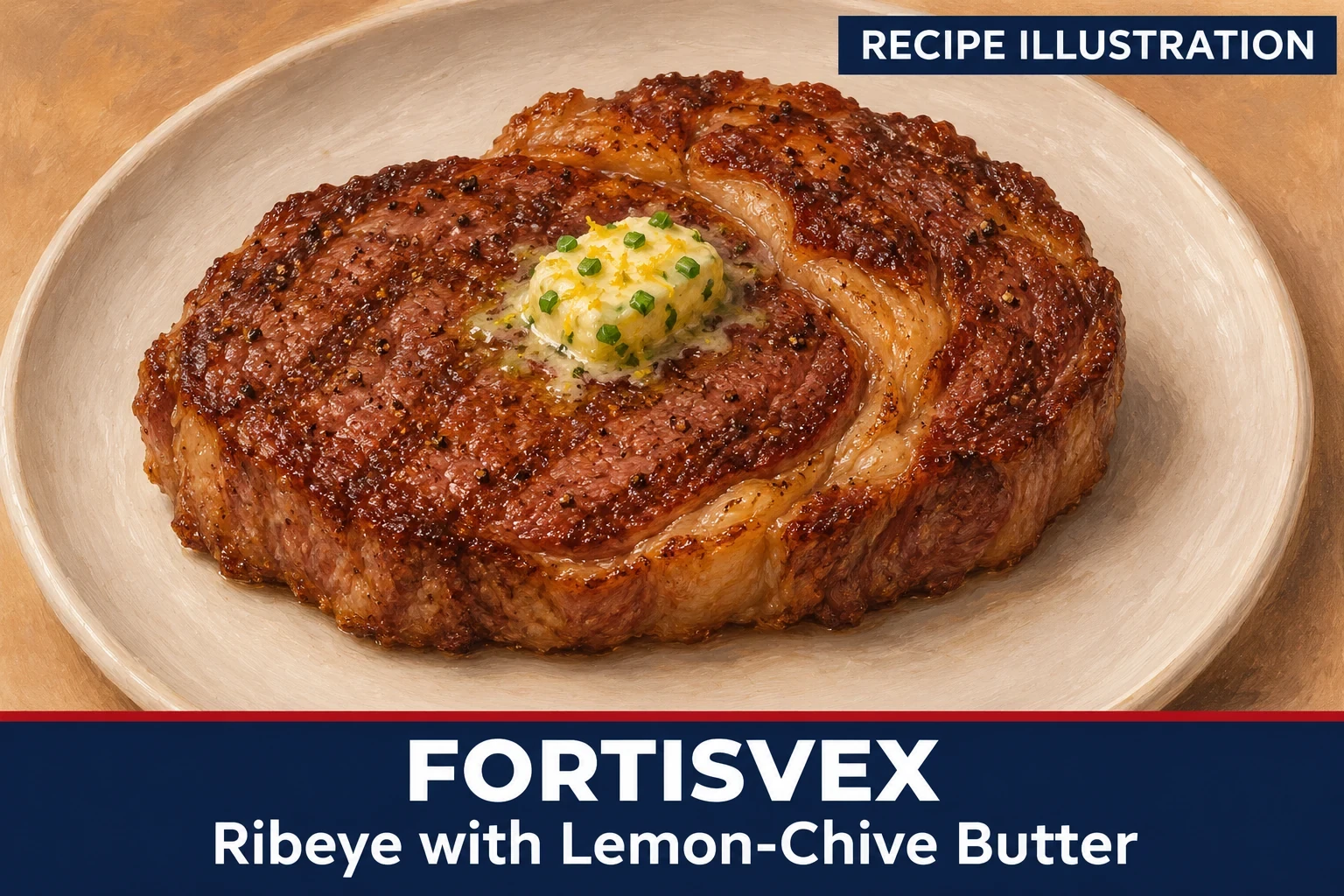
Charcoal Weber Kettle Ribeye with Lemon-Chive Butter
Ribeye needs a hot searing area and a clear place to escape flare-ups. This recipe keeps the seasoning simple and adds lemon-chive butter after cooking, so butter does not burn on the grate. Serves 2 generously. Allow 15 minutes preparation, roughly 12–25 minutes cooking and 5 minutes resting, plus fire preparation; steak thickness is more useful than a rigid timer.
An original FORTISVEX recipe formulation informed by published Weber charcoal methods and USDA safety guidance. This recipe is inspired by charcoal-kettle barbecue. Timing is an estimate and a thermometer governs doneness.
Ingredients
- Two boneless ribeye steaks, each 12–14 oz and about 1½ inches thick
- 6 g kosher salt
- 1 tsp freshly ground black pepper
- 2 tsp neutral cooking oil
- Finishing butter: 2 tbsp softened unsalted butter, 1 tsp finely grated zest from a washed lemon, 2 tsp chopped chives and ½ tsp lemon juice
Equipment
Charcoal Weber kettle large enough for the stated indirect area; charcoal and chimney starter; grate-level grill thermometer; instant-read food thermometer; long tongs; heatproof gloves; clean tray and board. Add a drip pan, foil and small grill-safe saucepan where the instructions call for them. All temperatures below are Fahrenheit.
Method
- Mix the finishing butter. Mash the butter with lemon zest, chives and juice. Refrigerate it in a clean covered bowl until serving. Prepare a clean platter for cooked steaks before handling raw meat.
- Season the steaks. Pat the steaks dry. Trim only loose hanging fat that could readily drip into the fire; retain the meat’s normal marbling. Coat with oil and distribute salt and pepper over both sides and edges. Keep refrigerated until the grill is ready.
- Set the charcoal kettle for direct heat. Bank lit charcoal across part of the charcoal grate, leaving a substantial clear area. Preheat with the lid closed to a direct-grilling range of about 450–550°F and clean the cooking grate. Keep the cooler side available throughout the cook; do not fill it with pans or vegetables that prevent moving a steak.
- Sear for a browned crust. Set the steaks over the lit coals and close the lid. Turn after the first face develops a brown crust, starting your inspection around 3 minutes. Brown the second face. For optional crosshatch grill marks, rotate the steak partway through searing each face. Do not extend cooking just to perfect the pattern; use its internal temperature to judge doneness. Release the steak gently rather than tearing it away from the grate. If flames rise around it, move it to the clear side; do not spray water into the grill.
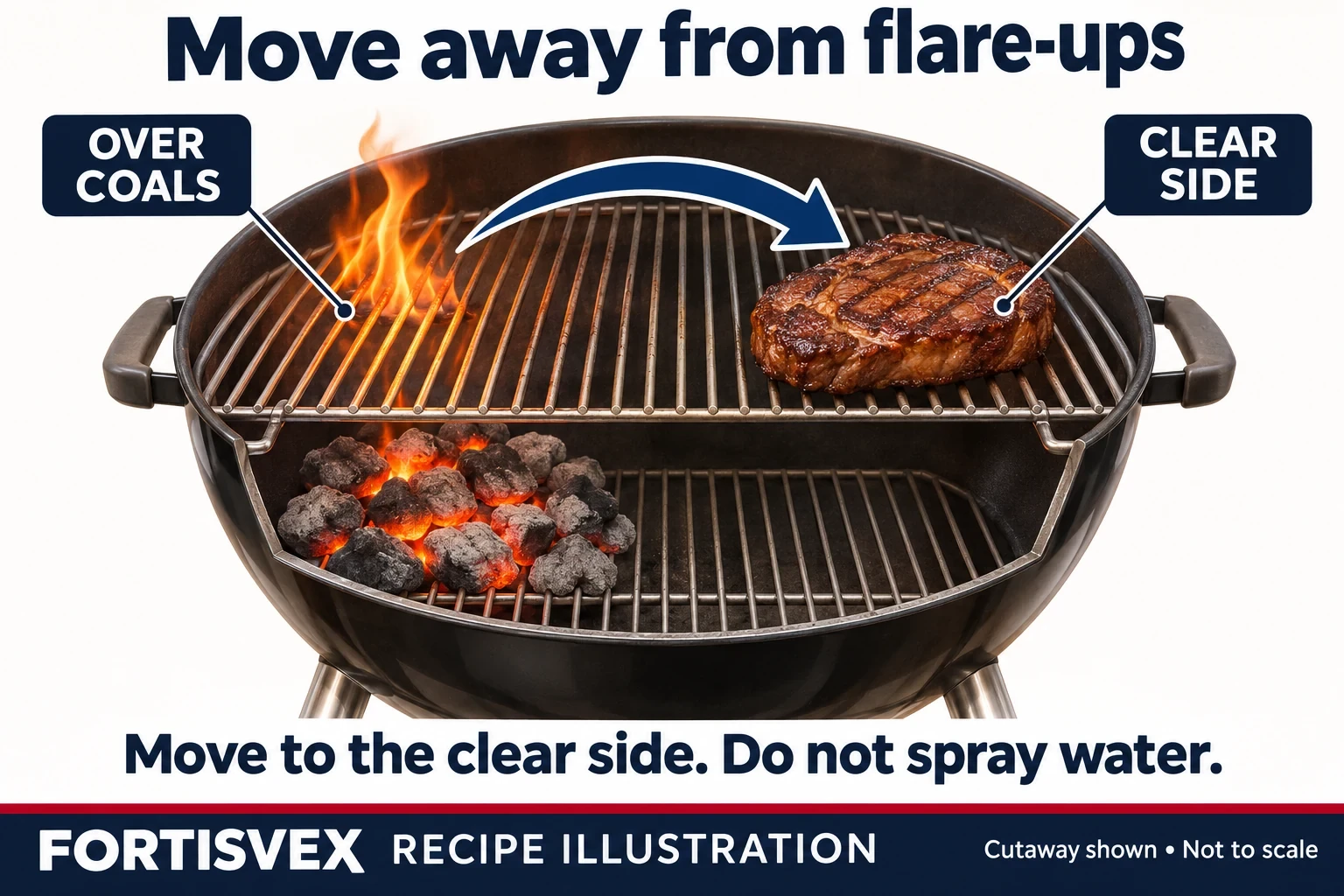
Keep a clear area available and move the steak away from a flare-up; do not spray water into the grill. Original FORTISVEX recipe illustration, not to scale. - Finish by temperature. Once the surfaces are browned, move the steaks to indirect heat and close the lid. Insert a food thermometer from the side into the center, avoiding large fat seams. Continue to at least 145°F before removal. Check each steak individually: equal-looking portions need not finish together. A browned exterior is not a substitute for the reading.
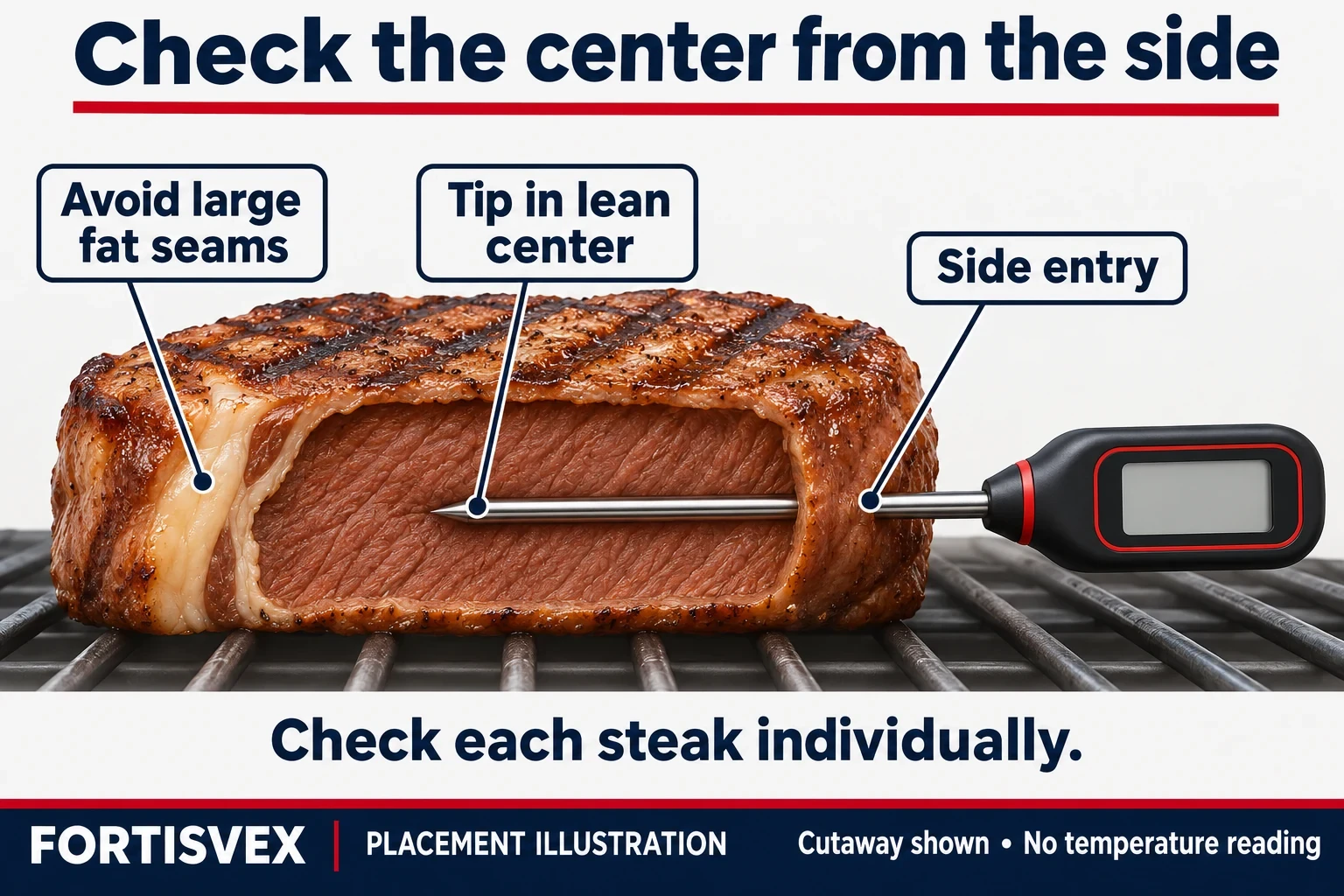
Placement illustration only: insert from the side into the lean center and check each steak individually. Cutaway is explanatory; no actual temperature is shown. - Rest and finish. Rest the cooked steaks for 5 minutes on the clean platter, exceeding the 3-minute minimum for whole beef cuts. Add half the butter to each steak while warm. Slice across the grain if serving family-style, or serve whole with the butter melting over the crust. Roasted potatoes and a lightly dressed green salad keep the plate straightforward.
What to Watch For
If the crust is dark but the center remains below the target, continue on the indirect side instead of returning to fierce heat. If the center is ready before the crust looks dramatic, serve the safe steak; prolonged searing can dry it out. The butter contains milk. These instructions do not recommend a lower medium-rare pull temperature or depend on an assumed carryover rise.
Leftovers
Refrigerate promptly in shallow containers: within 2 hours, or 1 hour above 90°F. Reheat leftovers to 165°F. Do not leave the serving platter outside throughout the gathering.
Beyond the Table
For a state-themed gathering, browse the FORTISVEX state flag collections after planning the meal. Choose the display location away from the kettle and compare the actual flag size and attachment details with your setup.
If your gathering marks a statehood anniversary, check the FORTISVEX state-birthday calendar. You can also choose your state on the flag-shopping map. These links help plan the occasion and display, not the cooking method.
FDA outdoor serving and handling guidance.
Method and Safety References
- Weber method reference (method evidence, not a claim of Weber endorsement).
- USDA safe internal temperatures.
- USDA time and temperature guidance.
Recent Posts
-
Death of Shimon Peres: Historical Half-Staff Archive
Death of Shimon Peres: Historical Half-Staff Archive Historical record — not a current half-staff n …Nov 4th 2026 -
Patriot Day and National Day of Service and Remembrance, 2016
Historical presidential archive · 2016 Patriot Day and National Day of Service and Remembrance, 201 …Nov 4th 2026 -
Honoring the Victims of the Attack in Baton Rouge, Louisiana
Historical presidential archive · 2016 Honoring the Victims of the Attack in Baton Rouge, Louisiana …Nov 4th 2026