
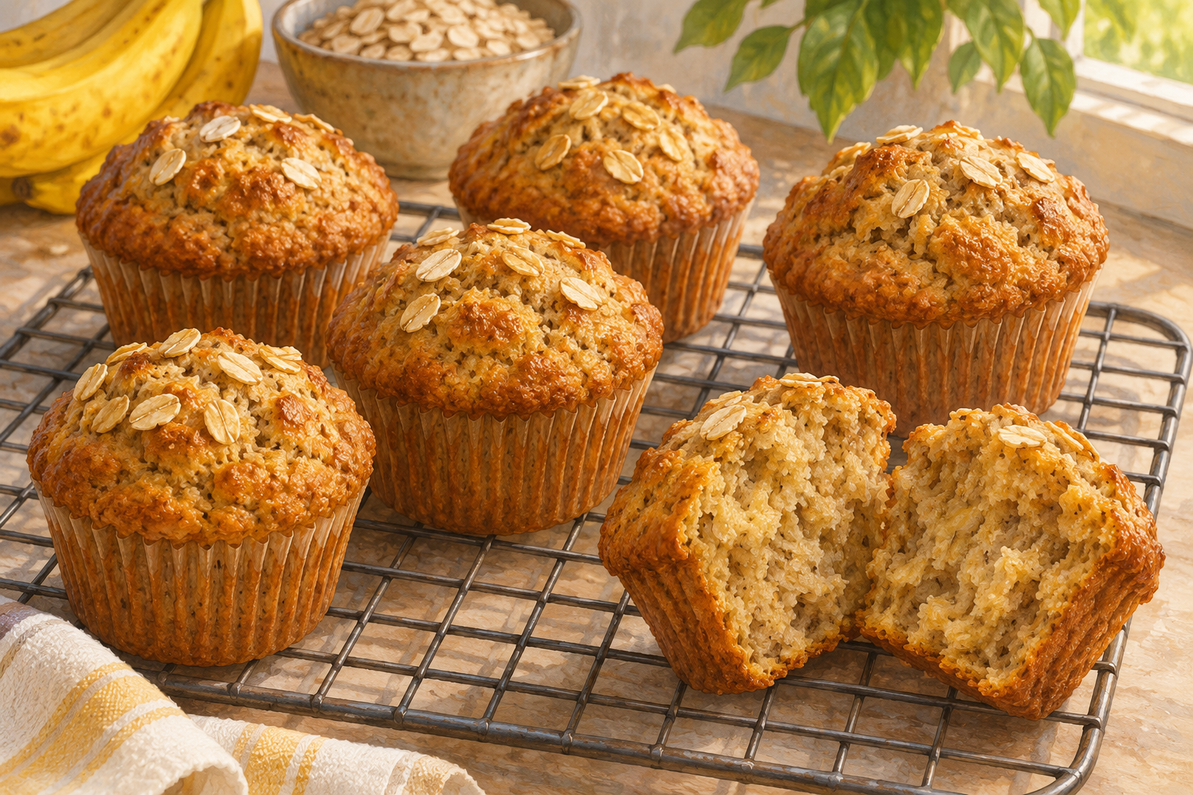
Banana-Oat Breakfast Muffins
Ripe bananas bring sweetness and moisture to these cinnamon-scented muffins, while rolled oats give the crumb a little chew. They are easy to portion for a breakfast table: bake one standard pan, serve a few warm, and freeze the rest once they have cooled.
Let muffins cool on a rack before packing them.
Makes: 12 standard muffins; 12 servings of one muffin. Preparation: about 20 minutes, including a 10-minute oat soak. Baking: 20–25 minutes. Cooling: 5 minutes in the pan, then about 20 minutes on a rack. Allow roughly 65–70 minutes before packing.
Oven performance and banana moisture can change the baking time; use the doneness checks below.
Choose the bananas and oats
Use bananas with heavily freckled skins and soft flesh, but discard any with mold or an off smell. Measure the mashed fruit rather than relying on a banana count: two large or three smaller bananas may give very different amounts. If using thawed frozen bananas, stir their released liquid back into the mash before weighing out 225 grams.
Old-fashioned rolled oats soften during a short soak in milk. Steel-cut oats need a different cooking method and are not a direct substitute. All-purpose wheat flour supplies structure; replacing it entirely with oat flour would require a separately developed recipe.
Ingredients
- 90 g old-fashioned rolled oats (about 1 cup), plus 1 tablespoon for topping
- 120 ml milk (½ cup)
- 225 g mashed ripe banana (about 1 cup)
- 180 g all-purpose flour (about 1½ cups, spooned and leveled)
- 100 g packed light brown sugar (about ½ cup)
- 2 teaspoons baking powder
- ½ teaspoon baking soda
- 1 teaspoon ground cinnamon
- ½ teaspoon fine table salt
- 2 large eggs
- 80 ml neutral oil, such as canola (⅓ cup)
- 1 teaspoon vanilla extract
Equipment: a standard 12-cup metal muffin pan, paper liners, two mixing bowls, whisk, flexible spatula, measuring tools or kitchen scale, and a cooling rack. A dark pan may brown the edges sooner; check at the early end of the range.
Method
- Heat and prepare. Heat a conventional oven to 375°F (190°C), with a rack in the middle. Line all 12 muffin cups and lightly grease the liners. This timing is for a standard muffin pan, not mini or jumbo muffins.
- Soften the oats. Stir the 90 g oats and milk together in a large bowl. Leave for 10 minutes while you measure the other ingredients and mash the banana. Reserve the topping oats.
- Combine the dry ingredients. Whisk the flour, baking powder, baking soda, cinnamon and salt in the second bowl. Break up any visible lumps of leavener so they do not remain in the finished muffins.
- Finish the wet mixture. Add the mashed banana, brown sugar, eggs, oil and vanilla to the soaked oats. Whisk just until the eggs and oil are incorporated.
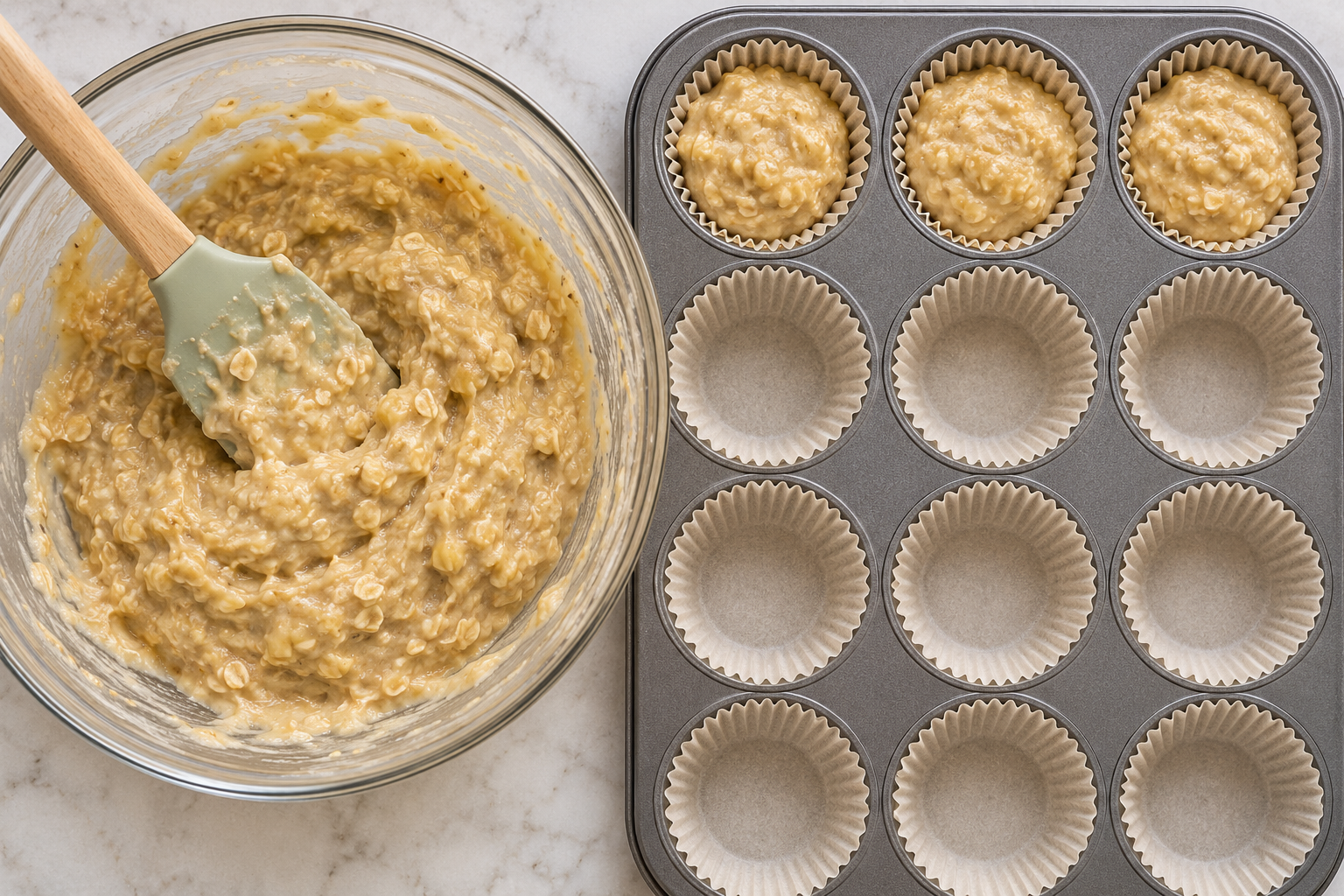
- Fold and portion. Add the flour mixture. Fold with a spatula, scraping the bottom, until no dry flour remains. Stop there; small banana lumps are fine. Divide evenly among the 12 cups, approximately three-quarters full, and scatter the reserved oats over the tops. Bake promptly rather than holding the mixed batter.
- Bake. Bake for 20–25 minutes. Start checking at 20 minutes: the tops should be lightly golden and spring back when gently touched, and a tester inserted into a central muffin should emerge without wet batter. A few moist crumbs are fine. If needed, bake in 2-minute increments and check again.
- Cool. Set the pan on a heatproof surface for 5 minutes. Carefully lift the muffins onto a rack. Serve warm, or cool completely before sealing in a container so steam does not soften the tops.
Small adjustments that matter
Heavy or gummy centers: check the banana measurement and continue baking if the tester carries wet batter. Extra banana is not a harmless addition; it changes the moisture balance. Let a muffin cool before judging its crumb.
Tough muffins: use gentle folding after the flour goes in. Prolonged beating develops a firmer structure. Weighing flour also avoids the extra flour that can be packed into a measuring cup.
Uneven baking: portion the cups evenly. If your oven has a strong hot spot, rotate the pan once after about 15 minutes, closing the door promptly. Avoid opening the oven repeatedly during the first part of baking.
Safe handling and storage
Do not taste the raw batter. Flour and eggs can carry harmful germs before baking. Wash hands, utensils and work surfaces after handling them, and keep raw batter away from ready-to-eat food. The CDC’s raw-dough guidance explains why flour needs the same care as raw eggs.
Once completely cool, keep the muffins in an airtight container at room temperature for up to two days, or freeze them individually for longer storage. Label the freezer container with its contents and date; use within two months for best quality. Thaw a muffin in its wrapper at room temperature and serve promptly. Discard muffins showing mold rather than cutting away a spot.
For a warm serving, split a thawed muffin and heat it briefly in a toaster oven, or microwave an unwrapped muffin on a microwave-safe plate for 10–15 seconds, adding short bursts as needed. Remove foil first. These muffins contain wheat, egg and milk; check ingredient labels for additional allergens before sharing.
A breakfast table for a community morning
For a neighborhood breakfast or a volunteer morning, keep the muffins in a covered food container and arrange any outdoor display separately. If the event calls for a flag, choose from FORTISVEX American flags or state flags to suit the occasion. Check dimensions and attachments against your equipment, and contact FORTISVEX if you need help with the display. Flags and display hardware should stay clear of food-preparation and serving surfaces.
Method references
King Arthur Baking’s oat-muffin method informs gentle mixing, rack cooling and short room-temperature storage. Its banana-muffin guidance supports checking the center for wet batter. These references do not validate this recipe’s exact ingredient balance or predicted baking range.
Recent Posts
-
West Virginia Half-Staff Order Honors Jay Rockefeller Through November 13, 2026
Governor Patrick Morrisey issued a November 6, 2026 order lowering the U.S. and West Virginia flags …Nov 8th 2026 -
Replacing a Kansas Flag: Match Size and Attachment
A replacement Kansas flag should match more than the state design. Before ordering, record the flag …Nov 8th 2026 -
Replacing a Storm-Warning Flag: Match the Piece and Dimensions
A missing or worn storm-warning flag does not necessarily call for a whole new collection. The firs …Nov 8th 2026