

Where to Put a Thermometer in a Whole Turkey on a Weber Kettle
Quick answer: Before taking a whole turkey off a Weber charcoal kettle, check the thickest breast meat and the innermost parts of the thigh and wing. Each spot must reach at least 165°F (74°C). Use an instant-read food thermometer rather than the grill’s lid dial.
A turkey can look done while deep meat is still too cool. Browning tells you what is happening at the surface. For this guide, start with a fully thawed, unstuffed turkey on the covered kettle’s indirect side, over a drip pan and away from the charcoal. For setup and fire management, see our whole turkey on a Weber charcoal kettle guide.
Where to put the probe
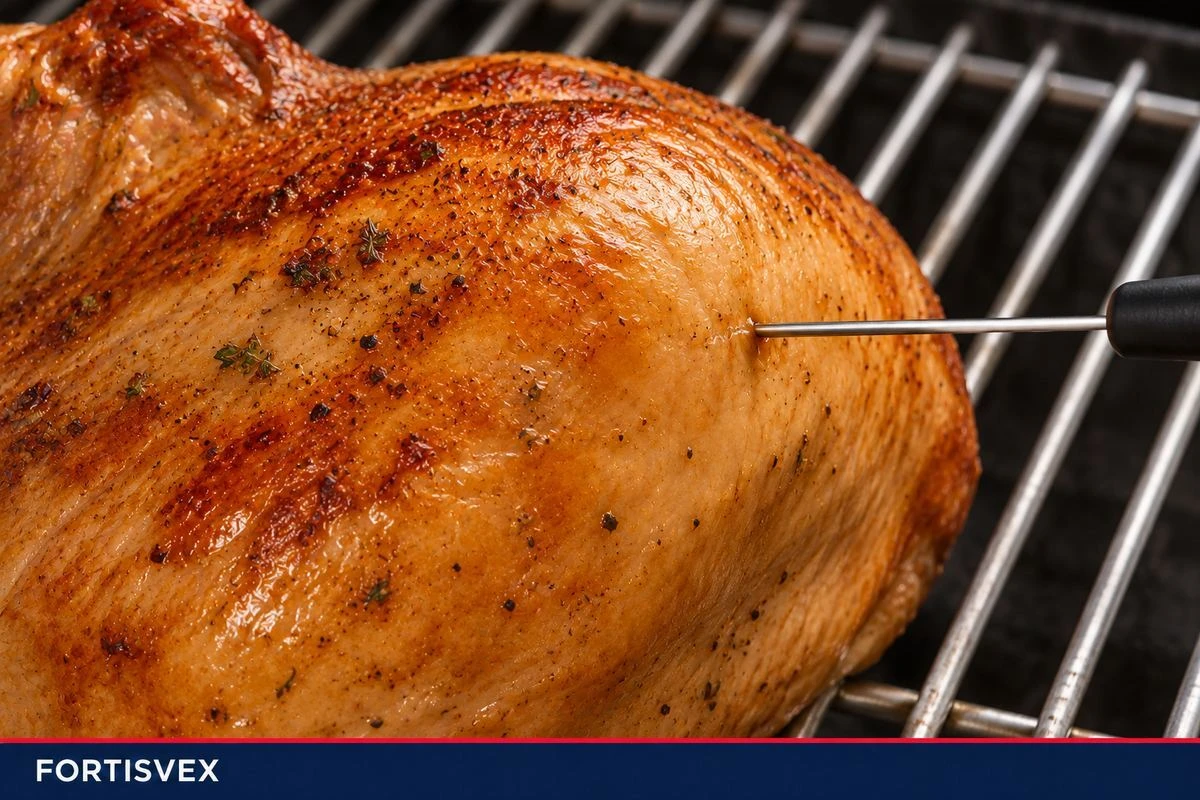
Thickest breast
Approach from the side and aim for the thick center of one breast half. Keep the sensing part of the probe in meat rather than pushing through to the cavity or pressing against the breastbone. Check the other half if the heat has been uneven.
Innermost thigh
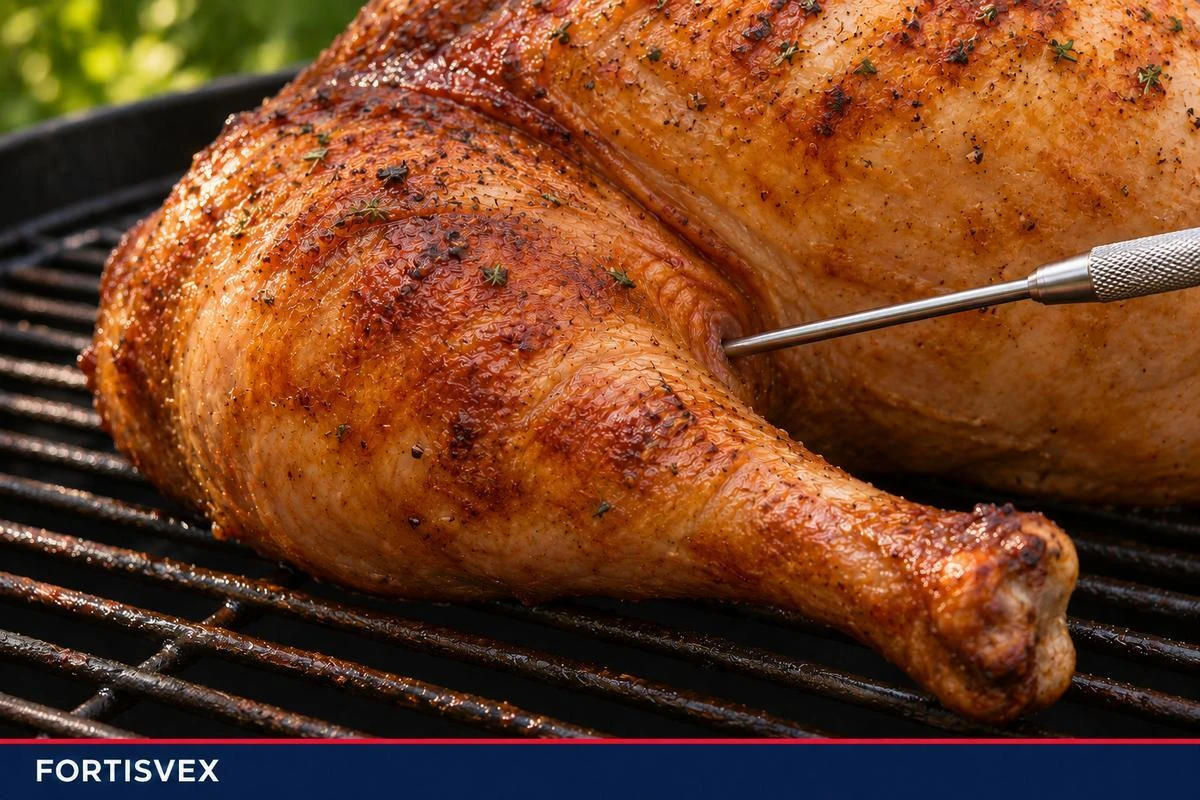
Find the deep thigh meat near where the leg meets the body. Angle into the muscle from the side, away from the joint and bone. Do not measure the drumstick tip or the loose skin at the crease.
Innermost wing
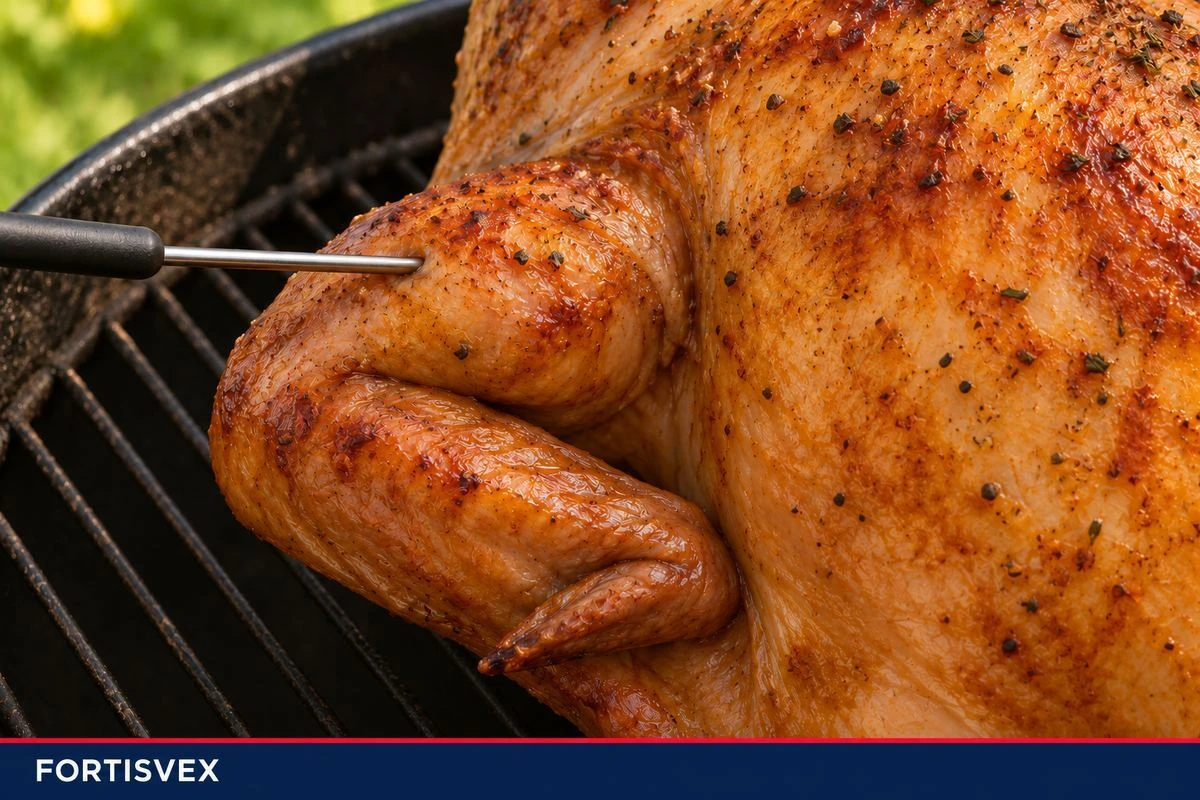
Check the meaty area where the wing joins the body, not the slender wing tip. Move the probe if it contacts the joint, bone, or a pocket without meat.
Every required spot must reach at least 165°F (74°C). If one reads lower, close the lid, continue cooking over indirect heat and recheck. A pop-up timer, the color of the juices or how freely the leg moves cannot replace those checks. Do not take the bird off early and rely on a projected rise while it rests. The darker skin on an applewood smoke-roasted turkey is no exception.
Use the two kinds of thermometer for different jobs
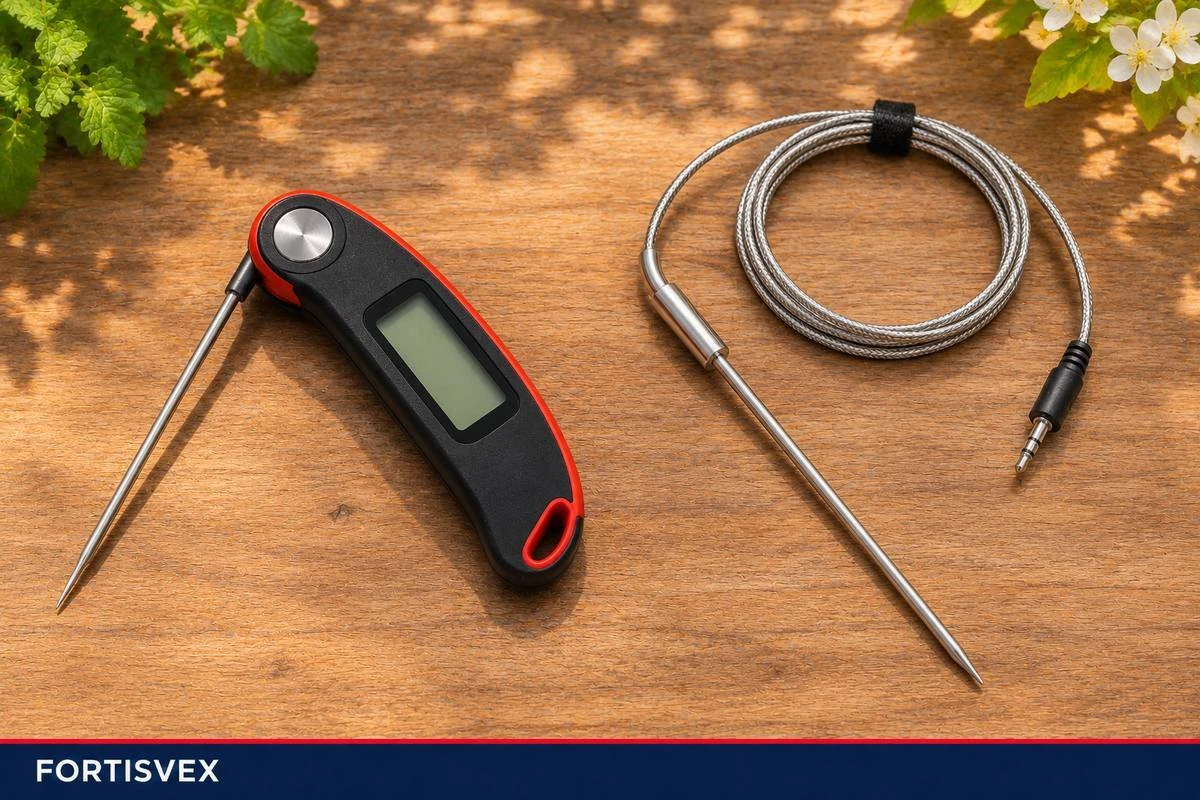
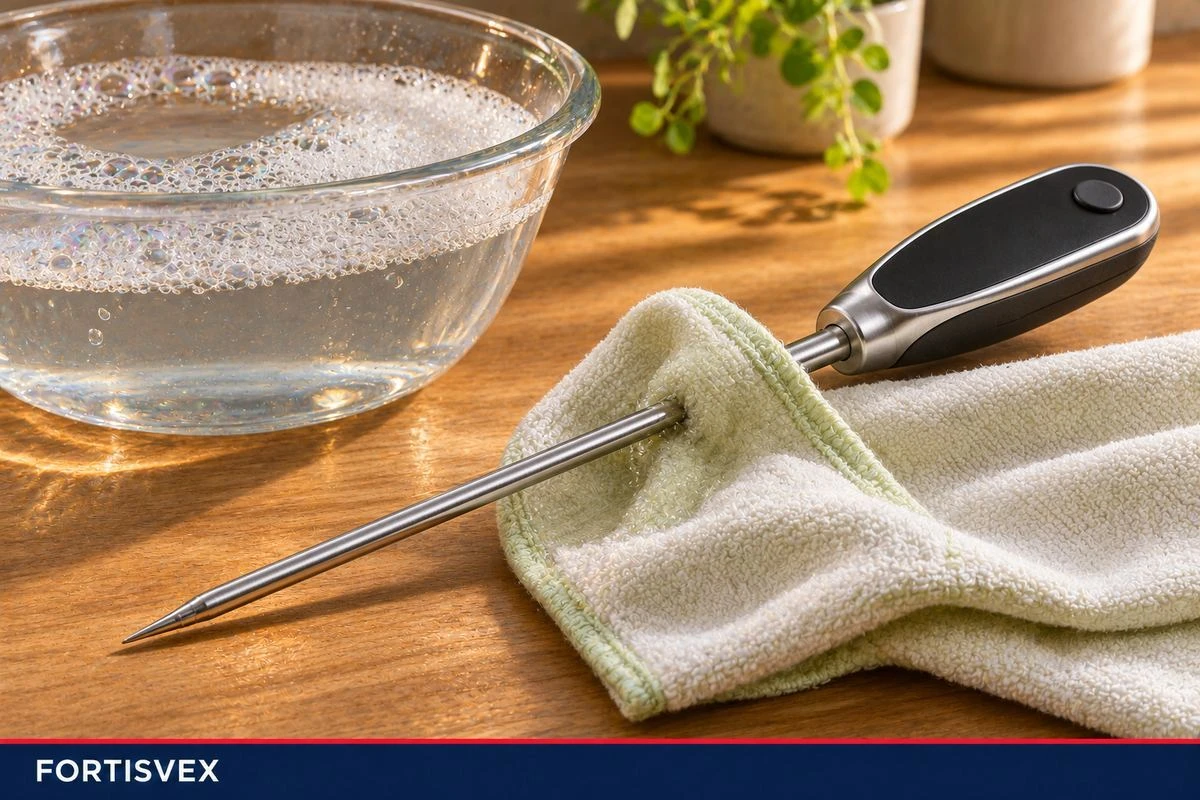
A grill-safe leave-in meat probe is handy for watching progress from outside the kettle with the lid closed. Place it according to its instructions and route its cable only as its maker allows. Near the end, verify the breast, thigh and wing with an instant-read thermometer. Check the thermometer manual for how much of the stem must be in the food, particularly with a dial model. Clean the probe with hot, soapy water after contact with undercooked poultry before using it on cooked food. Follow the manual for cleaning the handle and electronic parts.
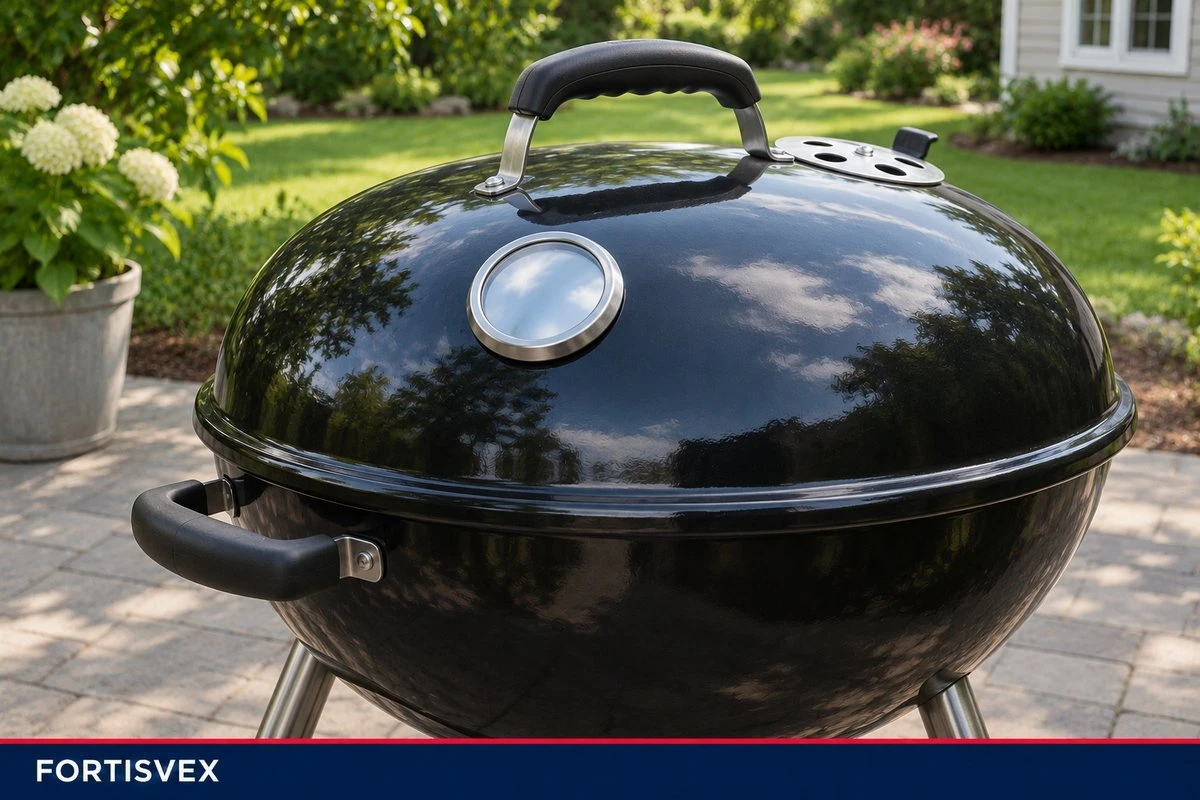
The thermometer on the kettle lid estimates heat in the cooking chamber; it does not measure your dinner. Keep the kettle closed between checks. If the grill is struggling to hold heat or the skin darkens too quickly, see our kettle turkey troubleshooting guide.
What if the readings jump?
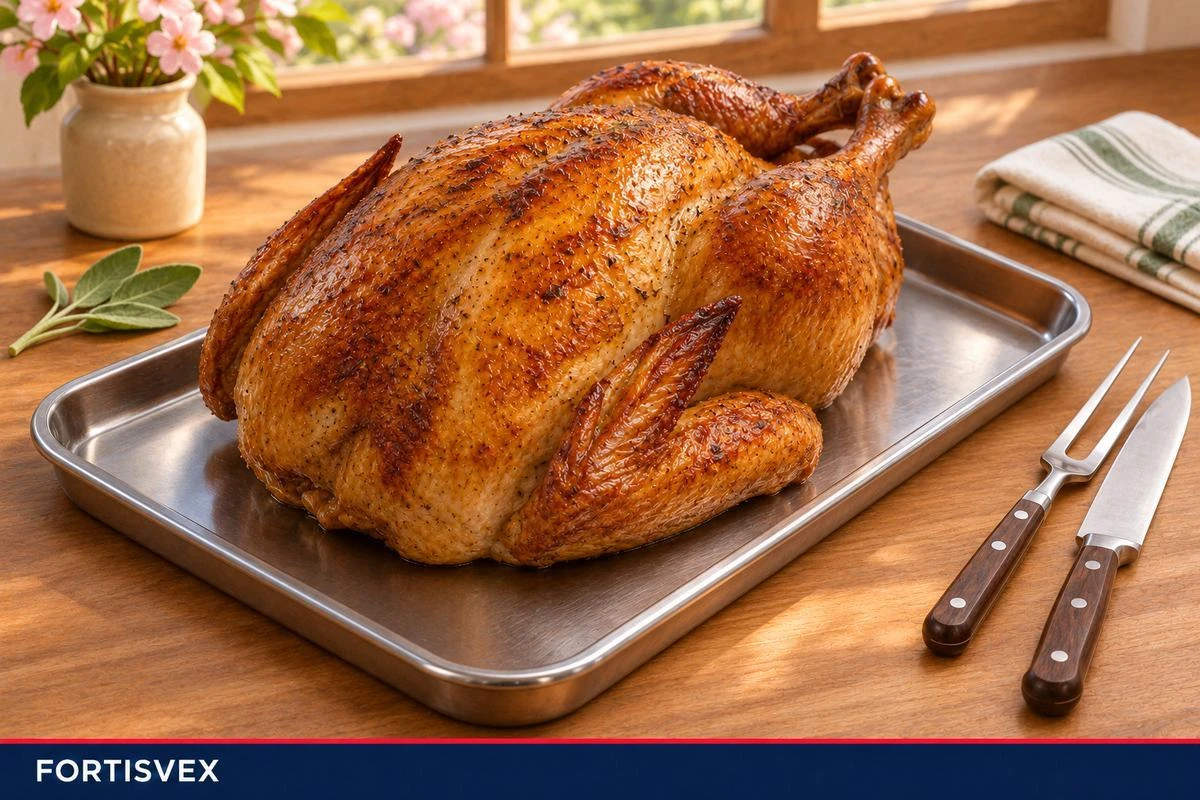
Give the thermometer time to settle according to its instructions. Move the tip slightly and check again if you hit bone or crossed into an air pocket. If you find a repeatable lower reading in the muscle, keep cooking. Once the turkey reaches 165°F in all required spots, transfer it to a clean tray and let it rest about 20 minutes before carving. Set the raw-prep pan aside for washing rather than bringing it to the table.
References: FoodSafety.gov whole-turkey temperature checks, CDC holiday turkey guidance and probe placement and FoodSafety.gov’s safe handling steps.
Recent Posts
-
Weber Kettle Turkey Cooking Too Fast or Too Slow? What to Do
The color on the skin tells you how the surface is browning. It doesn’t tell you whether dinner is e …Nov 26th 2026 -
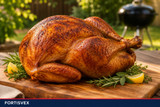
Applewood Smoke-Roasted Whole Turkey on a Weber Kettle
Smoke-roasting gives a turkey a little wood aroma without committing the holiday to a low-and-slow c …Nov 26th 2026 -
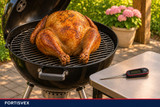
Where to Put a Thermometer in a Whole Turkey on a Weber Kettle
Quick answer: Before taking a whole turkey off a Weber charcoal kettle, check the thickest breast me …Nov 26th 2026