
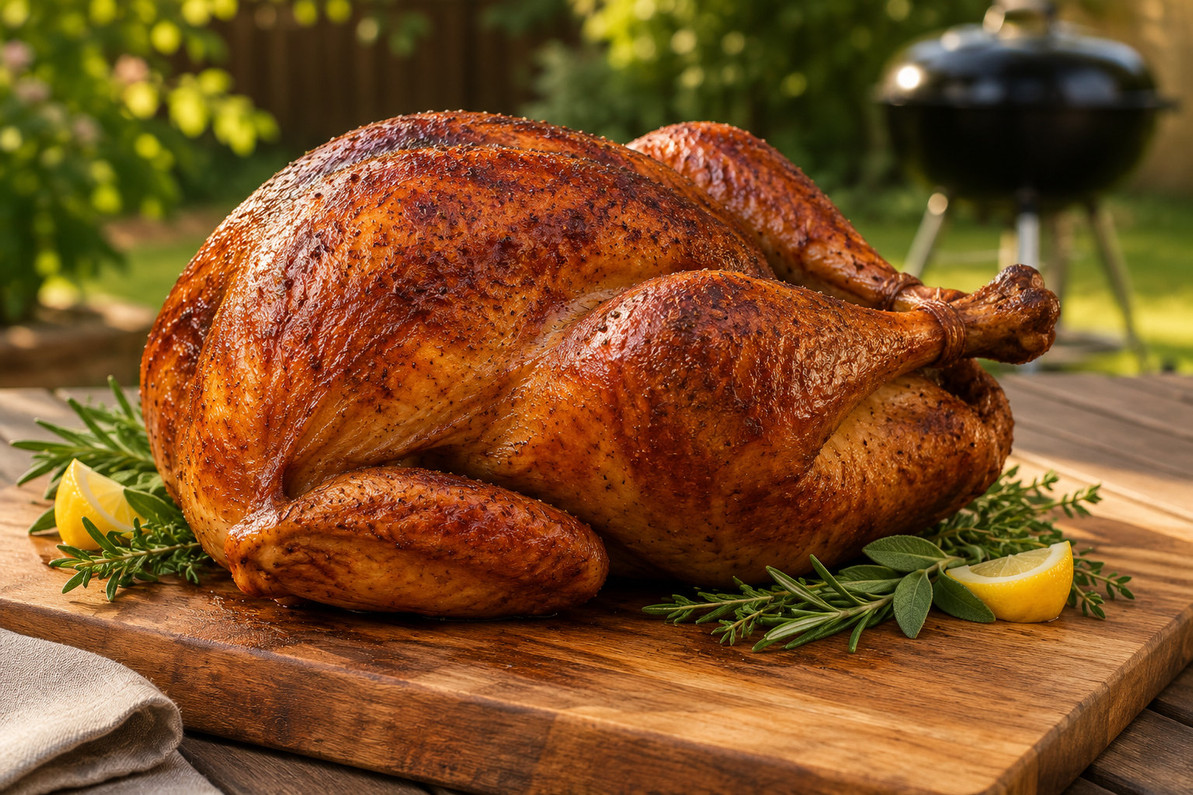
Applewood Smoke-Roasted Whole Turkey on a Weber Kettle
Smoke-roasting gives a turkey a little wood aroma without committing the holiday to a low-and-slow cook. Use applewood for the first part of a hot, indirect kettle roast. The coals do the cooking; the wood is there for flavor.
What you will need
- One fully thawed, unstuffed 10–12-pound turkey
- 1 tablespoon neutral oil, a little black pepper and salt if the package is not already seasoned
- One or two small untreated, food-grade applewood chunks
- A covered charcoal kettle, chimney, briquettes, drip pan, thermometer for the indirect zone and an instant-read food thermometer
Do not use pine, cedar, scrap lumber or wood that has been painted or treated. If applewood is unavailable, use a small amount of another mild cooking wood, such as cherry. Do not use extra wood to try to raise the cooking temperature.
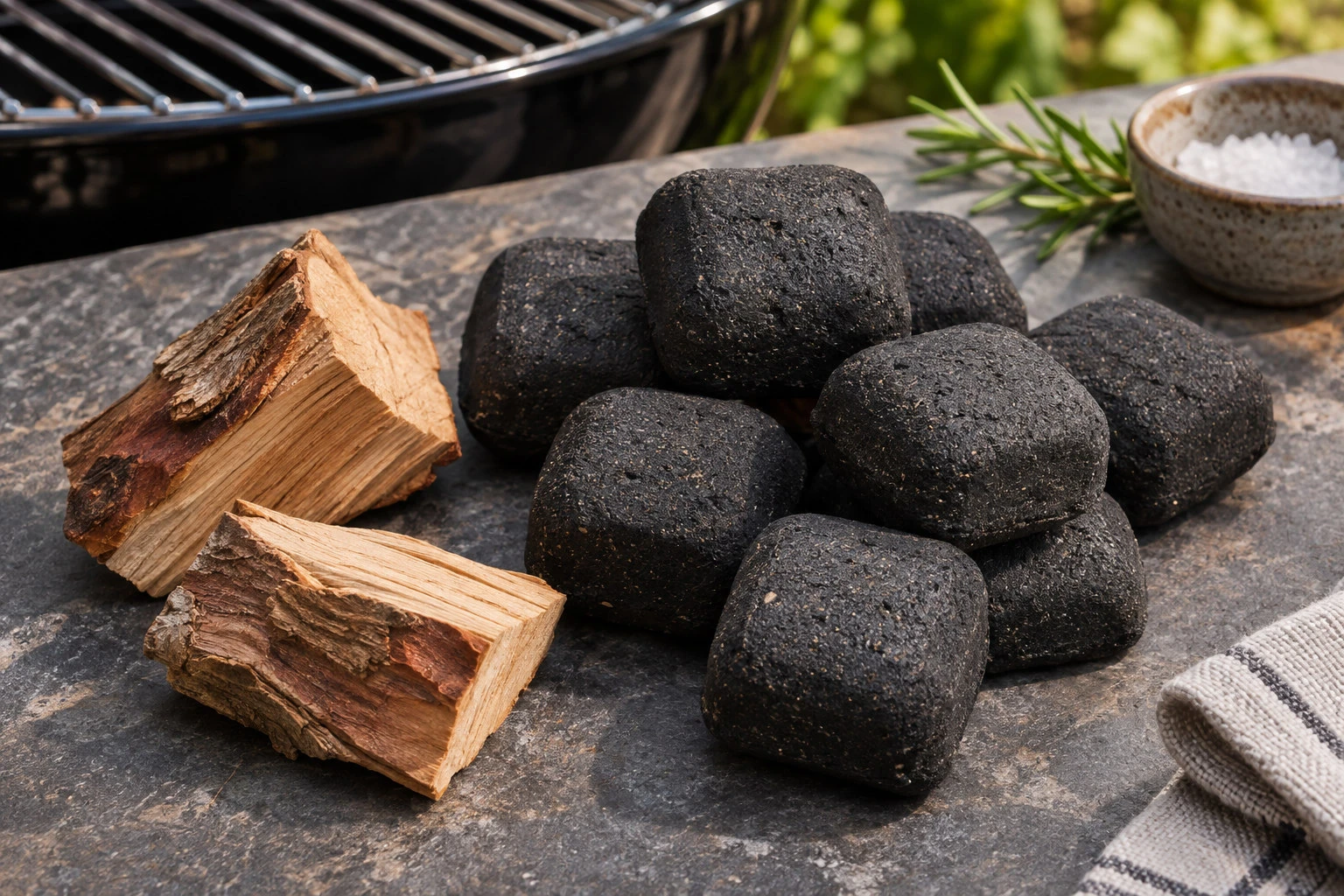
Use a little cooking wood for flavor, not to control the heat.
Let the fire settle before adding the bird
Work outdoors in the open air, away from siding and other combustibles. Bank lit briquettes to either side of the charcoal grate. Center a drip pan between the banks, replace the cooking grate, and bring the covered indirect zone to 350–375°F. Confirm there is clearance above and around the turkey with the lid fully seated. This is a hot smoke-roast, not the lower-temperature smoker method covered in USDA’s smoking instructions.
Set one small applewood chunk on a lit coal bank with long tongs. Put the patted-dry, lightly oiled and seasoned turkey breast-side up over the pan. Keep the kettle covered, with the vents open enough to sustain the fire. A faint wisp is enough. Add a second little chunk only if you want more smoke rather than feeding the kettle wood throughout the roast. If the cooker loses heat, correct the charcoal or airflow, not the wood supply.
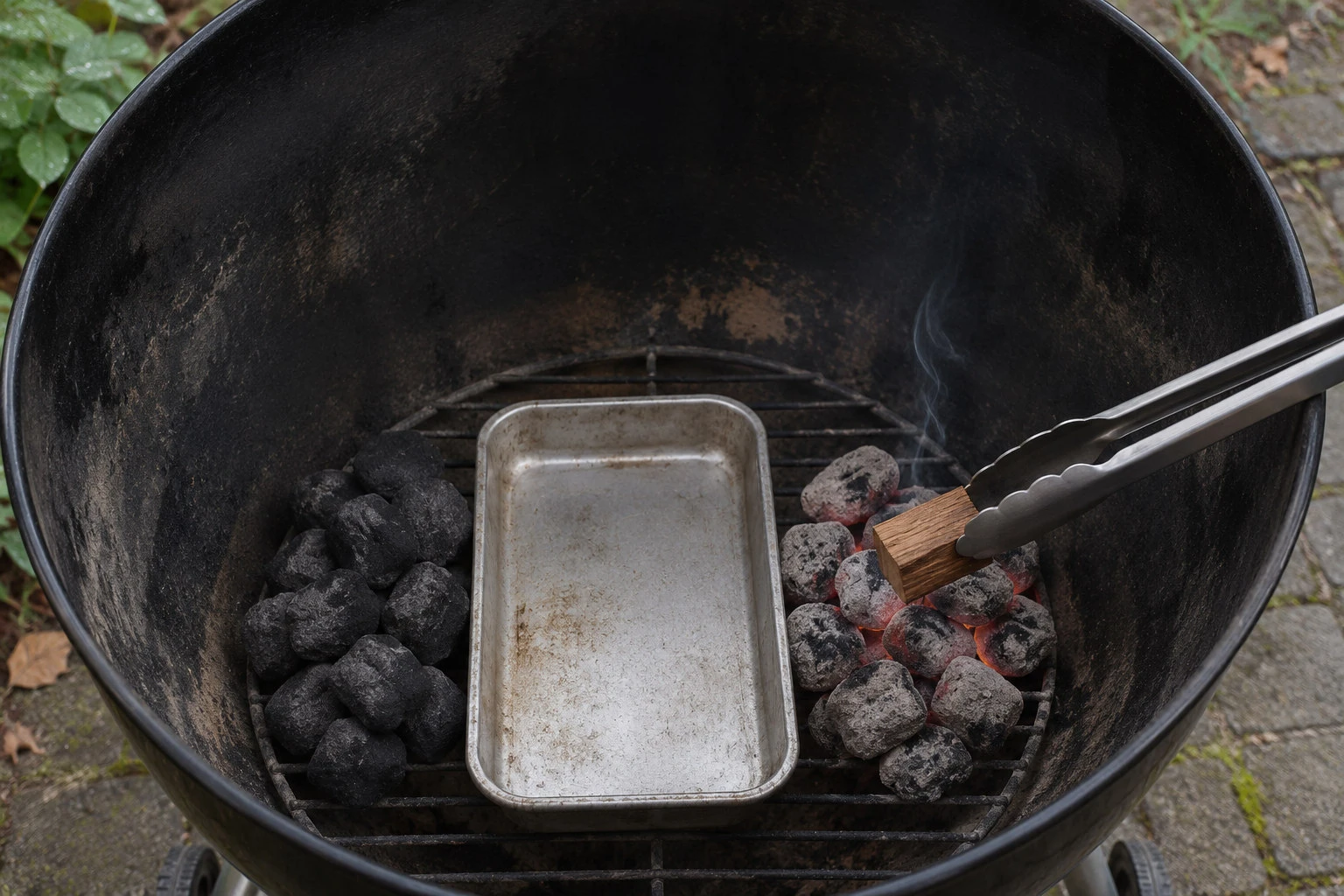
Place the wood on the charcoal bank, away from the pan in the middle.
Finish on temperature, not color
Wood smoke can deepen the skin color before the center is ready. Verify at least 165°F (74°C) in the thickest part of the breast and the innermost portions of the thigh and wing. Keep the probe off bone. If a section darkens too much, loosely shield that section with foil and keep cooking. Once all three locations pass, move the turkey to a clean board and rest for about 20 minutes.
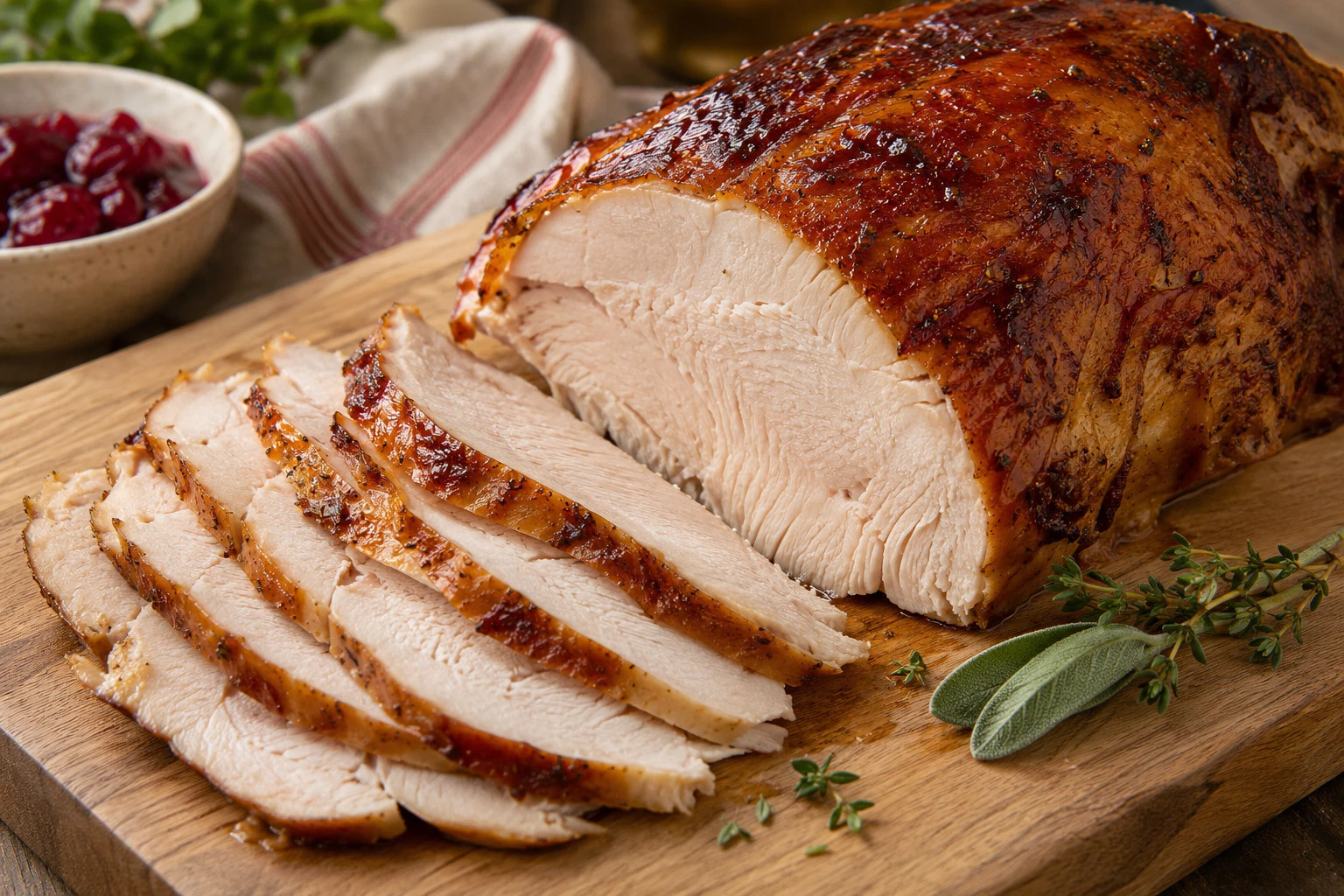
Rest after the turkey has reached the safe temperature, then carve.
Let the sides contrast with the smoke
Serve mushroom-sage bread dressing baked separately. The lemon and leeks in wild rice–stuffed acorn squash offer a brighter side to the smoke. For the same two-bank setup without added wood, see our whole turkey kettle guide.
References: Weber’s hot kettle roasting setup, CPSC charcoal safety and the federal whole-turkey temperature chart.
Recent Posts
-
Lemon-Dill Turkey and Barley Soup on a Weber Charcoal Kettle
Simmer barley and vegetables in a grill-safe Dutch oven on a Weber charcoal kettle. Once the barley …Nov 26th 2026 -
How to Grill a Whole Thanksgiving Turkey on a Weber Kettle
Quick answer: Cook a fully thawed, unstuffed 10–12 pound turkey breast-side up over a drip pan on a …Nov 26th 2026 -
Dry-Brined Whole Turkey on a Weber Kettle: An Overnight Plan
The biggest decision in a dry brine happens in the grocery aisle. Buy a plain turkey whose ingredien …Nov 26th 2026