

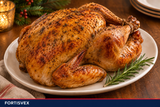
Dry-Brined Whole Turkey on a Weber Kettle: An Overnight Plan
The biggest decision in a dry brine happens in the grocery aisle. Buy a plain turkey whose ingredient list does not already include a salted solution. Then salt it the night before. By the next morning the bird is ready for the kettle without a bucket of brine taking up the refrigerator.
What you will need
- One completely thawed, unstuffed 10–12-pound turkey
- 22–27 grams kosher salt (roughly 2¼ grams per pound; crystal size varies by brand, so use weight)
- 1 teaspoon black pepper, 1 tablespoon chopped fresh rosemary and 1 tablespoon chopped fresh thyme
- 1 tablespoon neutral oil
- A wire rack, rimmed sheet pan, covered charcoal kettle, drip pan and food thermometer
This is a starting ratio for a plain bird. If the label says kosher, self-basting, enhanced, seasoned or injected with a salt solution, skip the dry-brine salt and use the herbs and pepper on cook day. Keep salted butter and salty broth out of the plan.
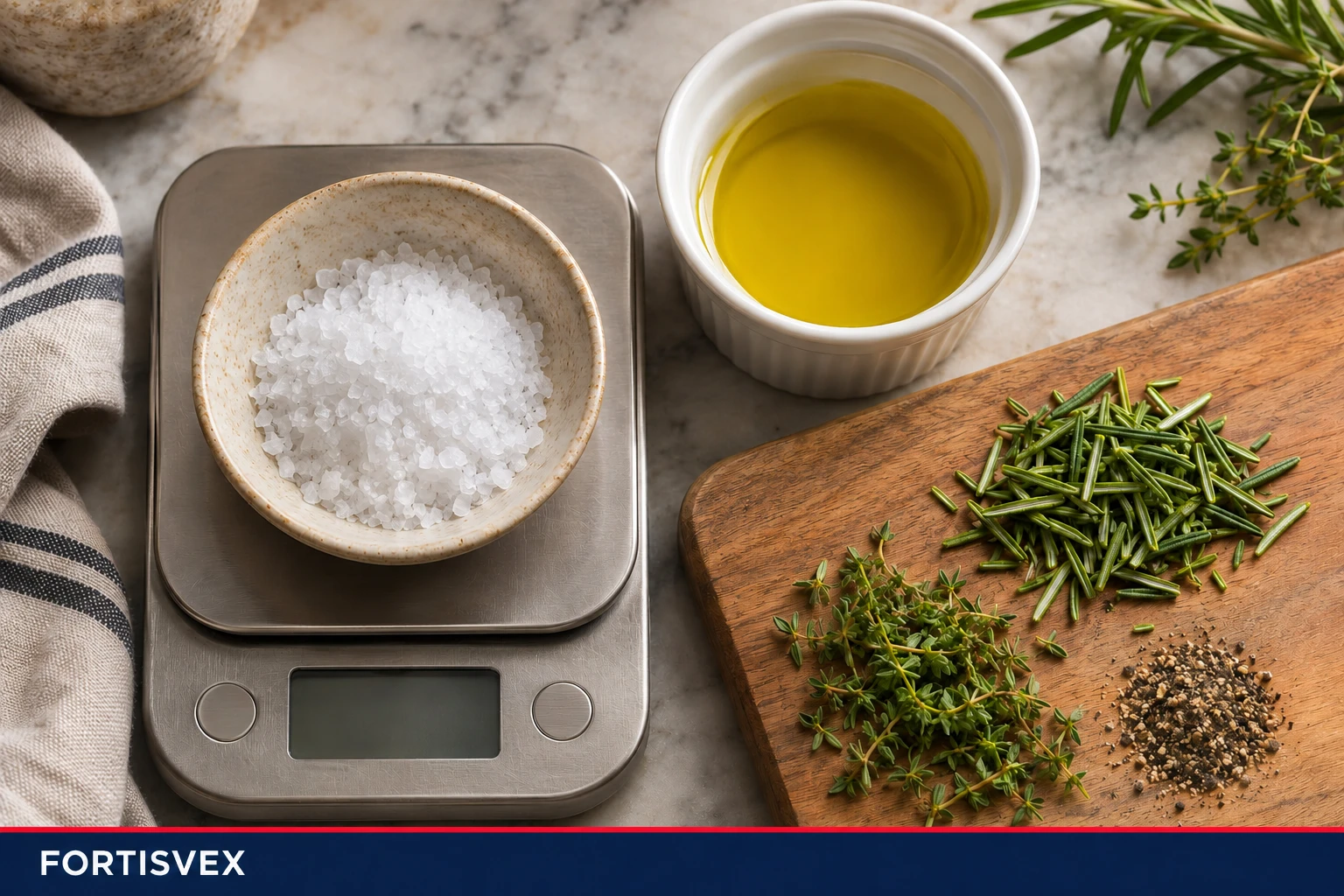
Weigh the salt before handling the raw turkey. Add herbs and pepper on cook day.
The night before: Salt and refrigerate
Remove the neck and giblets and blot the skin dry. Do not rinse raw turkey. Measure all the salt before touching the bird, then distribute it in a thin, even layer over the breast, back, thighs and legs. If a small area of the breast skin lifts easily, a little of the measured salt can go underneath. Do not tear the skin or dump extra salt into the cavity.
Set the turkey on the rack over the rimmed pan on the bottom shelf of a refrigerator at 40°F (4°C) or below. Keep it separated from ready-to-eat food, and arrange the shelf so there is no chance of drips or contact. Refrigerate overnight, about 18–24 hours. Count that time within the USDA’s one- to two-day refrigerated window after thawing or buying fresh poultry. The USDA’s dry-brining explanation describes how salt and the bird’s own moisture do the work.
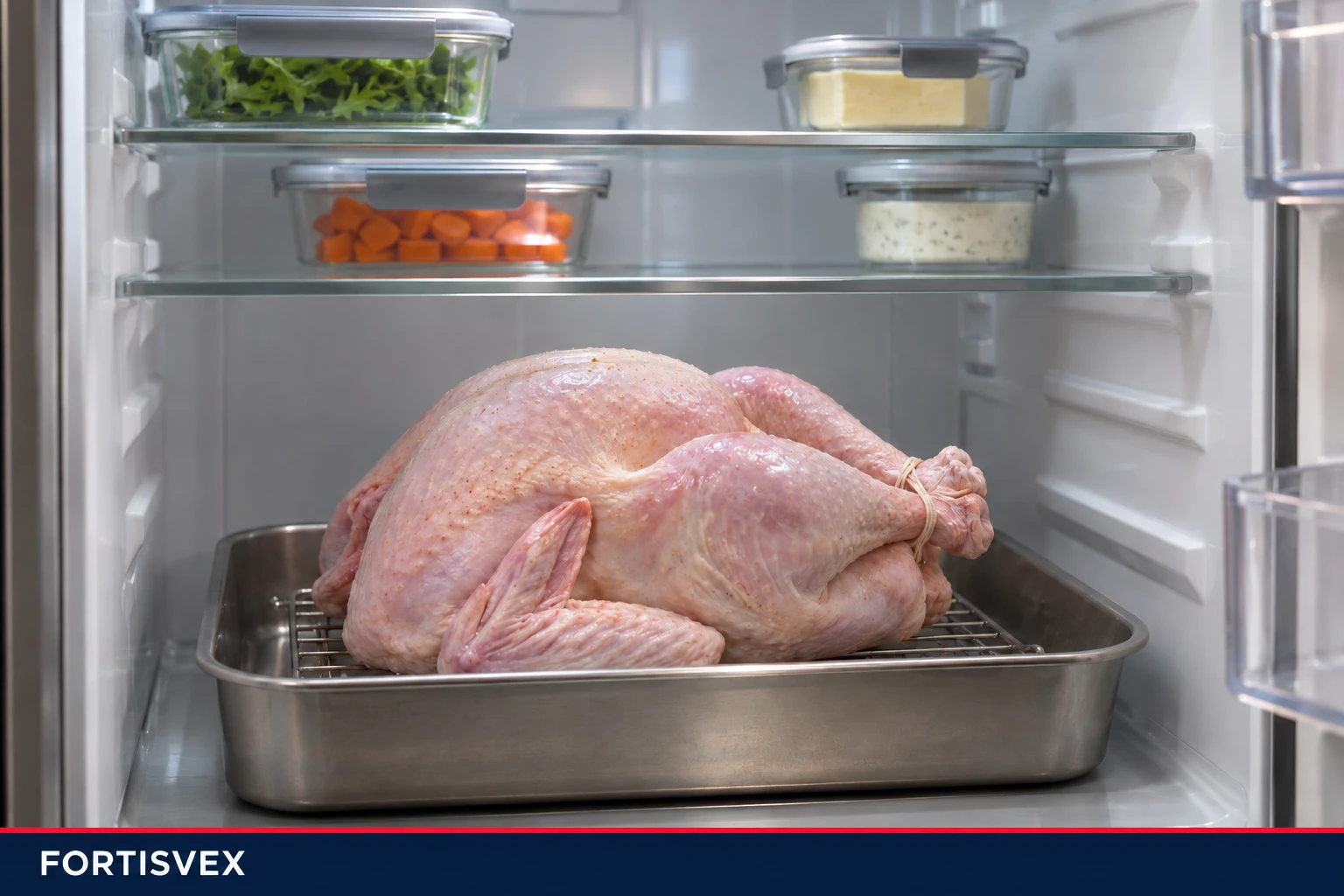
Use a rimmed pan to prevent drips from reaching other foods.
Cook day: Season the surface, not the cavity
Preheat the covered kettle outdoors for indirect roasting at 350–375°F. Put the drip pan between the two charcoal banks, below the cooking grate. Take the bird directly from the refrigerator when the grill is ready. Blot any visible wet spots, brush on a light film of oil, and add the herbs and pepper. No second round of salt is needed.
Put the turkey breast-side up in the coal-free center and shut the lid. Check with a food thermometer before taking it off: the thickest part of the breast and the innermost parts of the thigh and wing must each reach 165°F (74°C). Give the cooked turkey about 20 minutes on a clean board before carving. If the herbs darken sooner than you want, loosely shield only that area with foil while the meat finishes.
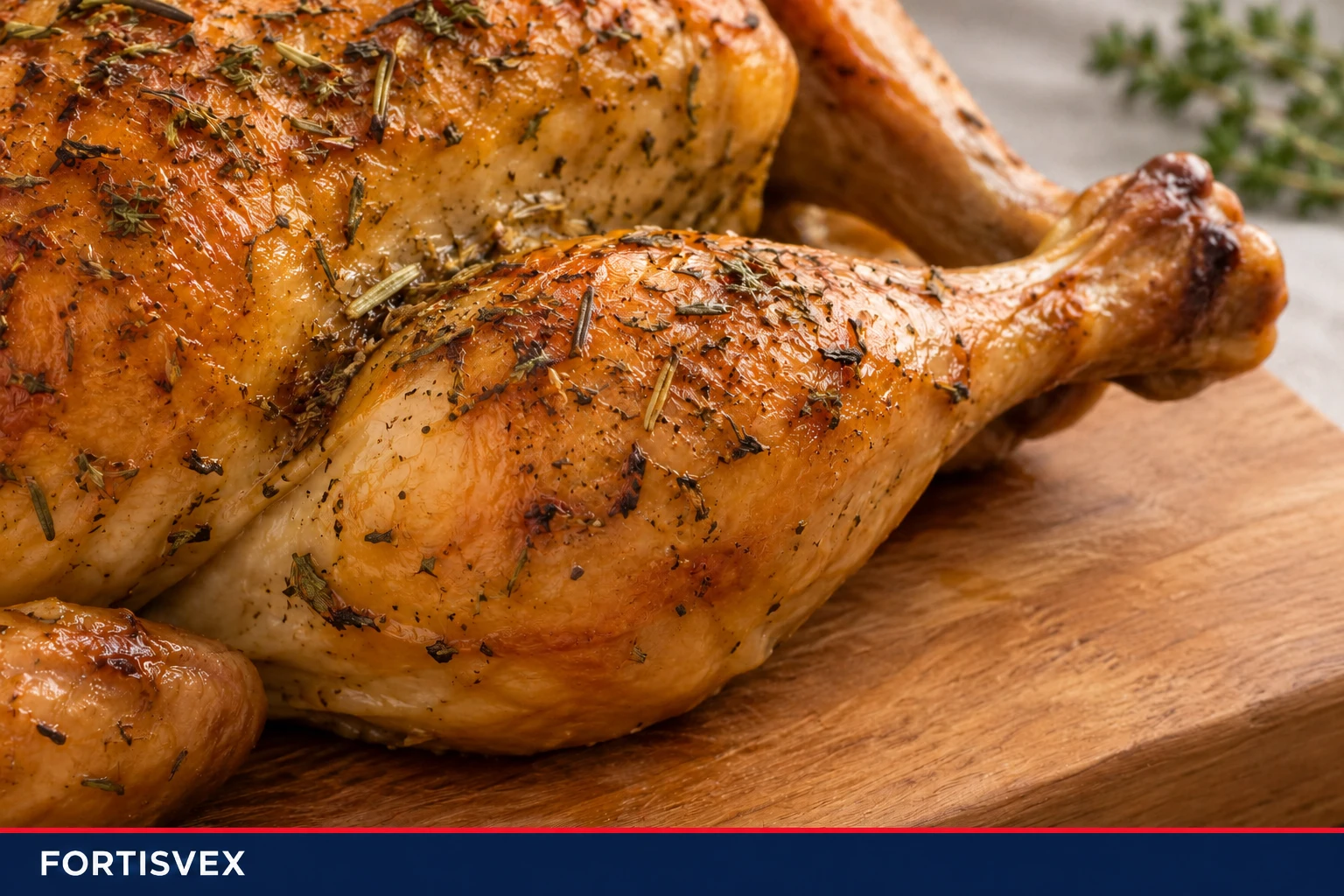
Browned herbs are a flavor cue, not a test of doneness.
Build the plate around it
Use our whole turkey kettle guide if you want to see exactly where the pan and coals go. The herb seasoning works with mushroom-sage bread dressing on the side. Set out wild rice–stuffed acorn squash if some guests want a meatless main.
References: USDA brining and refrigeration guidance, CDC turkey preparation and Weber’s kettle roasting setup.
Recent Posts
-
How to Grill a Whole Thanksgiving Turkey on a Weber Kettle
Quick answer: Cook a fully thawed, unstuffed 10–12 pound turkey breast-side up over a drip pan on a …Nov 26th 2026 -
Dry-Brined Whole Turkey on a Weber Kettle: An Overnight Plan
The biggest decision in a dry brine happens in the grocery aisle. Buy a plain turkey whose ingredien …Nov 26th 2026 -
Charcoal-Grilled Delicata Squash with Brown Butter and Sage
To grill delicata squash on a Weber charcoal kettle, cut it into 3/4-inch crescents, sear them over …Nov 26th 2026