
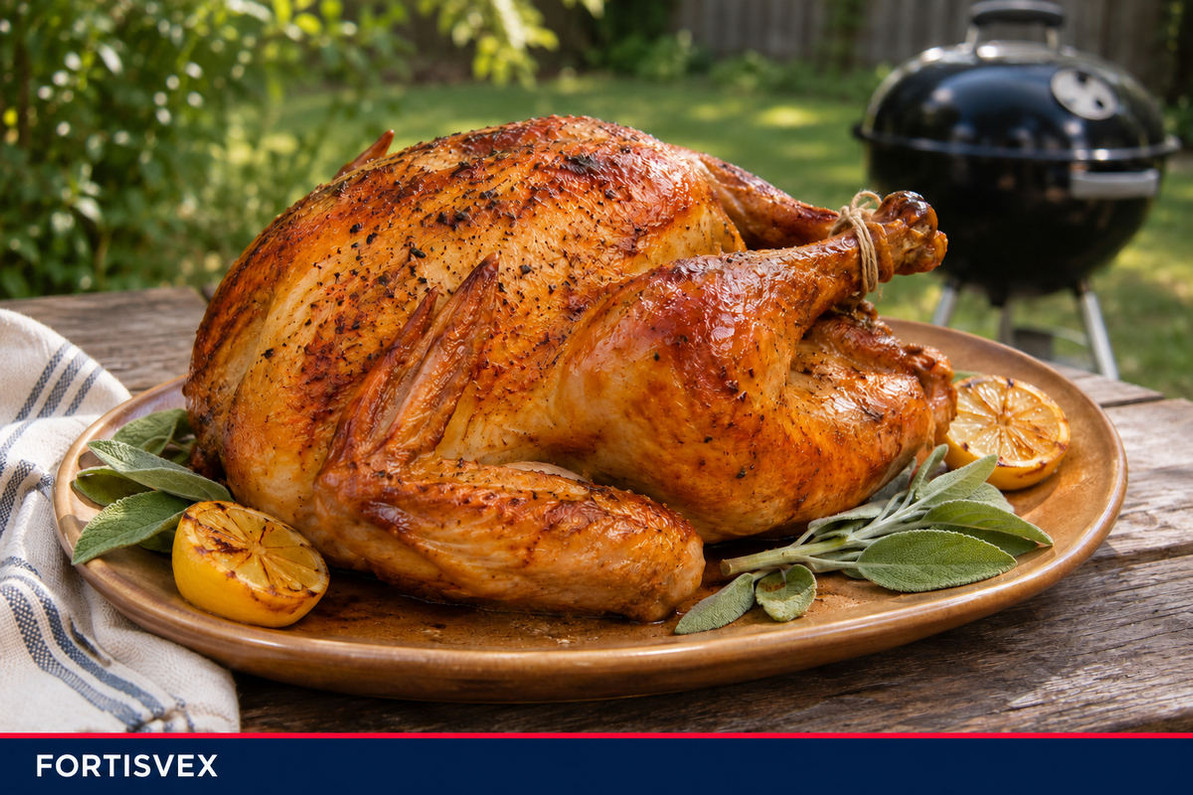
How to Grill a Whole Thanksgiving Turkey on a Weber Kettle
Quick answer: Cook a fully thawed, unstuffed 10–12 pound turkey breast-side up over a drip pan on a Weber charcoal kettle, with coals on either side. Aim for 350–375°F at the grate. Take it off the grill only when the thickest breast and innermost thigh and wing each reach at least 165°F (74°C).
The easiest way to think about a Weber kettle turkey is to picture an outdoor oven: the bird sits over a drip pan, not the fire, and the lid stays shut between checks. Start with a fully thawed, unstuffed 10–12-pound turkey and give yourself enough time to cook by temperature, not the dinner bell.
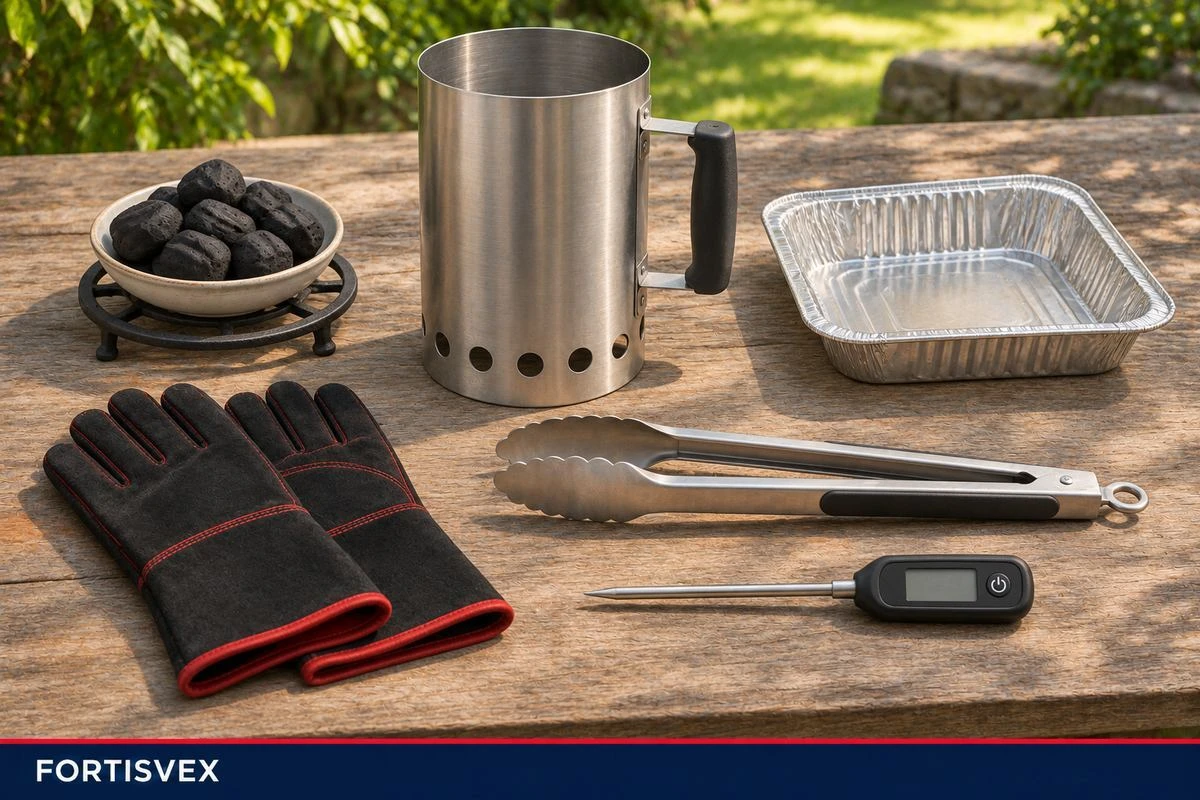
Plan for: A covered charcoal kettle that fits the bird, a chimney starter, briquettes, a sturdy drip pan, long tongs, grill gloves, a grate-level thermometer and an instant-read food thermometer. Have a clean platter and a clean roasting pan ready. The Weber charcoal owner’s guide gives 2 to 2½ hours for a 10–12-pound unstuffed turkey over indirect medium heat; treat that as a rough estimate, not a promise.
1. Fit and prep the bird
Check the fit before lighting the coals. Use the grill’s manual for clearance; Weber’s charcoal guide recommends about an inch between food and the closed lid. The pan, grate and turkey must all fit at once. If they don’t, use a smaller bird or cook in the oven.
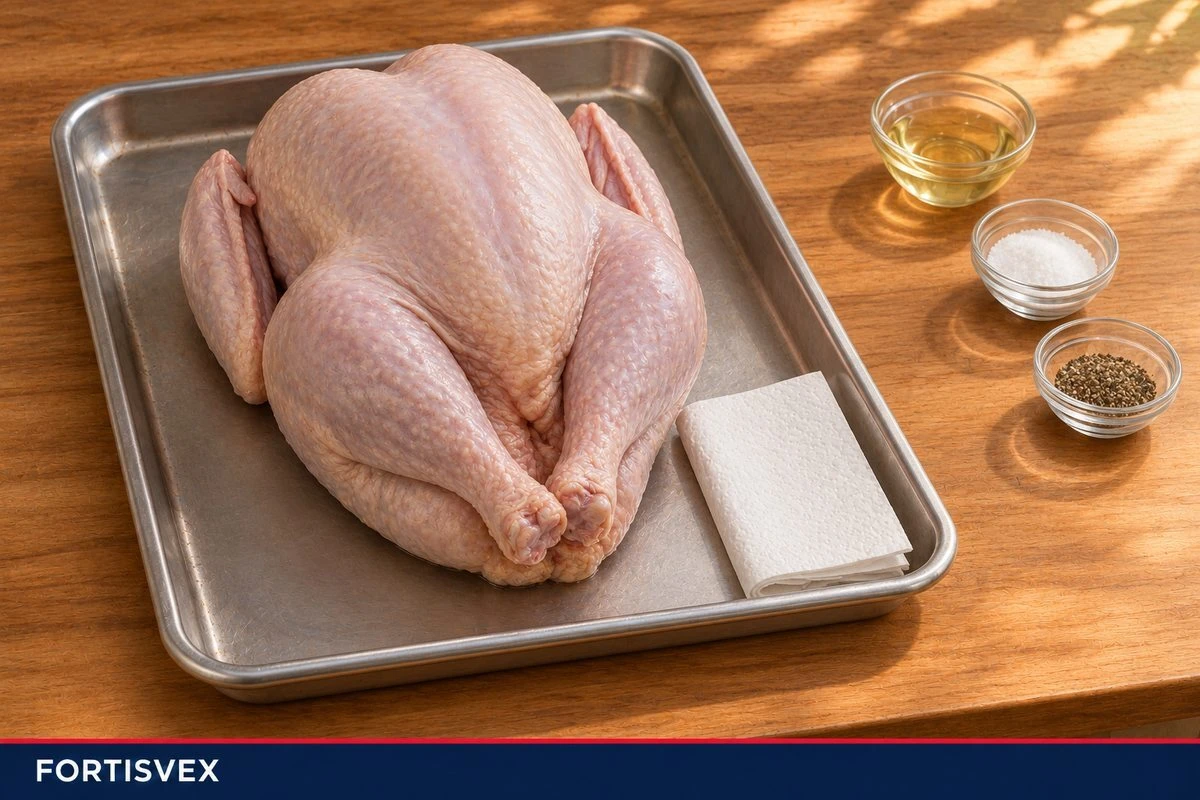
If you are starting with a frozen bird, allow roughly 24 hours in the refrigerator per 4–5 pounds, and never thaw it on the counter. Take the neck and giblet packet out of both cavities. Pat the skin dry with paper towels rather than rinsing it. Rub it lightly with neutral oil, then season with black pepper and salt unless the label says it was already salted or injected. Keep the cavity empty and bake the mushroom-sage bread dressing in its own dish.
2. Build the fire beside the turkey
Set the kettle on a stable surface outdoors in open air, clear of anything that could catch fire. Light the briquettes in a chimney according to your grill manual. When ready, divide the lit coals into two piles on opposite sides of the lower grate. Nestle the drip pan in the center, then replace the cooking grate. The pan goes below the turkey, not directly over the coals. With the lid on, let the grill settle around 350–375°F in the indirect zone. That is a roasting target for this method, not the turkey’s doneness temperature.
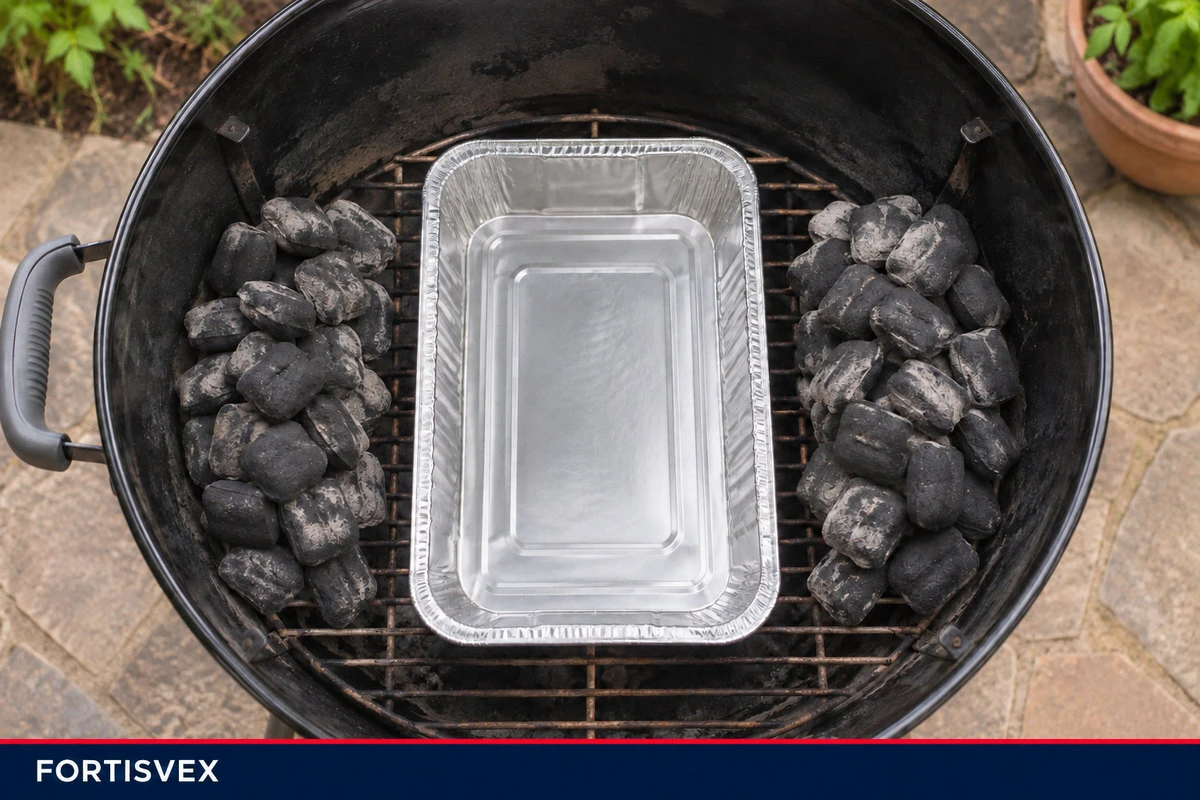
This cold layout shows where the two lit coal banks and the drip pan will go.
3. Close the lid and cook to 165°F in three places
Set the turkey breast-side up over the pan, with no coals directly underneath. Close the lid. Check the grate temperature without lifting the lid whenever possible, and make modest vent or fuel changes instead of repeatedly opening it. Keep spare briquettes on hand. Use a leave-in probe if you have one, but make the final check with an instant-read thermometer.
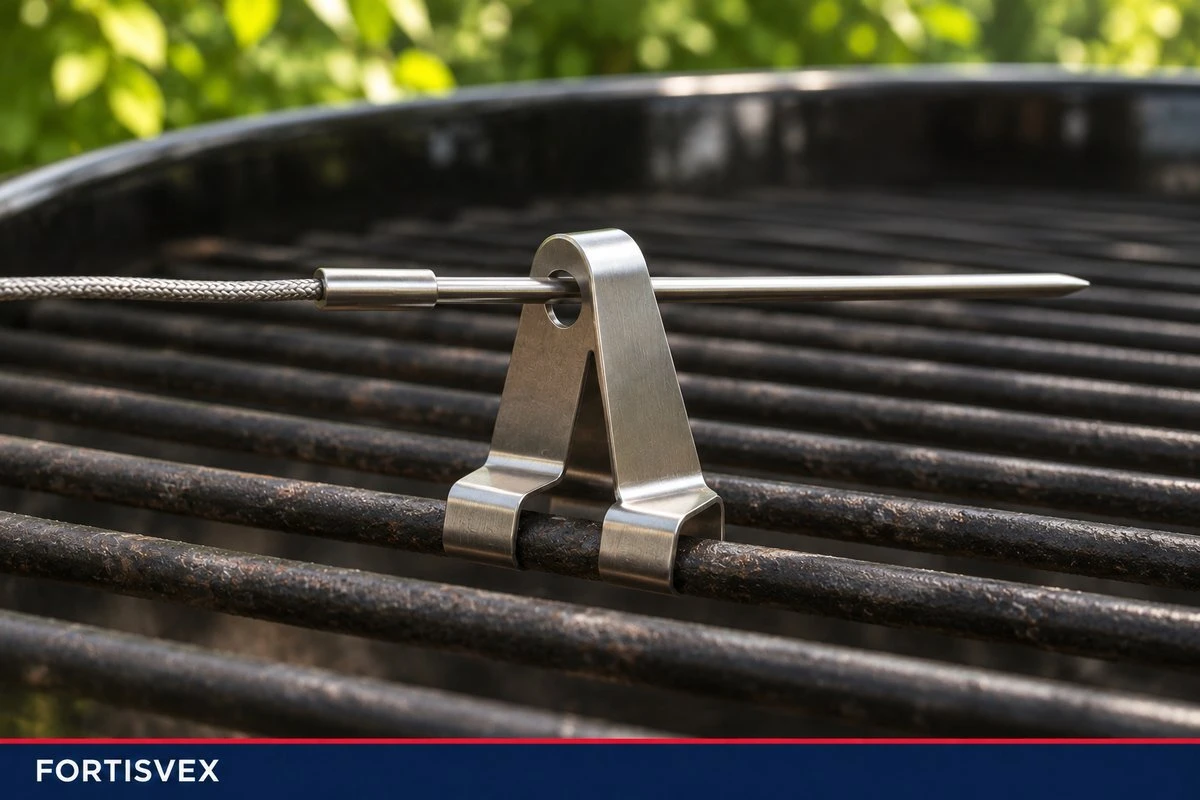
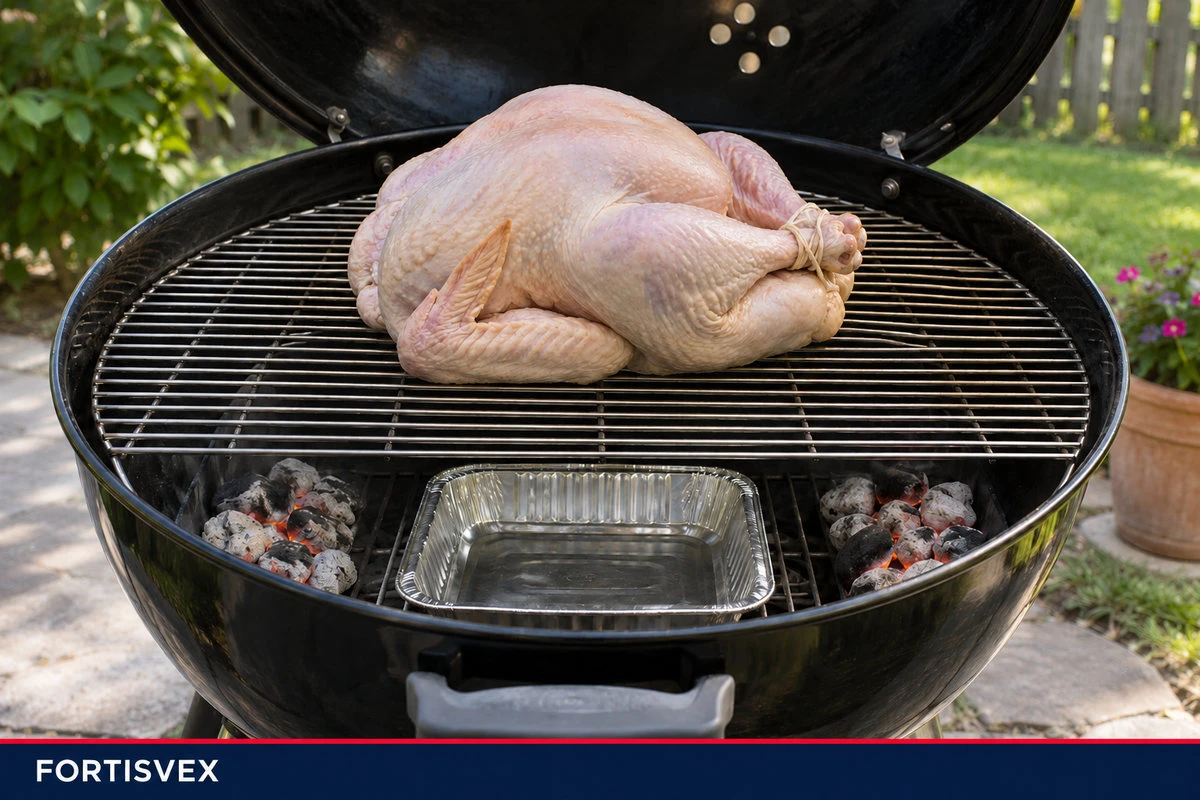
The turkey sits over the drip pan, not directly above the fire.
Before lifting the turkey off the grill, find 165°F (74°C) or higher in the thickest part of the breast and the innermost parts of the thigh and wing. Avoid the bones. Test the other side if the readings differ or the bird browned unevenly. A brown skin or a popped timer doesn’t replace these checks. Follow the federal safe-temperature chart.
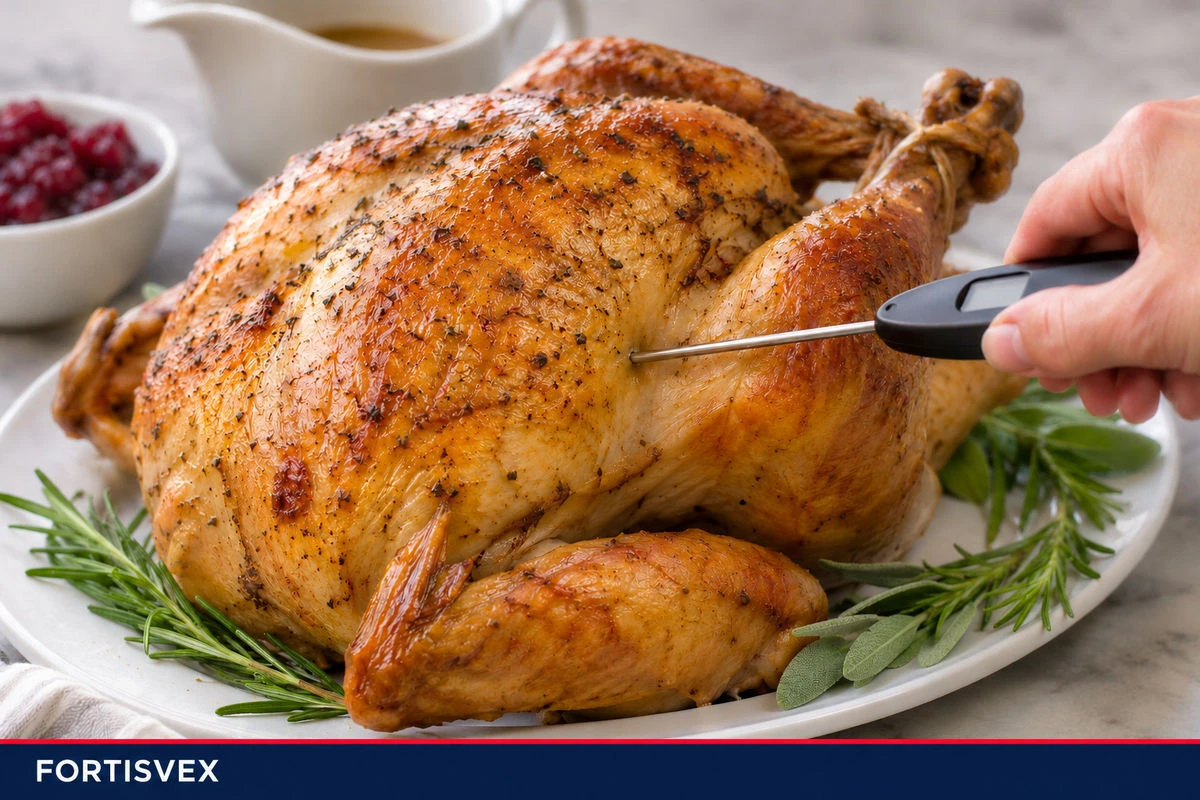
Check the breast, innermost thigh and innermost wing separately, without touching bone.
4. Rest it and bring out the sides
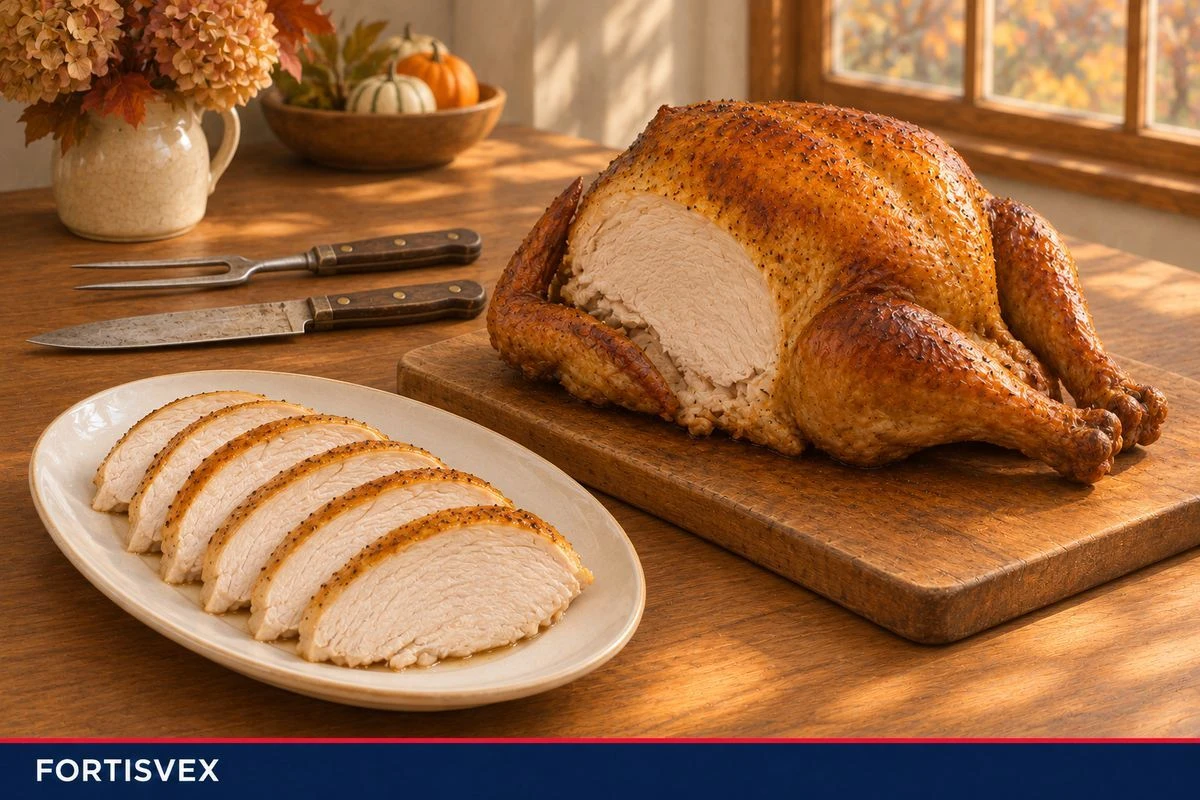
Move the bird to a clean platter or carving board and rest it about 20 minutes before carving. The rest helps with carving; it is not a substitute for reaching the safe temperature on the grill. Keep the kettle free during the turkey cook. The wild rice–stuffed acorn squash can cook inside, and the maple-ginger grilled pears can go on the kettle after dinner.
For more on fuel placement and monitoring, see Weber’s kettle turkey guide. For precautions specific to charcoal grills, see the CPSC’s charcoal guidance. For safe thawing and not washing poultry, see the CDC’s turkey preparation guidance.
Recent Posts
-
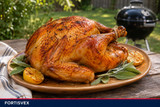
How to Grill a Whole Thanksgiving Turkey on a Weber Kettle
Quick answer: Cook a fully thawed, unstuffed 10–12 pound turkey breast-side up over a drip pan on a …Nov 26th 2026 -
Dry-Brined Whole Turkey on a Weber Kettle: An Overnight Plan
The biggest decision in a dry brine happens in the grocery aisle. Buy a plain turkey whose ingredien …Nov 26th 2026 -
Charcoal-Grilled Delicata Squash with Brown Butter and Sage
To grill delicata squash on a Weber charcoal kettle, cut it into 3/4-inch crescents, sear them over …Nov 26th 2026