
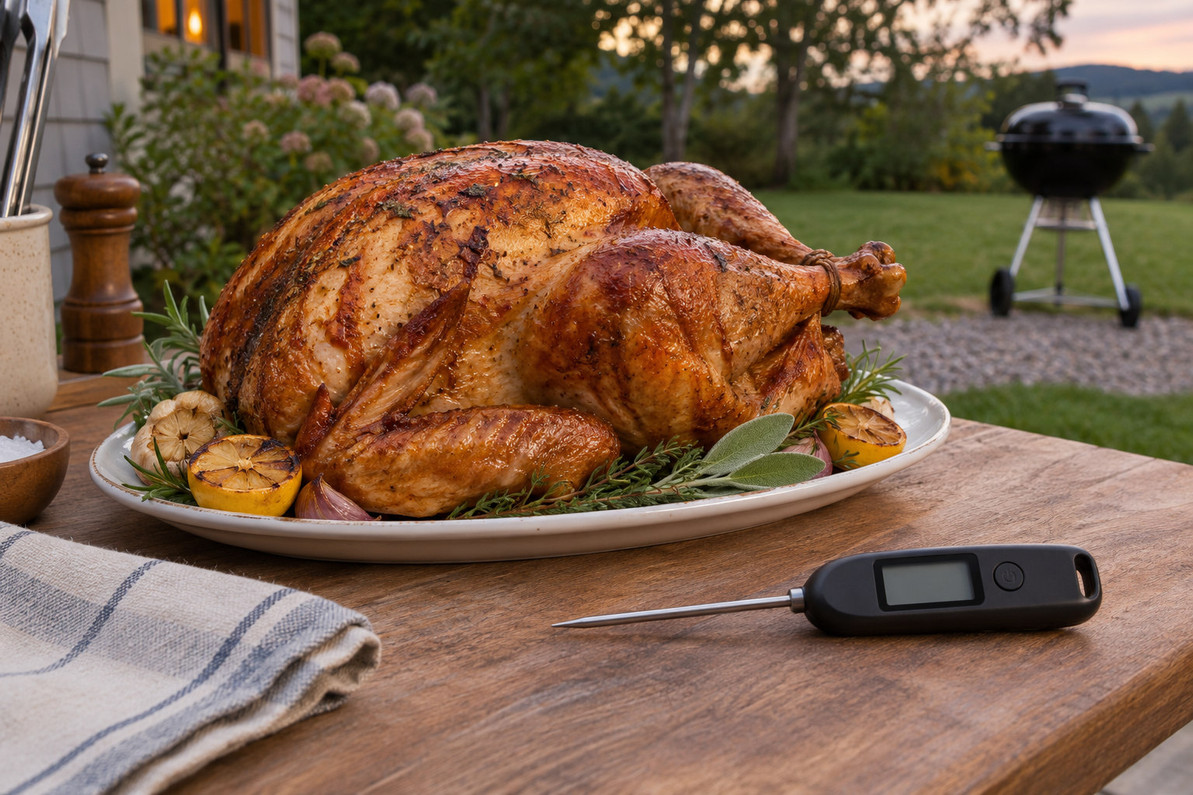
Weber Kettle Turkey Cooking Too Fast or Too Slow? What to Do
The color on the skin tells you how the surface is browning. It doesn’t tell you whether dinner is early or late. With a whole turkey on a Weber charcoal kettle, check the temperature near the bird and then see what the meat is doing. Those readings point to different fixes.
If the grill is cool and the turkey is behind
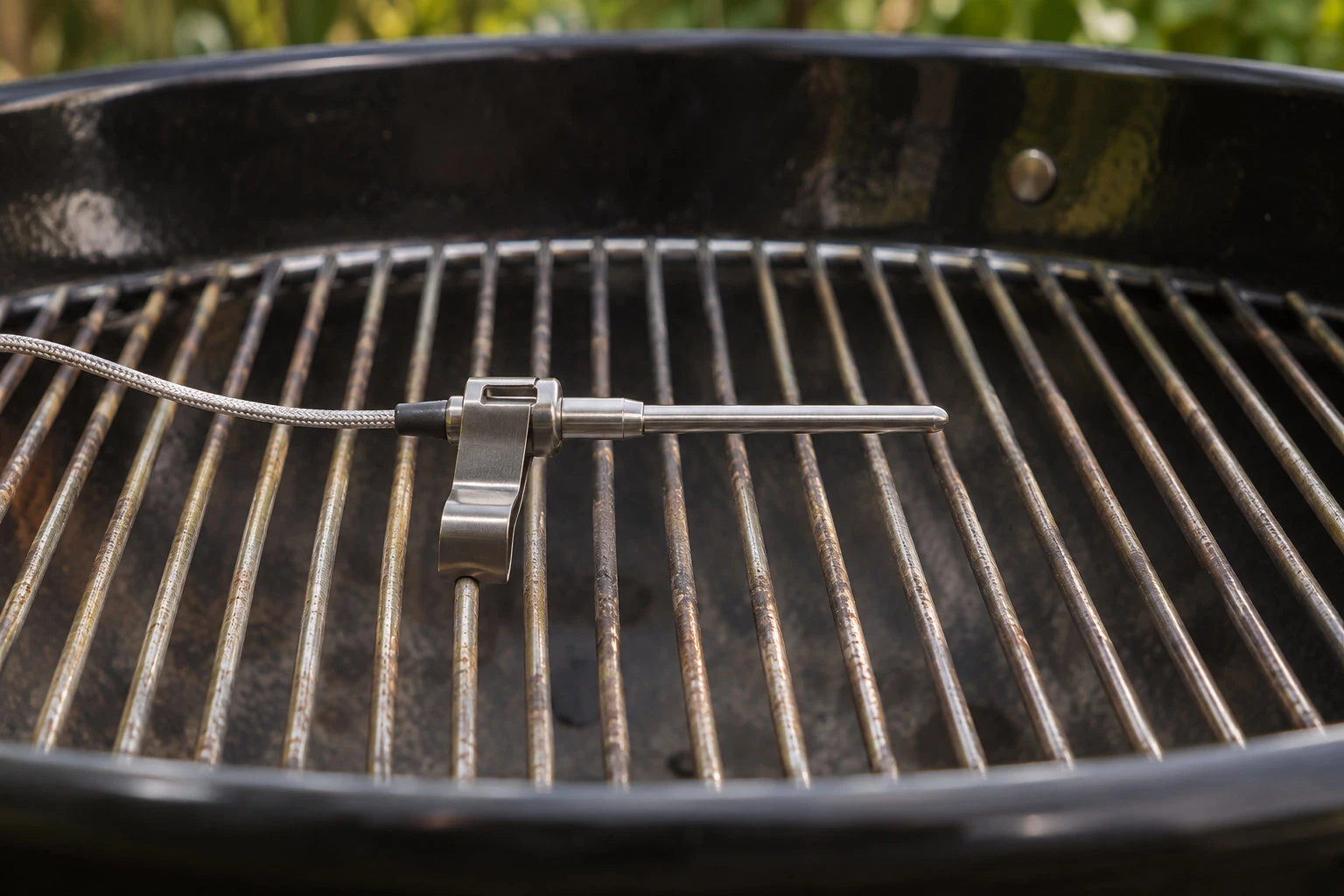
Check that your grill thermometer is in the indirect zone, not above a pile of coals or touching meat or metal. On a covered kettle set up for a 325–350°F indirect roast, a short dip after a lid opening does not need a big correction. Put the lid back on and watch the trend. If the temperature stays low, make a small airflow adjustment and check whether ash is restricting the lower vent. If the coal bed is running out of fuel, carefully add charcoal as needed, following the model’s instructions. Avoid lifting the lid just to watch it recover.
If you cannot restore cooking heat immediately, have a 325°F or hotter oven ready. Move the turkey straight into it in a sturdy oven-safe pan and keep cooking. Don’t refrigerate a partly cooked bird for later or serve the areas that merely look done. If the fire went out while you weren’t monitoring it and you can’t account for how long the turkey sat warm, don’t serve it.
FORTISVEX recipe illustration.
If the skin is dark but the meat is not done
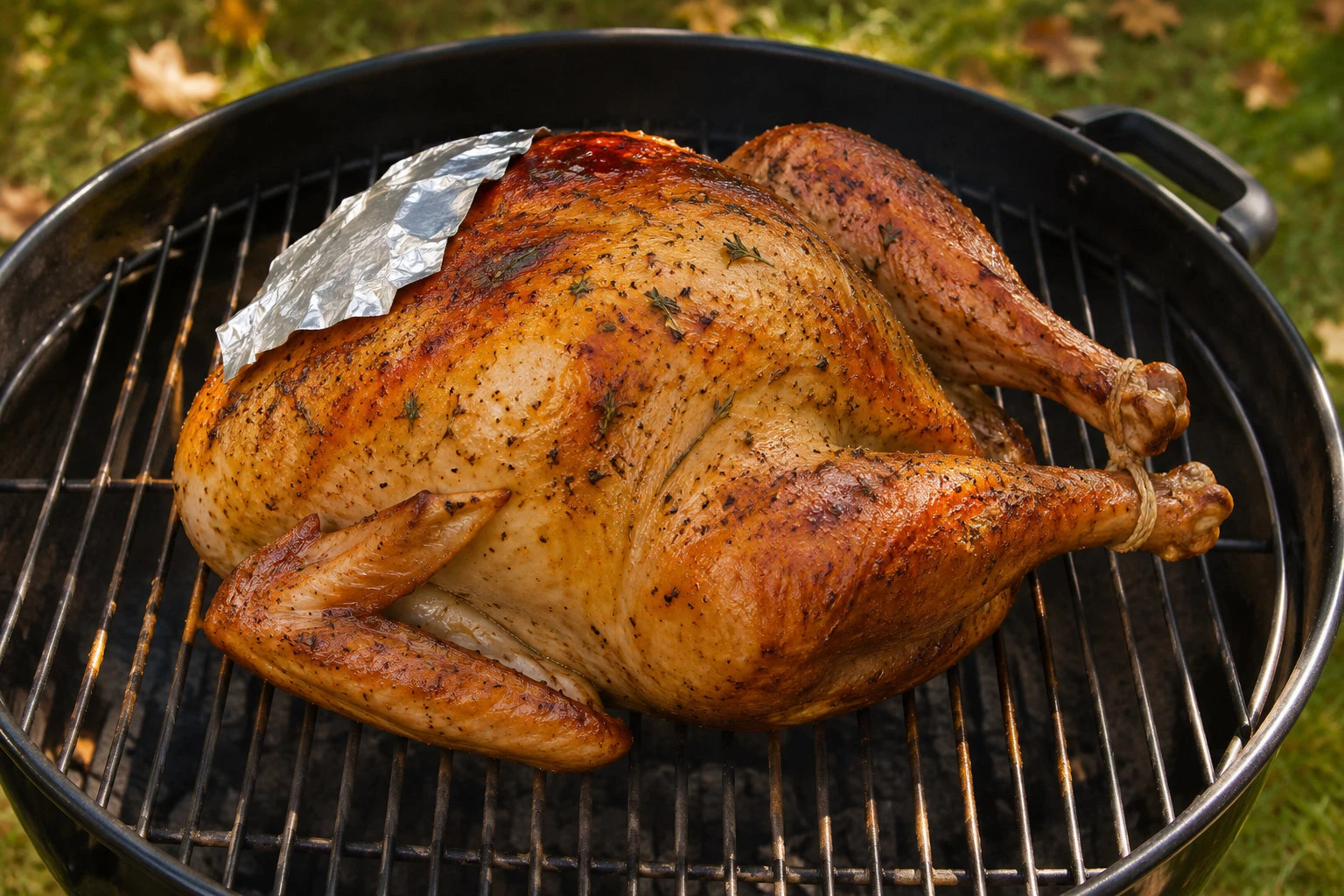
Confirm that the turkey is over the drip pan and clear of direct coals. Make modest vent adjustments if the kettle is running hot, and keep enough airflow to sustain the fire. Cover just the darkest area loosely with foil. Then check the thickest part of the breast and the innermost portions of the thigh and wing, staying clear of bone. A leave-in breast probe gives you one reading, not three. Continue cooking until each site reaches 165°F (74°C) or higher. Don’t treat the rest as extra cooking time to make the safety target.
FORTISVEX recipe illustration.
If the turkey is actually done early
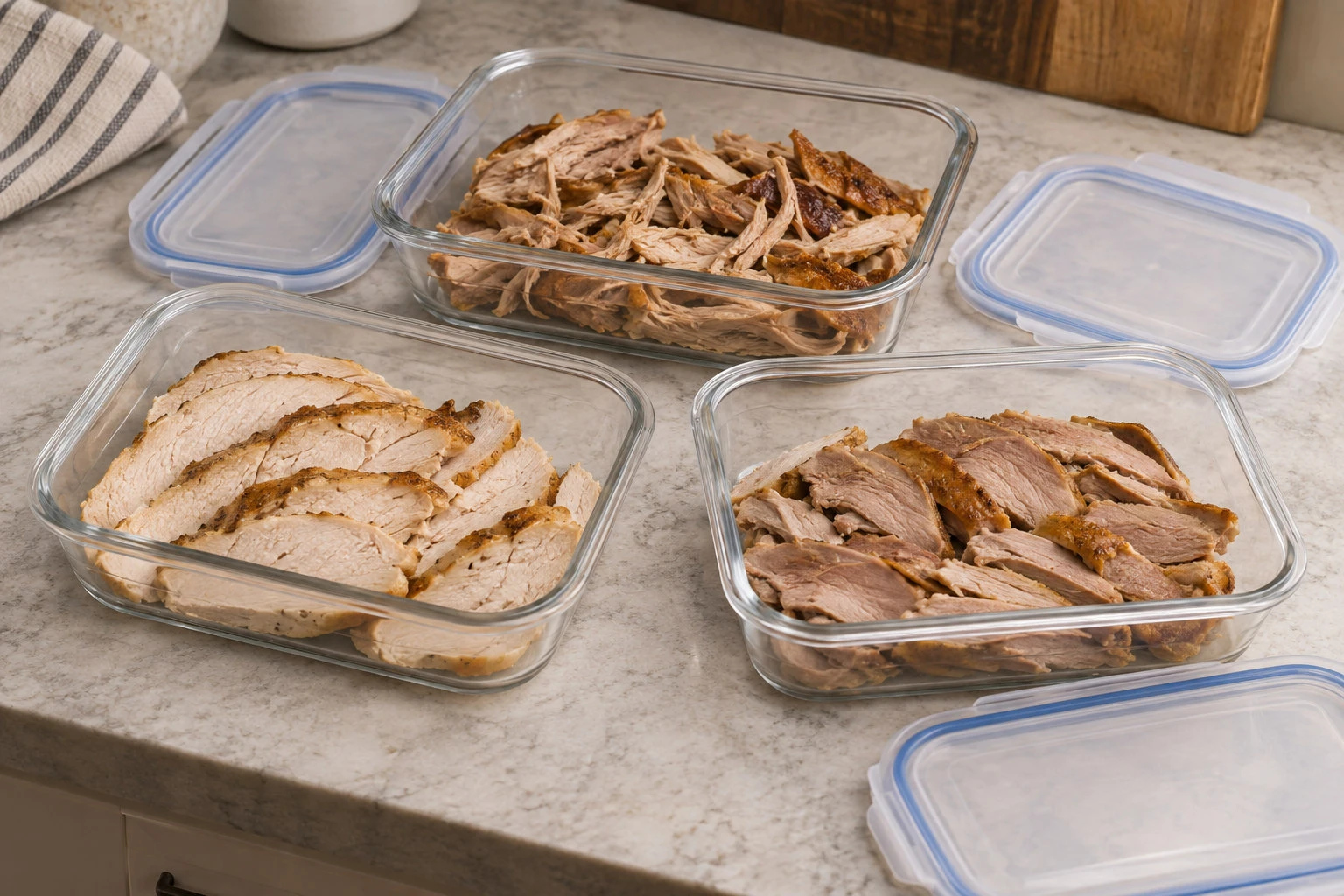
When all three readings pass, take the bird off the grill. For a short wait, rest it on a clean board and carve when ready. For a longer delay, use a warming setup that keeps the meat at 140°F (60°C) or warmer, confirmed with a food thermometer. If you aren’t keeping it hot, carve the turkey into portions and refrigerate it promptly in shallow containers. Refrigerate within two hours, or within one hour if it’s above 90°F. Reheat chilled portions to 165°F. A foil tent alone isn’t a hot-holding setup.
FORTISVEX recipe illustration.
Make the side dishes your buffer
Don’t crowd the kettle while you’re troubleshooting. Give the mushroom-sage bread dressing its own oven slot. Keep wild rice–stuffed acorn squash on its own schedule, and leave grilled pears with maple-ginger yogurt for after dinner when the turkey is no longer tying up the grill.
References: Weber’s kettle fire and temperature checks, USDA minimum oven temperature, USDA hot holding and USDA leftovers handling.
Recent Posts
-
Lemon-Dill Turkey and Barley Soup on a Weber Charcoal Kettle
Simmer barley and vegetables in a grill-safe Dutch oven on a Weber charcoal kettle. Once the barley …Nov 26th 2026 -
How to Grill a Whole Thanksgiving Turkey on a Weber Kettle
Quick answer: Cook a fully thawed, unstuffed 10–12 pound turkey breast-side up over a drip pan on a …Nov 26th 2026 -
Dry-Brined Whole Turkey on a Weber Kettle: An Overnight Plan
The biggest decision in a dry brine happens in the grocery aisle. Buy a plain turkey whose ingredien …Nov 26th 2026