
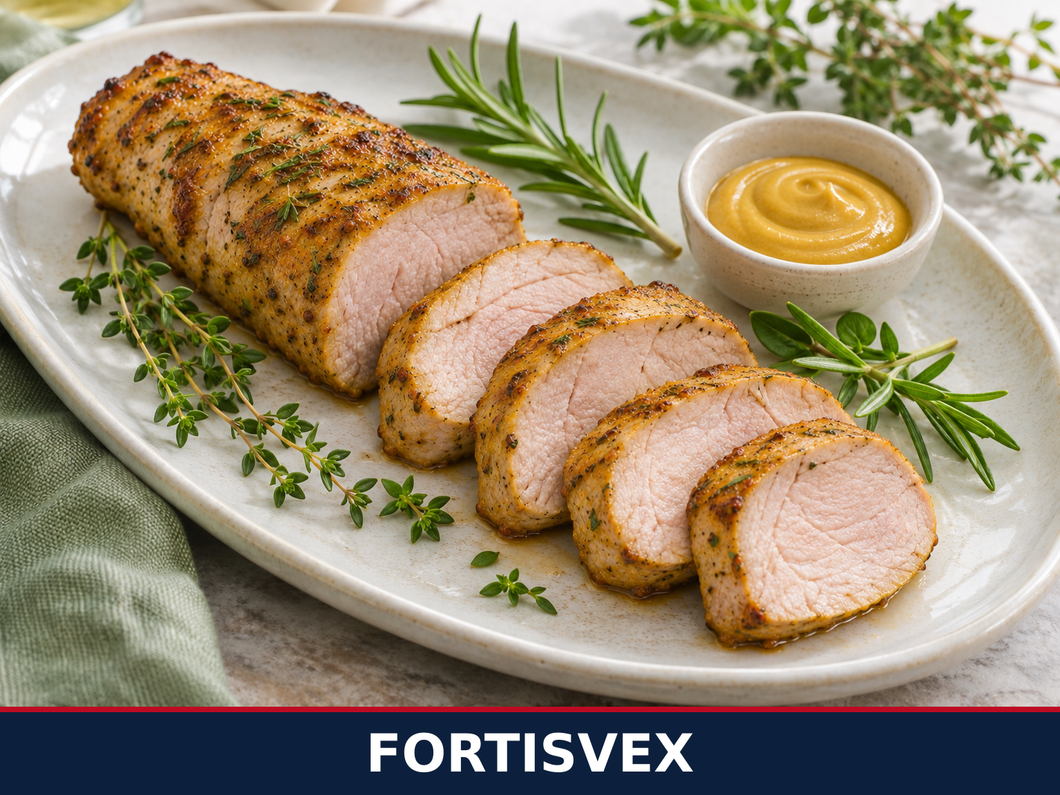
Weber Charcoal Kettle Pork Tenderloin with Mustard-Herb Rub
A thin Dijon coating carries rosemary, thyme and pepper onto lean pork tenderloin. Brief direct heat builds color; the cooler side of the kettle finishes the center without burning the herbs.
Slice the rested tenderloin into medallions just before serving.
Preparation: 20 minutes
Fire lighting and preheating: allow 25–35 minutes, overlapping preparation
Grilling: approximately 18–28 minutes
Rest: 5 minutes, always at least 3 minutes after reaching 145°F
Total planning window: about 55–75 minutes
Buy tenderloin, not pork loin
Use two plain, unseasoned tenderloins, each about 1 pound. These are narrow, tapered cuts. A broad pork loin roast will not follow this schedule, and shoulder needs a different approach altogether. If you want meat for shredding, choose the separate FORTISVEX mustard-cider pulled-pork recipe. This recipe is intended for slices.
Check the label for added brine or seasoning before buying: the quantities below assume pork without an added salt solution. Similar thickness matters more than perfectly matching weights. Cook each piece to its own measured endpoint.
Ingredients
- 2 pork tenderloins, about 1 pound (450 g) each, 2 pounds total
- 2 tablespoons Dijon mustard
- 1 tablespoon olive oil
- 2 teaspoons finely chopped fresh rosemary leaves
- 2 teaspoons fresh thyme leaves, chopped if large
- 1 teaspoon garlic powder
- 1 teaspoon freshly ground black pepper
- 5 g kosher salt, weighed because crystal sizes vary
- 1 teaspoon finely grated lemon zest
- Lemon wedges, for serving
Mustard is part of the recipe, not a hidden ingredient; check its label and any side dishes for your guests’ allergens. Do not add honey or sugar to this rub: its deliberately savory coating is easier to manage during the sear.
Equipment and fire setup
Use a charcoal kettle with enough room for both tenderloins to sit entirely away from the coals, such as a 22-inch Weber kettle. Have a chimney starter, charcoal briquettes, heatproof gloves, long tongs, a drip pan, a grate-level thermometer and an instant-read food thermometer ready. Use a separate clean tray and cutting board for cooked meat.
Cook outdoors only, never in a garage, tent or enclosed space. Follow your kettle and chimney manuals for lighting and clearance from combustible materials. Set the grill on a stable, suitable surface; keep children, pets, linens and decorations outside the hot area. Never add lighter fluid to burning coals.
- Trim while the pork is cold. Remove the silvery membrane with a narrow knife, angling the blade slightly toward the membrane to avoid wasting meat. Pat dry with paper towels; do not wash raw pork. Fold the thin tip underneath and secure it with food-safe butcher’s twine if it would otherwise cook much faster than the center.
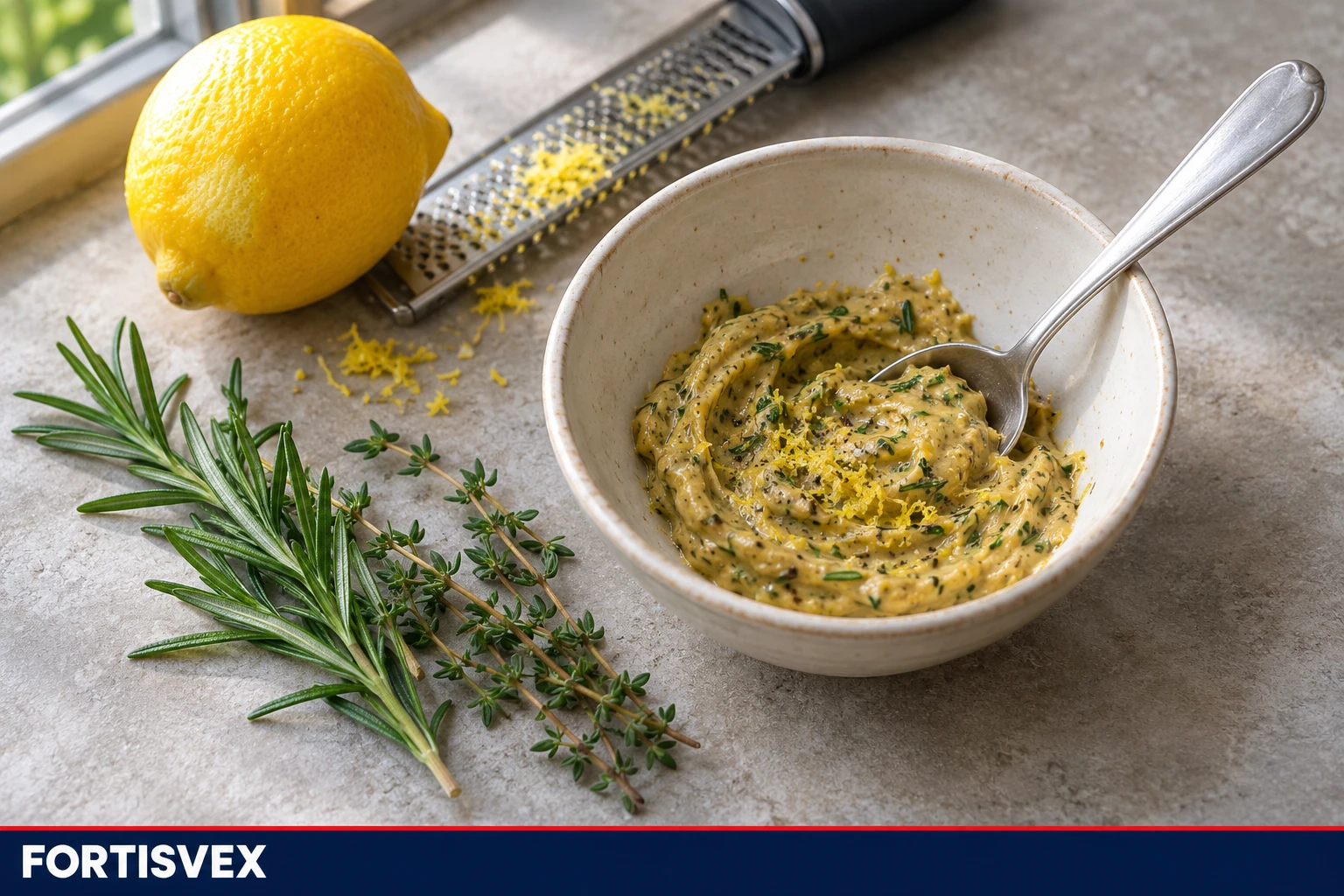
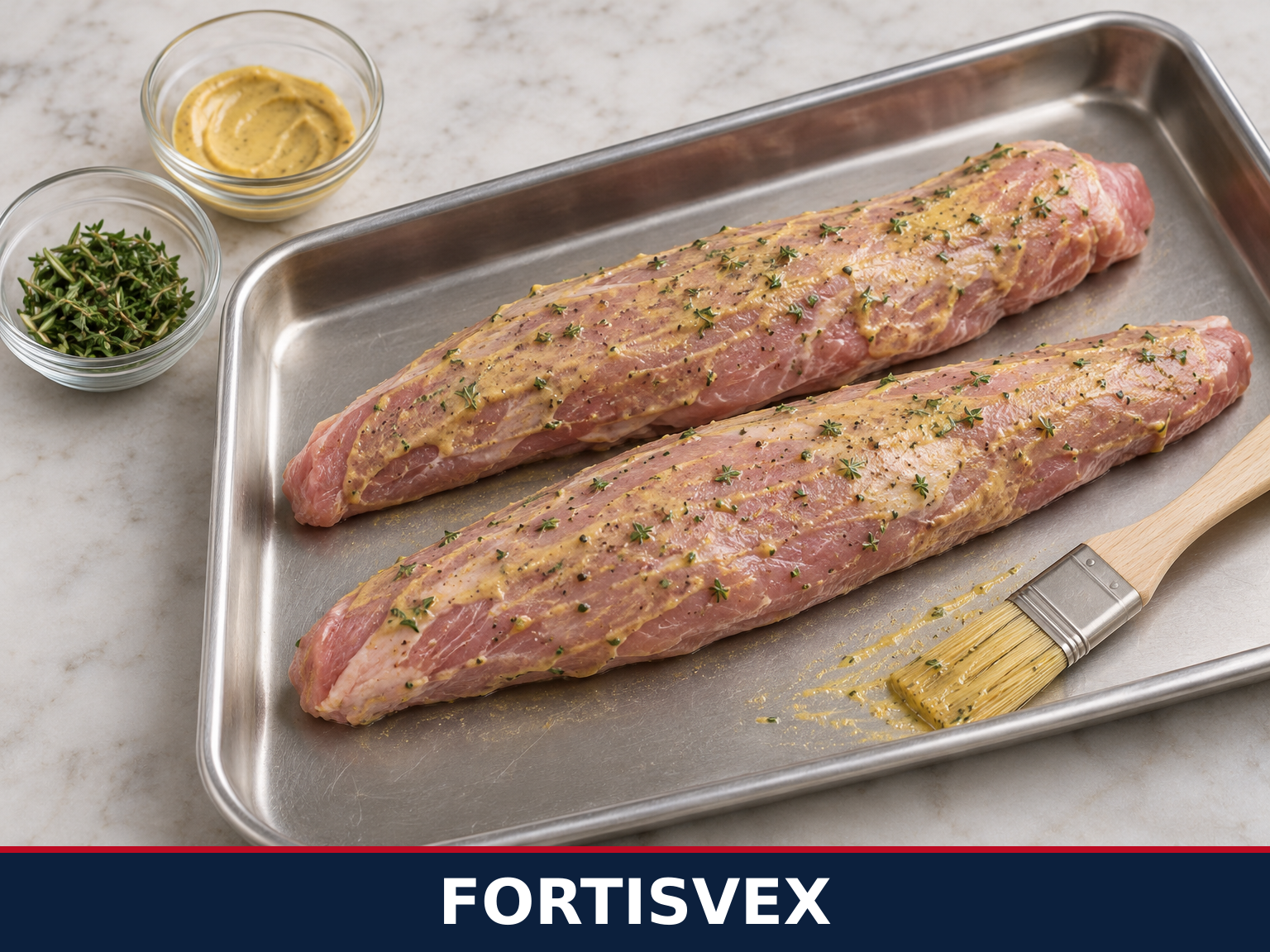
- Make the rub. Stir the mustard, oil, rosemary, thyme, garlic powder, pepper, salt and zest into a paste. Spread a thin, even layer over both tenderloins. Refrigerate on a covered tray while the fire is prepared. Do not keep raw pork outside while waiting for charcoal.
- Build two zones. For a typical 22-inch kettle, roughly half a standard chimney of briquettes is a starting point, not a guaranteed temperature. Light according to the equipment instructions. With heatproof gloves, arrange the fully lit coals on one half of the charcoal grate and put a drip pan on the empty half. Replace the cooking grate and preheat with the lid on for 10–15 minutes. Clean the grate and inspect it for loose brush bristles. Aim for about 375–425°F at grate level in the cooking area. Adjust the amount of fuel and vents to suit conditions; do not seal both vents during cooking.
- Sear briefly. Put the tenderloins above the coals. Turn with tongs about every 1½–2 minutes to color several sides, approximately 6–8 minutes total. Keep the lid on between turns where practical. You want browned patches, not a black herb crust. Move the pork to the empty side immediately if dripping oil causes flames or the coating darkens too fast.
- Finish indirectly. Move both pieces over the drip pan, with no lit charcoal directly beneath them, and close the lid. Position the lid vent over the indirect side. Begin checking internal temperature after about 12–15 minutes of total grilling. Expect roughly another 10–20 minutes after searing, but thickness, starting temperature, wind and fire strength can change the schedule. Rotate the pieces if the side facing the coals colors faster.
- Measure before removing. Insert the thermometer from the side into the center of the thickest section, avoiding the grate. Check more than one thick spot in each piece, including any folded section. Keep cooking until each tenderloin reaches at least 145°F (63°C) while still on the grill. Do not pull it early on the assumption that carryover heat will finish the safety step. Remove each piece as it reaches temperature; color and the clock cannot establish doneness.
- Rest and carve. Place on the clean tray and rest for 5 minutes, loosely tented if desired. The minimum rest after reaching 145°F is 3 minutes before slicing or eating. Remove all twine, cut crosswise into approximately ½-inch medallions and serve with lemon wedges.
Make the timing work for dinner
Prepare a cabbage-apple slaw or a green salad before lighting the charcoal, and keep it chilled. Bread and already-cooked potatoes make easy accompaniments. Have the table ready before the pork leaves the kettle: a small lean roast does not benefit from waiting while the sides are started.
If the rub is browning before the center is ready, use the indirect zone and close the lid rather than continuing to sear. If the grill temperature falls, check airflow and fuel safely; a low reading does not justify serving under-temperature pork. Do not partially cook the meat to finish later. For a very different, longer weekend project, the FORTISVEX pepper-coriander brisket guide explains a slow-cooked cut; its tenderness temperatures do not apply to this tenderloin.
Safe handling and leftovers
Wash hands with soap and water after touching raw pork, and clean utensils and work surfaces. Keep raw-meat trays and the used rub brush away from cooked food; discard paste left in contact with raw meat. Use a clean thermometer probe for final checks and serving.
Refrigerate leftovers in shallow covered containers within 2 hours of cooking, or within 1 hour when the outdoor temperature is above 90°F. Count resting and serving time in that limit. Keep the refrigerator at 40°F or below and use refrigerated leftovers within 3–4 days. Reheat to 165°F throughout, checking several places; a splash of water in a covered pan can help limit drying.
Set the table, then keep the grill area clear
For a state-themed backyard gathering, browse the FORTISVEX state flag collection when planning the display. Place flags and other decorations well away from the kettle, chimney starter and sparks. The cooking area needs its own clear space regardless of the occasion.
Method and food-safety sources
The mustard-herb quantities and sequence above are this article’s formulation, not a Weber recipe or an endorsement. Grilling times are planning estimates.
- Weber: charcoal-grill setup and preheating.
- Weber: two-zone fire configurations.
- Weber: tenderloin medium-heat cooking reference (different seasoning and serving method).
- FoodSafety.gov: safe minimum temperatures and rest times.
- FoodSafety.gov: separation, chilling and safe handling.
- USDA: safe leftover storage.
Recent Posts
-

Poland and Indonesia: Check the Top Band Before the Size
Poland and Indonesia both use red and white in two equal horizontal bands. The quickest distinction …Nov 18th 2026 -

Sweden and Finland: Compare the Crosses at the Same Height
Sweden’s yellow cross on blue and Finland’s blue cross on white share a familiar arrangement: the up …Nov 18th 2026 -
Charcoal-Kettle Savoy Cabbage Wedges with Mustard Vinaigrette
Savoy cabbage’s crinkled leaves catch a little oil and brown at their edges, while the thicker base …Nov 18th 2026