

Crispy Smashed Gold Potatoes on a Weber Charcoal Kettle
For crisp smashed potatoes on a Weber charcoal kettle, simmer small gold potatoes until a skewer slides through, then drain and let the surface dry. Press each potato into a thick round and crisp both sides in cast iron. Finish with lemon zest and dill off the heat. The skillet gives the broken edges room to brown without sending pieces through the grate.
Serves: 4 as a side. Plan on: About 50–65 minutes once the grill is lit, depending on potato size and how fast the water comes to a simmer.
Ingredients and equipment
- 1½ pounds baby gold potatoes, about 1¼–1¾ inches across, scrubbed and unpeeled
- 3 tablespoons olive oil, divided between brushing and the skillet
- ¾ teaspoon fine sea salt, divided, plus more to taste
- 1 tablespoon chopped fresh dill
- 1 teaspoon finely grated lemon zest
- ¼ teaspoon freshly ground black pepper
Use a lidded, grill-safe metal saucepan with heatproof handles, a colander, a rimmed tray, a flat spatula, long-handled turner and heavy grill mitts. A 10- or 12-inch cast-iron skillet works in batches. Use only an outdoor, stable kettle on a noncombustible surface. Follow the Weber charcoal owner’s guide for safe placement, lighting and vent operation.
1. Set up two zones and simmer the potatoes until tender
Bank lit, lightly ashed-over briquettes on one side of the lower charcoal grate. Leave the other side of that grate free of charcoal. Fit the cooking grate above it.
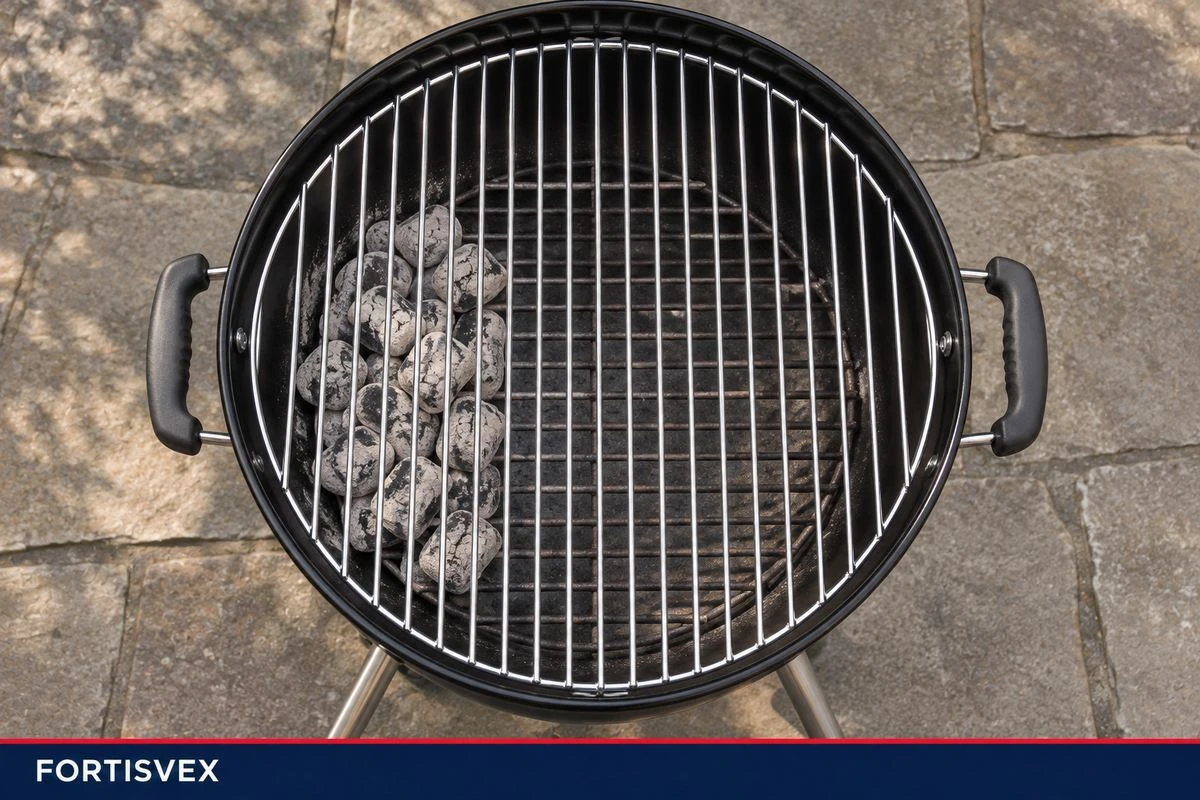
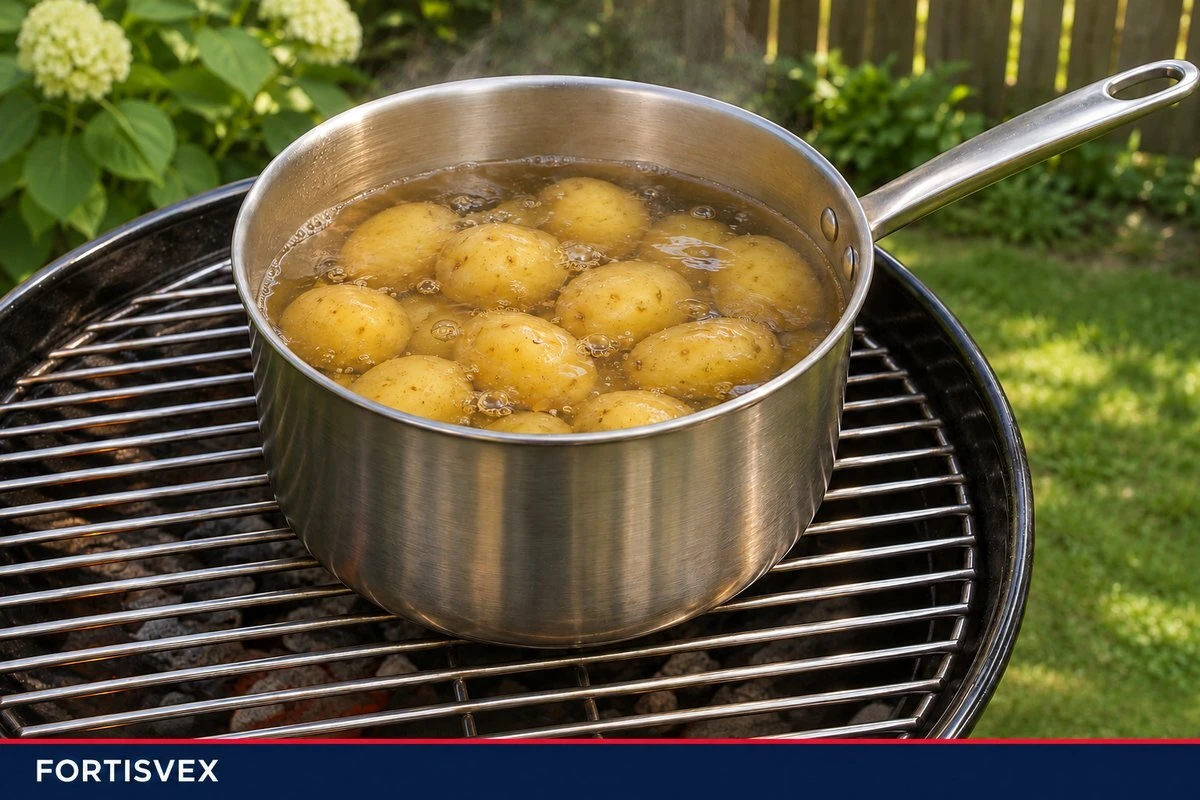
Place a grill-safe saucepan over the lit side; add the potatoes, ½ teaspoon salt and enough cool water to cover them by about an inch. Keep the saucepan stable and orient its handles away from where people walk. Follow your grill and cookware instructions. Once the water reaches a gentle boil, simmer until a thin skewer passes through the center of the largest potato without resistance, about 15–20 minutes after simmering starts. If the water boils hard, reduce the heat with your kettle’s vent controls as directed in its owner’s guide. Leave the pot in place until the bubbling stops. Use dry grill mitts and follow the cookware maker’s handling instructions before draining. Never drain hot water into the kettle.
2. Drain, air-dry and press
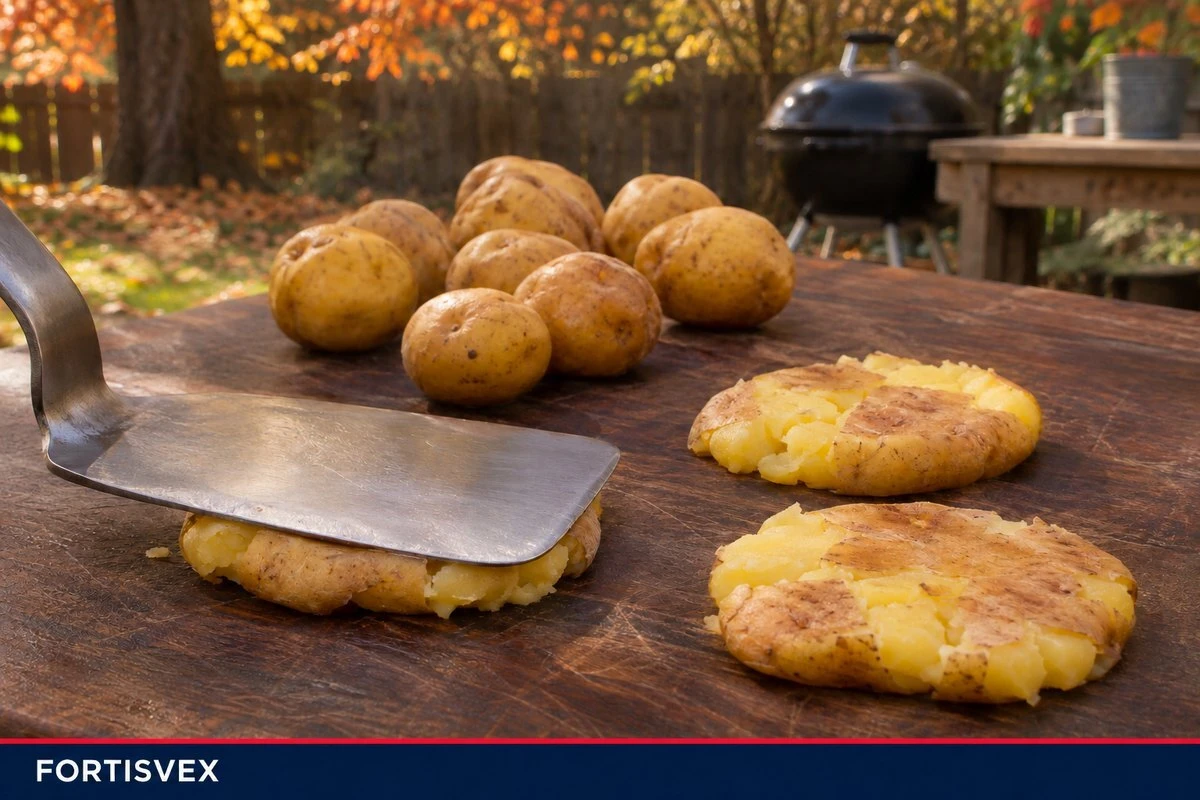
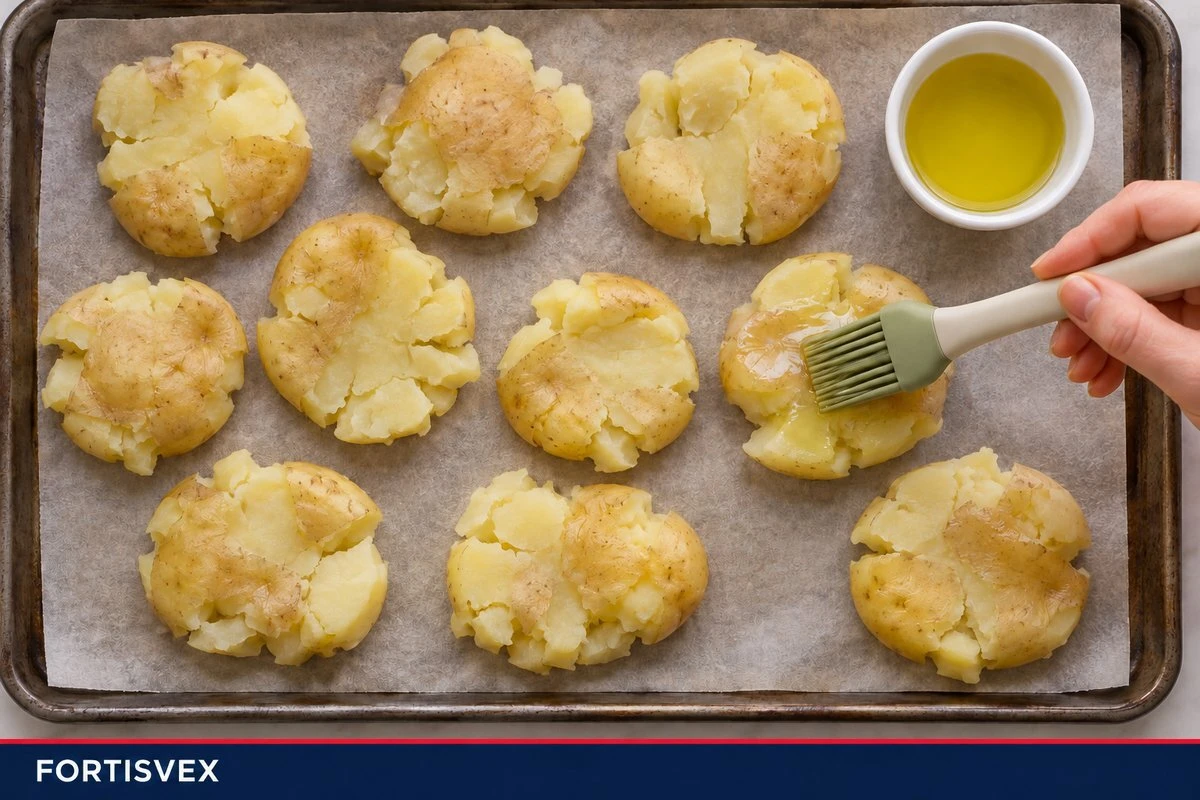
Let the drained potatoes steam-dry for about 5 minutes on a rimmed tray. Press each one under a flat spatula to about ½ inch thick. Cracks make more crisp edges, but stop before the pieces separate. Brush both faces with about 2 tablespoons of oil total and season with the remaining ¼ teaspoon salt. Surface water is the enemy here: if you can still see droplets before brushing, give them another couple of minutes to dry.
3. Crisp one layer at a time
Take the saucepan off the kettle. Set the dry skillet on the cooking grate above the coal-free side first; keep space around the pan and make sure the handle clears the lid. Then slide it toward the edge of the bank to preheat over moderate direct heat. Spread a thin film of the remaining tablespoon of oil in the pan and save some for the next batch. The oil should shimmer, not smoke.
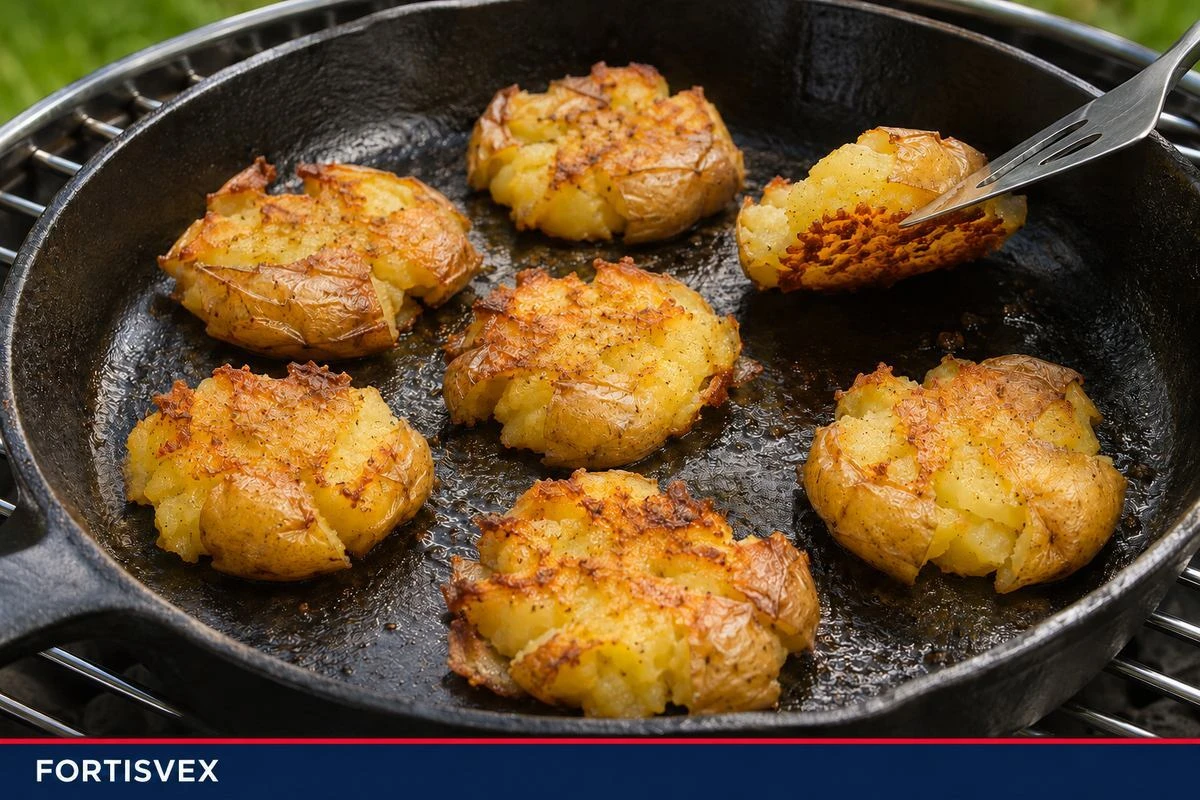
Set the potatoes in the skillet without overlap. Cook the first side undisturbed about 4–6 minutes; test one edge with a thin turner. If it sticks and is still pale, let it brown a little longer. Flip gently and cook about 4–6 minutes more, until both sides are deep golden and the edges feel firm. Move the pan fully to the coal-free side if the oil smokes or the first side darkens before it has firmed up. Use dry grill mitts whenever touching the skillet or moving it. Repeat with the next batch and set finished pieces on a rack or warm plate without stacking.
4. Add lemon and dill after cooking
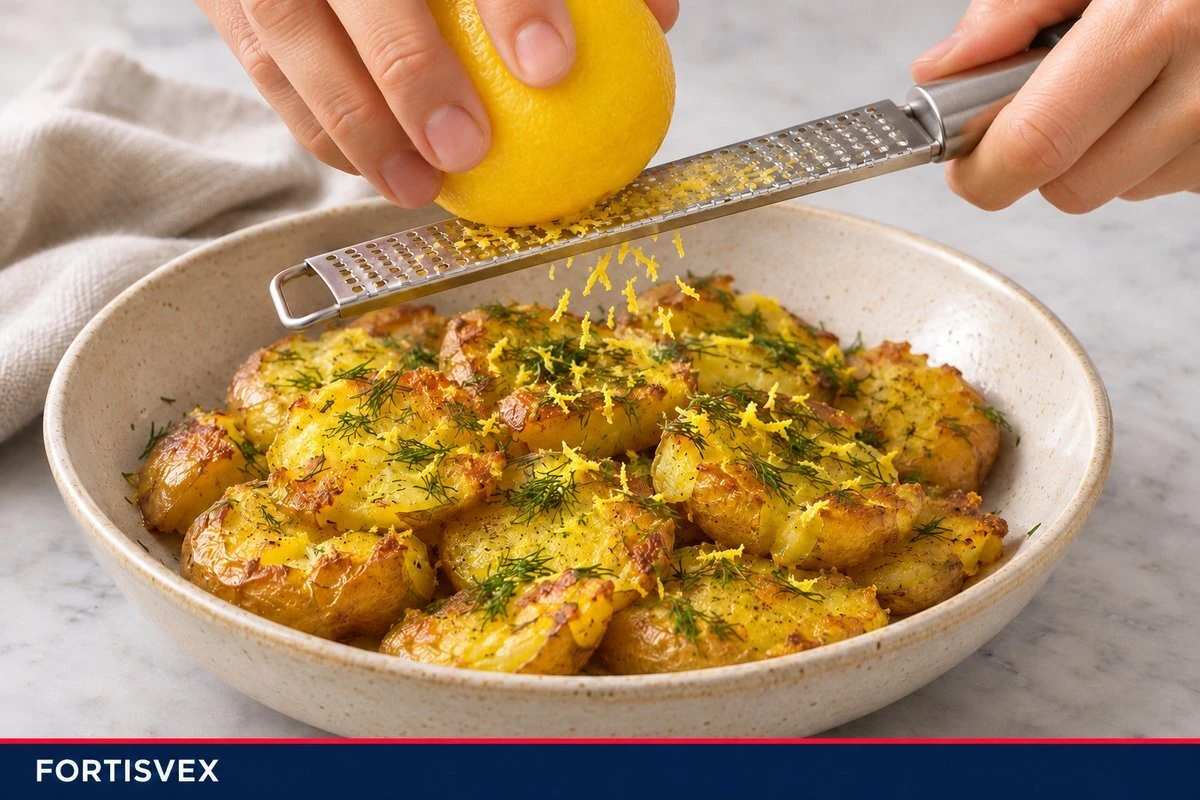
Move the finished potatoes away from the grill. Scatter on the dill, lemon zest and pepper, then taste before adding more salt. A finished piece should have a distinct crust and a soft center. Lemon zest gives it fragrance without adding the surface moisture of lemon juice.
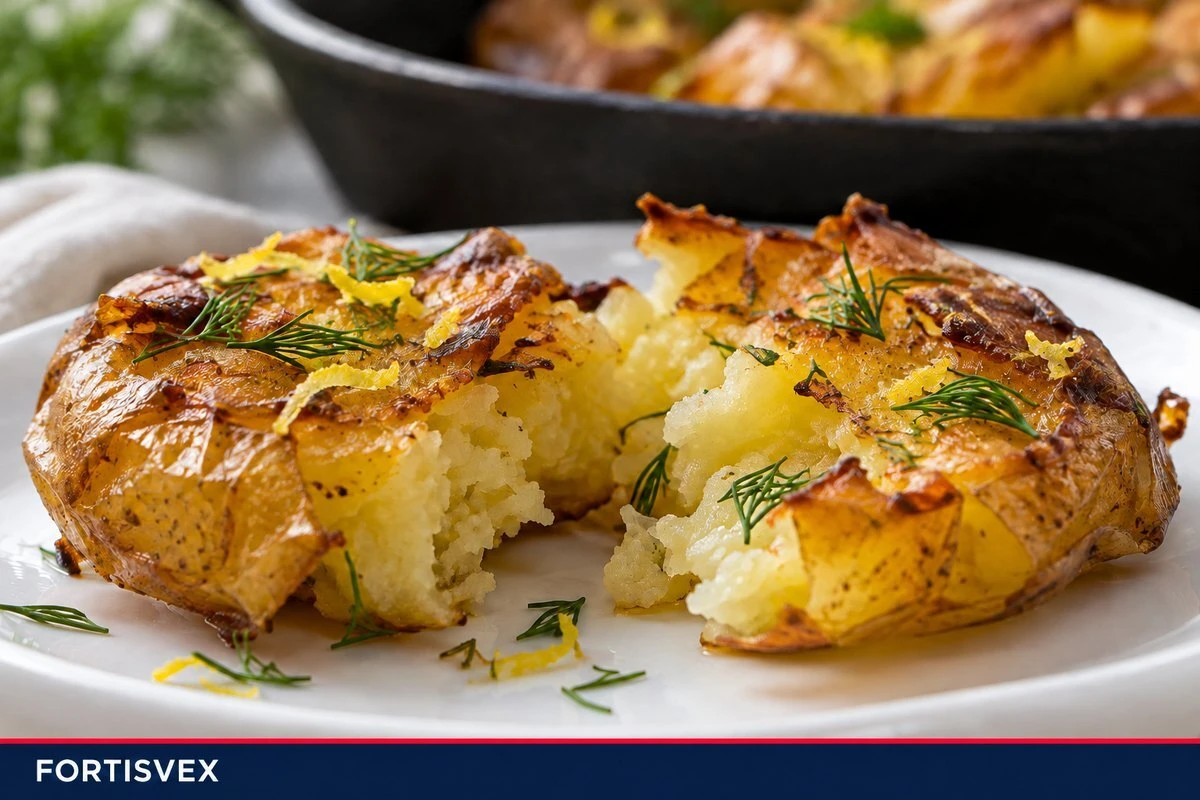
Serve right away for the best texture. Divide leftovers into shallow containers and refrigerate within 2 hours, or 1 hour when it is above 90°F. Use refrigerated portions within 3–4 days; follow USDA guidance for leftovers.
For more charcoal-kettle sides, see lemon-caraway kohlrabi wedges, grilled carrots with cumin and lemon yogurt, and delicata squash with brown butter and sage.
Recent Posts
-

Crispy Smashed Gold Potatoes on a Weber Charcoal Kettle
For crisp smashed potatoes on a Weber charcoal kettle, simmer small gold potatoes until a skewer sli …Nov 27th 2026 -

Clayton, Idaho: The Company Store, the Smelter and the Salmon River
Clayton is an incorporated city in Custer County along Idaho 75 and the Salmon River. Its mining his …Nov 27th 2026 -

Memorial Day 1994: Bill Clinton Half-Staff Proclamation 6696
On Memorial Day, May 30, 1994, President Bill Clinton asked government officials to direct half-staf …Nov 27th 2026