

Charcoal-Kettle Kohlrabi Wedges with Lemon and Toasted Caraway
To grill kohlrabi wedges on a Weber charcoal kettle, peel the tough skin, cut the pale flesh into ¾-inch wedges and brown both cut sides over the coals. Move the wedges away from the coals and close the lid until the centers are fork-tender. Toss with lemon, parsley and caraway toasted on the same kettle.
This is a good holiday side when the main dish is rich: the lemon cuts through gravy or browned butter, and the caraway gives the mild wedges a warm, slightly peppery finish. Serve the kohlrabi warm rather than trying to keep the cut faces crisp under a cover.
Serves: 4–6 as a side. Prep: About 15 minutes. Grill time: Allow about 25–35 minutes after the kettle heats. Total: Roughly 40–50 minutes, plus the time to light and preheat the grill. The actual time depends more on the thickness of the wedges and the fire than on the number of bulbs.
Ingredients
- 1½ lb (680 g) small kohlrabi bulbs, about 3 or 4, before trimming
- 2 tablespoons neutral high-heat oil, such as canola, divided
- ½ teaspoon fine salt, plus more to taste
- ¼ teaspoon freshly ground black pepper
- 1 teaspoon whole caraway seeds
- 1 medium lemon, for ½ teaspoon finely grated zest and 1 tablespoon juice
- 2 tablespoons chopped flat-leaf parsley
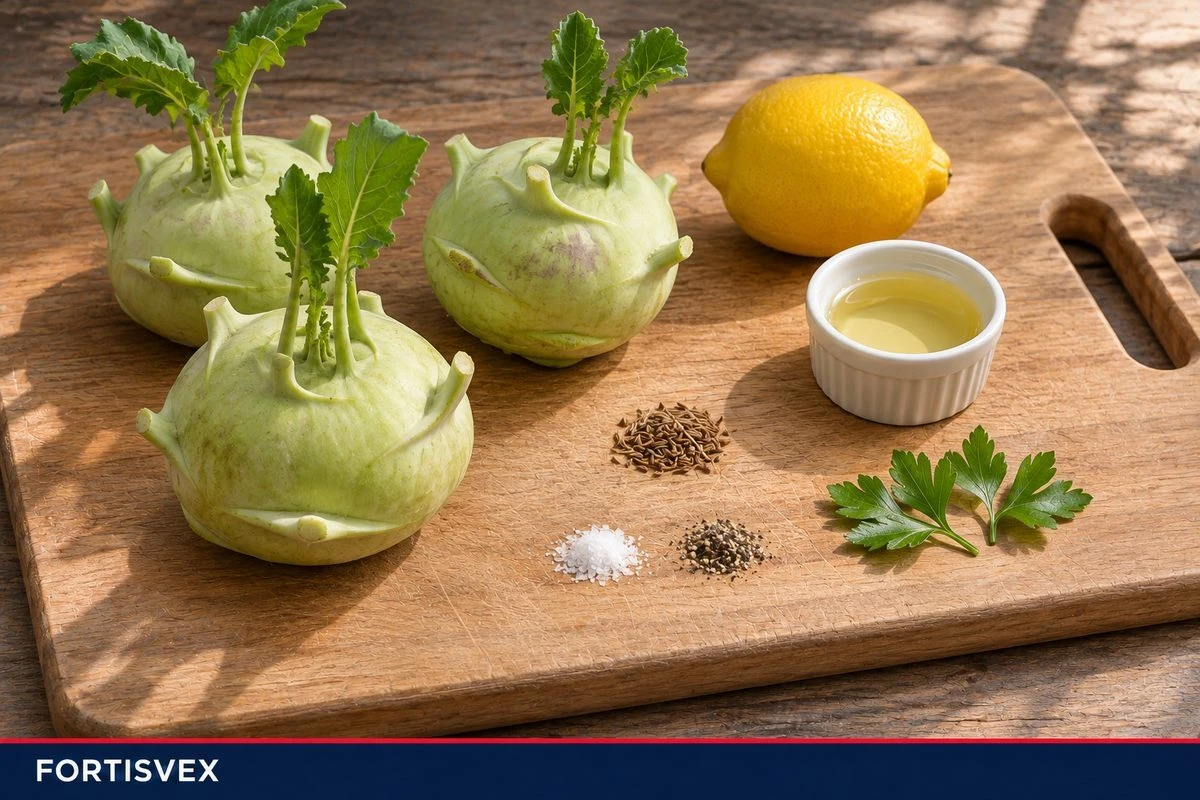
1. Peel until you see smooth pale flesh
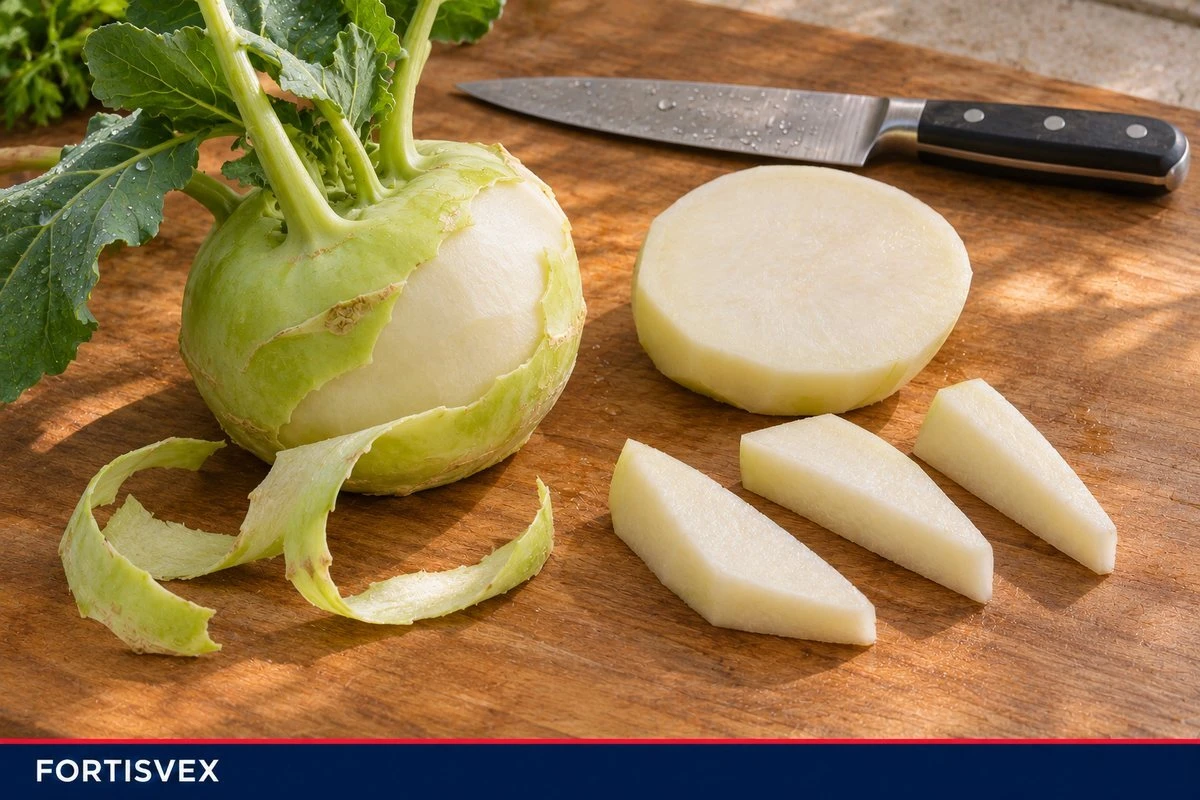
Choose firm small bulbs without cracks or soft spots. Rinse the bulbs and herbs under running water and dry them; wash the lemon before zesting. Trim off the stems and bottom, then use a knife or sturdy peeler to remove the tough skin and any fibrous layer beneath. The pale flesh is what you want to grill. Halve the peeled bulbs, put each half cut-side down and slice into roughly ¾-inch (2 cm) wedges. Use 1 tablespoon of oil to coat them lightly, then add the salt and pepper. Skip the lemon for now; a wet coating slows browning.
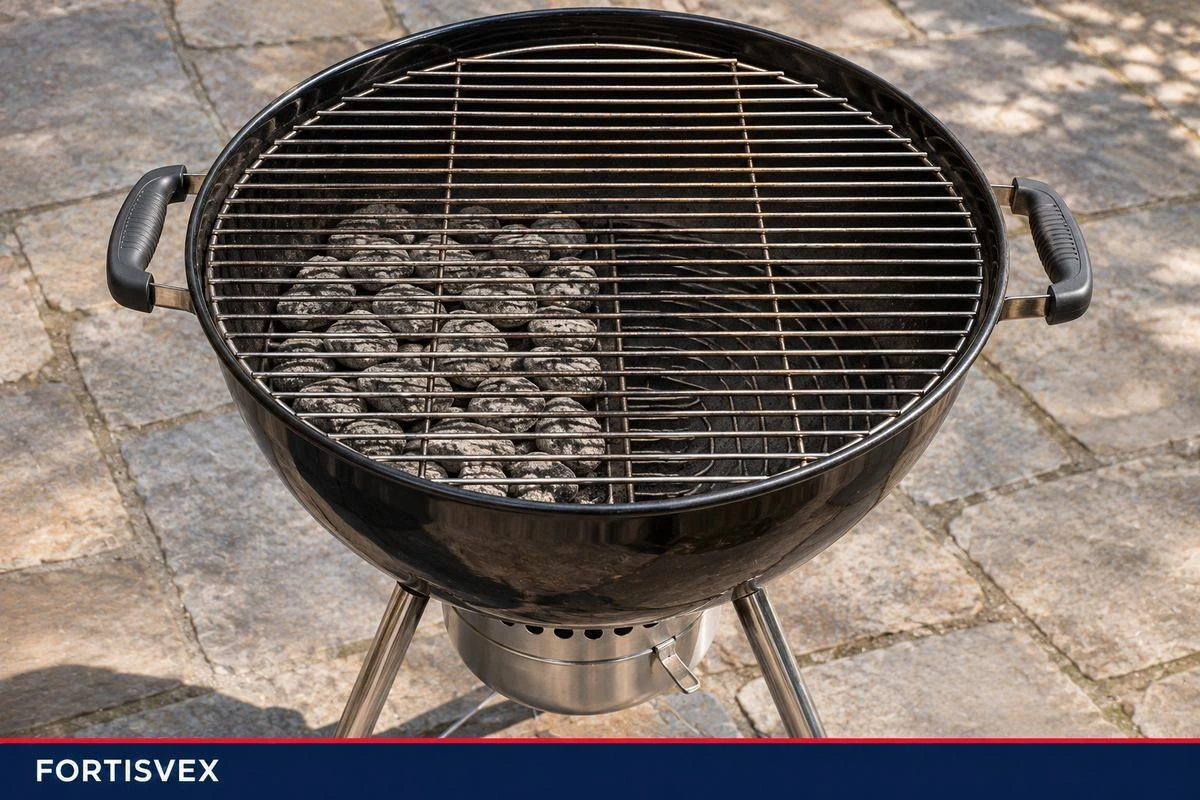
2. Set up direct and indirect heat
Use the charcoal kettle outdoors in an open, well-ventilated area, not in a garage or under a covered porch. Bank lit briquettes on one side of the lower charcoal grate. Leave the other side empty and set the cooking grate in place. Let the covered kettle settle around 375–425°F measured near the food on the indirect side. That is a grill target, not a doneness temperature for the vegetable. Keep long tongs, dry grill mitts and a heatproof landing spot nearby.
3. Sear briefly, then roast away from the coals
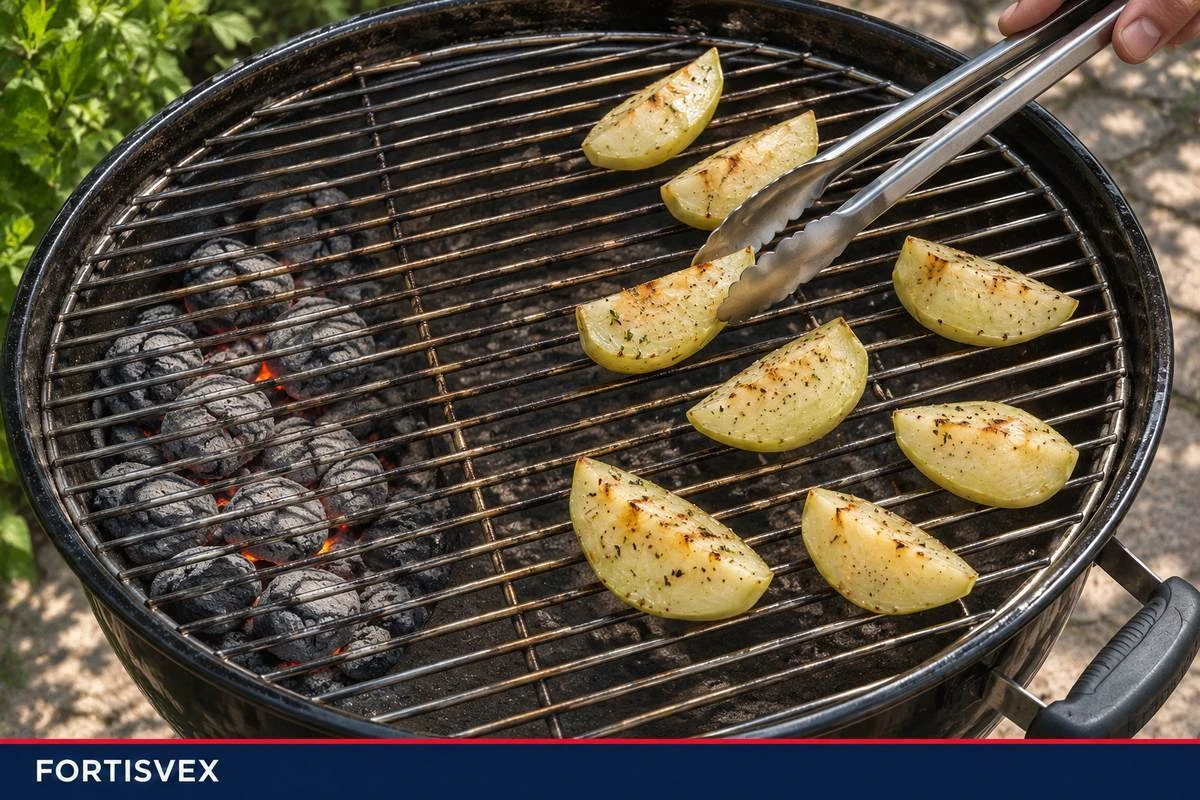
Set the wedges flat on the cooking grate over the coals. Sear for about 2–3 minutes on each broad side, moving any piece that darkens too quickly. Look for scattered golden-brown spots, not an all-black crust. Grill in batches if needed so the wedges have space between them.
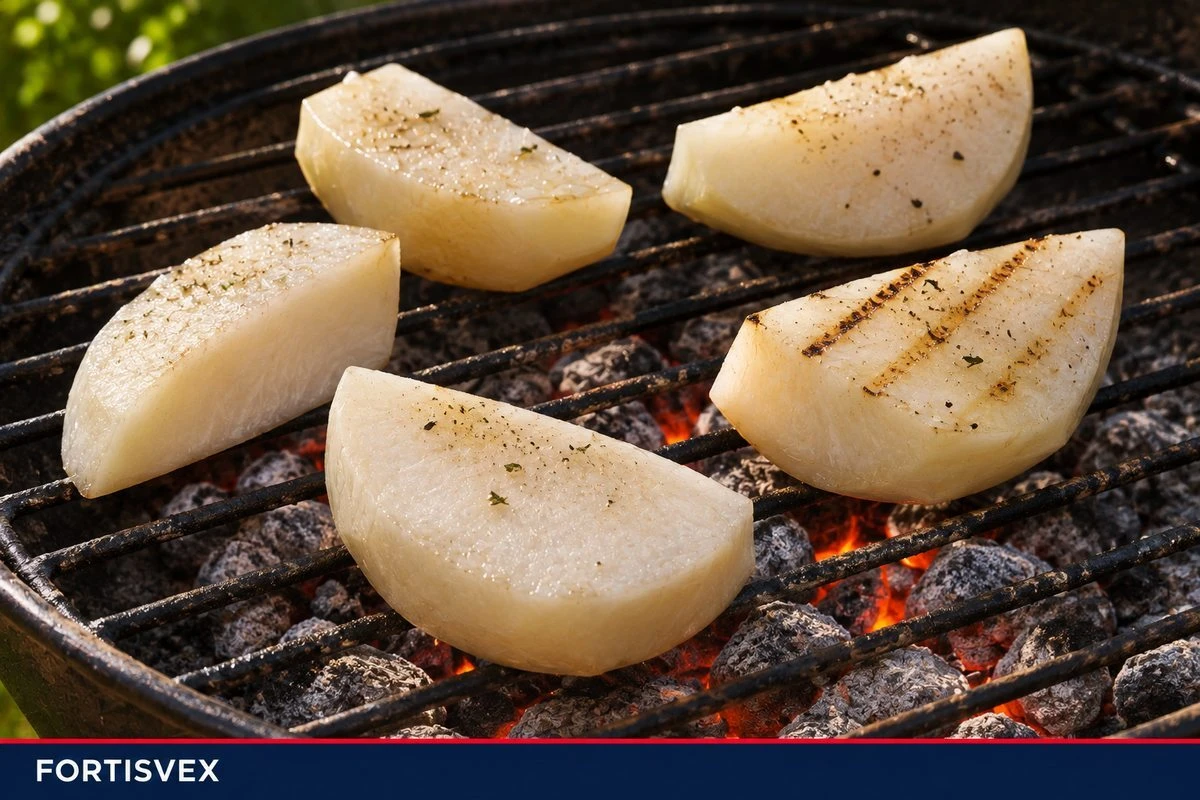
Move the wedges to the coal-free side and close the lid. Start checking after 15 minutes. A fork should slide into the thickest part with little resistance, while the piece still holds its shape when lifted. Allow about 15–25 minutes on this side, or a little longer for thicker pieces. If the outside is browned but the centers are firm, keep the wedges off the coals and leave the lid on for a few more minutes.
4. Toast the caraway and finish off the heat
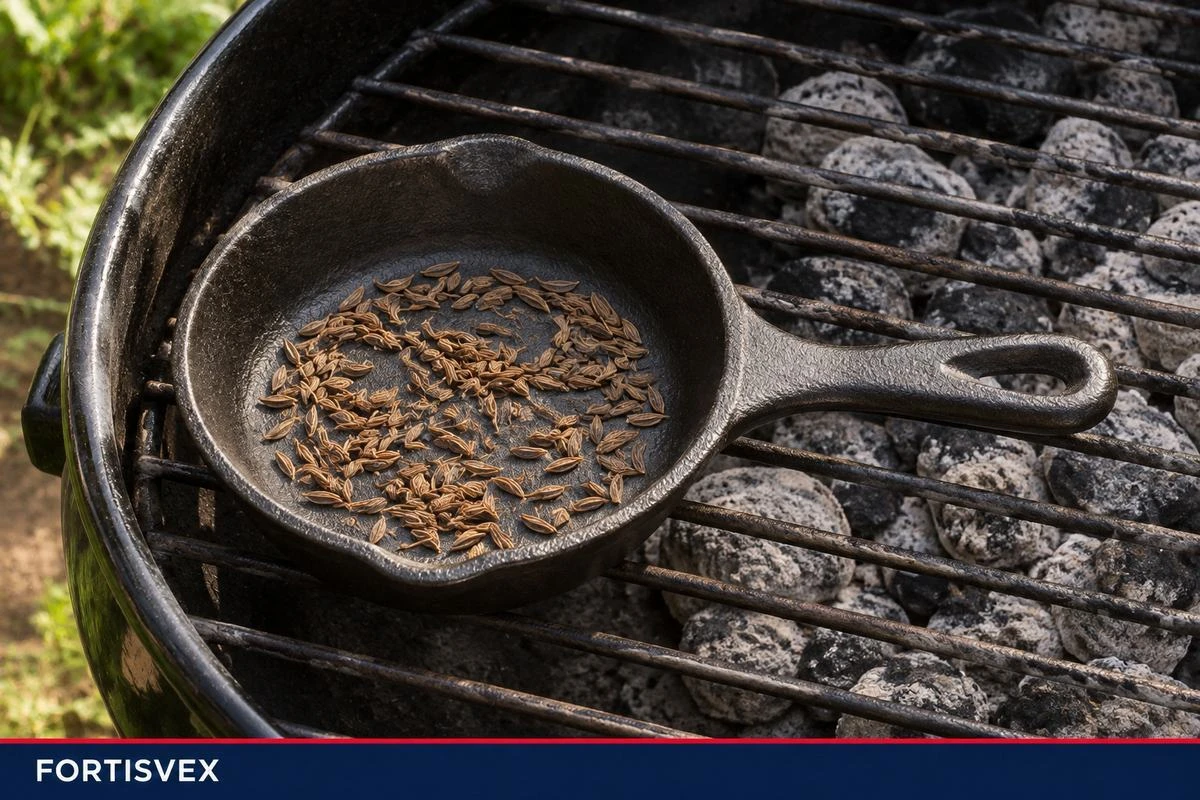
While the wedges finish, set a small grill-safe metal skillet with an all-metal handle on the cooking grate at the edge of the coal bank. Add the caraway to the dry pan in one layer. Shake the pan gently using a dry mitt until the seeds smell toasty, usually 30–60 seconds once the pan is hot. Tip them into a heatproof bowl immediately so they do not keep browning. If the grill is crowded, do this after removing the wedges.
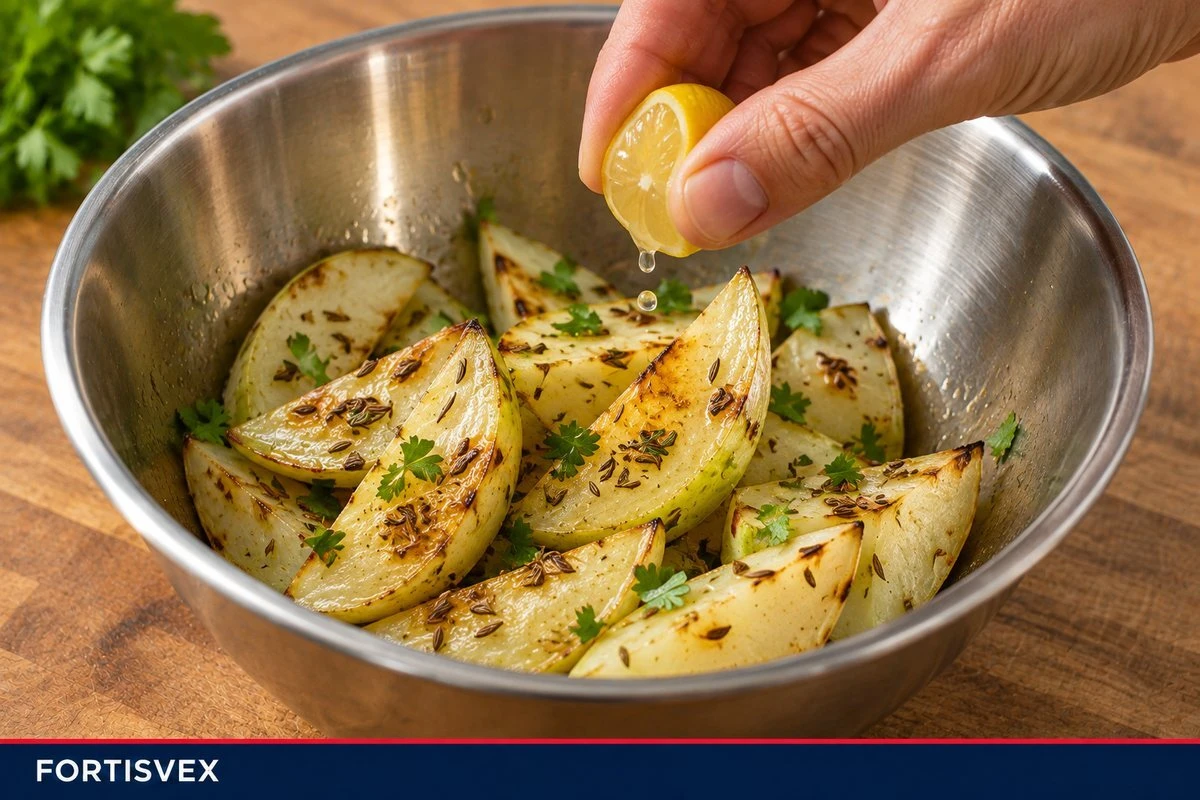
Combine the toasted caraway, remaining tablespoon of oil, lemon zest and juice in a serving bowl. Add the hot wedges and toss gently. Scatter over the parsley and taste for salt. Keep extra lemon at the table instead of soaking the wedges before serving.
What to serve with it
Serve this with the turkey breast in the Weber charcoal kettle dinner for four, or use it as the bright side on a larger vegetable platter. For a milder option, set out charcoal-grilled delicata with brown butter and sage. If you are already grilling carrots, the cumin carrots with lemon yogurt give the table a creamy contrast.
If you want to prep ahead, peel and cut the kohlrabi a day ahead and refrigerate it covered. Pat it dry before oiling; toast the caraway separately and add it at the end. If caraway is not to your taste, leave it out or use a small pinch of toasted cumin instead. Refrigerate cooked leftovers in a shallow container within two hours, or within one hour above 90°F, and use within 3–4 days. Reheat leftovers to 165°F if serving warm.
For handling and setup, see the FDA produce-washing guidance, Purdue Extension’s kohlrabi guide, UF/IFAS Extension’s two-zone grilling guidance, CPSC charcoal safety and FoodSafety.gov’s cooling guidance. Recipe timings are estimates; use texture as the doneness check.
Recent Posts
-
Charcoal-Kettle Kohlrabi Wedges with Lemon and Toasted Caraway
To grill kohlrabi wedges on a Weber charcoal kettle, peel the tough skin, cut the pale flesh into ¾- …Nov 27th 2026 -

Tip O’Neill: Bill Clinton Half-Staff Proclamation 6644
On January 6, 1994, President Bill Clinton issued Proclamation 6644 in memory of former House Speake …Nov 27th 2026 -

Thurgood Marshall: Bill Clinton Half-Staff Proclamation 6526
On January 24, 1993, President Bill Clinton issued a half-staff proclamation honoring Thurgood Marsh …Nov 27th 2026