
Stovetop-Steamed Artichokes with Lemon-Basil Yogurt Dip
A whole globe artichoke is a vegetable to eat slowly: pull away a leaf, scrape the tender flesh from its base, and work toward the heart. Covered stovetop steaming softens the artichoke without putting it directly into boiling water. A small bowl of lemon-basil yogurt dip adds a cool, tangy contrast.
The fuzzy center is not edible. The eating instructions below explain what to discard and how to reach the heart; do not treat the whole leaf or center as a bite of cooked vegetable.
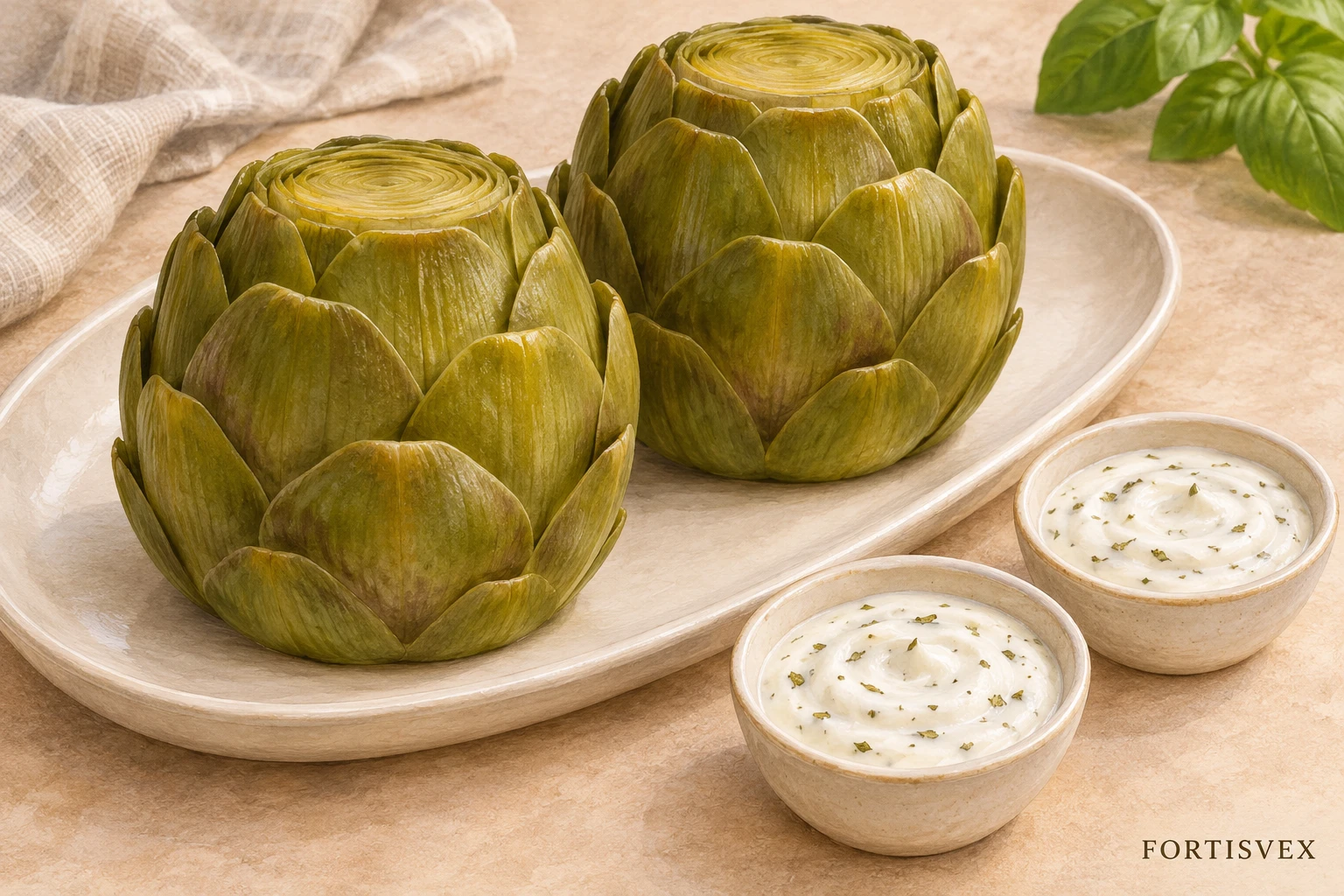
At a Glance
- Yield estimate: 2 whole artichokes with about 1/2 cup dip; 2 substantial appetizer portions
- Preparation: about 15-20 minutes
- Steaming: begin checking at 25 minutes; allow roughly 25-40 minutes or longer, depending on size and tenderness
- Total estimate: about 45-70 minutes, including water heating and a brief cooling period for handling
These are planning estimates. Artichoke size, maturity and your steamer affect the cooking time. Easy leaf release and a tender base matter more than a timer alone.
Ingredients
- 2 fresh whole globe artichokes of similar size, approximately 3-4 inches across before trimming
- 1 lemon, rinsed and dried; use 1/2 teaspoon finely grated yellow zest for the dip and cut the remainder into wedges
- 1/2 cup plain nonfat Greek yogurt made from pasteurized milk
- 1/4 teaspoon garlic powder
- 1/2 teaspoon dried basil
- 1/16 teaspoon fine salt
- Water for steaming, measured to fit the pot and rack as described below
Use U.S. measures. These are globe artichokes, not Jerusalem artichokes, canned hearts or baby artichokes. The dip uses lemon zest rather than added lemon juice so it stays thick. Lemon wedges are for rubbing cut surfaces and optional serving; lemon does not preserve the cooked food.
Set Up the Steamer Before Heating
Use a sturdy saucepan or stockpot with a well-fitting ordinary lid and a stable steamer rack or basket. The two trimmed artichokes must fit upright in one layer, with room for steam and with the lid fully seated. Choose equipment that permits seeing the water level and adding water at the side without lifting a loaded hot basket. Follow the manufacturer's stovetop and water-level instructions. This is not a pressure-cooker method.
Check the fit while everything is cold. The source method uses about 1 1/2 inches of water, but your rack must stand above that level so neither the artichoke bases nor the food-supporting surface sits in water. Use less only if your steamer's instructions permit it, and expect more frequent water checks. If the pot cannot provide both adequate water and clearance, use a taller compatible rack or different steamer before starting; do not improvise an unstable support.
Have kitchen scissors, a sharp knife, a stable cutting board, a spoon, secure tongs, dry oven mitts and a heat-safe plate ready. Plan a safe way to lift each cooked artichoke without tipping the basket. Keep a heat-safe pouring vessel of hot water available for replenishment, away from counter edges.
Prepare the Dip and Artichokes
- Start clean. Wash hands and clean the work area. Rinse the lemon and artichokes under cool running water before cutting, gently opening the outer leaves enough to rinse away debris. Do not use soap on produce. Take care around sharp leaf tips and keep preparation separate from raw meat and eggs.
- Mix the dip. Finely grate 1/2 teaspoon of yellow lemon zest, avoiding the bitter white layer. Stir the zest, yogurt, garlic powder, dried basil and salt in a small bowl. Cover and refrigerate at 40 degrees Fahrenheit (4 degrees Celsius) or below while the artichokes cook.
- Trim for cooking. Pull off dried or tough lower leaves. Cut the stem flush with the base so each artichoke can sit upright. Cut away approximately the top quarter, then snip any remaining sharp outer-leaf tips with kitchen scissors. Keep fingers clear of the blades. Rub the cut surfaces with a lemon wedge to limit browning. Some discoloration may still occur.
- Check the fit again. Set the trimmed artichokes upright on the cold rack and confirm the lid closes without pressing them down. Remove them briefly while bringing the measured water to a boil. Do not stack the vegetables or force them into a pot that is too small.
Steam Without Letting the Pot Run Dry
- Begin steaming. Once the water boils, reduce the heat briefly and use secure tongs to place the artichokes upright on the stable rack. Keep hands and face away from escaping steam. Cover and adjust the heat to maintain steady steaming without water splashing up onto the vegetables.
- Monitor the water. Stay nearby. Check early in cooking to learn how quickly your pot loses water, then check often enough to keep water in the bottom throughout. There is no universal safe interval. Before opening, reduce the heat; use a dry mitt and lift the lid away from your face so steam escapes away from you. Rest the lid on a heat-safe surface.
- Replenish carefully if needed. Turn off the burner before adding water. Without lifting the loaded rack, pour small amounts of hot water slowly down the accessible inside edge of the pot, keeping the level below the rack's food-supporting surface. Avoid splashes and keep your hands above and away from the steam path. Replace the lid and restore steady steaming. If safe access is not possible, stop rather than trying to balance or lift a hot loaded basket. If the pot has boiled dry, turn off the heat and follow its manufacturer's cooling instructions; do not pour water into an overheated dry pan.
- Check tenderness. Begin checking at about 25 minutes. A leaf near the center should pull away easily with tongs, and a thin knife or skewer should enter the fleshy base without firm resistance. Check both artichokes. If they are still firm, replace the lid and continue steaming, maintaining the water level and checking periodically. Larger or older artichokes may take longer than 40 minutes. These are texture checks, not a claimed food-safety temperature.
- Remove safely. Turn off the burner, open the lid away from your face and lift each artichoke onto the heat-safe plate with a secure grip. Let it drain and cool just until comfortable to handle. Do not carry or empty a pot of boiling water while serving. Leave the water in the stable pot until safe to handle.
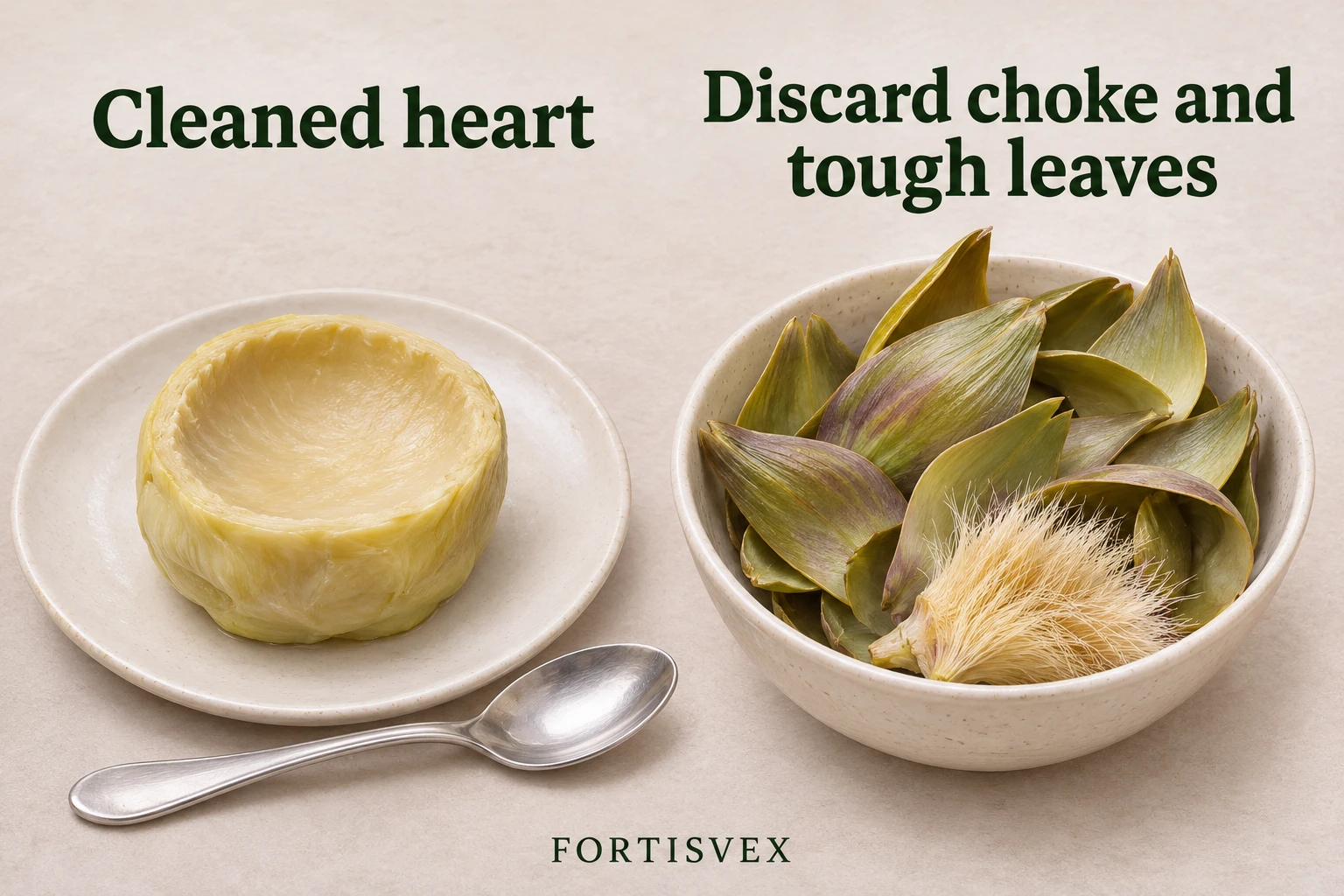
How to Eat the Leaves and Heart
Give each diner a small dish of dip and a separate plate for discarded leaves. Pull off one outer leaf at a time. Dip the fleshy base, then draw that base gently between your teeth to scrape away the soft flesh. Discard the tough, fibrous remainder of the leaf rather than chewing or swallowing it. Work inward, taking care with any remaining pointed tips.
When you reach the thin inner leaves and fuzzy center, remove the inner leaves to expose the choke. With a spoon, carefully scrape out and discard all of the fuzzy, spiny choke. It is not edible, even when cooked. The fleshy heart underneath is edible: check that no fuzz remains, then cut it into manageable pieces and eat it with the remaining dip. If you cannot confidently identify and remove the choke, do not eat that portion.
Storage and Allergens
The yogurt dip contains milk. Check all packaged ingredients and account for cross-contact. No dairy-free, vegan or allergen-free claim is made. Keep the main bowl of dip refrigerated and put out only the portions needed. Do not return dip from used individual dishes to the storage bowl.
Refrigerate leftover cooked artichokes and untouched dip separately in shallow covered containers, promptly and within 2 hours of cooking or removal from refrigeration; use a 1-hour limit when exposed to temperatures above 90 degrees Fahrenheit (32 degrees Celsius). Count handling and serving time within those limits rather than restarting the clock. Keep the refrigerator at 40 degrees Fahrenheit (4 degrees Celsius) or below. Do not leave food on the counter until completely cold.
Label leftovers with the preparation date and use them within 3-4 days, or sooner if the yogurt's instructions require it. If reheating cooked artichoke portions, heat them to 165 degrees Fahrenheit (74 degrees Celsius), checking the thickest edible part with a food thermometer. Keep the yogurt dip cold; it does not need to be reheated with the artichokes. Discard food held beyond safe limits rather than trying to rescue it by reheating.
Plan the Rest of the Meal
For a separate main course, tofu and broccoli rice bowls use both a rice saucepan and a skillet. Check your available burners before adding this steamer, or cook in stages without leaving cooked food sitting out. Follow that recipe's separate soy, possible wheat and rice-handling guidance.
If you prefer a vegetable side that needs less leaf-by-leaf eating, lemon-parsley green beans offer a roasted alternative. Their 425-degree oven method and timing do not apply to these steamed artichokes.
For dessert, cinnamon apple-oat crisp uses the oven rather than another stovetop burner. Plan its baking and resting time separately and check its wheat and milk ingredients; these dishes are separate recipes, not a synchronized cooking schedule.
Method and Safety Sources
Preparation and covered rack-steaming are adapted from Illinois Extension's artichoke preparation guidance. The edible-leaf-base and choke-removal explanation follows the utilization section of Virginia Cooperative Extension's Globe Artichoke profile, page 8 (PDF).
The dip uses the lemon-zest seasoning variation in Oregon State University's Food Hero Savory Yogurt Spread. This version specifies dried basil and a measured amount of salt. Cleaning and chilling follow federal food-safety guidance, with storage and reheating guidance from Illinois Extension.
Recent Posts
-
Stovetop-Steamed Artichokes with Lemon-Basil Yogurt Dip
A whole globe artichoke is a vegetable to eat slowly: pull away a leaf, scrape the tender flesh fro …Nov 5th 2026 -
Baked Almond-Milk Vanilla Custard Cups
These gently baked custards combine unsweetened vanilla almond milk, eggs and a little honey. A wat …Nov 5th 2026 -
Thunder During a Flag Ceremony: Plan the Stop Before the Event
An outdoor flag ceremony needs a way to stop, not just a polished opening. Decide before guests arr …Nov 5th 2026