

Pressure-Cooker Mushroom Barley Soup
FORTISVEX · EVERYDAY RECIPES
Brown the mushrooms first, let pearl barley give the broth body, and finish each bowl with lemon and parsley.
A good mushroom-barley soup has enough broth to sip and enough substance to make supper. Sliced cremini mushrooms bring an earthy base, carrots add sweetness, and pearl barley turns tender while keeping a little chew. This version uses vegetable broth and olive oil; it does not need cream to feel substantial.
The pressure cooker handles the covered cooking, but the flavor begins with an uncovered sauté. Cook the mushrooms in two batches so they can brown, then loosen the browned bits before closing the lid. Allow time for the cooker to pressurize and cool down naturally: an 18-minute pressure setting is only one part of the evening’s schedule.
Mushrooms and pearl barley share a brothy bowl with carrots and celery.
The recipe at a glance
Yield: approximately 7–8 cups; 4 generous servings of roughly 1¾–2 cups.
Preparation: 20 minutes.
Sauté: about 18–22 minutes.
Pressure: 18 minutes on high, plus approximately 10–20 minutes to reach pressure.
Release: full natural release, often 20–30 minutes or longer.
Finish: 5 minutes. Total: allow about 1½–2 hours, longer if pressure release or barley tenderness requires it.
Times and yield are estimates for this original formulation. Use the texture checks below and follow your appliance’s instructions.
Choose the barley and check the cooker
Use regular pearl barley, not quick-cooking barley, hulled barley or a grain blend. Those products do not share this cooking schedule. Rinse the pearl barley in a fine-mesh strainer and let it drain while you chop the vegetables.
This batch is intended for a 6-quart or larger electric pressure cooker whose manual permits cooking barley. Barley can foam and expand. Before sealing, keep the combined food and liquid at or below the cooker’s marked half-full limit, or its lower model-specific limit. Do not double the recipe in a 6-quart cooker or force it into a smaller machine. If the measured ingredients exceed the permitted level, use a larger suitable cooker; do not reduce the liquid just to make them fit.
Check that the sealing ring and steam-release components are clean and correctly fitted according to the manual. Use the normal pressure-cooking lid and setting, not an air-frying lid or a delayed start. The manufacturer’s fill-limit guidance explains why expanding foods need extra room.
Ingredients
Use US measuring cups and spoons. Weights are helpful for vegetables, whose sizes vary.
- 2 tablespoons (30 ml) olive oil, divided
- 12 ounces (340 g) cremini mushrooms, cleaned, stem ends trimmed and sliced about ¼ inch thick
- 1 small yellow onion, diced, about 1 cup (150 g)
- 2 medium carrots, cut into ½-inch pieces, about 1 cup (150 g)
- 2 celery stalks, diced, about ¾ cup (100 g)
- 3 garlic cloves, minced
- 1 teaspoon dried thyme
- ¼ teaspoon ground black pepper, plus more to taste
- 5 cups (1.18 liters) low-sodium vegetable broth, divided, plus up to 1 cup for thinning after cooking
- ¾ cup (about 145 g) regular pearl barley, rinsed and drained
- 1 bay leaf
- ¼ teaspoon fine salt, plus more after cooking if needed
- 1 tablespoon fresh lemon juice, plus up to 1 tablespoon more to taste
- 2 tablespoons chopped fresh parsley
Method
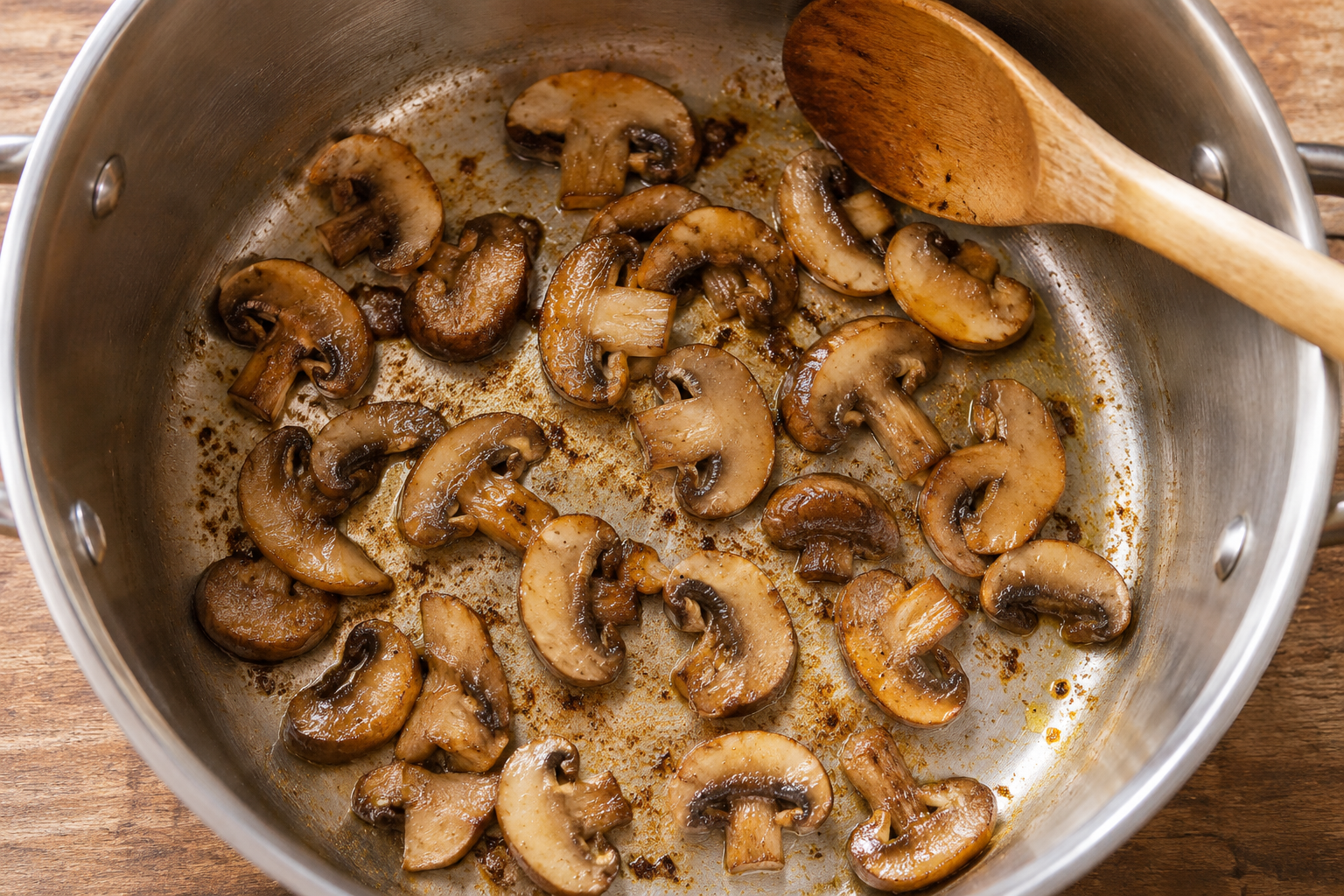
- Brown the first batch. Select Sauté and let the inner pot heat as directed by its manual. Add 1 tablespoon oil and half the mushrooms. Cook uncovered for about 5–7 minutes, stirring occasionally, until the released moisture largely evaporates and several cut faces are golden brown. Transfer to a bowl. Repeat with the remaining oil and mushrooms. Adjust the sauté heat if the residue darkens too quickly; brown is useful, blackened residue is not.
- Soften the aromatics. Leave the second mushroom batch in the pot. Add the onion, carrot and celery. Cook for 4–5 minutes, stirring, until the onion begins to soften. Add garlic, thyme and pepper; stir for about 30 seconds. If the vegetables stick, use a splash from the measured broth.
- Deglaze thoroughly. Cancel Sauté. Pour in 1 cup of the measured broth and scrape the entire bottom with a wooden spoon or suitable heatproof spatula until no stuck-on layer remains. Return the reserved mushrooms and their juices. Add the rest of the measured 5 cups broth, barley, bay leaf and ¼ teaspoon salt. Stir. Confirm the total contents do not exceed the half-full mark or your model’s lower limit.
- Cook at high pressure. Close and seal the cooker according to its instructions. Set High Pressure for 18 minutes. The countdown begins after pressure is reached, not when you first press Start. Stay nearby and follow the manual if the appliance reports an error; do not keep restarting a burn warning.
- Let pressure fall naturally. When cooking ends, cancel Keep Warm if your model allows it and leave the cooker undisturbed with its release control in the sealing position. Allow a full natural release. Do not quick-release this starchy soup, cover the vent, or force the lid. Open only when the appliance indicates it is fully depressurized and the lid releases normally; lift it away from your face. The maker’s pressure-release guidance recommends natural release for soups and grains.
- Check, loosen and finish. Remove the bay leaf. Taste a few barley grains: they should be tender with a light chew, without a hard, chalky center. If still firm, simmer uncovered on a gentle Sauté setting, stirring often and checking every 3–5 minutes. Add extra broth in ¼-cup portions as needed. If the soup is already tender but too thick, loosen it the same way and heat through. Stir in 1 tablespoon lemon juice and the parsley. Taste, then add the remaining lemon juice or more salt and pepper only as needed. Divide among four bowls.
Make the texture work for you
Soup thickens as barley absorbs liquid, including while the pot waits to be served. Aim for a loose consistency at the end of cooking rather than reducing it to a stew. Stir before filling each bowl so the barley and vegetables are distributed evenly. A little extra hot broth is more useful than a large splash of cold water that dilutes the seasoning.
Carrots and celery will be soft after this pressure cycle; that is part of this soup’s texture. Cut the carrots into the specified chunks instead of paper-thin coins. For more mushroom bite, use firm fresh cremini mushrooms and avoid cutting them into tiny pieces. White button mushrooms can replace cremini by weight, with a milder flavor.
Do not add flour, a cornstarch slurry or cream before pressurizing. The recipe relies on barley for body and thin broth for cooking. Do not substitute dry beans for any ingredient: they need their own liquid and cooking schedule. Likewise, a change to hulled barley needs a separately worked-out method rather than a few guessed extra minutes.
Serving the soup
Serve with crusty bread or toast and a simple green salad. For a separate vegetable side, lemon-parsley green beans add a crisp-tender contrast to the soft barley. If you prefer a sweeter, tart side, small portions of cranberry-orange roasted carrots work alongside smaller soup bowls.
For another soup night, creamy corn and white bean chowder offers a different texture and a stovetop method. Keep that as a separate recipe rather than folding milk and beans into this pressure-cooker formula.
Storage and reheating
Do not leave the finished soup in the cooker to cool for hours. Divide leftovers into shallow containers and refrigerate promptly, within 2 hours of cooking or removal from hot holding; reduce that limit to 1 hour when the surrounding temperature is above 90°F (32°C). Keep the refrigerator at 40°F (4°C) or below and use refrigerated leftovers within 3–4 days. Freeze portions promptly if you will not use them in that window.
Thaw frozen portions in the refrigerator, or reheat from frozen in a saucepan with a little broth and frequent stirring. Bring reheated soup to a boil and verify it reaches at least 165°F (74°C) throughout with a food thermometer. Add broth gradually to restore a spoonable texture; barley will continue to absorb liquid during storage. Do not rely on a slow-cooker or Keep Warm setting to reheat cold leftovers. For storage and reheating guidance, see FoodSafety.gov’s leftover-safety advice and safe chilling guidelines.
Ingredient and method notes
Allergens: barley contains gluten, so this is not a gluten-free soup. Check broth and seasonings for other allergens and cross-contact information. With plant-based broth and the listed ingredients, the formula contains no added meat, eggs or dairy; verify packaged ingredients for anyone with dietary restrictions.
Timing basis: the high-pressure setting uses the 18-minute reference in Instant Pot’s basic pearl-barley method. This soup’s ingredient proportions, sauté steps and finishing choices are original; its full natural release follows the manufacturer’s separate soup-and-grain guidance. Different barley, appliance models and altitude can affect tenderness and total elapsed time. The texture check remains essential. This recipe is for cooking and promptly refrigerating or freezing soup, not pressure canning or shelf-stable storage.
Recent Posts
-
Standard vs. Deluxe Pulley-and-Eyebolt Assemblies: Threads and Rope Size
Standard and Deluxe pulley-and-eyebolt assemblies differ in more than their names. These two models …Nov 8th 2026 -
West Virginia Half-Staff Order Honors Jay Rockefeller Through November 13, 2026
Governor Patrick Morrisey issued a November 6, 2026 order lowering the U.S. and West Virginia flags …Nov 8th 2026 -
Replacing a Kansas Flag: Match Size and Attachment
A replacement Kansas flag should match more than the state design. Before ordering, record the flag …Nov 8th 2026