
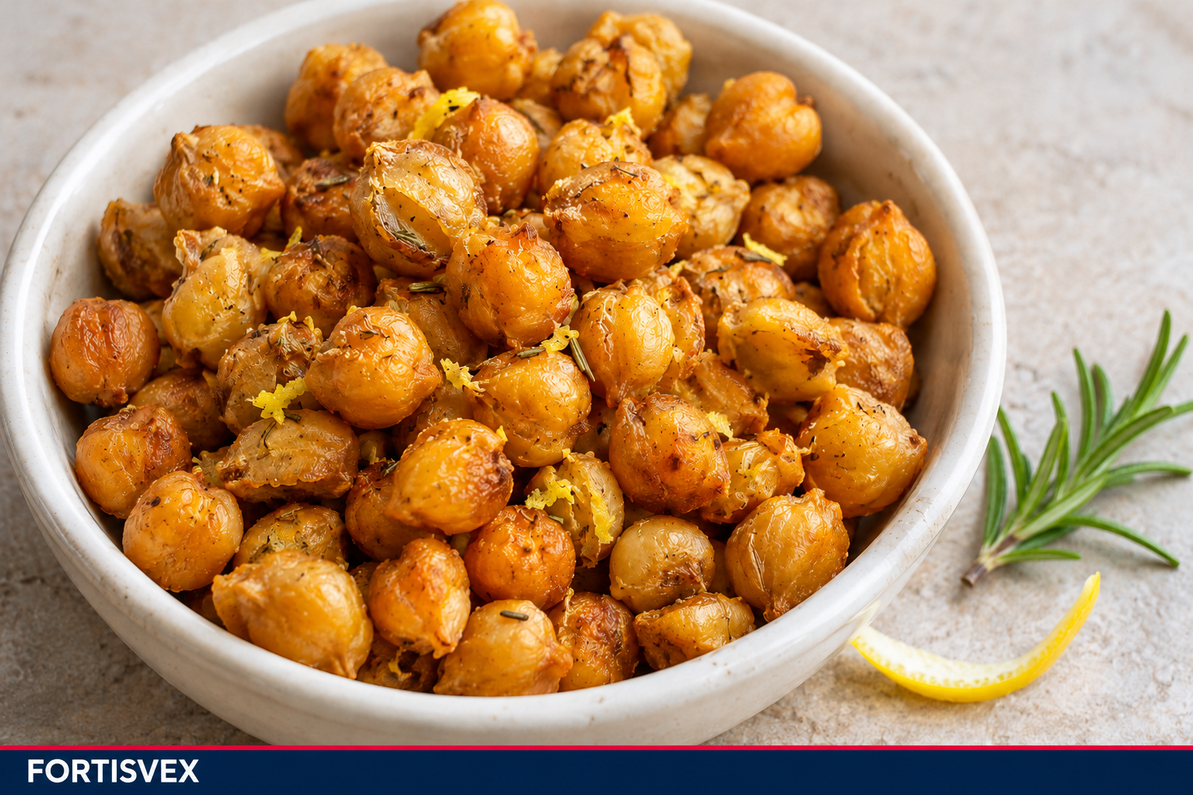
Lemon-Rosemary Roasted Chickpeas: A Small-Batch Savory Snack
A can of chickpeas can become a warm, savory snack rather than another bowl of beans. This version finishes oven-roasted chickpeas with lemon zest and finely crushed rosemary. The citrus comes from the yellow peel, not a splash of juice, so the seasoning adds fragrance without immediately wetting the roasted surface.
Serves: 4 as a snack. Preparation: about 15 minutes. Roasting: approximately 30 minutes, with extra time if needed. Cooling: 5–10 minutes before tasting. Plan roughly 50–55 minutes overall. Texture varies with the beans, drying and oven; expect crisp edges with some variation in the centers rather than a promise of packaged-snack crunch.
Ingredients and equipment
- 2 cans chickpeas, about 15 ounces each, drained and rinsed
- 2 tablespoons olive oil
- ¼ teaspoon fine salt, plus a little more to taste
- ¼ teaspoon ground black pepper
- ½ teaspoon dried rosemary, crushed very finely
- 1 teaspoon finely grated lemon zest, from a washed lemon
Use a large rimmed metal baking sheet, roughly 13 by 18 inches, a colander, clean towels, a mixing bowl and a fine grater. These instructions start with fully cooked canned chickpeas. Raw dried chickpeas are not a substitute; they need their own soaking and cooking process first.
Prepare a dry, uncrowded tray
Drain the chickpeas thoroughly, then spread them on a clean towel. Blot gently with a second towel until the surfaces no longer look wet. Remove loose skins that come away easily, but there is no need to peel every bean. The useful task is drying, not making every chickpea identical.
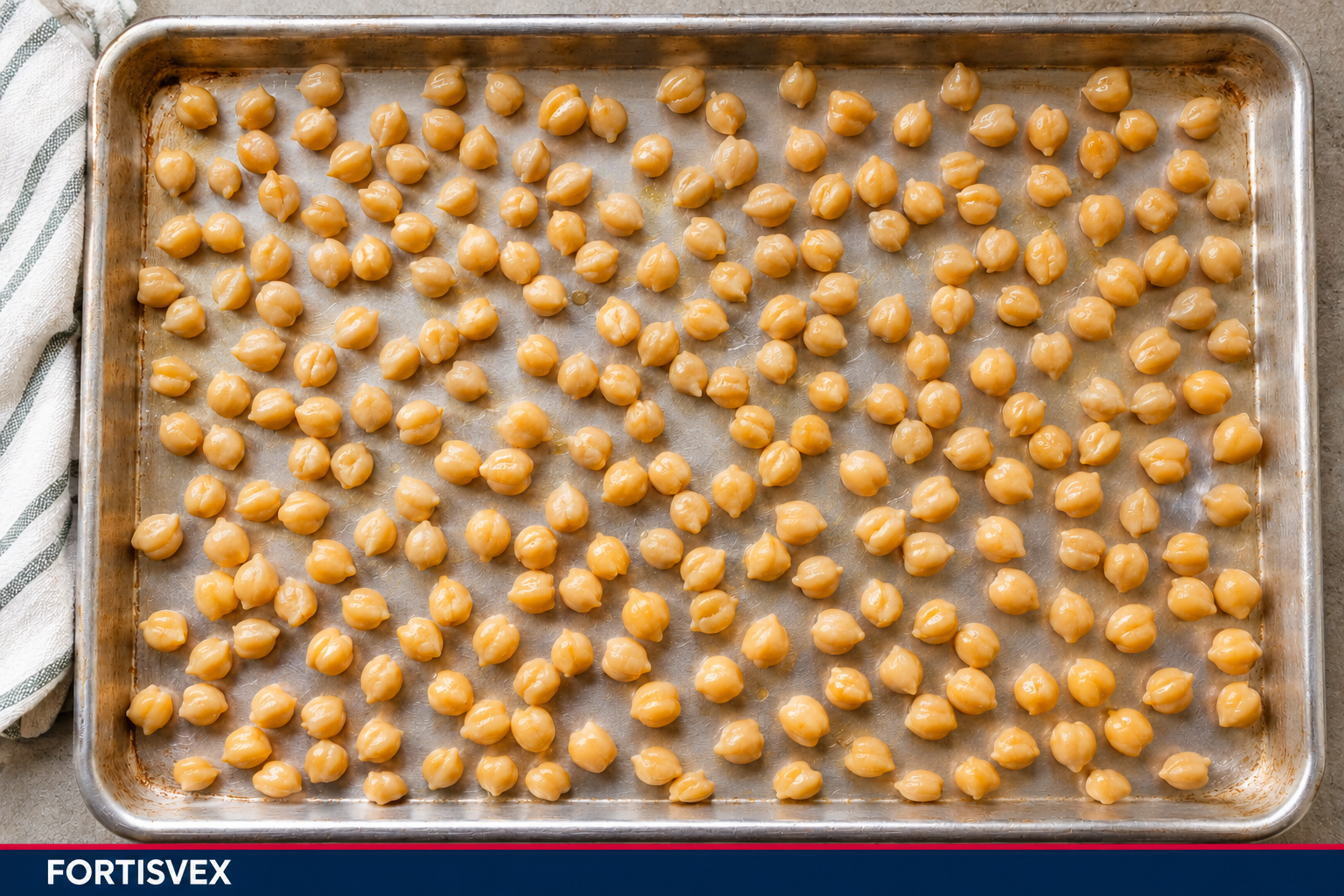
Look at the tray before it goes into the oven. A single layer means no piles, with enough room to turn the chickpeas without spilling them. If your baking sheet is smaller, divide the batch between two sheets and allow for uneven browning between oven positions. Do not use a deep dish as though it will behave exactly like a shallow sheet.
Roast, check and season
- Heat the oven. Set a conventional oven to 425°F (220°C), with a rack near the middle. Wash your hands and rinse the lemon before grating its peel.
- Coat the chickpeas. Toss the dried chickpeas with the oil, measured salt and pepper. Spread them over the baking sheet.
- Roast. Cook for about 30 minutes, gently shaking or stirring the tray every 10 minutes. Use oven mitts and keep the hot tray level. Begin watching closely toward the end: the surfaces should look dry and golden, not dark brown or scorched.
- Test a cooled sample. Remove a few chickpeas with a spoon and let them cool before tasting. If they remain wetter or softer than you want, return the tray for 5-minute intervals, checking the color each time. Stop if the outside is becoming too dark; further roasting will not rescue burned surfaces.
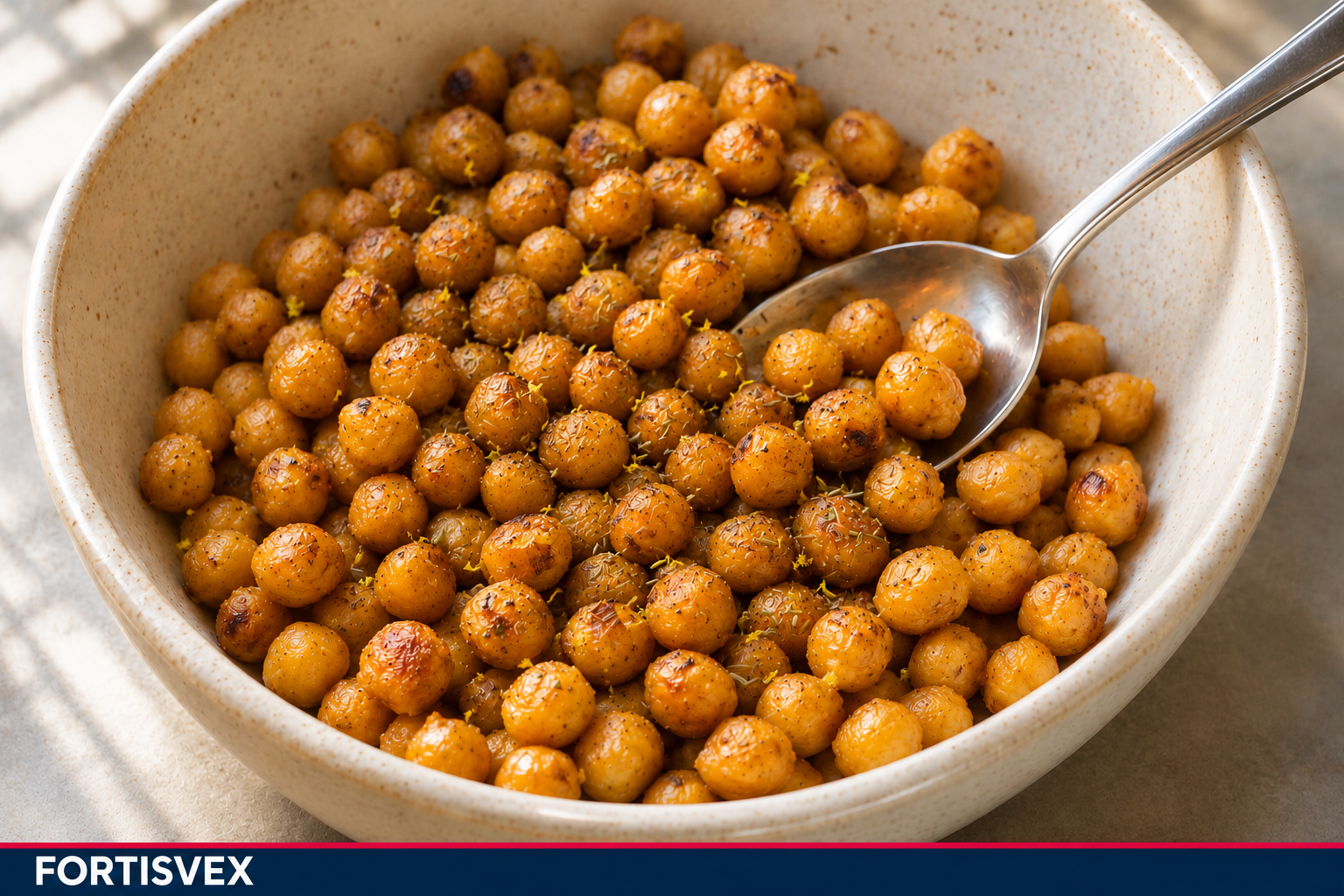
- Finish. Transfer the warm chickpeas to a heatproof bowl. Toss with the finely crushed rosemary and lemon zest. Cool for 5–10 minutes, then taste before adding any extra salt. Serve while freshly roasted.
Why the finishing step matters
Long rosemary needles can be unpleasant in a small snack. Crush the dried leaves between your fingers or with a mortar before measuring. A little should scent the bowl without turning each bite into a mouthful of herbs. Lemon zest should be fine enough to cling to the chickpeas; avoid grating deeply into the white pith.
Keep lemon juice out of this batch if your priority is a drier finish. If you prefer a juicy, softer bean side, add a small squeeze to your own serving rather than changing the whole bowl. It becomes a different texture, not a failed snack. Likewise, do not add a wet sauce and expect the coating to remain crisp.
Ways to serve a small batch
Set out a small bowl before dinner, or scatter a spoonful over a salad just before eating. They can add a different texture beside lentil and sweet potato stew; keep the chickpeas separate until serving rather than letting them soak in the broth.
For a fuller meal with chickpeas as a main component, try roasted butternut squash and chickpea bowls. That is a vegetable-and-sauce meal, not this dry snack. If dinner needs a separate crisp-tender vegetable, lemon-parsley green beans offer another option without making an oversized snack batch.
Leftovers and practical limits
Make only what you expect to enjoy soon. Home-roasted chickpeas can soften as they sit, and this recipe is not a shelf-stable preservation method. Refrigerate leftovers in a shallow container within two hours, or one hour when the surrounding temperature is above 90°F. Keep the refrigerator at 40°F or below. Use refrigerated leftovers within 3–4 days; accept a softer texture or add them to a cooked dish rather than promising restored crunch.
Check canned-food and seasoning labels when serving someone with an allergy. Chickpeas are legumes; this is not a claim that the snack is suitable for every guest. Whole firm chickpeas may also be unsuitable for someone who needs soft foods.
Method and handling references
The canned-bean, oil and hot-oven approach draws on University of Maryland Extension’s roasted-chickpea method. The VA chickpea recipe sheet also distinguishes warm crispness from a chewier cooled result. This lemon-rosemary finish is a separate seasoning choice. Follow FoodSafety.gov’s cleaning and chilling guidance when preparing and storing food.
View the recipe reference
Faithful page-image preview of page 2 of the official VA chickpea recipe sheet. This source recipe is distinct from the lemon-rosemary variation above. The preview is not an interactive PDF viewer.
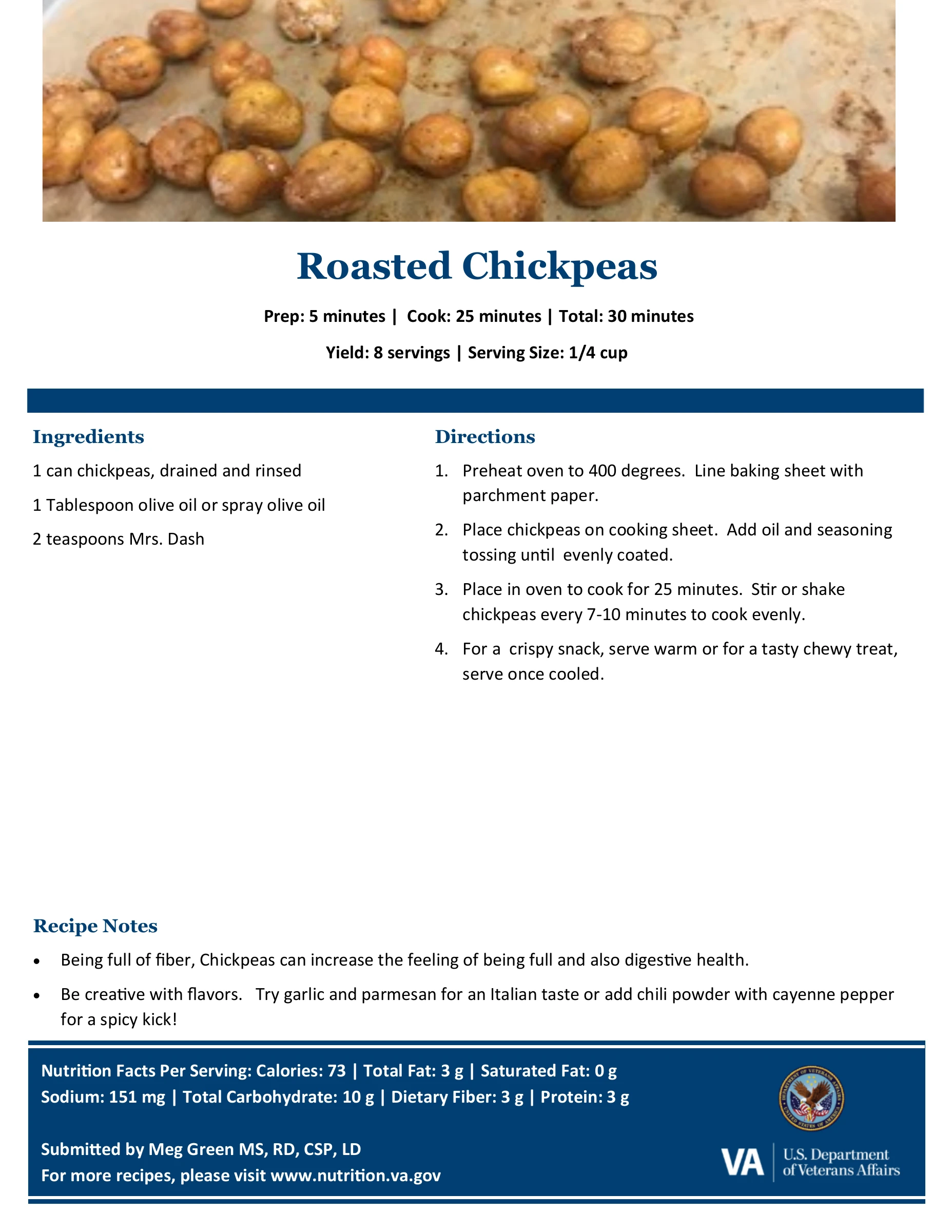
Open or download the official two-page VA recipe PDF. Use the PDF browser controls to zoom or save the original; the roasted-chickpea reference is on page 2.
Recent Posts
-

Poland and Indonesia: Check the Top Band Before the Size
Poland and Indonesia both use red and white in two equal horizontal bands. The quickest distinction …Nov 18th 2026 -

Sweden and Finland: Compare the Crosses at the Same Height
Sweden’s yellow cross on blue and Finland’s blue cross on white share a familiar arrangement: the up …Nov 18th 2026 -

Charcoal-Kettle Savoy Cabbage Wedges with Mustard Vinaigrette
Savoy cabbage’s crinkled leaves catch a little oil and brown at their edges, while the thicker base …Nov 18th 2026