
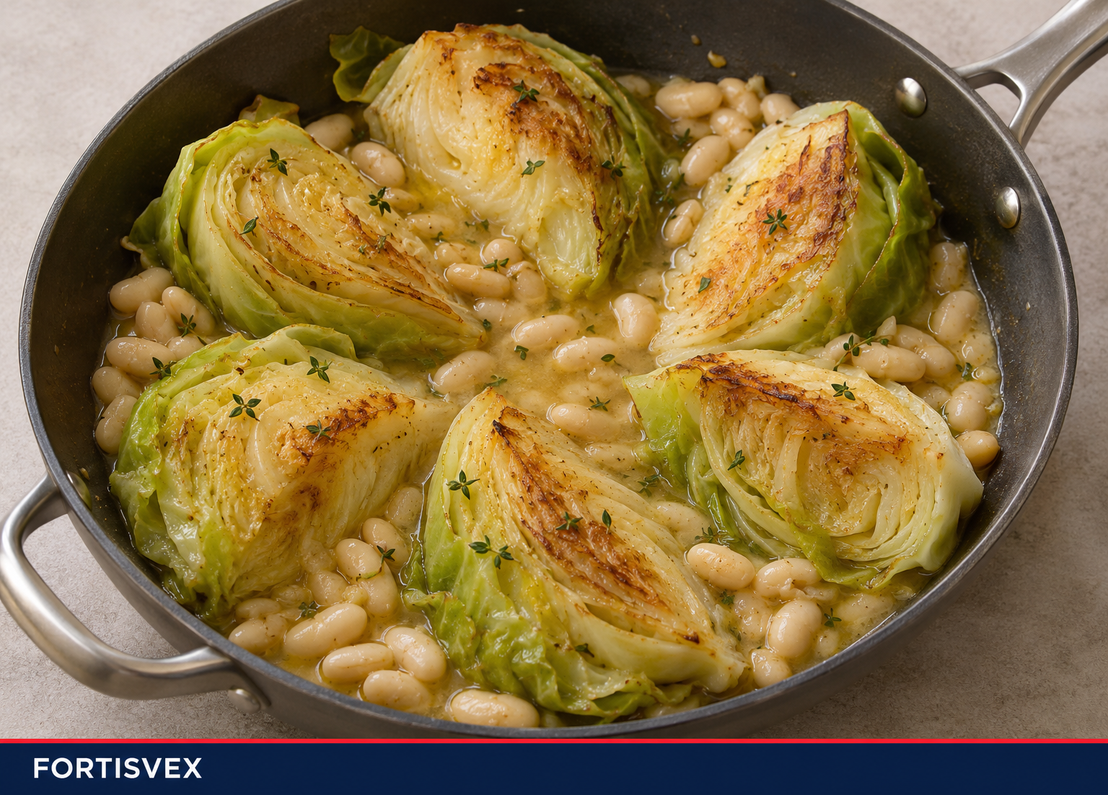
Lemon-Braised Cabbage and White Beans
Browning cabbage wedges before covering the pan gives their cut faces a sweet, savory edge. Cannellini beans simmer alongside the cabbage just long enough to warm through and pick up the pan juices. The finish is a little lemon and thyme, not a deep pool of broth. Serve this as a weeknight main with toast or as a warm side for a winter meal.
If you want a different dinner you can start earlier in the day, try our slow-cooker lentil and sweet potato stew.
Lemon-Braised Cabbage and White Beans
Yield: 3 main-dish or 6 side-dish servings. Prep: 12 minutes. Cook: 25 to 35 minutes once the pan is hot. Total: about 40 to 50 minutes. If the cabbage needs to brown in batches, allow a few extra minutes.
Equipment: A wide, deep 12-inch sauté pan or skillet with a lid, tongs, a cutting board and a sharp knife.
Ingredients
- 1 small head green cabbage, about 1½ pounds (680 g)
- 2 tablespoons olive oil, divided
- 2 garlic cloves, finely chopped
- ¾ cup low-sodium vegetable broth, plus a splash if needed
- 1 teaspoon fresh thyme leaves, plus a few leaves for serving if desired
- ½ teaspoon fine sea salt, divided, plus more to taste
- ¼ teaspoon ground black pepper
- 2 cans cannellini beans (15 ounces each), drained and rinsed
- 1 lemon: ½ teaspoon finely grated zest and 1 tablespoon juice, plus more juice to taste
Instructions
- Cut six wedges. Peel off any wilted outer leaves and rinse the cabbage under running water. Pat it dry. Halve the head through the stem, then cut each half into three wedges. Trim the dry stem end, but leave a strip of core in each wedge so the leaves hold together. Pat the cut faces dry for better browning.
- Sear the cabbage. Heat 1 tablespoon oil in the skillet over medium-high heat. Sprinkle the wedges with ¼ teaspoon salt. Lay them cut-side down in one layer. Cook 3 to 4 minutes, until the underside is golden brown in patches, then use tongs to brown the other cut face for another 2 to 4 minutes. Work in batches if the wedges overlap, dividing the searing oil between batches. Lower the heat if the oil starts smoking. Lift the wedges onto a plate.
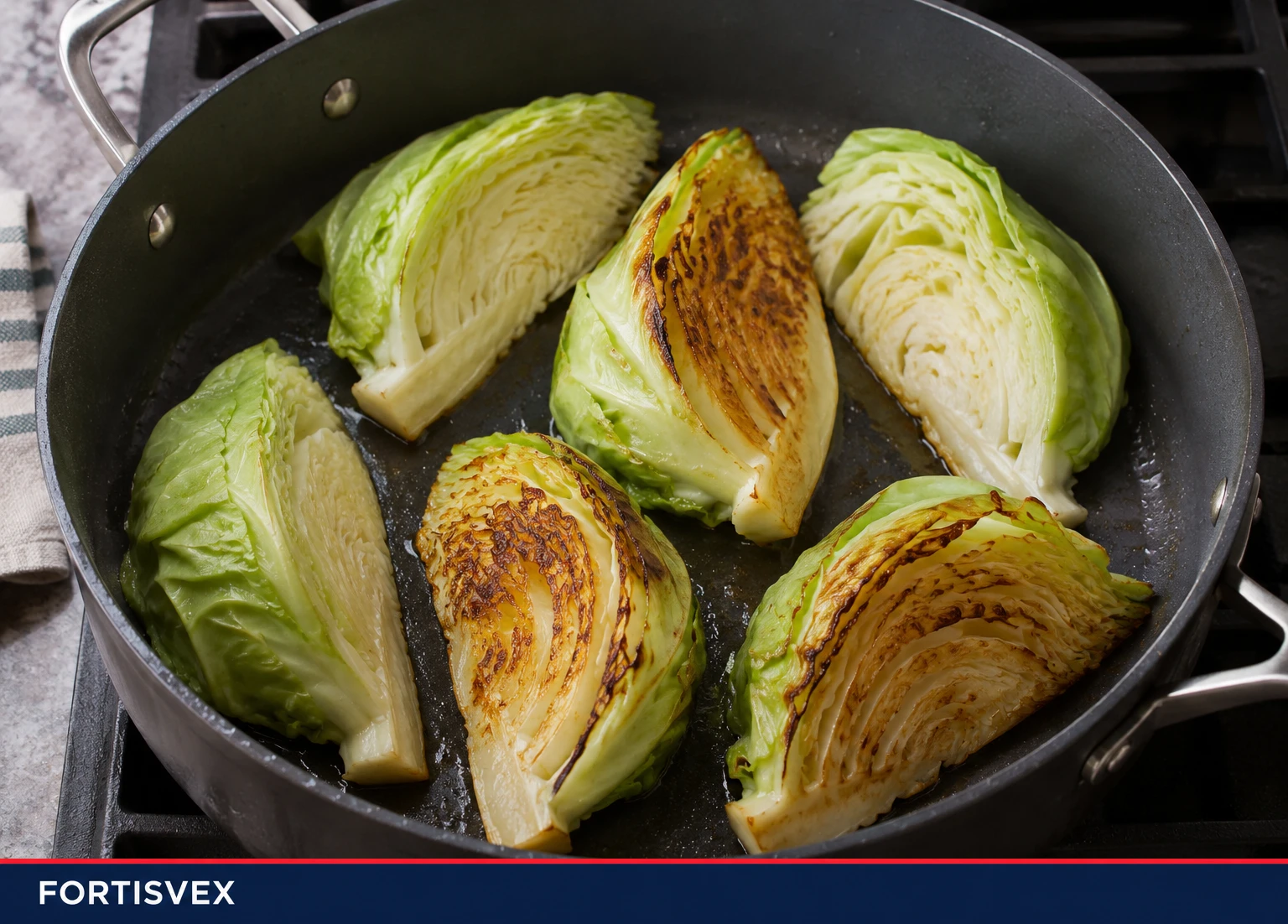
- Build the braise. Reduce the heat to medium. Add the remaining tablespoon of oil and the garlic. Stir for about 30 seconds, just until fragrant. Pour in the broth and scrape up the browned bits. Add the thyme, pepper and remaining ¼ teaspoon salt. Return the wedges in one layer. Once the liquid comes to a bubble, reduce to medium-low or adjust the burner to keep it at a gentle simmer. Cover and cook 12 to 16 minutes, until a knife slides into the thick part of a wedge with just a little resistance. If the pan nearly dries out, add 1 to 2 tablespoons of water or broth.
- Add the beans and finish. Spoon the drained beans between the wedges. Cover and gently simmer another 4 to 6 minutes, until the beans are hot and the cabbage is tender near the core. If the braising liquid is deeper than you want, uncover and simmer 1 to 3 minutes to reduce it. Turn off the heat, stir the lemon juice into the beans and pan juices, and sprinkle over the zest. Taste a spoonful with beans before adding more salt or lemon.
Serve it with the juices
Divide the cabbage and beans among shallow bowls or plates. Slide a spatula under each wedge to keep the layers intact, and spoon the remaining juices over and around it. If a piece of core is firmer than the leaves, leave it on the plate.
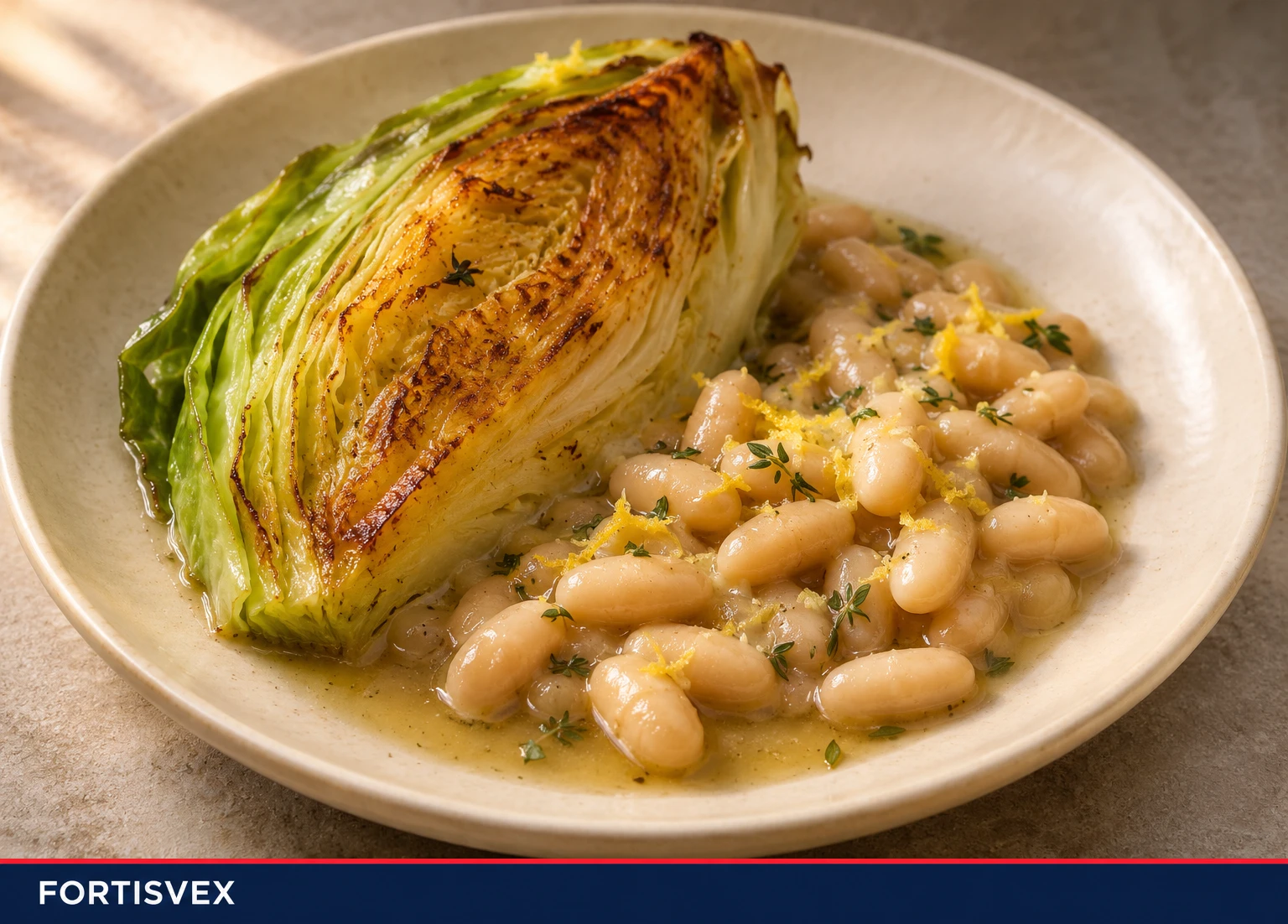
Toast works well for soaking up the broth. For another meatless skillet dinner, try our ginger-garlic tofu and broccoli rice bowls. If you are serving this as part of a dinner for guests, the cinnamon apple-oat crisp can bake separately while the cabbage cooks on the stovetop.
Swaps and leftovers
Great Northern beans also work. Use beans that are already cooked; the short final simmer is not suitable for dried beans. If you are using homemade cooked beans, start with about 3 cups drained. If the dish needs to suit an allergy or other dietary restriction, verify the broth and bean labels and avoid cross-contact.
Refrigerate leftovers in shallow containers at 40°F (4°C) or below within 2 hours, or within 1 hour if the temperature is above 90°F (32°C). Use within 3 to 4 days. Reheat only what you plan to eat to 165°F (74°C), checked with a food thermometer. A splash of water can loosen the beans as they reheat.
Recent Posts
-

Slow-Cooker Butternut Squash and Black Bean Chili with Charred Poblano
Char a poblano while you prep the squash, then let the slow cooker do the simmering. Tender butternu …Nov 24th 2026 -

Roasted Turnips with Cider Vinegar and Brown-Butter Breadcrumbs
Roast turnips until the flat sides turn gold and a fork slips into the center. A splash of cider vi …Nov 24th 2026 -

Charcoal-Kettle Foil-Packet Rainbow Trout with Lemon, Fennel and Dill
A closed foil packet turns the cooler side of a Weber charcoal kettle into a small oven. Here, each …Nov 24th 2026