
A Flag Is Not a Table Cover: Plan a Patriotic Event Without Repurposing the Display Flag
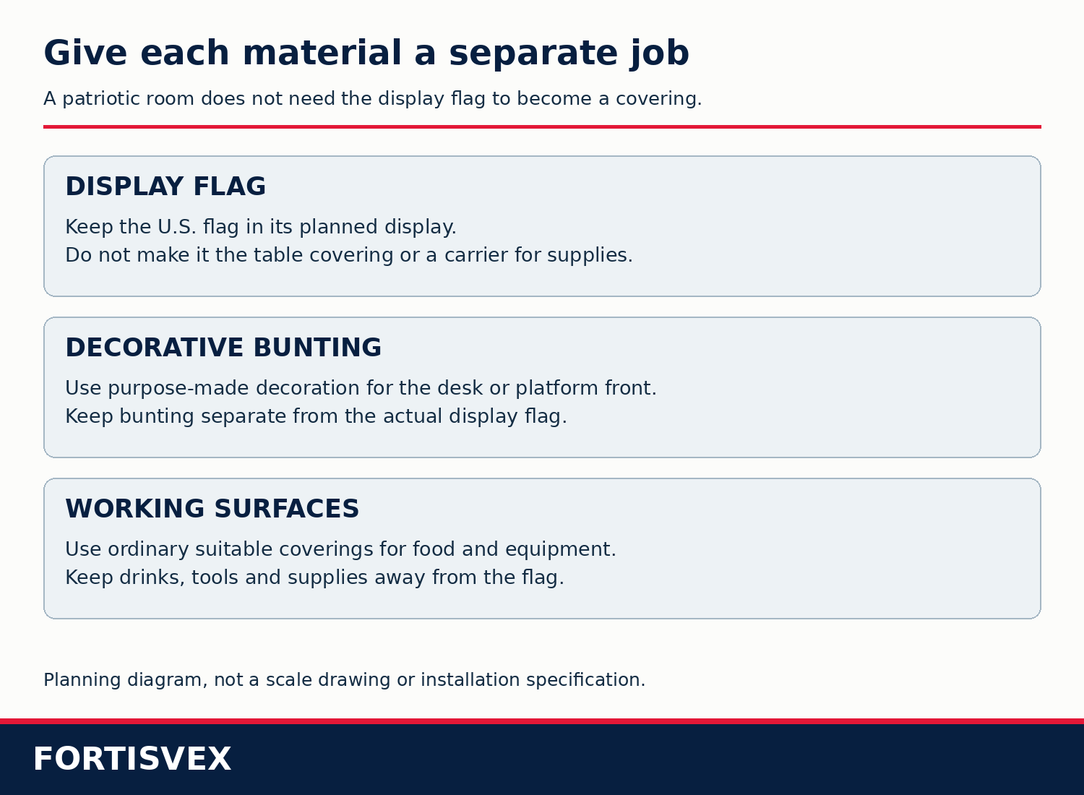
A patriotic event can have a flag, a decorated platform and a welcoming refreshment table without asking one piece of fabric to do all three jobs. The simplest planning decision is to keep the actual U.S. display flag separate from the materials used to cover surfaces or decorate furniture.
That distinction is useful before anyone starts unloading boxes. A flag brought for the ceremony should not become a convenient table runner while the room is being arranged. Give it a named place in the display plan, and bring separate materials for the other work.
Start with the flag's job
The U.S. Flag Code addresses this directly. Section 8(d) says the flag should not be used as drapery and identifies blue, white and red bunting for a speaker's desk, the platform front and general decoration. Sections 8(b), 8(e) and 8(h) also address contact with surfaces beneath the flag, avoiding damage and not using it as a receptacle.
For an event organizer, the practical distinction is between displaying the flag and making it serve another object. Use a suitable ordinary covering for a buffet or equipment table. Do not place plates, drinks, boxes or tools on the display flag, or gather items inside it to carry them across the room.
This article uses the Code's respectful-display guidance. It does not invent a venue rule, a fine or a private enforcement power. If your organization has its own protocol, ask the responsible person how it applies to the actual occasion.
Choose decoration that does not borrow the flag
Bunting supplies the decorative role without turning the display flag into a swag or covering. The Code describes the order as blue above, white in the middle and red below. Check that order in the finished arrangement, not just while the material is folded in its package.
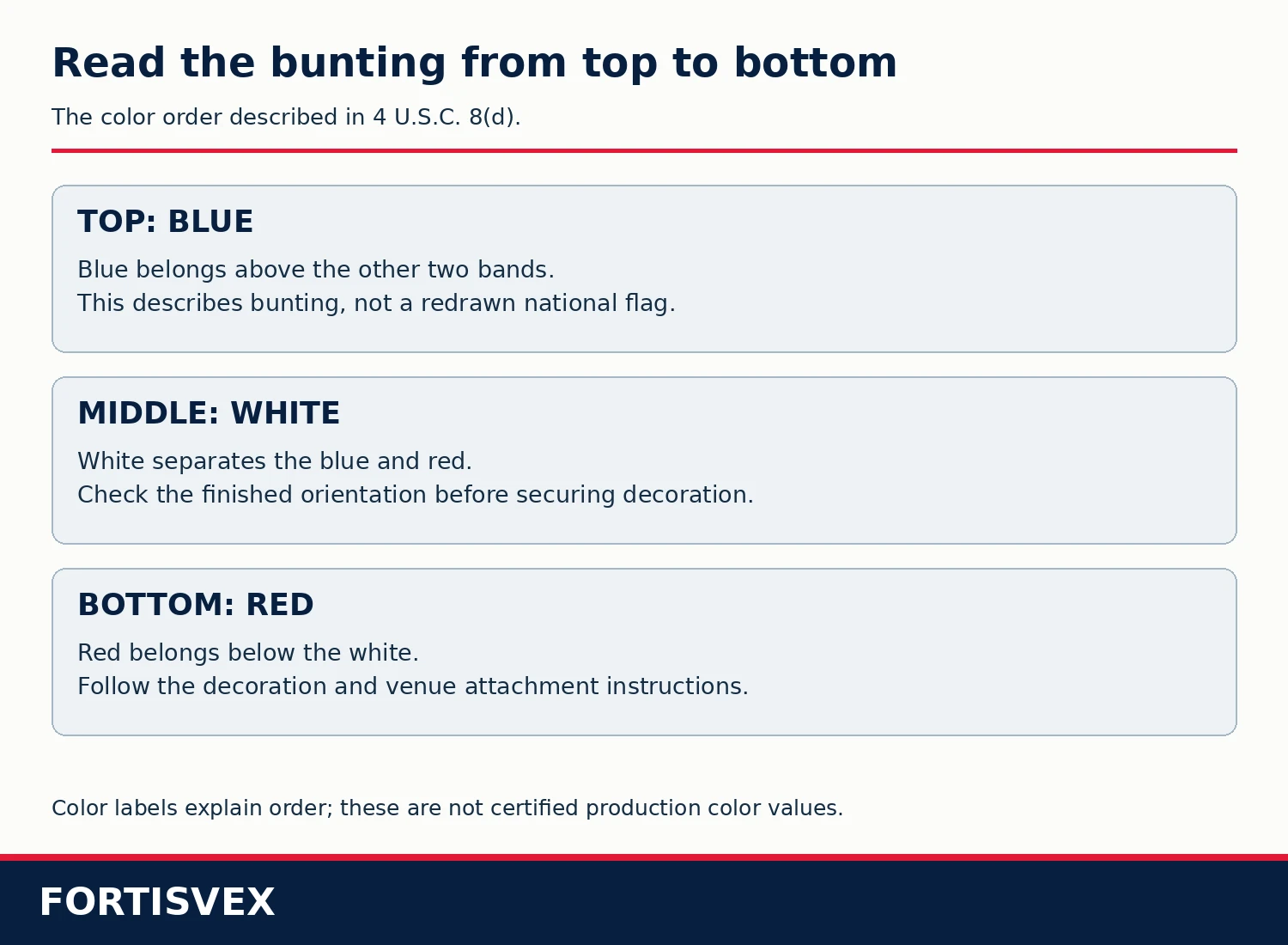
The diagram shows color order rather than a manufacturing pattern. It does not specify a product's dimensions, fabric, fixing method or exact color values. Read the selected decoration's instructions and the venue's requirements before choosing attachments. A familiar red-white-blue appearance is not evidence that a fabric is suitable near heat, lighting or equipment.
Keep the display flag out of the fastening experiment. Do not add holes or improvised ties to it to solve a decoration problem. If the platform front cannot accept the intended decoration safely, change the decoration plan with the venue rather than repurposing the flag.
Put the flag and the furniture on the same plan
A sketch should show the flag display, the speaker's position, the decorated area and the working tables as separate items. It should also leave room for the people who need to pass between them. Avoid placing serving activity where a person carrying a tray has to brush past the flag.
Our indoor flag display venue-review worksheet helps organize questions about the display's footprint and projection. Use it to discuss the real room with the venue, not to declare a stand stable or an aisle compliant from a sketch. This article supplies no installation or structural approval.
Separate decoration decisions from the ceremony's running order as well. The flag, Pledge and anthem cue sheet addresses who does what during the program. A well-decorated platform does not tell the host when to invite people to stand or who is responsible for the flag.
Do not turn a narrow rule into a broader claim
The current Section 8(c) contains a limited exception to its horizontal-carry wording for respectful military or patriotic observances, added in 2024. That provision is distinct from the drapery and receptacle guidance used here. This room-planning checklist is not an assessment of a particular ceremonial horizontal display, and it does not describe every such display as improper.
Likewise, the article is about the actual U.S. display flag. It is not a blanket ruling on every item with patriotic colors or a flag-inspired design. Keeping the scope clear helps volunteers solve the setup in front of them without making unsupported claims about other people's decorations.
Make the final walk-through useful
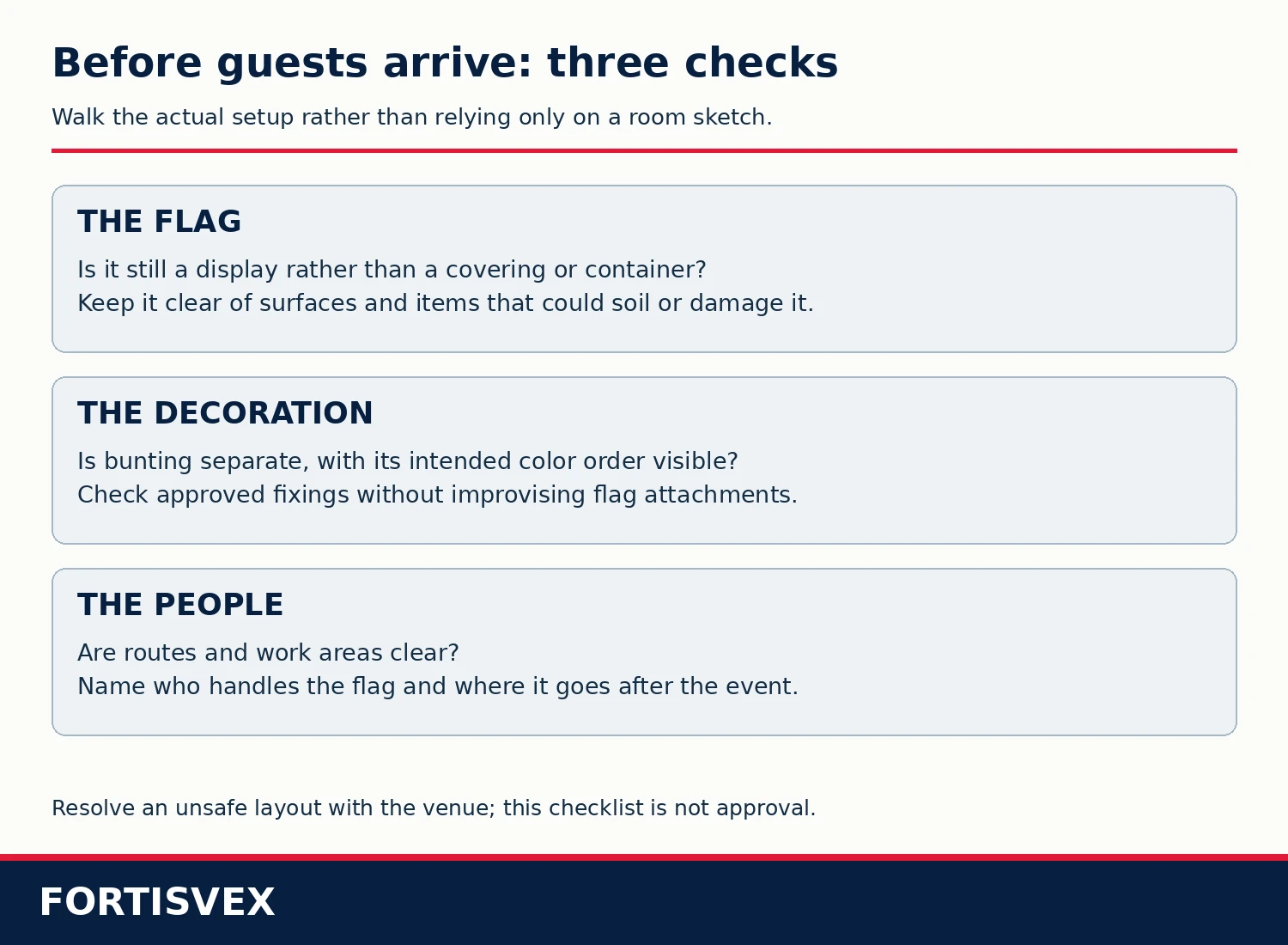
Before opening the room, look at the setup from the entrance and from the working side of the tables. Confirm that the flag remains clear of surfaces and supplies, that the bunting is separate, and that people can use the room without catching the flag or its equipment. If something is uncertain, ask the venue before guests arrive rather than improvising around them.
Finish by assigning the flag's end-of-event handling. Our event flag display kit handoff checklist helps keep the display and its components together. Pack decoration and working-table supplies separately so the flag does not become a wrapping cloth during cleanup.
The result is straightforward: the flag represents the occasion, the bunting decorates the room, and ordinary coverings protect the working surfaces. Giving each one its own job makes a respectful setup easier to explain, check and repeat.
Recent Posts
-
Wisconsin Half-Staff Order for November 21, 2026: Waukesha Parade Remembrance
Wisconsin Gov. Tony Evers signed Executive Order 306 on November 19, 2026, directing that the U.S. a …Nov 19th 2026 -
Flying a U.S. Flag After Dark: Check the Flag, Not Just the Light
A bright porch light and a visible flag are not necessarily the same thing. Before leaving a U.S. fl …Nov 19th 2026 -

Roasted Delicata Squash with Maple-Cider Dressing and Toasted Pepitas
Delicata squash makes a holiday side without tying up a burner. Roast the crescents until their edge …Nov 19th 2026