
Flying a U.S. Flag After Dark: Check the Flag, Not Just the Light
A bright porch light and a visible flag are not necessarily the same thing. Before leaving a U.S. flag outside overnight, look at the actual display after dark, not just the illuminated fixture or a daytime photograph. Then decide who will notice and respond if that arrangement stops working.
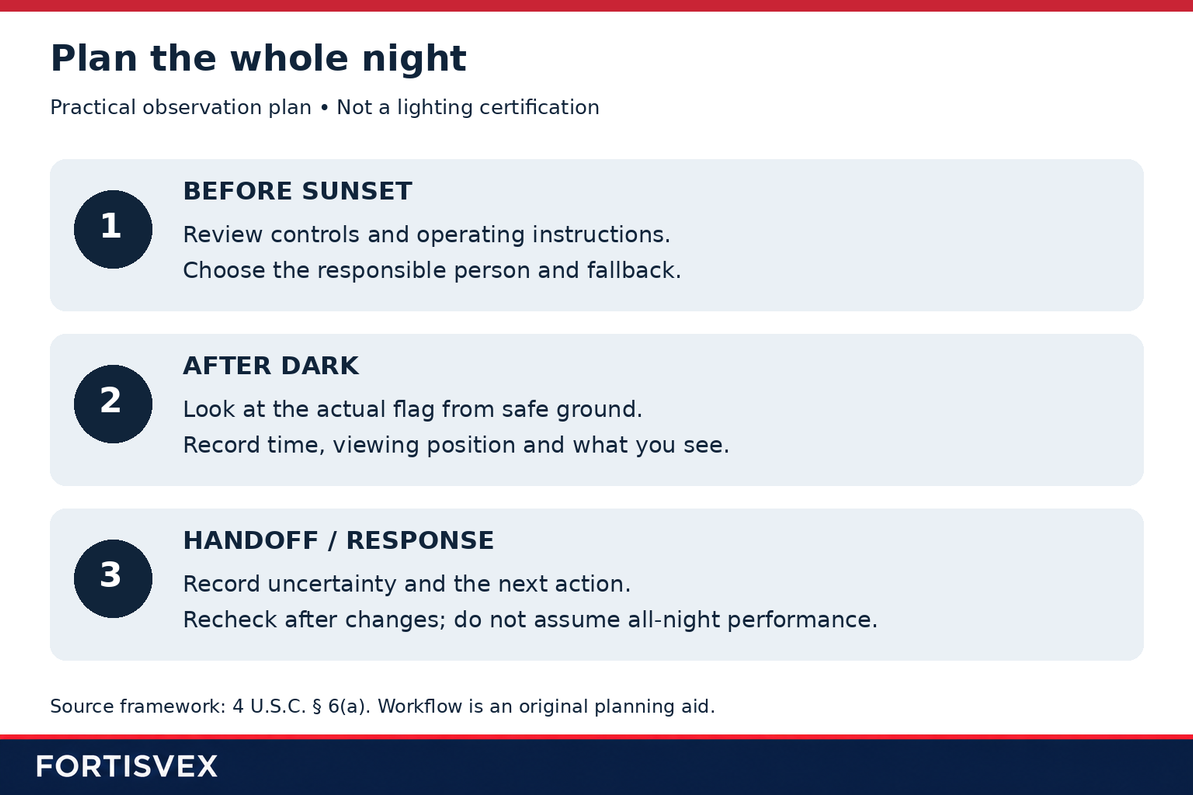
Separate the display guidance from the observation plan
4 U.S.C. § 6(a) describes sunrise-to-sunset display as customary. It allows round-the-clock display for a patriotic effect when the flag is properly illuminated throughout darkness. That condition concerns the nighttime display, not merely whether a light was installed.
The American Legion’s flag-display FAQ interprets proper illumination in terms of a flag that an ordinary observer can clearly see and recognize. It prefers a dedicated light directed toward the flag but also discusses other adequate light sources. This is the Legion’s interpretation, not a numeric lighting threshold stated in § 6(a).
The checks below are a practical planning aid. They are not a lighting measurement protocol, a product certification or an electrical installation procedure. A successful observation records what you saw at that time; it does not establish that the display will remain illuminated until morning.
Look at the flag from a normal viewing position
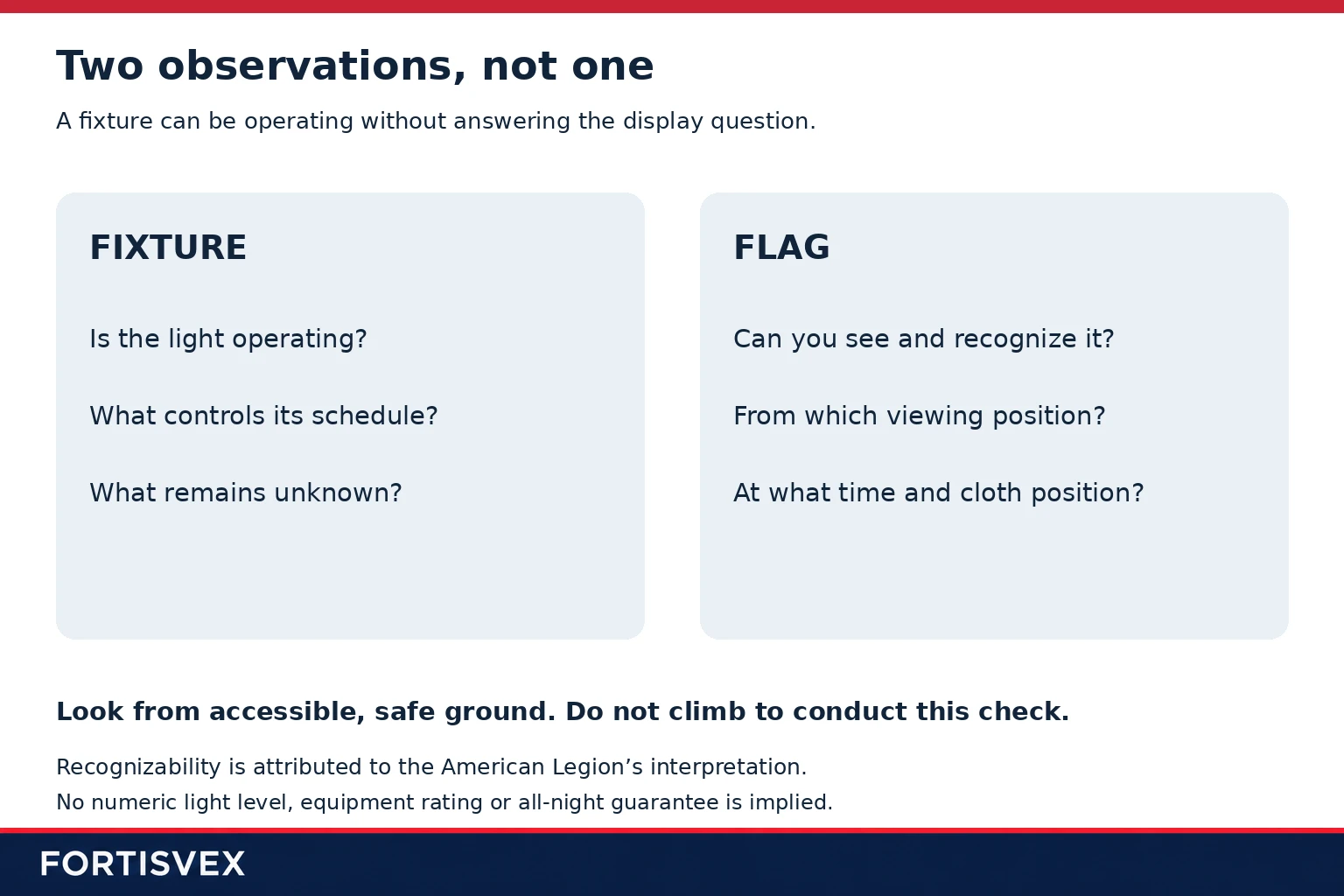
Choose an accessible place from which someone would ordinarily see the display. Stay on safe, permitted ground rather than stepping into a roadway or climbing to inspect the fixture. Look at the flag itself. Can you recognize the displayed flag, or do you mainly see a bright lamp and a dark patch of fabric?
Record the viewing position and time. If the cloth is moving, observe more than one position rather than selecting the clearest instant as your entire assessment. A flag folded around its pole presents a different problem from a light that misses its target. Our porch-flag wrapping checklist treats that separate attachment and movement question; it is not a substitute for checking illumination.
Plan for the part of the night you do not see
Do not turn an early-evening check into an unsupported all-night promise. Review the actual lighting arrangement’s operating instructions and controls. Note any timer, switching schedule or other condition that could end illumination before daylight. If those details are unknown, record that uncertainty rather than treating a product name or bright initial appearance as proof.
For a shared building or event, identify who is responsible after the person arranging the display leaves. Agree on how a problem will be reported and who can safely respond. An unattended display with no workable response plan is different from one whose lighting and responsibilities have been checked.
Keep the pedestrian route separate from the flag’s visibility check. The porch-display walkway guide addresses space used by visitors. A clear, well-lit path does not by itself show that the flag above it is adequately illuminated.
Choose the fallback before sunset
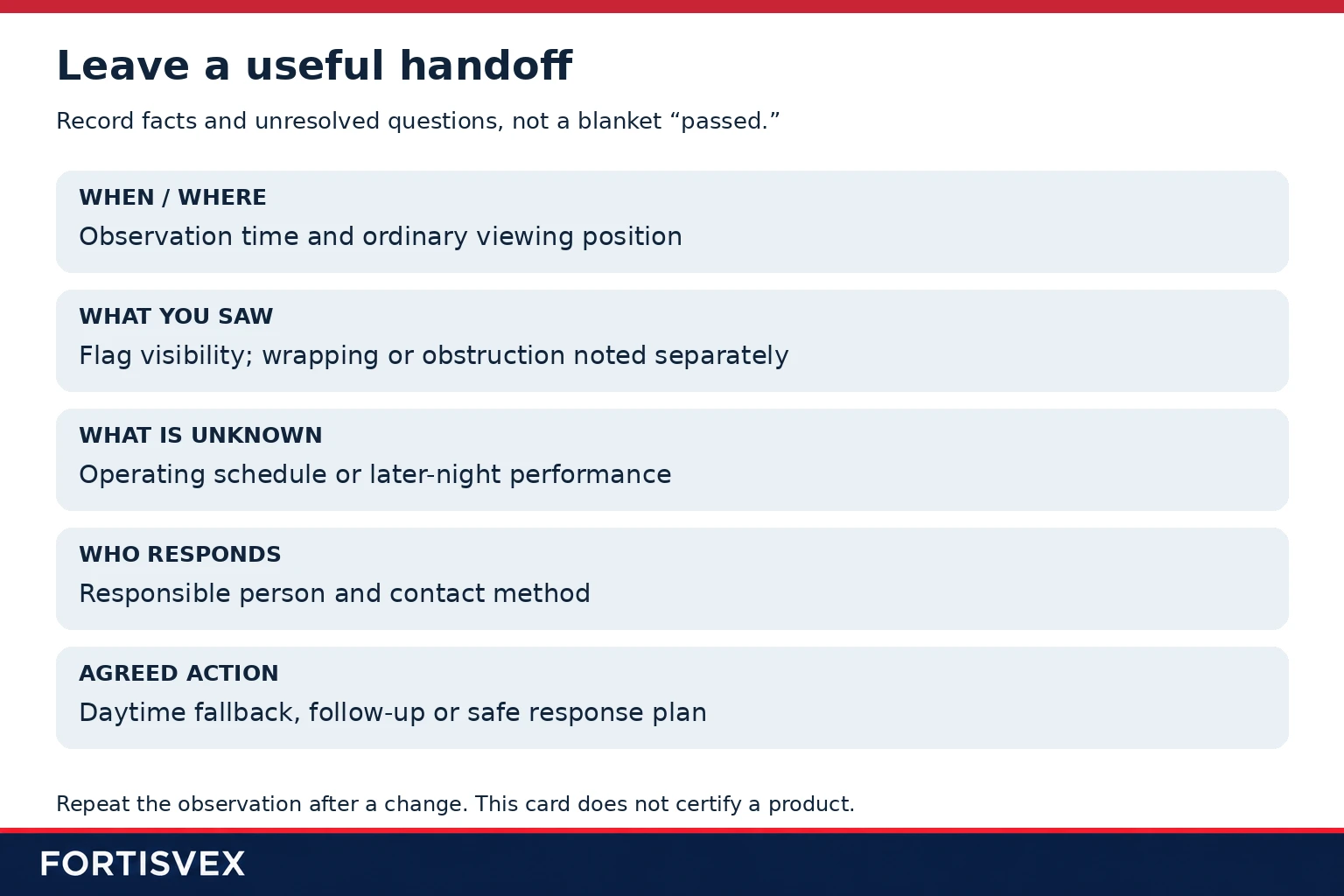
If you cannot establish a suitable overnight arrangement, choose daytime display and plan to lower the flag at sunset. If illumination fails while the flag is up, notify the responsible person and arrange a safe response rather than assuming the light will recover. Do not climb, handle electrical equipment or improvise mounting changes in darkness to complete this checklist.
After an adjustment or repair, repeat the after-dark observation. Keep the previous note so the next person can distinguish what changed from what still needs attention. This is especially useful when a timer was changed or the flag’s position was moved.
Keep the flag purchase and the lighting decision separate
When choosing among U.S. flags, consider the actual flag and its intended display separately from the lighting arrangement. A textile or attachment choice does not establish nighttime illumination, and a light does not settle the flag’s size or mounting suitability. Finish with two clear decisions: what will be displayed, and how that particular display will be managed after dark.
Recent Posts
-

Flying a U.S. Flag After Dark: Check the Flag, Not Just the Light
A bright porch light and a visible flag are not necessarily the same thing. Before leaving a U.S. fl …Nov 19th 2026 -

Roasted Delicata Squash with Maple-Cider Dressing and Toasted Pepitas
Delicata squash makes a holiday side without tying up a burner. Roast the crescents until their edge …Nov 19th 2026 -
Choosing a Fringed U.S. Flag: Decoration Is Not the Attachment Method
A gold-fringed U.S. flag may look right for a meeting room, reception area or ceremonial display. Be …Nov 19th 2026