
Charcoal Weber Kettle Cauliflower Steaks with Lemon-Caper Dressing
A cauliflower steak needs two things: enough of the central stalk to hold together and enough cooking time for that stalk to become tender. Brown edges alone do not finish the job. This recipe pairs the grilled cauliflower with a bright dressing of lemon, capers and parsley, added after cooking so you can control how much reaches each portion.
This recipe is inspired by charcoal-kettle barbecue.
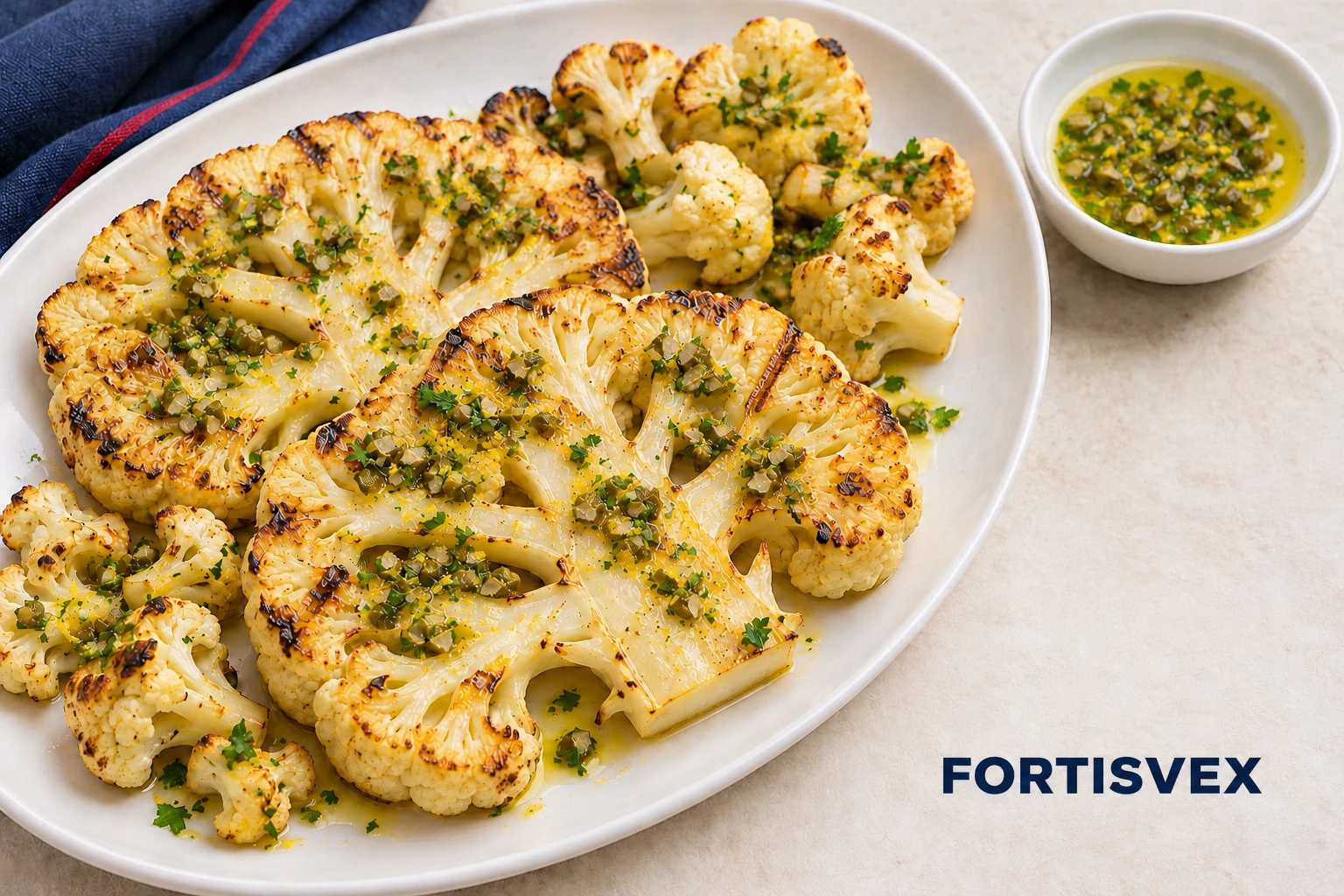
Ingredients
For the cauliflower
- 1 large, firm cauliflower head
- 2 tablespoons olive oil
- 1/4 teaspoon fine salt, plus more to taste after cooking
- 1/4 teaspoon freshly ground black pepper
For the dressing
- 2 tablespoons olive oil
- 1 tablespoon fresh lemon juice
- 1 teaspoon finely grated lemon zest
- 1 tablespoon drained capers, roughly chopped
- 2 tablespoons chopped fresh flat-leaf parsley
- 1 tablespoon water, with more if needed
- Black pepper to taste
Capers vary in saltiness. Taste the finished dressing before adding any salt.
Set out the equipment
Use your charcoal Weber kettle, suitable barbecue mitts, a wide metal spatula and a grill-safe perforated pan or basket for loose florets. Follow the kettle and accessory instructions. Keep a clean serving platter separate from the preparation board. Do not use a plastic colander as a grill basket.
Method
- Wash and cut. Wash your hands and rinse the cauliflower, lemon and parsley under running water; do not use soap on produce. Dry them. Remove the cauliflower leaves and trim only the projecting end of the stalk, leaving the core intact. On a stable board, cut down through the center, then cut roughly 1/2-inch-thick slabs that retain a section of core. Expect the outer portions to separate into florets. Keep those pieces rather than forcing them into steaks.
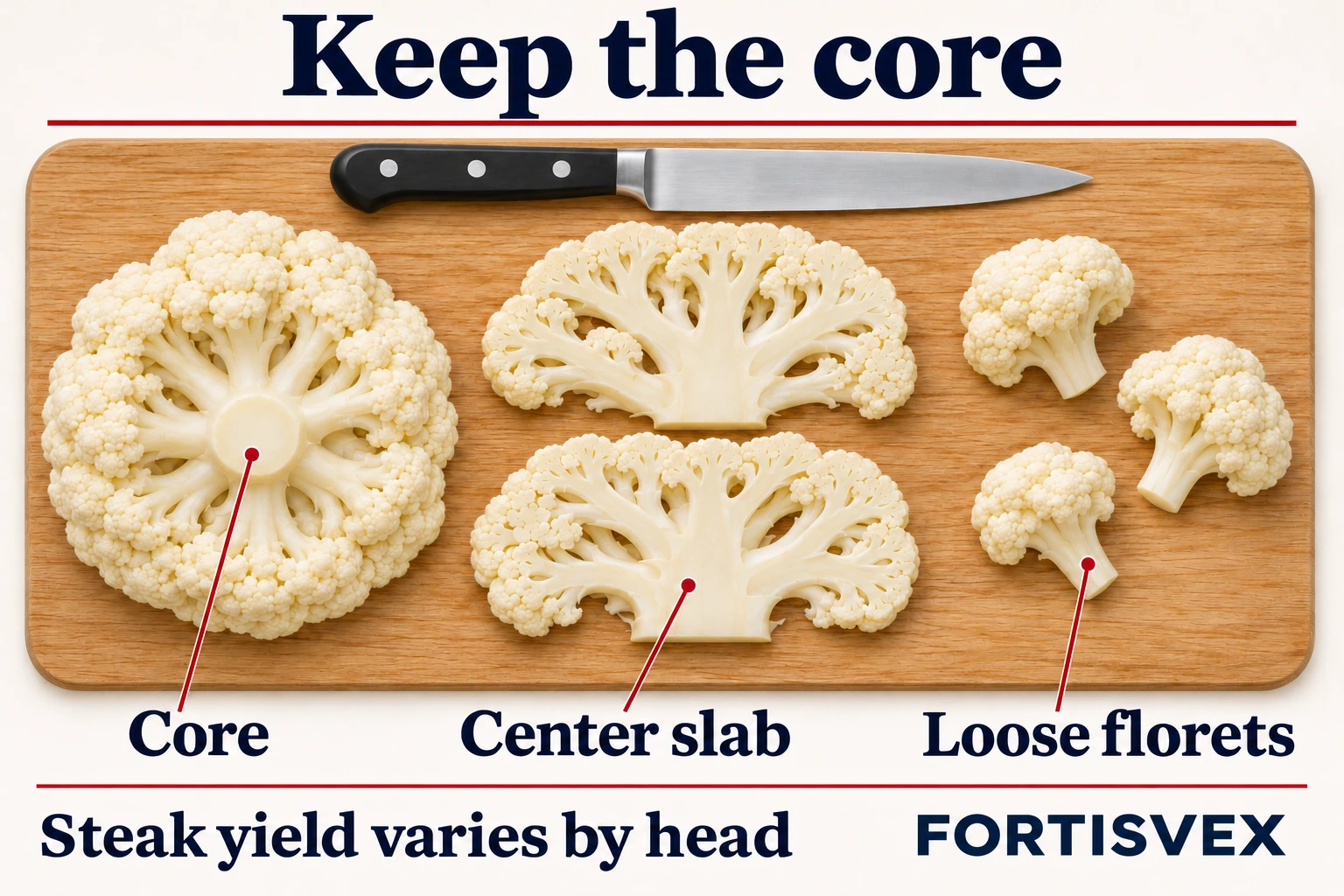
Keep some core in each slab; usable steak yield varies by head. - Prepare the kettle. Arrange a two-zone charcoal fire, with the fuel on the lower charcoal grate beneath one side of the upper cooking grate. Leave the other side without coals beneath it. Preheat for direct medium cooking, approximately 350–450°F. The indirect side provides somewhere to finish a browned but still-firm piece; it is still hot. Use the fuel quantity and lighting procedure specified for your kettle rather than a universal briquette count.
- Mix the dressing. Stir together its oil, lemon juice, zest, capers, parsley and water. Taste and add pepper. If too sharp, stir in a little more water, a teaspoon at a time. Keep the dressing separate and refrigerated at 40°F or below until serving.
- Season and grill. Brush the slabs and loose florets lightly with the oil reserved for the cauliflower; season with the measured salt and pepper. Put slabs on the upper cooking grate over the direct zone. Put small florets in the grill-safe pan so they cannot fall through. Close the lid. Check at about 8 minutes, lifting an edge with the wide spatula. Turn when the underside is browned, supporting the whole slab rather than pulling on a single branch.
- Finish by tenderness. Cook the second side with the lid closed and begin checking after another 8 minutes. A small knife should enter the thick core with little resistance. If the outside is sufficiently browned but the core remains firm, move that piece to the indirect side, close the lid and check every few minutes. Turn the loose florets as needed and remove them individually when tender. Their size can make them finish before the slabs. The clock is a guide, not the endpoint.
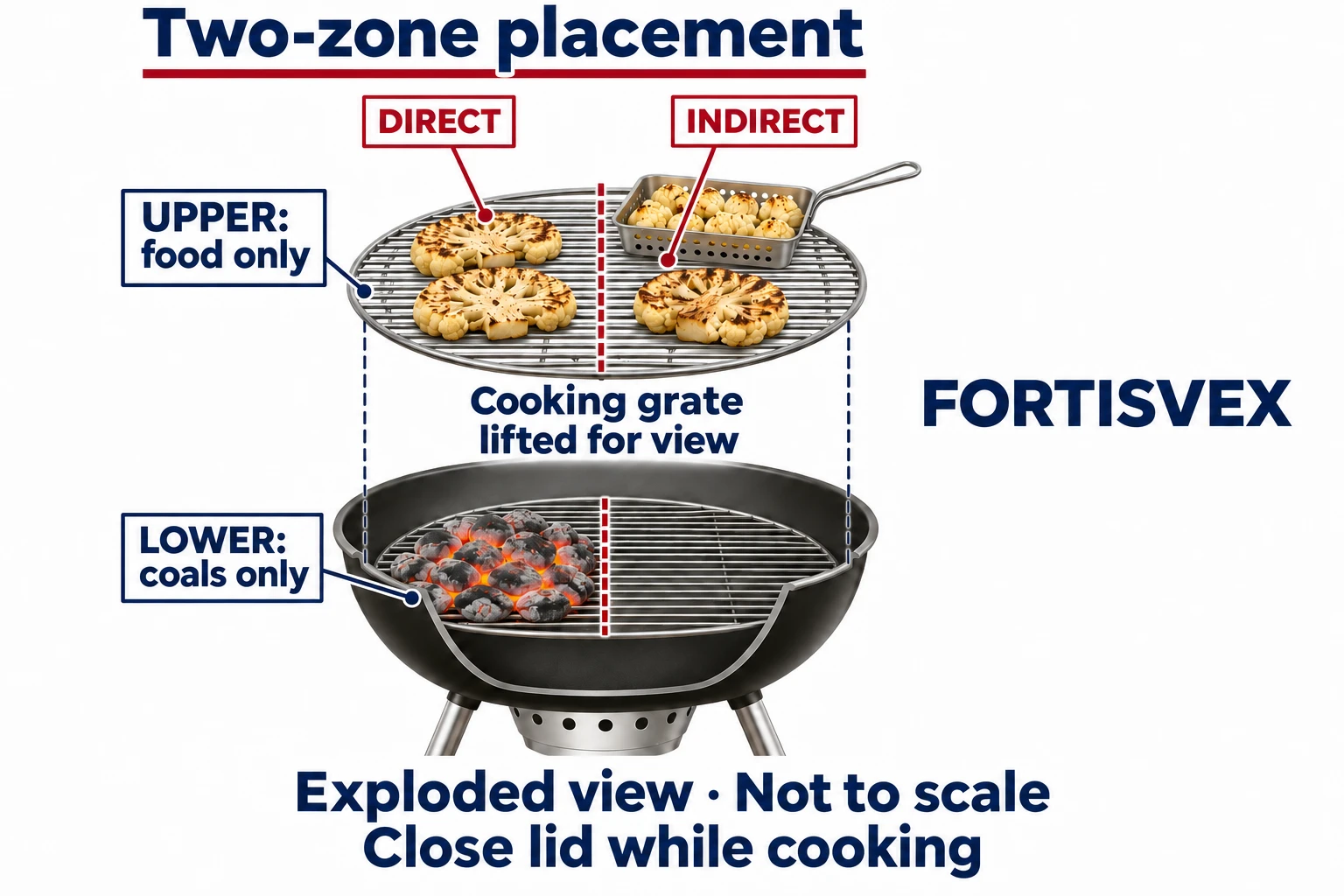
Brown over direct heat; finish a firm core over indirect heat with the lid closed. - Dress and serve. Transfer to the clean platter. Spoon over some dressing and offer the rest separately. Serve the loose florets alongside. A broken slab is still dinner: arrange the pieces together instead of overhandling them to preserve a perfect outline.
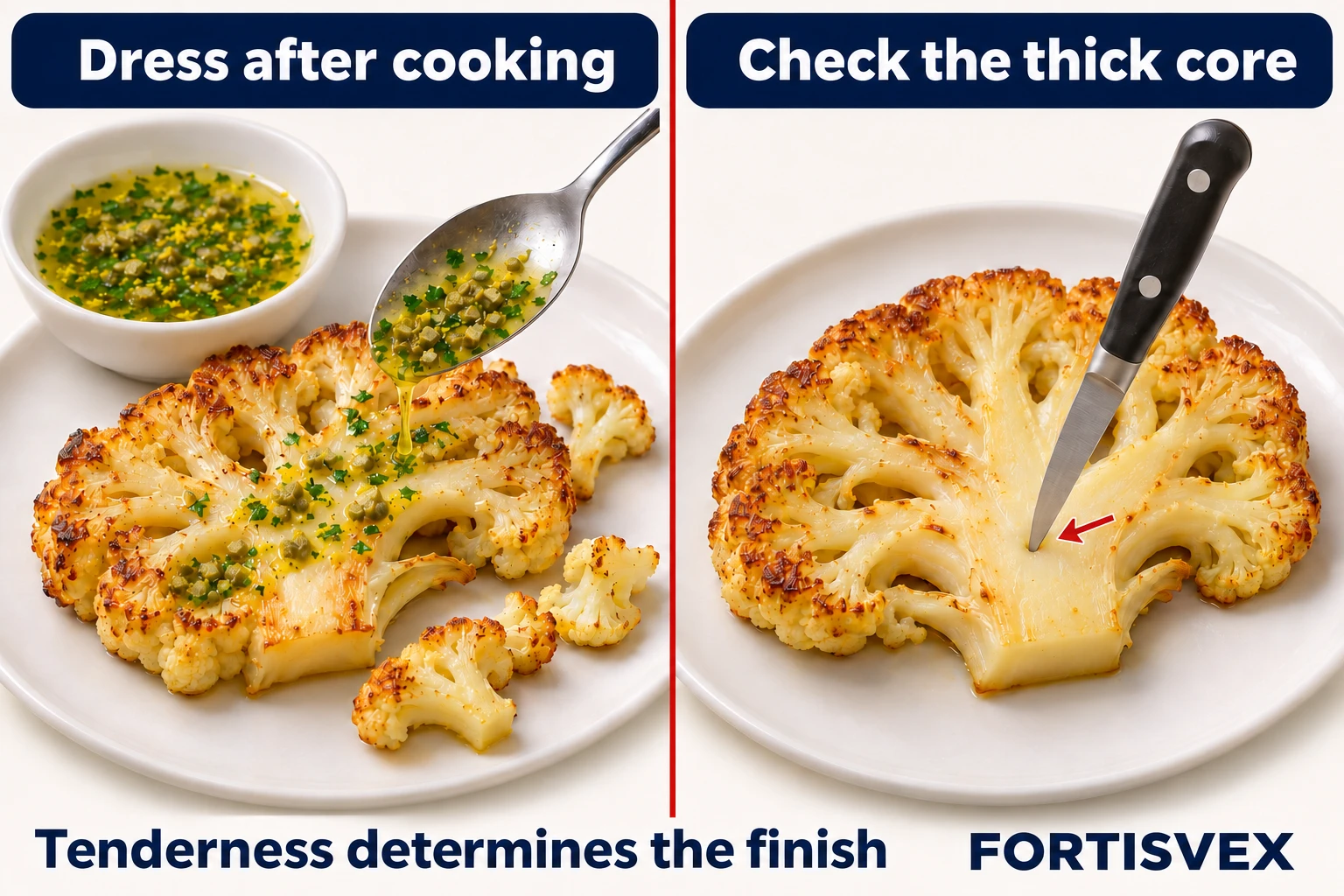
Tenderness, not grill marks or elapsed time alone, determines the finish.
If the outside gets ahead of the center
Use the reserved indirect space before the surface becomes blackened. Do not keep a firm-centered slab over intense direct heat merely to meet a time estimate. For the next batch, compare thickness and placement. Similar thickness helps pieces cook more evenly, but one cauliflower will not produce an identical set of slabs.
Keep the cookout safe
Use charcoal outdoors only, never in a garage or enclosed space: it produces potentially fatal carbon monoxide. Keep the kettle away from combustible decorations and supervise it throughout the cook. If meat is cooking at the same event, prevent its raw juices and utensils from contacting these vegetables, the dressing or the serving platter.
Refrigerate leftovers promptly in shallow covered containers, within two hours of cooking or one hour when the air temperature exceeds 90°F. Keep the dressing under the same two-hour or one-hour limit, counting from preparation or removal from refrigeration rather than the end of grilling. Store both leftovers and dressing at 40°F or below. Do not treat lemon juice as a preservation method.
Planning a community cookout?
If your gathering includes a separate flag display, use our event kit checklist for transport and return, keep its configuration in a flag display log, and consult the multi-nation display guide when welcoming international guests. Keep all display equipment and fabric away from the cooking area; these organizational guides do not establish grill clearances.
Recent Posts
-
Tofu and Broccoli Rice Bowls with Ginger-Garlic Sauce
FORTISVEX · RECIPES A good tofu bowl has more than one texture: golden edges on the tofu, broccoli …Nov 4th 2026 -
Placing an Indoor Flag Display: A Venue-Review Worksheet
An indoor flag display can fit its stand and still be poorly placed in a room. The base occupies on …Nov 4th 2026 -
Charcoal Weber Kettle Cauliflower Steaks with Lemon-Caper Dressing
A cauliflower steak needs two things: enough of the central stalk to hold together and enough cooki …Nov 4th 2026