
Baked Almond-Milk Vanilla Custard Cups
These gently baked custards combine unsweetened vanilla almond milk, eggs and a little honey. A water bath surrounds the individual cups while the egg mixture sets. Serve the custard chilled in its baking cup, with vanilla as the main flavor and a light dusting of nutmeg.
Keep the ingredient list simple and measure the mixed custard before filling. Cup shapes vary, and a stated cup capacity is not an invitation to fill it to the brim.
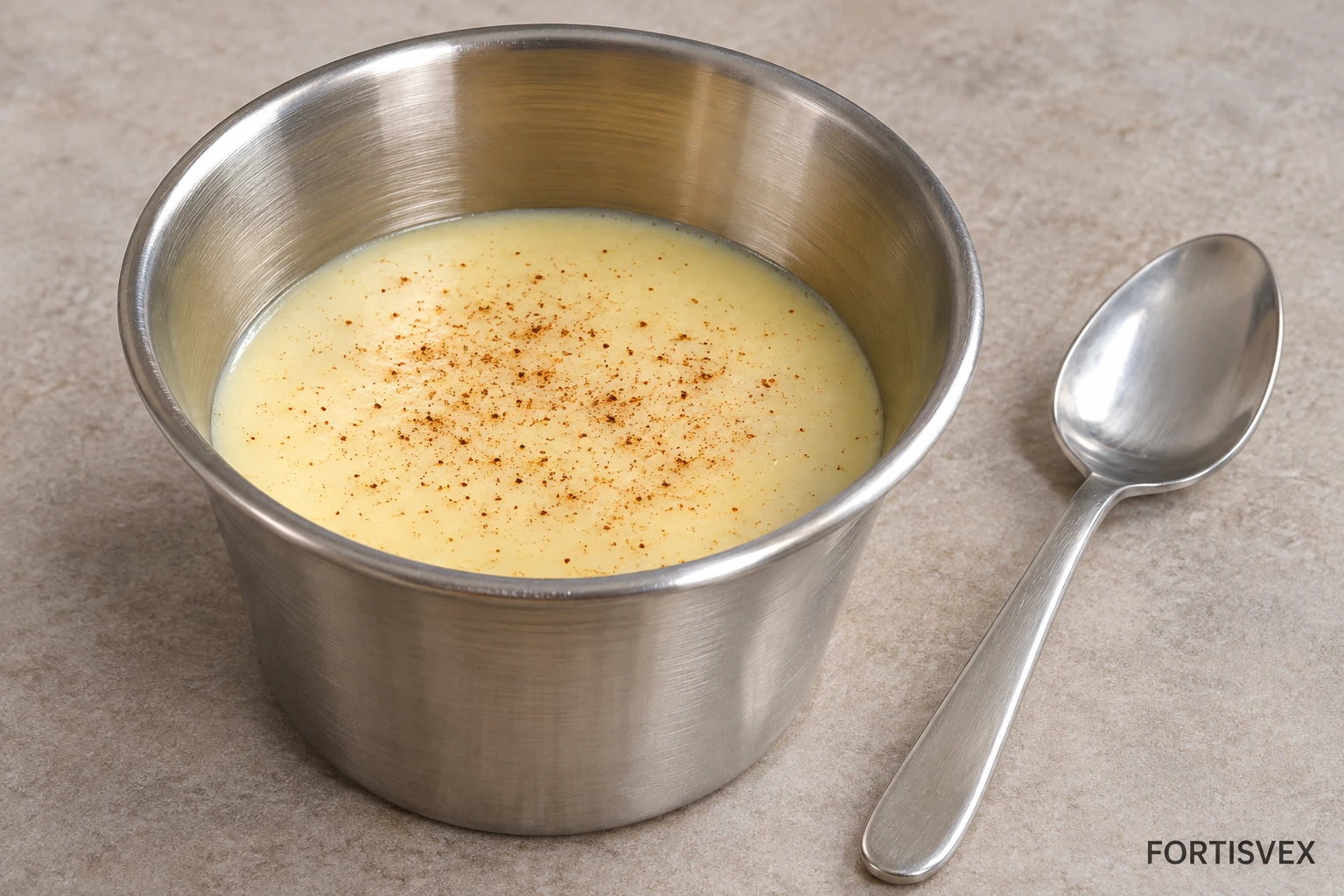
At a Glance
- Yield estimate: 5 modest individual custards
- Preparation and heating: about 20 minutes
- Baking: begin checking at 45 minutes; the source method allows about 45-60 minutes, but use the temperature and setting checks below
- Chilling: allow several hours, until thoroughly cold; plan ahead rather than promising an exact finish time
Egg size, cup shape, starting temperature and oven behavior affect the result. The baking time is an estimate, not a substitute for checking each custard.
Ingredients
- 2 cups unsweetened vanilla almond milk, from a commercially packaged refrigerated or shelf-stable beverage, handled according to its label
- 2 tablespoons honey
- 3 large eggs, kept refrigerated until needed
- 1 teaspoon pure vanilla extract
- 1/8 teaspoon fine salt
- 1/16 teaspoon ground cinnamon
- 1/16 teaspoon ground nutmeg, divided among the cups
Use U.S. measuring cups and spoons. This recipe specifies almond milk; dairy milk, canned coconut milk and other beverages are not promised to behave the same way. Shake the closed almond-milk container as directed on its label before measuring. Do not taste the uncooked egg mixture.
Equipment and Fill Planning
Use five individual stainless-steel custard baking cups, each rated to hold at least 8 fluid ounces and explicitly suitable for a 325-degree oven and a hot-water bath. Have one extra matching cup available. Use the manufacturer's instructions; ordinary drinking cups and containers intended only for storage are not suitable substitutes.
You also need a sturdy metal roasting pan deep enough to hold the cups and water safely, a small saucepan, mixing bowl, whisk, pouring measuring jug, kettle or saucepan for water, food thermometer with a probe suitable for shallow foods, dry oven mitts, a heat-safe cooling rack and a room-temperature tray for refrigeration. Arrange the empty cups in the roasting pan first: they must sit flat, with space between them and the sides, without tipping or crowding. Before heating anything, practice securely lifting each empty cup out with the dry heat-resistant mitts you will use, and prepare a clear landing place on the heat-safe rack. If the cups cannot be gripped and removed safely, choose suitable equipment before starting; do not proceed with an unsafe removal plan.
Expect roughly 2 3/4 cups of mixture, but measure the actual volume after mixing. Divide it evenly among five cups only if each portion is no more than 2/3 cup and sits at least 1/2 inch below the rim. Both limits apply. If necessary, use the extra cup rather than overfill. Container dimensions and the final number of portions may change the baking time.
Mix and Fill
- Prepare the work area. Wash hands and clean the utensils and surfaces. Check that the eggs are uncracked. Position an oven rack so the roasting pan will sit level in the middle of the oven, and heat the oven to 325 degrees Fahrenheit. Clear a stable heat-safe landing area beside the oven. Keep children, pets and loose items away from the hot-water work area.
- Warm the almond milk. Combine the almond milk and honey in the small saucepan. Stir over moderate heat until the honey dissolves and the liquid just comes to a boil. Remove from the heat and let it stand for 5 minutes. Watch the saucepan rather than leaving it unattended.
- Combine gradually. Whisk the eggs, vanilla and salt together until combined. Slowly pour the warm almond-milk mixture into the eggs in a thin stream while whisking steadily; do not dump the hot liquid in at once. Stir in the cinnamon. Wash hands and any utensils or surfaces that contacted raw eggs.
- Fill the cups. Transfer the mixture to the pouring jug and note its actual volume. Divide among the cups using the fill and headspace limits above. Sprinkle the measured nutmeg across the tops. Keep the cups upright in the roasting pan.
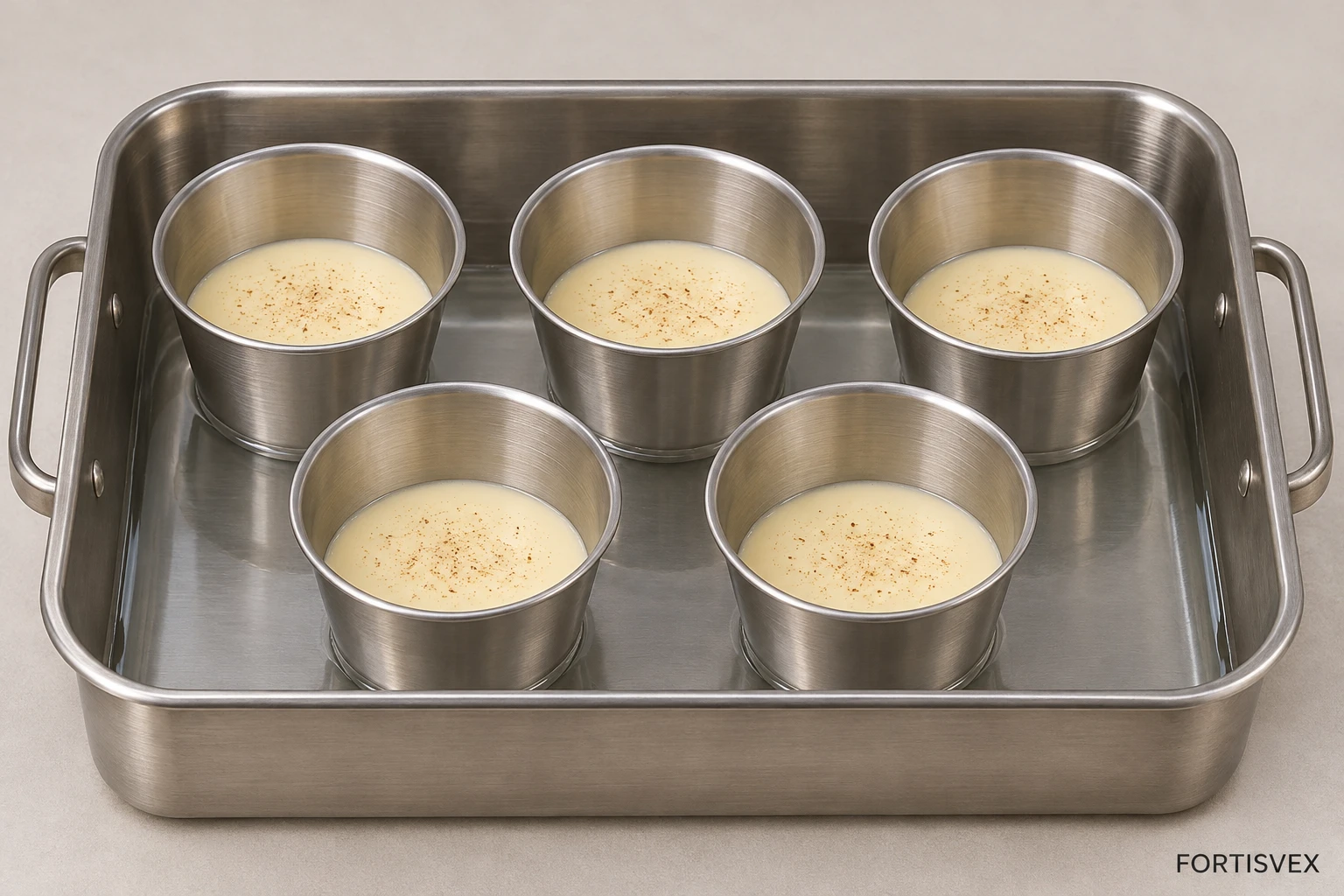
Bake in a Water Bath
- Add the bath safely. Place the roasting pan with its filled cups on the level oven rack before adding water. Using a heat-safe pouring vessel, carefully add hot water to the pan around the cups, not into the custard. Aim for about 1 inch of water, but keep the water at least 1/2 inch below every cup rim and below the roasting-pan rim. Stop sooner if needed to preserve that clearance. Do not overfill or carry a full hot-water bath across the kitchen.
- Check the custard. Bake and begin checking at about 45 minutes. With dry mitts, ease the rack forward only as far as is safe and stable for your oven. Avoid sloshing the water. Check the center of every custard with a clean food thermometer, inserting the probe into the mixture without touching the metal. Each must reach at least 160 degrees Fahrenheit (71 degrees Celsius). The custard should be set, with no liquid egg mixture in the center; a thin knife inserted near the center should come out clean. A slight soft movement is different from a pool of liquid. Appearance or the knife test alone does not establish safety.
- Continue if needed. If any cup is below 160 degrees Fahrenheit or still liquid, continue baking and check again after about 5 minutes. Different cups may finish at different times. Chilling will not make an undercooked custard safe. If your probe cannot measure a shallow portion correctly, use an appropriate thermometer rather than guessing.
- Remove the cups. When the custards meet both checks, switch off the oven. Using dry heat-resistant mitts and a secure grip, lift the cups individually onto the heat-safe rack; avoid splashes and do not dip mitts into the water. If an unexpected handling problem prevents safe removal, do not risk a burn. Any waiting in the switched-off oven or hot bath counts toward the refrigeration deadline from completion of cooking; removing a cup later does not restart that clock. Discard custard that cannot be refrigerated within the limits below rather than trying to rescue it by chilling or reheating. After removing the cups, leave the bath water in the switched-off oven until it can be handled safely. Follow the cup manufacturer's cooling instructions and never plunge hot cups into ice water or place them on a cold, wet surface.
Chill, Store and Serve
After a brief rest of about 5-10 minutes on the rack, transfer the individual cups on a room-temperature tray to the refrigerator, provided the cup manufacturer's instructions permit this handling. Keep space around them for cold air to circulate and loosely cover without trapping a sealed pocket of steam; cover securely once cold. Do not wait on the counter for them to reach room temperature. Choose equipment that allows prompt refrigeration before starting.
Refrigerate promptly at 40 degrees Fahrenheit (4 degrees Celsius) or below, within 2 hours from completion of cooking, or within 1 hour if exposed to temperatures above 90 degrees Fahrenheit (32 degrees Celsius). Count all waiting, oven or bath holding, rack resting and handling time within that deadline; it does not begin again when the cups leave the oven. Those are maximum limits, not suggested cooling times. Serve thoroughly chilled and keep the remaining cups refrigerated until needed.
Label with the cooking date and use safely refrigerated custard within 3-4 days. This is a chilled dessert; reheating is not required for cold service. If you choose to reheat a portion, heat it to 165 degrees Fahrenheit (74 degrees Celsius), using equipment suitable for that method. Reheating cannot rescue custard left out beyond the safe time limits. Plan to serve these cups refrigerated. Freezing performance for this almond-milk formulation has not been established.
Allergens and Meal Planning
Contains egg and almonds. Check the beverage, vanilla and other ingredient labels for additional allergens and cross-contact. Almond milk does not make an egg custard vegan, and no allergen-free or gluten-free claim is made.
For a dinner with fewer competing oven tasks, tofu and broccoli rice bowls use a separate stovetop method. Keep their soy, possible wheat and cooked-rice handling guidance separate from this dessert.
If that meal also includes lemon-parsley green beans, bake and chill the custards earlier. The beans roast at 425 degrees Fahrenheit, while these custards bake at 325 degrees; give them separate oven slots rather than changing the custard temperature to fit the side dish.
For another occasion when you want a fruit-and-oat dessert rather than a smooth custard, consider cinnamon apple-oat crisp. Follow its separate baking schedule and wheat and milk allergen guidance; it is an alternative dessert, not an ingredient in these cups.
Method and Safety Sources
The almond-milk, honey and egg formula and hot-water-bath approach are adapted from UMass Chan Medical School's Vanilla Custard. This version specifies egg size, spice measures and practical cup-filling limits.
The thermometer and refrigerated-storage checks follow FDA egg-safety guidance. The federal cold-food storage chart lists custard and chiffon pies as unsuitable for freezing. That is related quality guidance, not a verified freezing result for these almond-milk custard cups. For the purpose of gentle water-bath heating, see the Exploratorium's egg-protein explanation.
Recent Posts
-
Stovetop-Steamed Artichokes with Lemon-Basil Yogurt Dip
A whole globe artichoke is a vegetable to eat slowly: pull away a leaf, scrape the tender flesh fro …Nov 5th 2026 -
Baked Almond-Milk Vanilla Custard Cups
These gently baked custards combine unsweetened vanilla almond milk, eggs and a little honey. A wat …Nov 5th 2026 -
Thunder During a Flag Ceremony: Plan the Stop Before the Event
An outdoor flag ceremony needs a way to stop, not just a polished opening. Decide before guests arr …Nov 5th 2026