

Spatchcock Turkey on a Weber Charcoal Kettle with Lemon and Thyme
A spatchcocked turkey lies flat because the backbone is removed. It needs less room under the lid but more room across the cooking grate. The make-or-break step on a Weber charcoal kettle is finding a coal-free area wide enough for the entire bird. Sort that out before you light the chimney.
Makes: About 8 servings. Prep: About 20 minutes, plus thawing. Plan: Start checking the meat at about 60 minutes. Weber’s charcoal spatchcock guide estimates around 90 minutes for a 12-pound example, but a windy day or small fire can change that. The thermometer, not the clock, tells you when to carve.
Ingredients and equipment
- 1 whole, plain turkey, about 10 pounds, completely thawed and unstuffed
- 1 tablespoon neutral oil
- Zest of 1 lemon, finely grated
- 1 tablespoon fresh thyme leaves, chopped
- 1 teaspoon ground black pepper
- 2 teaspoons kosher salt, or to taste; omit if the turkey is already salted, injected or self-basting
You’ll also need a covered Weber charcoal kettle, chimney starter, charcoal briquettes, long tongs, grill gloves, a shallow drip pan, sturdy poultry shears, a sturdy board, a rimmed tray and an instant-read food thermometer. A grate-level thermometer helps you check the air beside the turkey.
Flatten the turkey
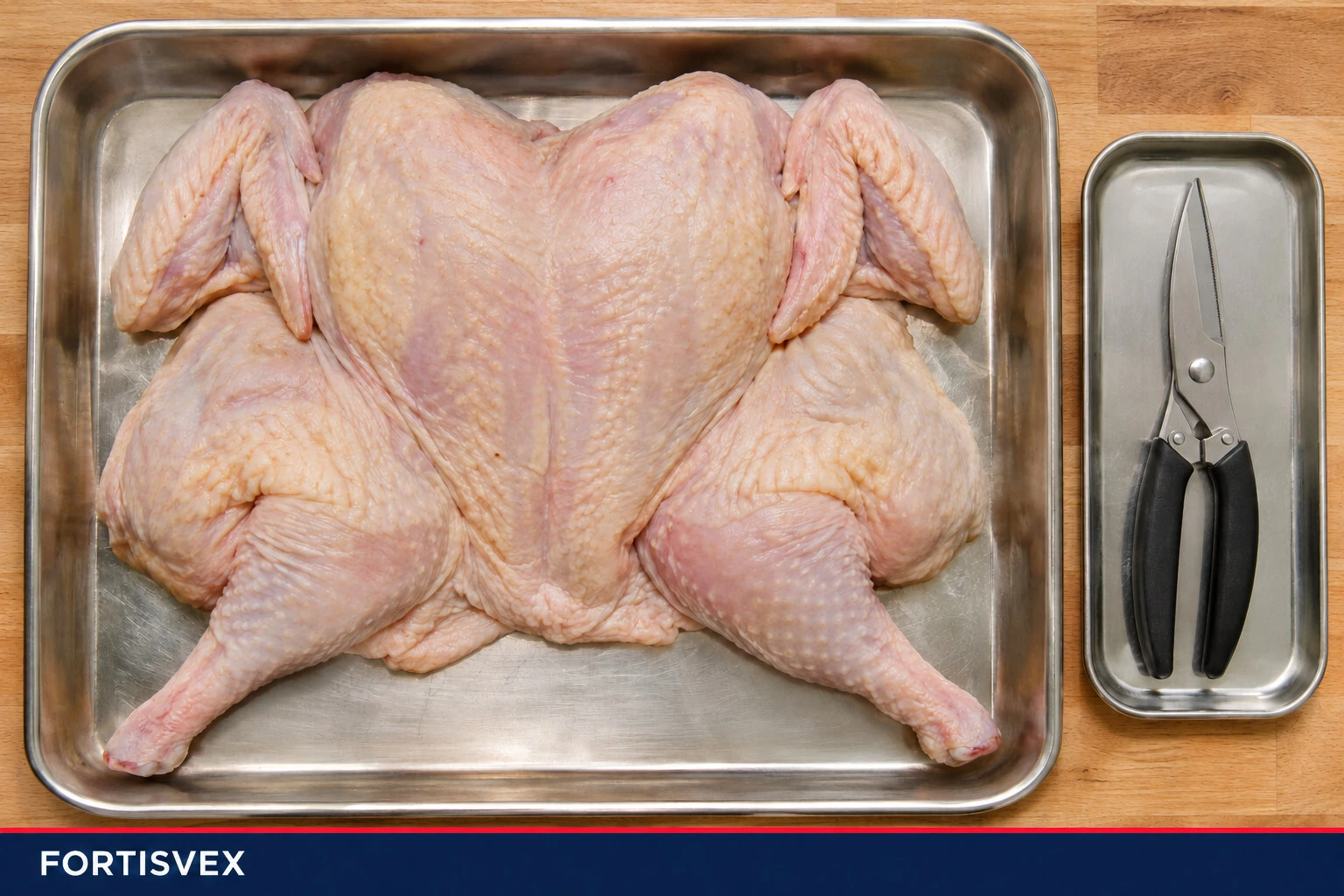
- Remove the neck and giblets from both cavities. Pat the turkey dry rather than rinsing it. Put it breast-side down on a stable board set inside a rimmed tray. Cut along both sides of the backbone with sturdy poultry shears, from the tail toward the neck. If the bones are too hard to cut safely, ask the butcher to remove the backbone rather than forcing the shears.
- Turn the turkey breast-side up and press firmly in the middle until the breastbone gives and the bird lies flatter. Let the legs splay to the sides and tuck the wing tips back if they’ll stay put. Mix the oil with the zest, thyme, pepper and measured salt, then rub that over the skin. Keep the seasoned turkey refrigerated until the kettle is ready.
- Wash your hands and clean and sanitize the board, shears, tray and work surface after contact with raw poultry. Use a separate clean board or platter for the cooked bird.
Fit the bird over a one-sided fire
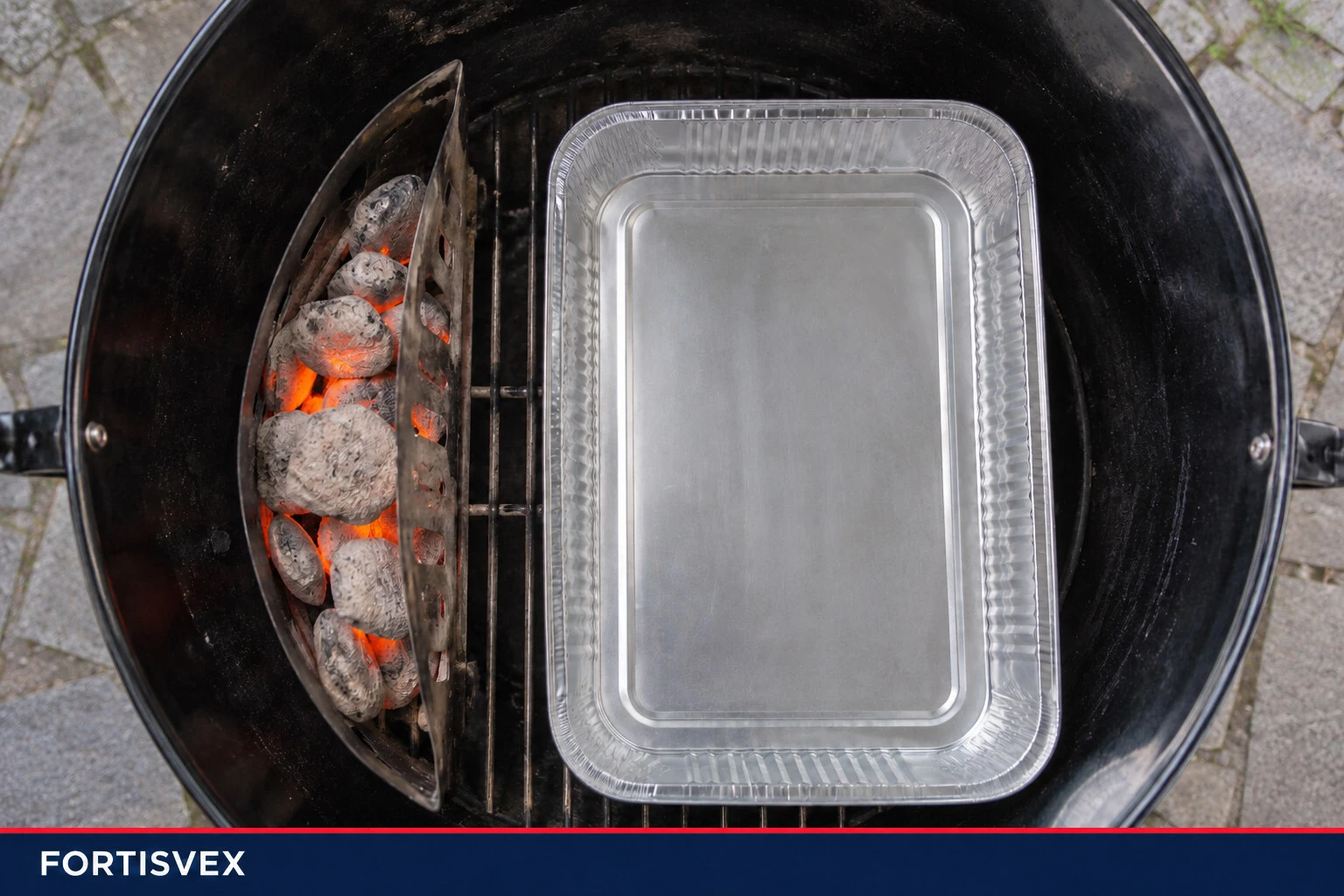
Imagine a narrow crescent of coals against one wall of the kettle and the rest of the grate reserved for the turkey. Check the footprint cold before lighting. You can compare the length and width of the flattened bird to the coal-free zone using a clean tape measure, without setting raw turkey on the unused grate. Allow room to close the lid completely. Weber suggests starting around 10 pounds for a 22-inch kettle, not that every 10-pound turkey will fit. If yours would overlap the coal bank, use a larger kettle or cook it indoors in a roasting pan at 350°F.
Use the kettle outdoors in the open air, clear of anything that could catch fire. Light and handle the briquettes according to your model’s manual. Bank them in a narrow crescent to one side, and set the drip pan flat on the lower charcoal grate away from the coals. Refit the cooking grate, close the lid and stabilize the indirect side near 350°F. For a more compact bird that stays in its original shape, see the whole-turkey charcoal kettle guide.
Cook to temperature, then carve
Set the turkey skin-side up on the cooking grate over the drip pan, with the legs angled toward, but not over, the coals. Keep the lid shut between checks. If one edge browns faster, adjust the bird within the coal-free area or loosely shield just that part with foil. Don’t flip the bird over the fire or finish it over direct coals.
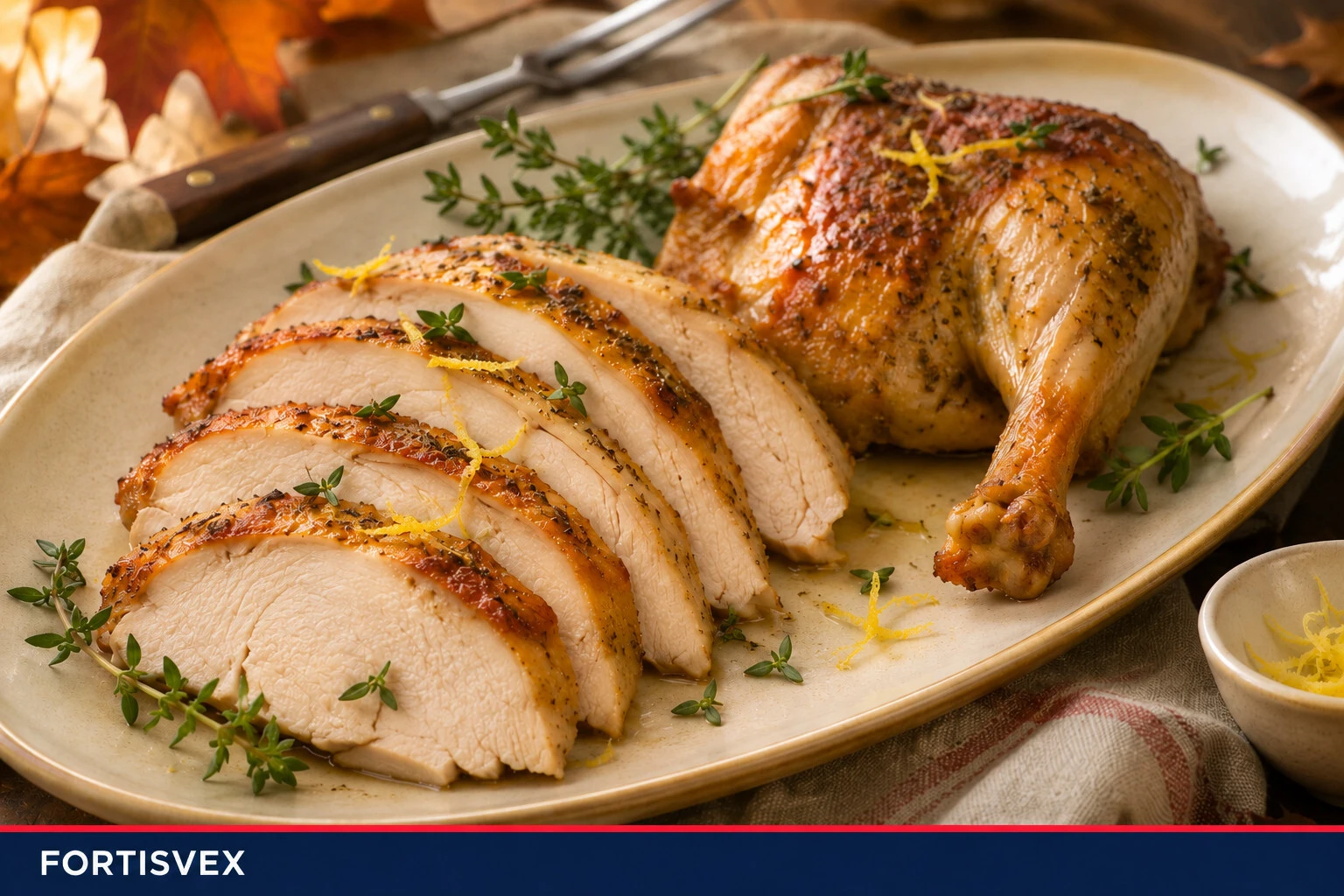
Before removing it, use an instant-read thermometer to verify at least 165°F (74°C) in the thickest part of the breast and the innermost parts of the thigh and wing, without touching bone. Check the other side too if the fire-facing side reads hotter. Move the fully cooked bird to a clean board and rest it about 20 minutes. Separate the legs and thighs, then carve the breast across the grain. Put maple-ginger grilled pears on the kettle after the grill is cleared for dessert. To try this one-sided coal setup on a smaller cook another day, make foil-packet rainbow trout and follow its separate temperature guidance.
References: USDA’s three-site turkey temperature check, CDC’s turkey prep and handling guidance and CPSC charcoal safety guidance.
Recent Posts
-
Lemon-Dill Turkey and Barley Soup on a Weber Charcoal Kettle
Simmer barley and vegetables in a grill-safe Dutch oven on a Weber charcoal kettle. Once the barley …Nov 26th 2026 -
How to Grill a Whole Thanksgiving Turkey on a Weber Kettle
Quick answer: Cook a fully thawed, unstuffed 10–12 pound turkey breast-side up over a drip pan on a …Nov 26th 2026 -
Dry-Brined Whole Turkey on a Weber Kettle: An Overnight Plan
The biggest decision in a dry brine happens in the grocery aisle. Buy a plain turkey whose ingredien …Nov 26th 2026