
Your U.S. Flag Touched the Ground: Check Its Condition Before Deciding What Comes Next
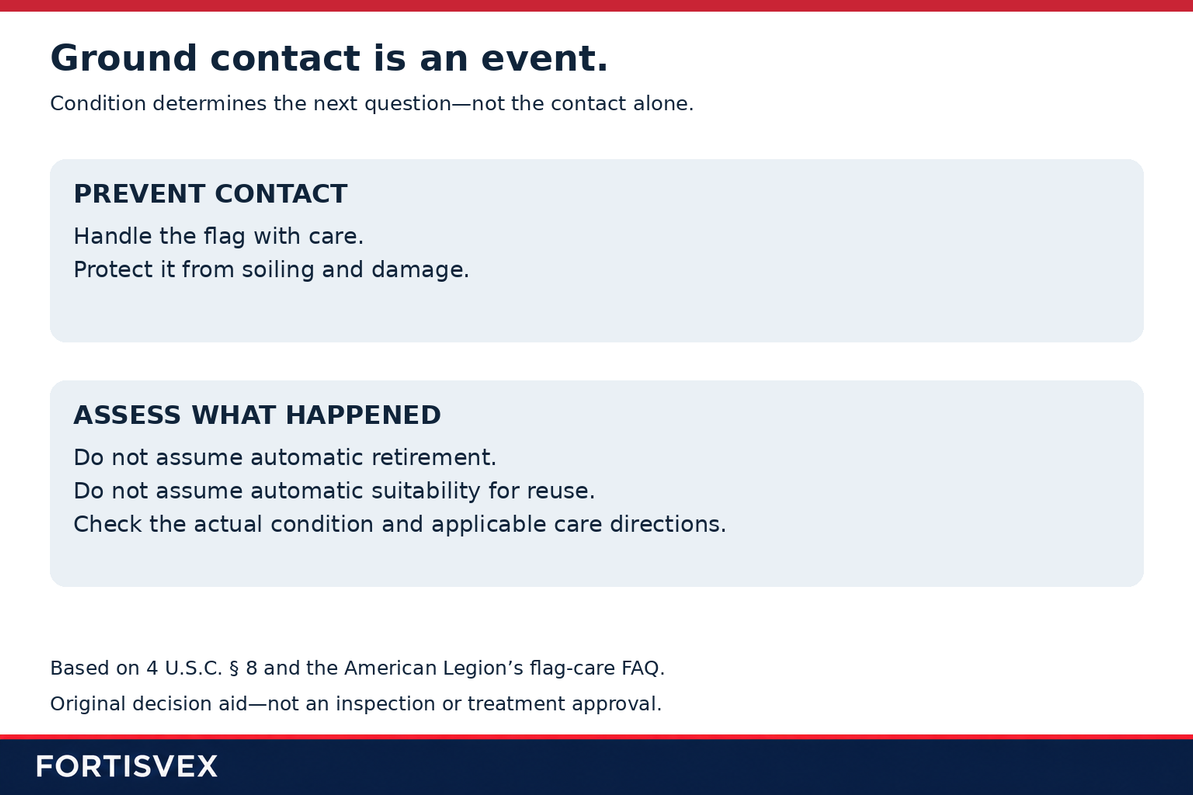
If your U.S. flag accidentally touches the ground, the contact alone does not mean it must be destroyed. The next question is its condition. A flag that remains suitable for display is different from one that has become unfit through damage or deterioration. Do not turn an accident into an automatic retirement decision.
This distinction does not weaken the handling guideline. Section 8 of the U.S. Flag Code addresses avoiding contact with things beneath the flag, preventing damage, and dignified retirement when its condition no longer makes it a fitting emblem for display. These are related considerations, not a rule that one moment of contact automatically settles all three.
Separate what happened from what you can observe
Start with a plain description: the flag brushed a clean floor while being lowered, fell onto wet soil, or came loose and was found with visible damage. Those are different observations. None should be replaced with a vague label such as “ruined” before you have considered the actual textile.
Recover it only when you can do so safely. Do not enter traffic, climb unstable equipment or reach into an unsafe location to retrieve it. Once accessible, handle it respectfully and avoid dragging it or making existing damage worse. This article is not a retrieval procedure for hazardous locations or a structural inspection of the display.
Contact is not the same as loss of serviceability
The American Legion’s flag-care FAQ directly addresses the misconception that ground contact requires destruction. It explains that a flag may continue to be displayed if it remains suitable, including when appropriate cleaning is needed. That is not a guarantee that every fallen flag can be put straight back up.
Look at the visible condition without pulling on weak areas. Is there soil that needs a care decision? Is an edge torn, a seam opening or an attachment area damaged? If you cannot confidently distinguish a superficial mark from a problem requiring attention, keep the question open rather than inventing a repair or assuming a wash will resolve it.
Use the exact flag’s care directions
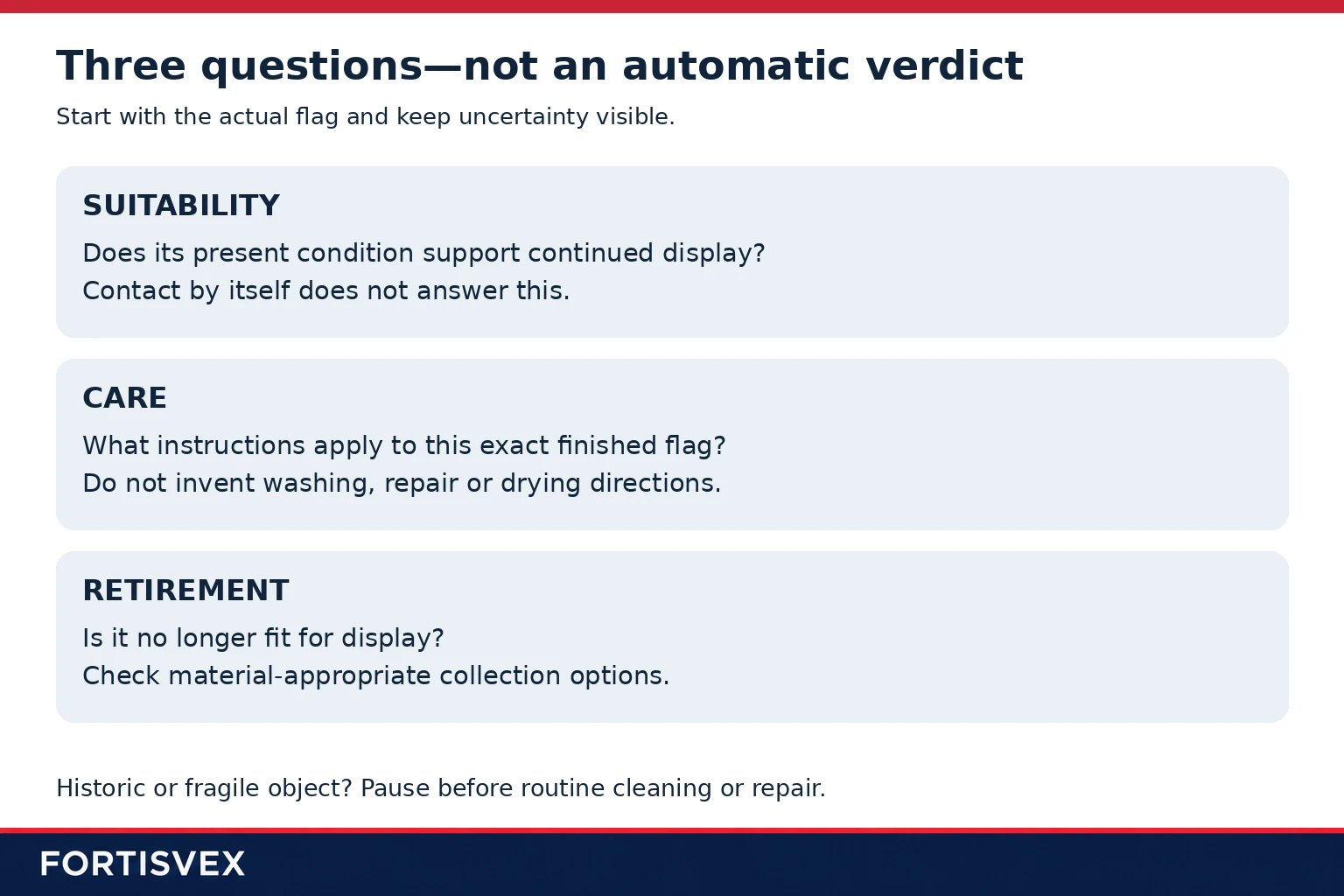
Do not choose a washer setting, stain treatment or drying temperature simply because the flag is nylon or polyester. Check the label and the instructions for the finished item, including its heading and any trim. Our guide to a nylon flag’s care label explains how to resolve missing or conflicting directions before selecting a method.
A cleaning decision and a display decision are separate. The fact that a care method is allowed does not prove that damaged fabric is suitable for reuse. If directions are unavailable, keep the product identifier and photographs of the relevant condition ready when asking the maker or seller for item-specific guidance. Do not describe an unverified treatment as approved.
Pause if the flag is a historic or fragile object
An inherited flag, a documented ceremonial object or a visibly fragile textile should not be treated as ordinary outdoor laundry. Its history and present condition may change the right next step. Our preservation decision guide for an inherited flag explains why documenting the object and consulting a textile conservator can come before cleaning or repair.
Keep associated labels, letters and other records with their identity intact. A modern replacement for routine display is not a replacement for the history of a particular family object.
Retirement is a condition decision, not a penalty
If the flag is no longer fit for display, arrange dignified retirement appropriate to its material. Ask a local veterans’ organization or fire department about currently available collection options rather than assuming every location accepts flags. The Legion cautions about burning synthetic materials; this guide does not provide a home-burning procedure.
Make the next handling plan clearer
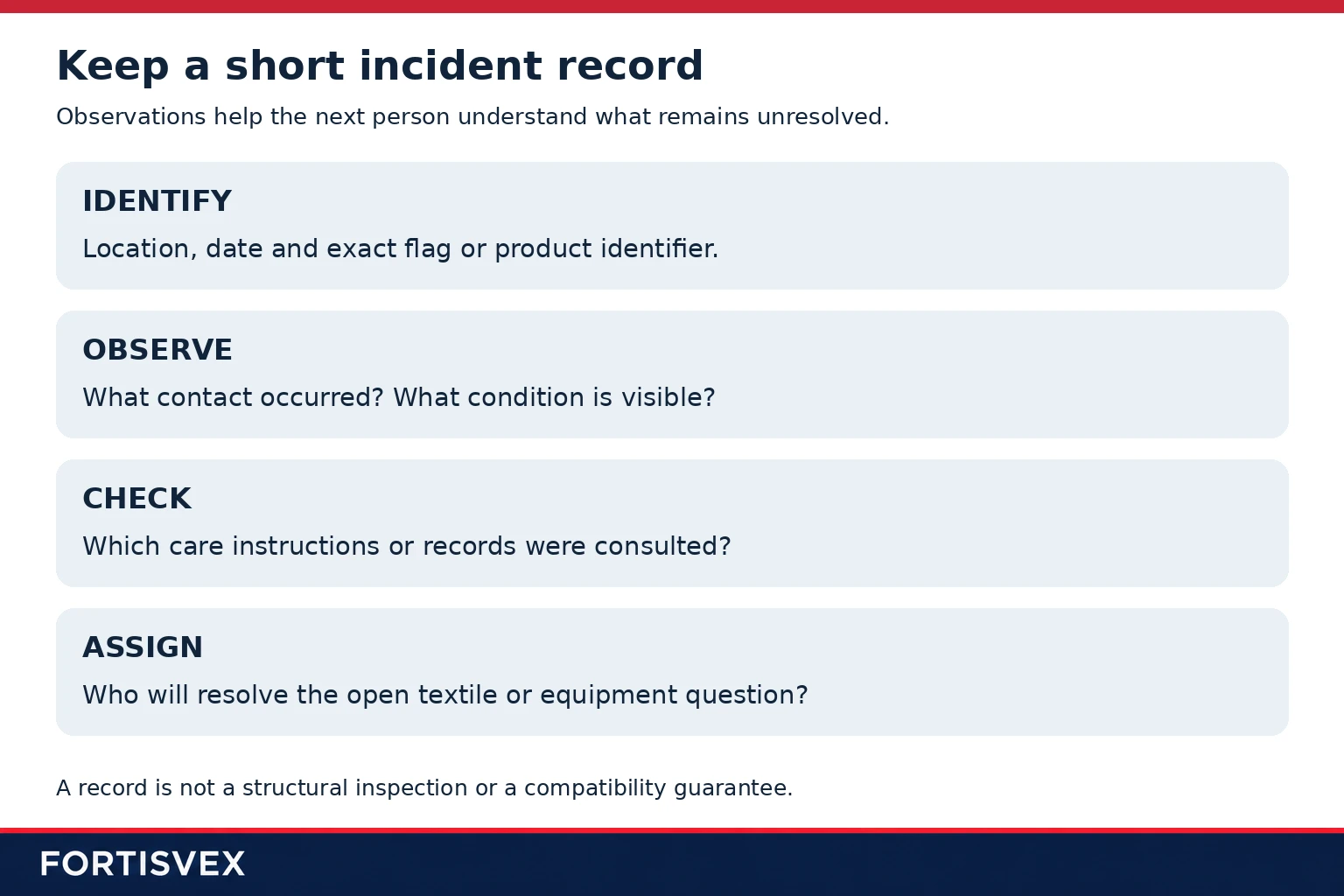
After deciding what to do with the textile, record what happened and what remains unresolved. A flag display log can connect the observation to the correct location and item. Note the date, visible condition, care instructions consulted and the responsible person or role.
If a fitting failed or the handling setup caused the contact, refer that separate equipment question to the appropriate responsible person. A clean flag does not certify a repaired attachment, and a replacement flag does not explain why the previous one fell. Keep those decisions separate so the next display rests on verified information rather than an assumption.
Recent Posts
-

Flying a U.S. Flag After Dark: Check the Flag, Not Just the Light
A bright porch light and a visible flag are not necessarily the same thing. Before leaving a U.S. fl …Nov 19th 2026 -

Roasted Delicata Squash with Maple-Cider Dressing and Toasted Pepitas
Delicata squash makes a holiday side without tying up a burner. Roast the crescents until their edge …Nov 19th 2026 -

Choosing a Fringed U.S. Flag: Decoration Is Not the Attachment Method
A gold-fringed U.S. flag may look right for a meeting room, reception area or ceremonial display. Be …Nov 19th 2026