
Sheet-Pan Miso-Ginger Salmon and Broccoli
A thin miso glaze gives salmon a savory, gently sweet finish, while a head start in the oven gives broccoli time to brown. The useful trick is timing the two ingredients separately on the same pan: roast the vegetables first, then add the fish. Fresh ginger, a little rice vinegar and lime at the table keep the meal from feeling heavy.
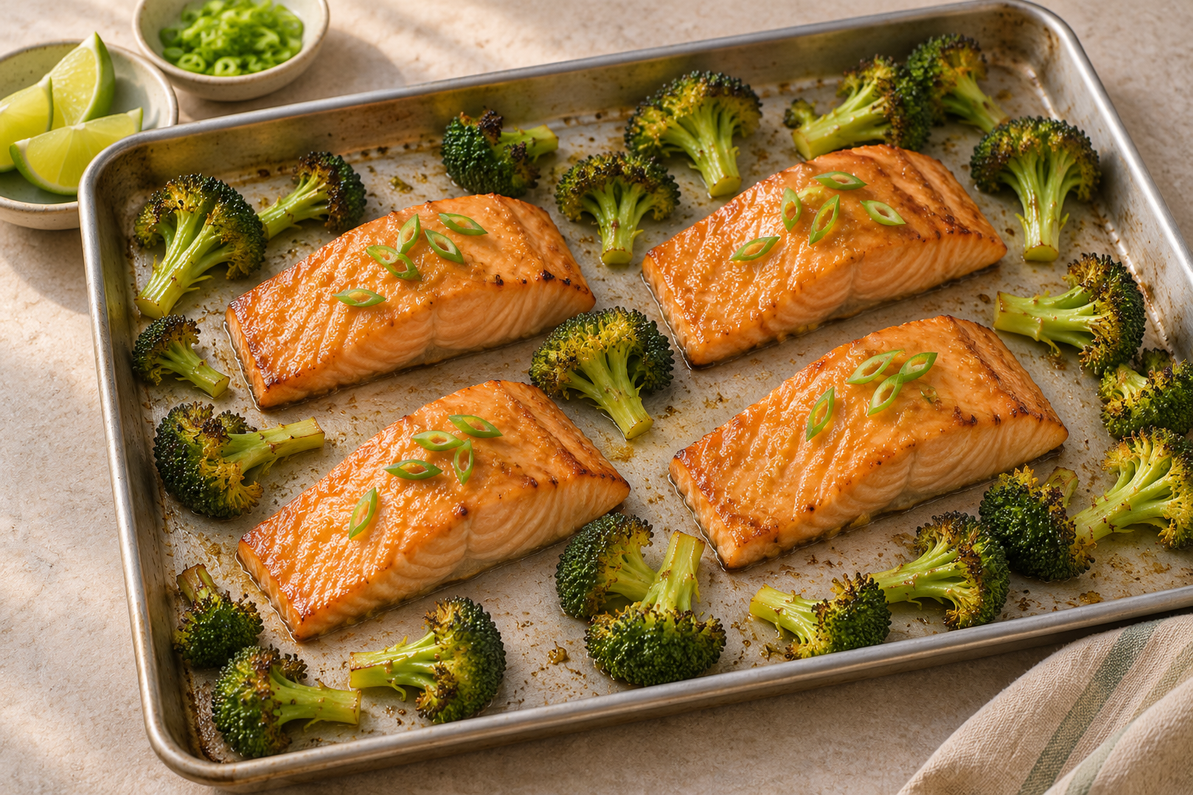
Serving suggestion: glazed salmon with browned broccoli, scallions and lime.
Serves: 4. Preparation: about 20 minutes, including oven preheating. Roasting: about 20–25 minutes total. Plan on: 40–45 minutes with fully thawed fish. Thickness, pan crowding and oven performance affect timing; temperature decides when the salmon is ready.
Choose the fish and the pan
Use four skin-on salmon portions, about 6 ounces each and ¾–1 inch thick at their thickest point. Similar thickness matters more than identical weight. Very thin tail pieces can finish before thicker center cuts; remove each portion when it reaches the temperature below. This method starts with thawed fish, not frozen blocks.
A rimmed metal half-sheet pan, approximately 18 by 13 inches, gives the vegetables room. A small roasting dish will crowd them and trap more steam. If your pan cannot hold the food in one layer with gaps, use a second rimmed pan for part of the broccoli and check both pans independently. That changes the one-pan convenience, not the cooking endpoint.
Ingredients
- 4 skin-on salmon fillets, about 6 ounces (170 g) each; 1½ pounds (680 g) total, pin bones removed
- 1 pound (450 g) broccoli florets, cut into roughly 1½-inch pieces; split thick stems lengthwise
- 1 tablespoon neutral oil for the broccoli, plus 1 teaspoon for the fish spaces
- ¼ teaspoon freshly ground black pepper
- 2 tablespoons white miso paste
- 1 tablespoon honey
- 1 tablespoon unseasoned rice vinegar
- 1 tablespoon water
- 2 teaspoons finely grated fresh ginger
- 1 small garlic clove, finely grated
- 1 teaspoon reduced-sodium soy sauce
- 1 teaspoon toasted sesame oil
- 2 scallions, thinly sliced, for serving
- 1 lime, cut into wedges, for serving
- Optional: 2 cups freshly cooked rice, divided among four plates
White miso is a mild starting point; darker miso can make this small amount of glaze considerably stronger. Miso and soy sauce supply salt, so no extra salt is specified. Check labels for allergens: this meal contains fish and usually soy, sesame and wheat. A gluten-free version requires verified gluten-free miso and soy-sauce alternative, not just a different label color.
Equipment
Use a rimmed half-sheet pan, a small mixing bowl, a brush or spoon, a thin-probe food thermometer, a wide spatula and oven mitts. Lightly oil the metal pan; no broiler step is needed.
Method
- Heat and prepare. Put a rack in the middle of the oven and heat to 425°F (220°C), conventional heat. Wash the broccoli, scallions and lime under running water; dry the broccoli thoroughly. Keep the salmon refrigerated while the oven heats. Pat it dry with disposable towels and check for pin bones with clean fingers or tweezers.
- Give the broccoli a head start. Toss the florets on the pan with 1 tablespoon oil and the pepper. Spread them in a single layer, with cut surfaces against the metal where possible. Roast for 10 minutes. They should begin to soften and show some browning, but need not be fully tender yet.
- Mix the glaze. In the bowl, stir the miso, honey, vinegar, water, ginger, garlic, soy sauce and sesame oil until smooth enough to spread. Break up any miso lumps. There is no long marinating step.
- Add the salmon. Set the hot pan on a heatproof surface. Turn the broccoli and move it toward the edges to make four spaces. Spread the remaining teaspoon of neutral oil over those spaces. Add the salmon skin-side down, leaving gaps between portions. Brush a thin, even coating of glaze over the flesh; avoid pouring puddles onto the pan. Discard any glaze left after the brush or spoon has touched raw fish, and wash the bowl and utensils before reuse.
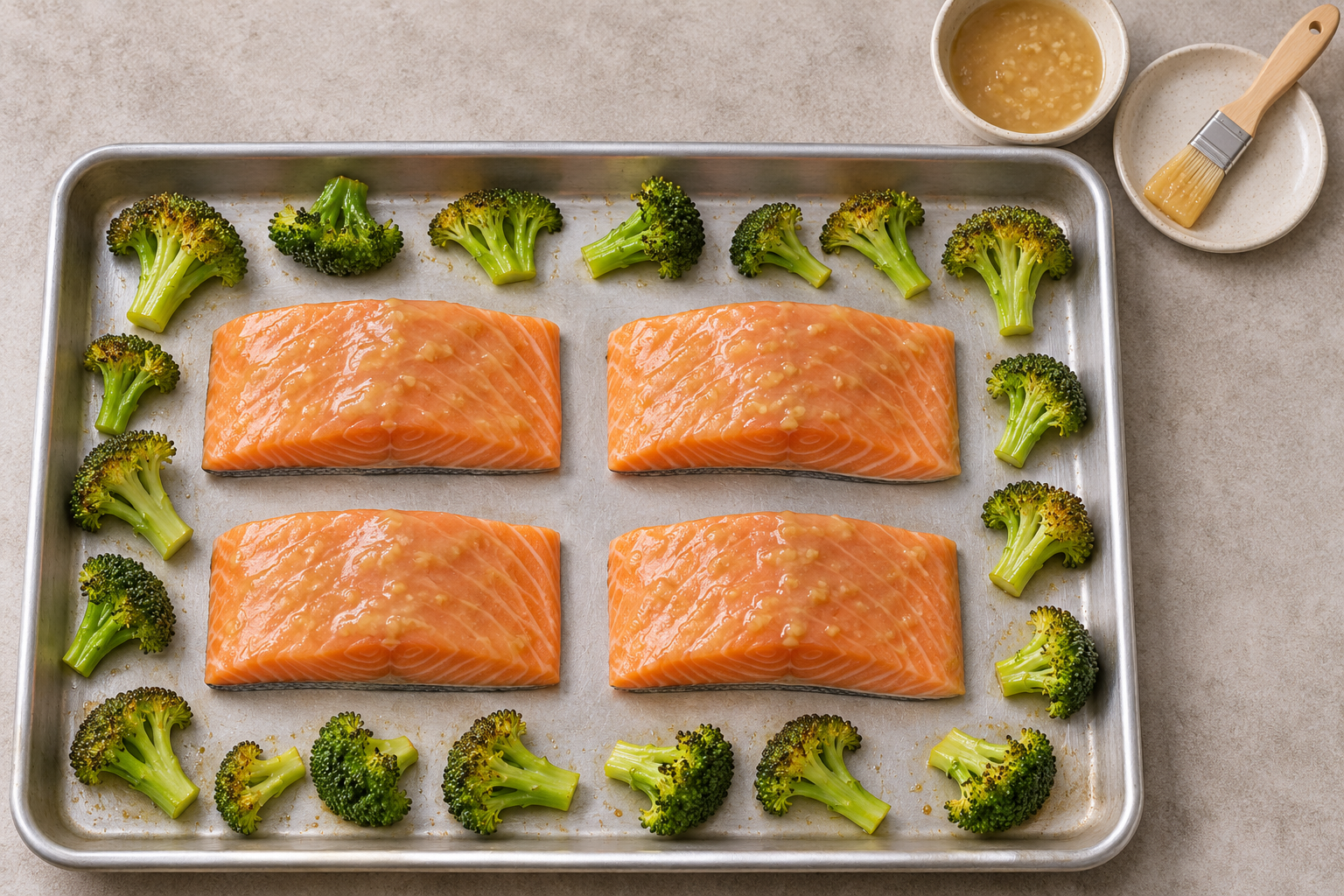
- Roast to temperature. Return the pan to the middle rack. Begin checking the fish after 8 minutes; portions of the stated thickness may need about 10–15 minutes after they are added. Insert the probe sideways into the thickest center of each portion, without touching the hot pan. Continue until every portion you serve reaches 145°F (63°C). Remove finished portions with a clean spatula while thicker ones finish. Surface color, flaking and the pictured glaze do not replace this check.
- Finish the vegetables. The broccoli should be tender enough to pierce with a fork, with browned tips. If it needs longer after the salmon is done, move the fish to clean plates and return the broccoli to the oven for a few minutes, checking often. If the glaze darkens before the fish reaches temperature, loosely shield the fish with foil and continue cooking; do not broil it to force a darker finish.
- Serve promptly. Add scallions and squeeze lime over the fish at the table. Serve the salmon and broccoli as they are, or with the optional freshly cooked rice. Slide the spatula between flesh and skin if you prefer to leave the skin behind; this roasting method does not promise crisp skin.
Small adjustments that help
Wet broccoli: dry it before oiling, and spread it out. Adding more glaze will not help it brown. Salty glaze: use white miso and reduced-sodium soy sauce as written; brands vary, so taste the mixed glaze before it touches raw fish. Uneven portions: check each piece and remove it separately rather than waiting for the thickest one with all four still on the pan.
For two servings, halve the ingredients but keep the same oven temperature and temperature endpoint. Start checking the fish at the same early point. For eight servings, use two pans and allow more oven space; do not stack twice the food on one pan or assume the same finish time.
Handle, chill and reheat safely
Keep raw salmon at 40°F (4°C) or below and use it within two days of purchase, or freeze it. Thaw in the refrigerator, following the package’s instructions, including any instruction to remove vacuum packaging before thawing. Keep raw fish and its juices away from garnishes and ready-to-eat food. Wash hands and clean utensils and surfaces after raw-fish handling. The FDA seafood guide explains safe storage, thawing and separation.
The federal temperature chart lists 145°F for fish and 165°F for reheated leftovers. Do not rely on a rest period to bring undercooked salmon up to the recipe’s endpoint.
Refrigerate leftovers, including any rice, in shallow containers within two hours, or within one hour if exposed to temperatures above 90°F (32°C). Do not wait for a full pan to cool on the counter. Use refrigerated leftovers within four days. Reheat only the portion needed, covered to limit drying, until the center reaches 165°F (74°C). Follow FoodSafety.gov's safe chilling steps and the CDC's leftover storage guidance; discard food left out beyond the time limit.
Make it a small gathering
This four-serving dinner works well for a low-key celebration at home. If you are planning around your state’s anniversary, the state birthday calendar gives the dates. For a separate porch or entryway display, use the state-flag map to find your state, then compare sizes and attachment styles in the state flag collection. Keep any decorations away from the oven and food-preparation surfaces; dinner needs clear working space.
Recent Posts
-
Standard vs. Deluxe Pulley-and-Eyebolt Assemblies: Threads and Rope Size
Standard and Deluxe pulley-and-eyebolt assemblies differ in more than their names. These two models …Nov 8th 2026 -
West Virginia Half-Staff Order Honors Jay Rockefeller Through November 13, 2026
Governor Patrick Morrisey issued a November 6, 2026 order lowering the U.S. and West Virginia flags …Nov 8th 2026 -
Replacing a Kansas Flag: Match Size and Attachment
A replacement Kansas flag should match more than the state design. Before ordering, record the flag …Nov 8th 2026