
New Zealand’s Flag: From the 1869 Ensign to 1902 Confirmation
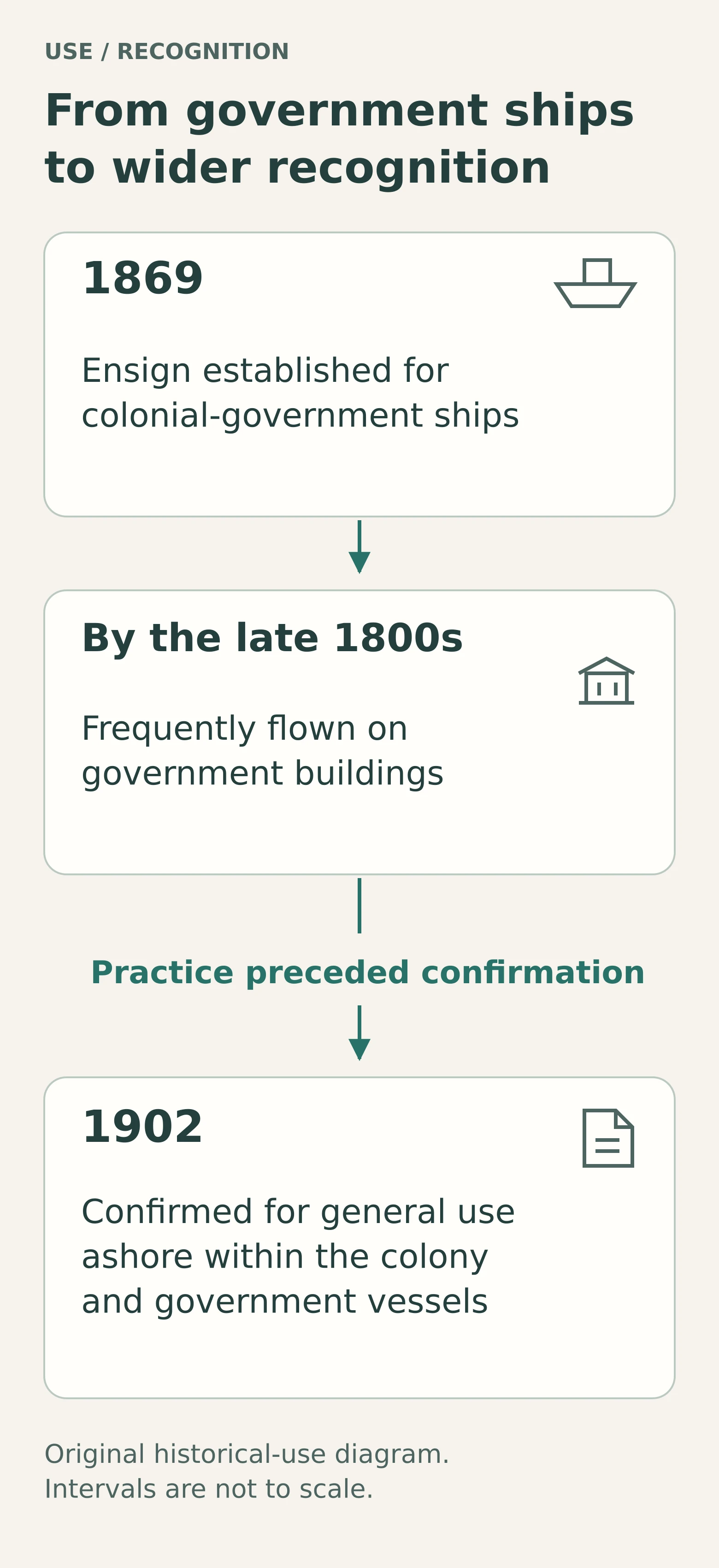
New Zealand’s flag history has a maritime beginning and a later milestone in recognition on land. The years 1869 and 1902 belong together: one marks the establishment of an ensign for colonial-government vessels, while the other marks confirmation for general use. Between them, the flag had already acquired a life ashore.
A familiar design with an earlier setting
The Ministry for Culture and Heritage describes a blue field carrying the Union Jack and four red, five-pointed stars outlined in white. The stars form the Southern Cross, which the ministry connects with New Zealand’s place in the South Pacific. It credits the 1869 design to Albert Hastings Markham. These recognizable features provide an introduction to the history, but they cannot by themselves explain when the flag’s different uses developed. See the ministry’s design and designer account.
From letters to the Southern Cross
The immediate predecessor used lettering rather than stars. In 1867, the initials NZ, colored red and edged in white, were added to the blue ensign.
On 23 October 1869, Governor Sir George Bowen’s proclamation appeared in the New Zealand Gazette. It established the ensign design for ships belonging to the colonial government. The Southern Cross arrangement replaced the lettering, giving the ensign its four-star identity. This milestone concerned government ships; extending it to every New Zealand vessel would go beyond the account’s evidence. NZHistory explains the 1867 and 1869 developments.
The flag reached land before 1902
Use did not remain confined to the original maritime setting. NZHistory records that the ensign became New Zealand’s flag in practice and was frequently flown on government buildings by the close of the nineteenth century. The later confirmation therefore followed an existing shore tradition. A history beginning land use in 1902 would leave out this important part of the flag’s development. Read the account of its wider adoption.
Confirmation brought specifications too
NZHistory dates the confirmation to 12 June 1902, following news of royal assent to the New Zealand Ensign Act 1901. The proclamation recognized the flag for general use ashore in the colony and aboard vessels belonging to New Zealand’s government. The year in the Act’s name and the year of this proclamation consequently serve different purposes in the story.
Specifications followed in the Gazette on 27 June 1902. They included substantially larger Southern Cross stars than those on the 1869 ensign. Although the constellation motif continued, that change prevents an account of the two milestones from assuming identical design details. NZHistory describes the confirmation and enlarged stars.
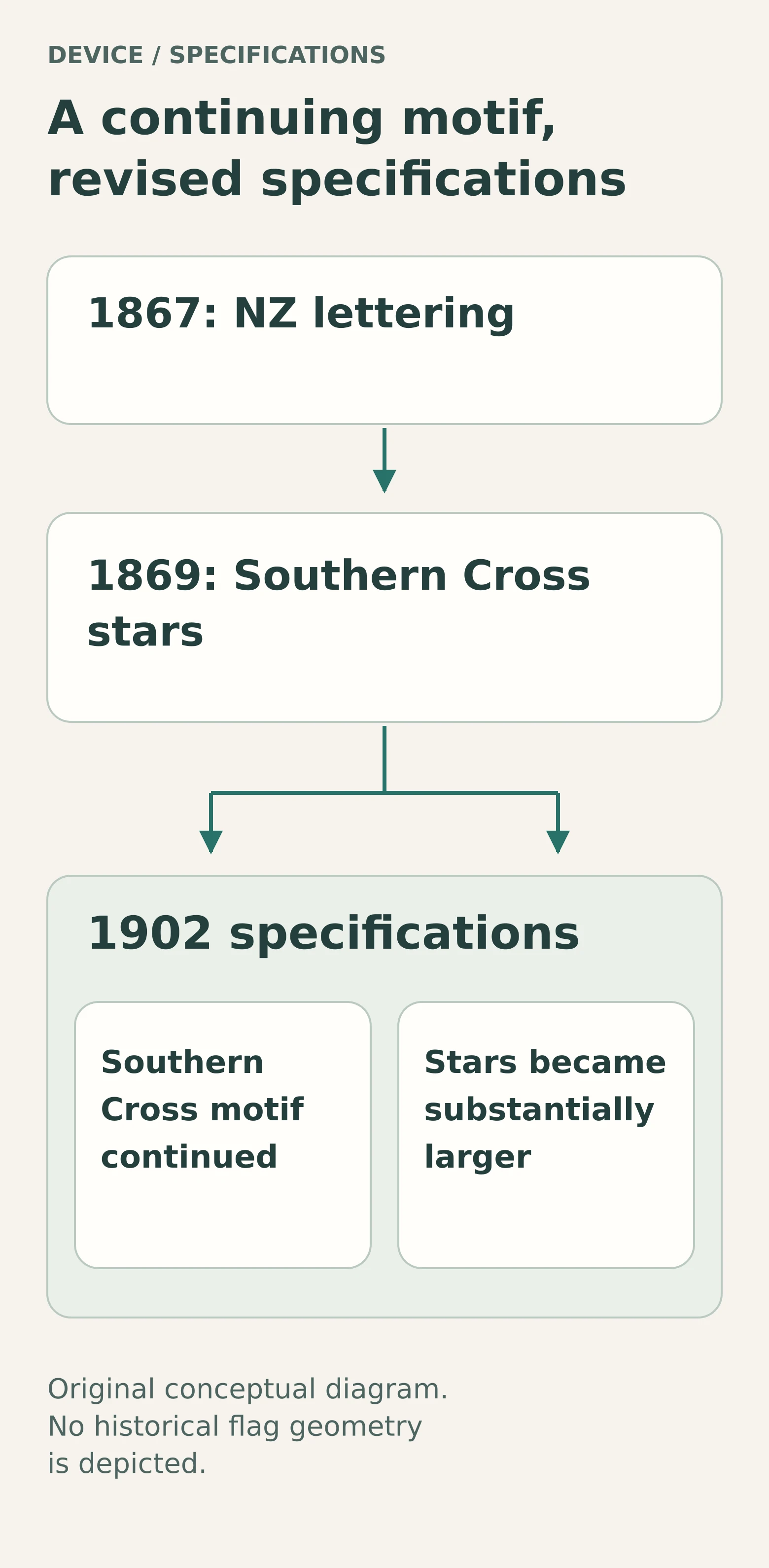
Together, these developments show a government-vessel ensign becoming established on land, then receiving formal confirmation and revised specifications. This account draws on the ministry’s historical explanations, rather than direct examination of the original proclamation, Act or Gazette pages.
Recent Posts
-
Norway’s Flag in 1821: Agreement on Design, Disagreement on Authority
In 1821, Norway’s parliament and king accepted the flag’s design while disputing who could determine …Nov 5th 2026 -
Reading Beach Warning Flags: Check the Local Sign, Not Just the Color
A beach warning flag is easier to recognize than to interpret. You may remember a color from anothe …Nov 5th 2026 -
New Zealand’s Flag: From the 1869 Ensign to 1902 Confirmation
New Zealand’s flag history has a maritime beginning and a later milestone in recognition on land. T …Nov 5th 2026