
Denmark’s Rectangular Flag and Split Flag: Recognize the Two Shapes
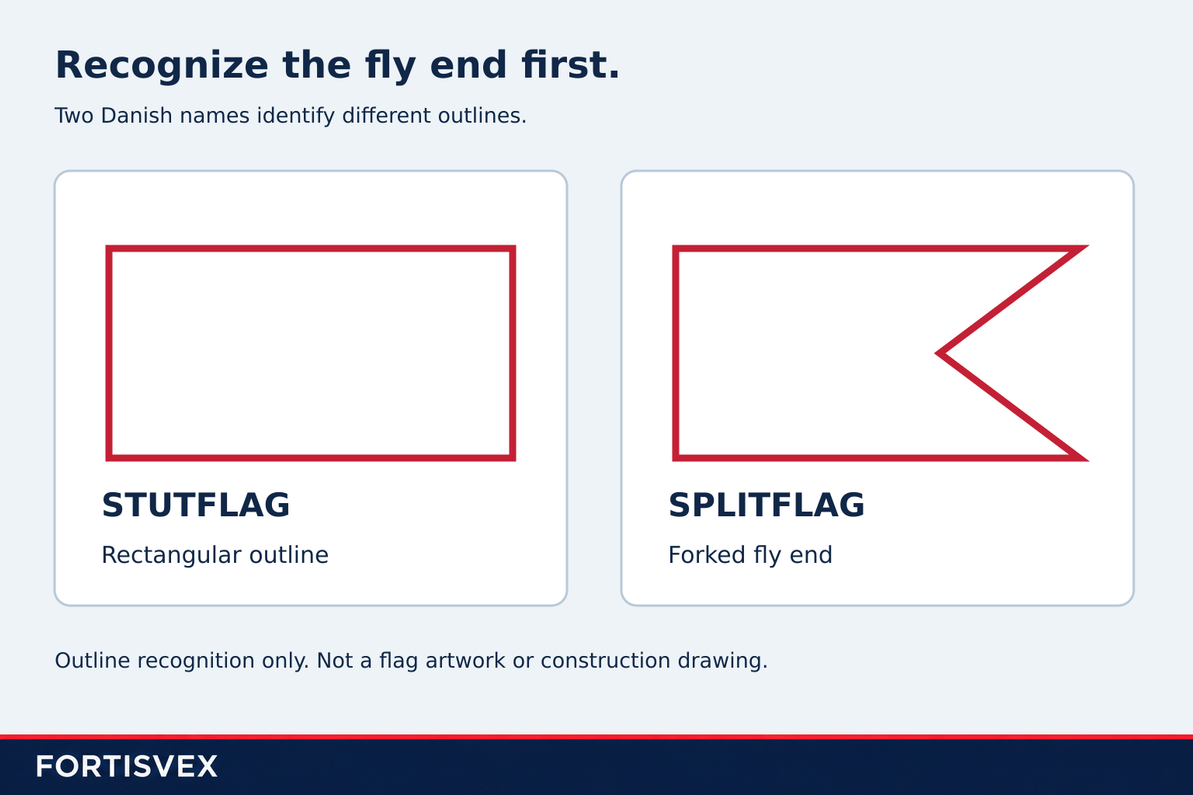
The name Dannebrog does not tell you everything about a Danish flag’s outline. Two terms worth recognizing are stutflag, the rectangular form, and splitflag, the form with a forked fly end. The distinction is more than a choice between a straight edge and a decorative cut.
For a clear comparison, start with the full outline and the exact designation. Then keep a separate question in view: what does the official guidance say about using that version?
Stutflag and splitflag: look at the free end
The explanatory notes to the Danish government’s 2024 flag bill describe the stutflag as rectangular and the splitflag as nonrectangular, with pointed extensions at the fly. These are useful recognition terms, not instructions to trim a rectangular flag into another form.
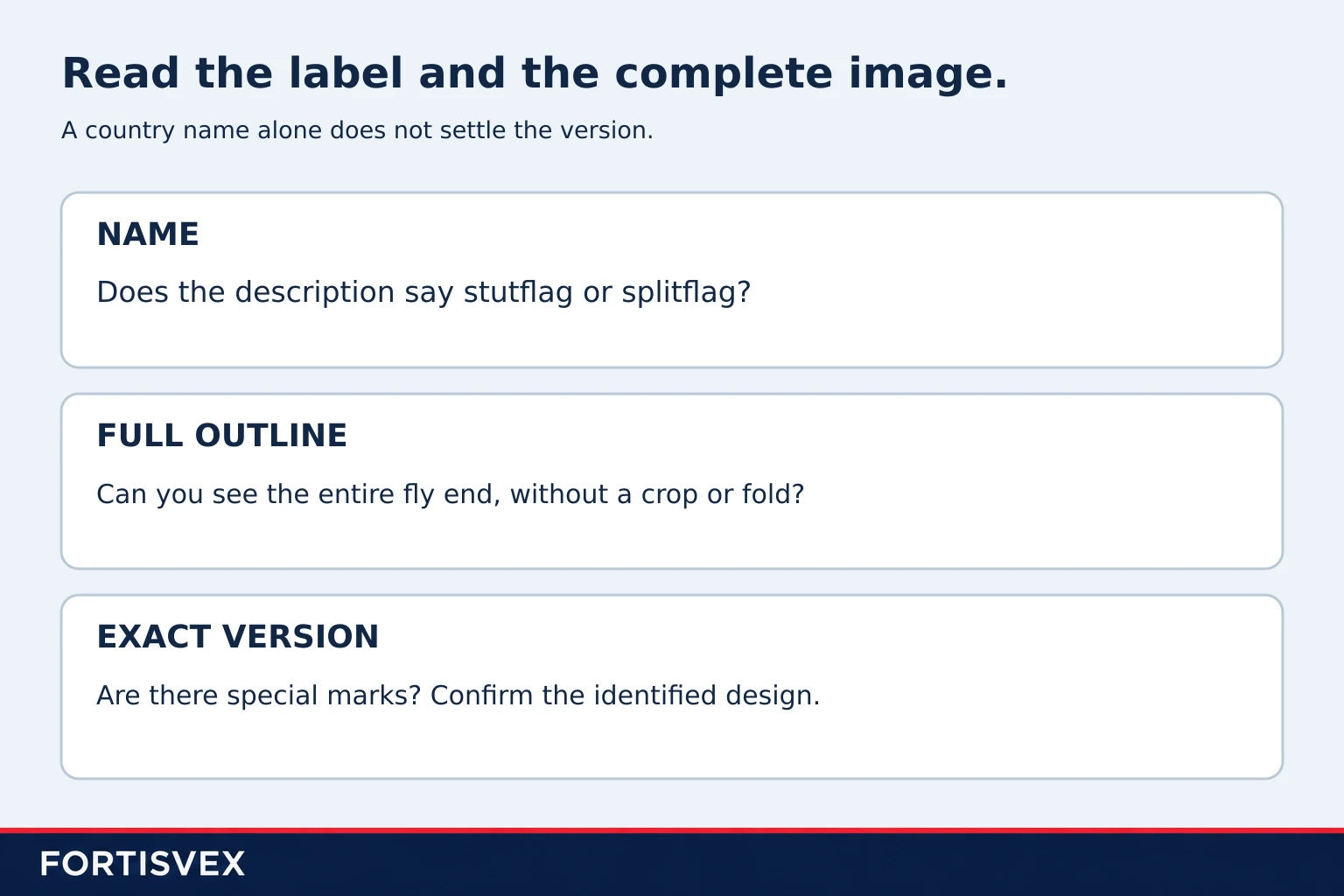
In a photograph, check the edge farthest from the attachment side. A fold can hide part of the fly, while a tight crop can remove the very feature that distinguishes the two outlines. If the entire edge is not visible, ask for a flat, uncropped reference rather than treating the thumbnail as conclusive.
The diagrams here show outlines only. They do not supply cross dimensions, cutting patterns, color specifications or manufacturing ratios. For a particular item, keep its stated dimensions and design reference together. Our explanation of hoist, fly and flag proportions helps distinguish the overall span from the shape within it. A forked outline does not fill every part of its surrounding rectangle.
The category matters before a display decision
Denmark’s Ministry of Justice says that, on official flag days, private individuals and other authorities may choose to fly Dannebrog as stutflag. Its separate splitflag guidance reserves that form to the Royal House, Parliament, courts, state authorities and people or organizations with special permission by royal resolution. It also distinguishes permission for versions bearing special marks.
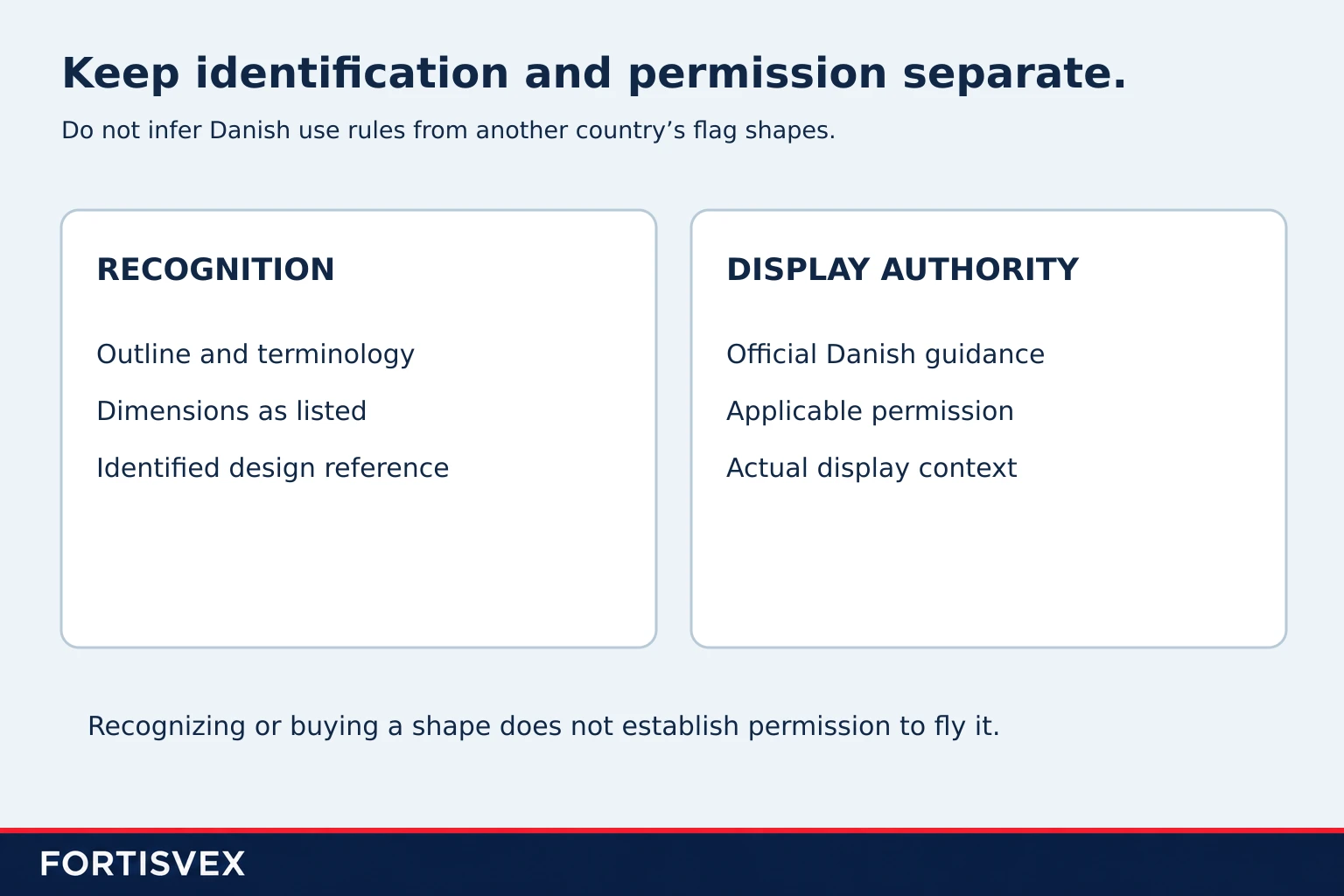
This is a summary of the Ministry’s Danish guidance, not a determination that a particular buyer or display qualifies. Before planning a display that depends on permission, consult the official guidance for the actual context. A seller’s photograph, product title or completed purchase does not establish that permission.
Do not treat royal marks as interchangeable decoration
The Royal House describes its royal flags as splitflag versions with special marks in the center field. That makes the identified version important even after you recognize the forked outline. This article does not reproduce those marks or offer a template for making them.
When cataloging an image, retain its caption and source. If the reference identifies a particular royal flag, do not relabel it simply as an ordinary Danish flag. If the identification is missing, record that uncertainty instead of guessing from a small central detail.
Keep history and present-day categories distinct
The story of Dannebrog is a separate topic from recognizing the version in front of you. For that background, see our guide to the 1219 legend and the historical evidence. An old image or a familiar origin story does not by itself answer a present-day display question.
A comparison with Switzerland’s square national flag and rectangular maritime ensign offers another example of context-specific flag shapes. It does not supply Danish rules: each country’s categories and official guidance must be read on their own terms.
Keep a precise comparison note
- Copy the exact name: stutflag, splitflag or a specifically identified variant.
- Retain an uncropped view that shows the fly end.
- Record both stated dimensions and the item or image reference.
- Resolve the intended display category separately from appearance.
That short record makes the comparison useful without turning an outline sketch into a product specification or a permission claim.
Official sources
- Ministry of Justice: flagging guidance.
- Ministry of Justice: splitflag guidance.
- Royal House: royal flags.
- 2024 flag bill and explanatory notes, printed pages 11–12, used here for the shape descriptions, not presented as the current enacted law.
Official source document: open or download the 2024 Danish flag bill and explanatory notes (PDF). This link opens the document separately; there is no inline PDF viewer.
Recent Posts
-
Poland and Indonesia: Check the Top Band Before the Size
Poland and Indonesia both use red and white in two equal horizontal bands. The quickest distinction …Nov 18th 2026 -
Sweden and Finland: Compare the Crosses at the Same Height
Sweden’s yellow cross on blue and Finland’s blue cross on white share a familiar arrangement: the up …Nov 18th 2026 -

Charcoal-Kettle Savoy Cabbage Wedges with Mustard Vinaigrette
Savoy cabbage’s crinkled leaves catch a little oil and brown at their edges, while the thicker base …Nov 18th 2026