
Can You Wear the U.S. Flag? Actual Flags, Patches and Lapel Pins
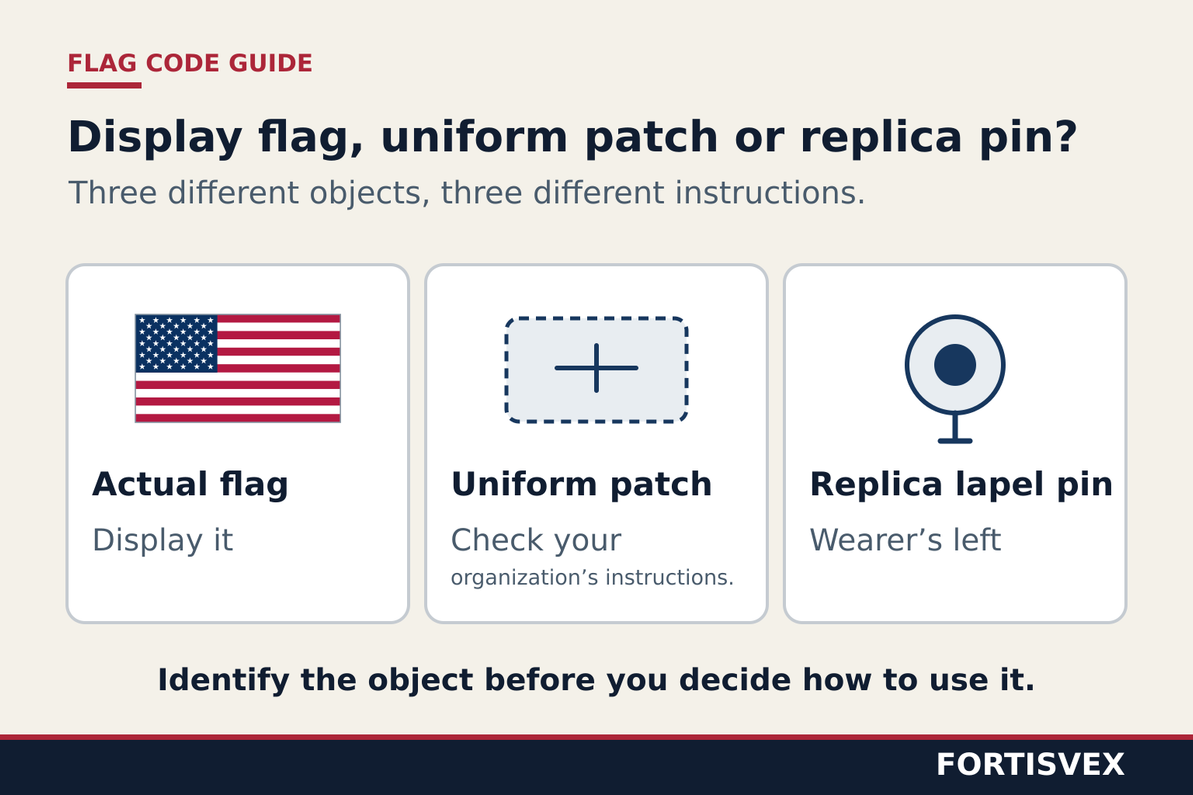
At a parade or school program, a full-size U.S. flag worn over someone’s shoulders, a small flag patch on a uniform and a flag-shaped lapel pin may all be intended to show respect. The Flag Code treats them differently. Before deciding what to wear or carry, identify the object: an actual flag, a patch made for a uniform or a replica pin.
An actual flag is for display, not a cape
4 U.S.C. § 8(d) and (j) advise against using the U.S. flag as clothing or using any part of it as a costume or athletic uniform. If someone brings a display flag intending to wear it as a cape, keep it for display and choose a separate costume or garment. The same distinction matters when someone proposes cutting a flag to make part of an outfit: the Code refers to part of the flag, not just an intact one.
Start with the object’s purpose, not its fabric or size. A small flag meant for display does not become a patch because it is small. Our U.S. flag catalog is one way to see the different materials and attachment styles used on display flags. Red, white and blue alone do not tell you how something was made or intended to be used.
Uniform patches and replica lapel pins are different
Subsection (j) expressly allows a flag patch on the uniforms of military personnel, firefighters, police officers and members of patriotic organizations. That is a specific provision. It does not tell members of those organizations which sleeve to use, how to orient the patch or which version their uniform permits. If you wear an official uniform, check that organization’s instructions rather than copying a photo of someone from a different unit.
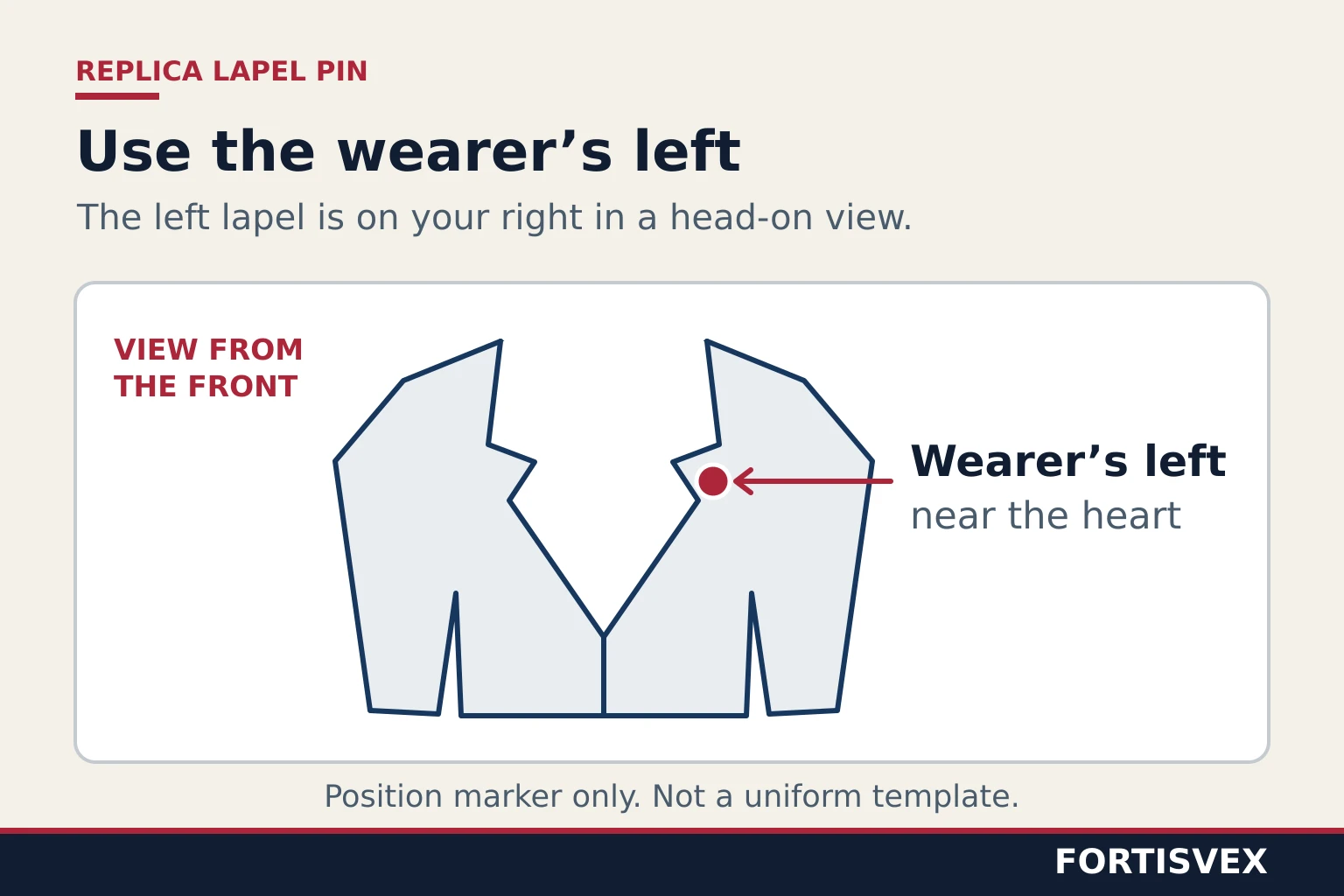
The same subsection describes a flag lapel pin as a replica and recommends wearing it on the left lapel, near the heart. That means the wearer’s left, not the left side of a photograph taken face-on. A lapel pin is its own example, not permission to pin or stitch part of a display flag onto clothing.
Give the flag a separate job at the event
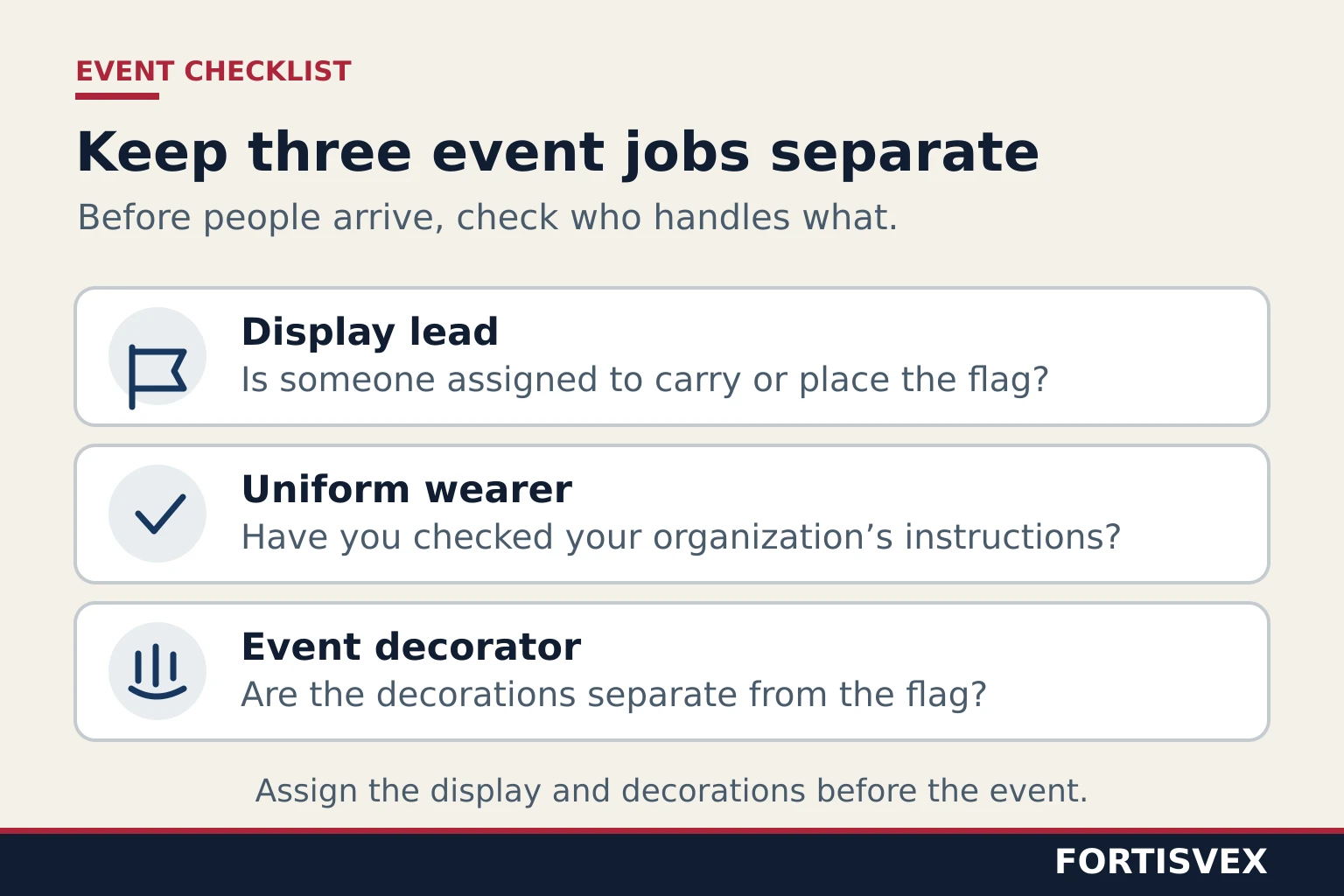
For a parade, decide which item will be carried and which will be worn. A volunteer who planned to wear the display flag can leave it with the people responsible for the flag instead. The guide to flag placement in a procession covers a separate question: where bearers position the U.S. flag when carrying it alongside other flags.
At a school ceremony or community event, you can keep clothing, decoration and the displayed flag separate. If the event needs color across a table or in front of a platform, our guide to using bunting instead of a flag as a table cover explains why a decoration and a display flag serve different purposes.
The takeaway is narrow: display the actual flag instead of wearing or cutting it, check the applicable uniform instructions for a patch and use the wearer’s left lapel for a replica pin. The patch and pin provisions do not settle every question about flag imagery on civilian clothing, advertising or merchandise.
Recent Posts
-
Iowa Half-Staff Notice for Wally E. Horn: Monday, November 23, 2026
Governor Kim Reynolds has directed flags to fly at half-staff in Iowa from sunrise to sunset on Mond …Nov 22nd 2026 -
Can You Wear the U.S. Flag? Actual Flags, Patches and Lapel Pins
At a parade or school program, a full-size U.S. flag worn over someone’s shoulders, a small flag pat …Nov 22nd 2026 -

Where Does the U.S. Flag Go on an Open or Closed Casket?
If you’re planning a service with a U.S. burial flag, tell the funeral director or honor guard wheth …Nov 22nd 2026