
Wigwag Signals
Civil War signal flags needed to be seen, yet visibility could invite interception.
Albert J. Myer proposed his visual signaling system to the Army in 1856. The Army dates its adoption to June 21, 1860, with Myer becoming its first signal officer.
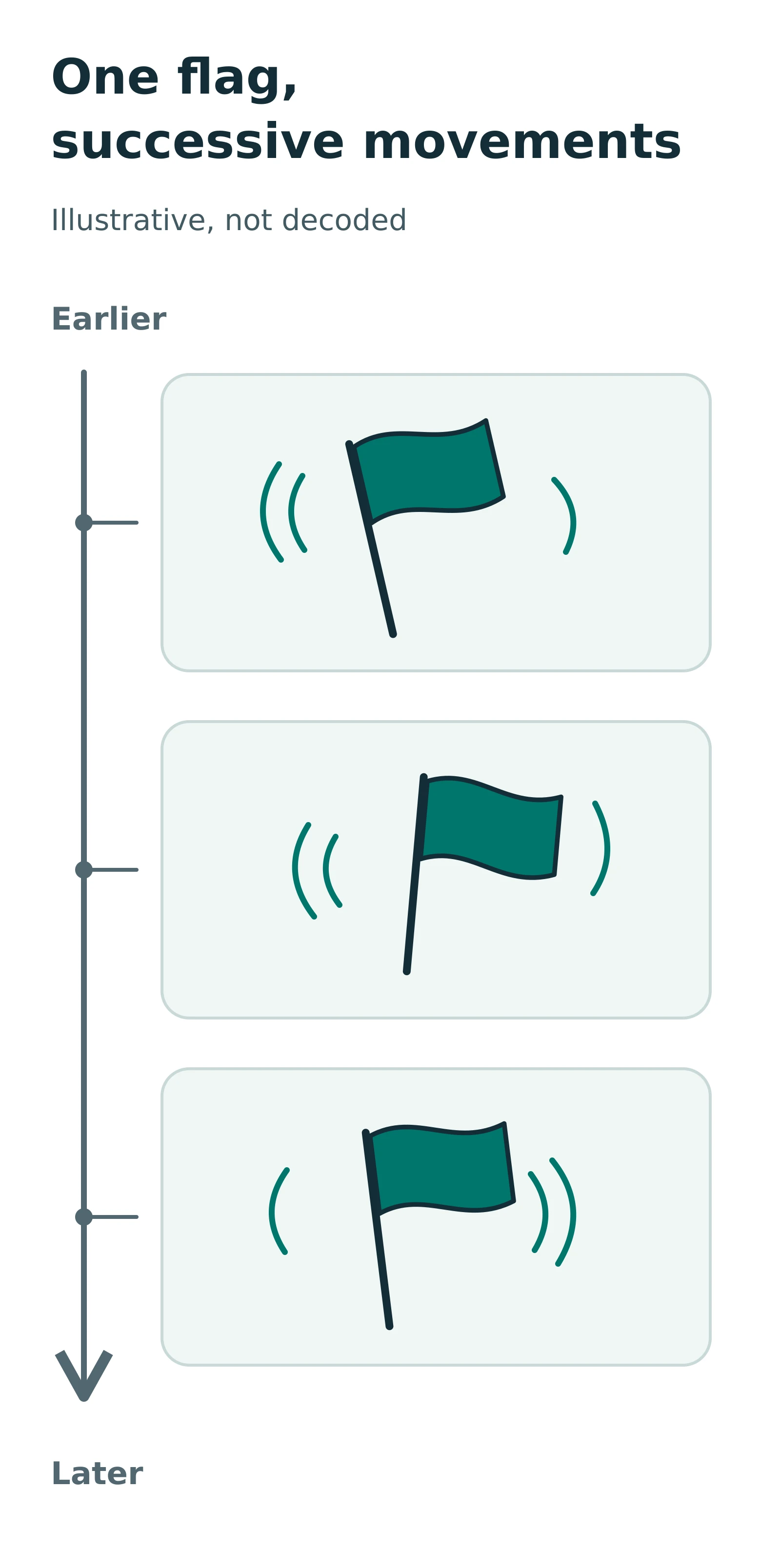
Information unfolded over time
Wigwag used one flag to carry ordered movements representing numerals, grouped to stand for letters. The information emerged over time, making the order of movements part of the message.
Flag colors were selected for contrast against the background, helping observers distinguish the movements. The National Park Service also describes varying staff length to improve readability. A color visible against one background might be less distinct against another.
Seeing and understanding were separate
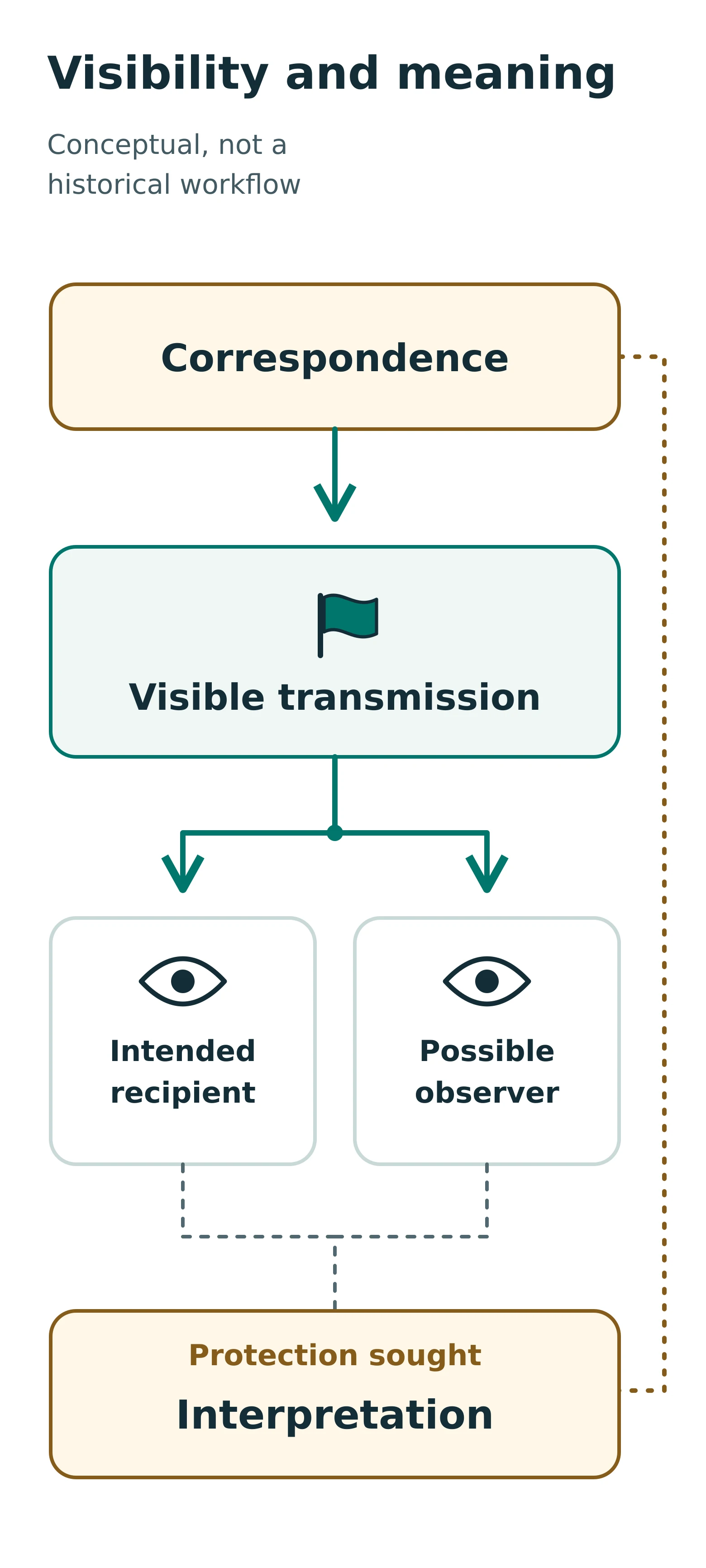
The National Cryptologic Museum notes that both armies knew the system, so visible messages could be intercepted.
In the NPS account, rotating a cipher disk changed the correspondence between letters and numeral combinations. Encryption sought to protect meaning while transmission remained visible. An observer's ability to see a flag did not establish that they could decipher its message.
Exposure brought another danger
In a letter transcribed by the National Museum of Civil War Medicine, Julius M. Swain described observing enemy movements without exposing his station's flag to sharpshooters. The account does not establish that he encrypted those messages.
Recent Posts
-
Wigwag Signals
Civil War signal flags needed to be seen, yet visibility could invite interception. Albert J. Myer p …Nov 5th 2026 -
Norway’s Flag in 1821: Agreement on Design, Disagreement on Authority
In 1821, Norway’s parliament and king accepted the flag’s design while disputing who could determine …Nov 5th 2026 -
Reading Beach Warning Flags: Check the Local Sign, Not Just the Color
A beach warning flag is easier to recognize than to interpret. You may remember a color from anothe …Nov 5th 2026