
Split or One-Piece Flash Collar? How to Fit an Installed Flagpole
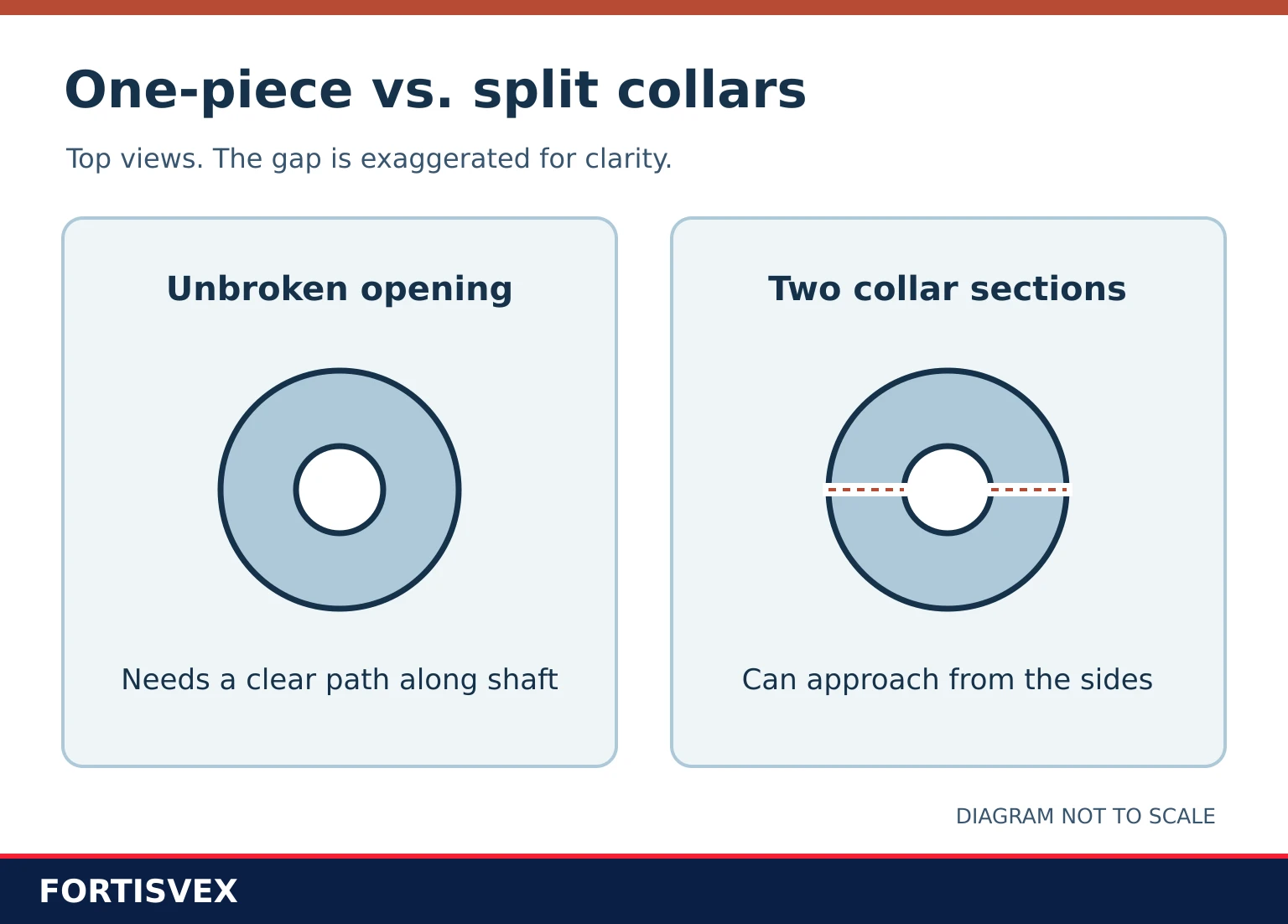
If a flash collar needs replacing on an installed flagpole, start with a simple question: can the replacement get around the shaft without moving the pole? A split collar can fit around the shaft from the sides when the model and base allow it. A one-piece collar has a continuous opening, so it needs an unobstructed installation path along the shaft. The same nominal pole diameter does not make them interchangeable.
Identify the mounting style first
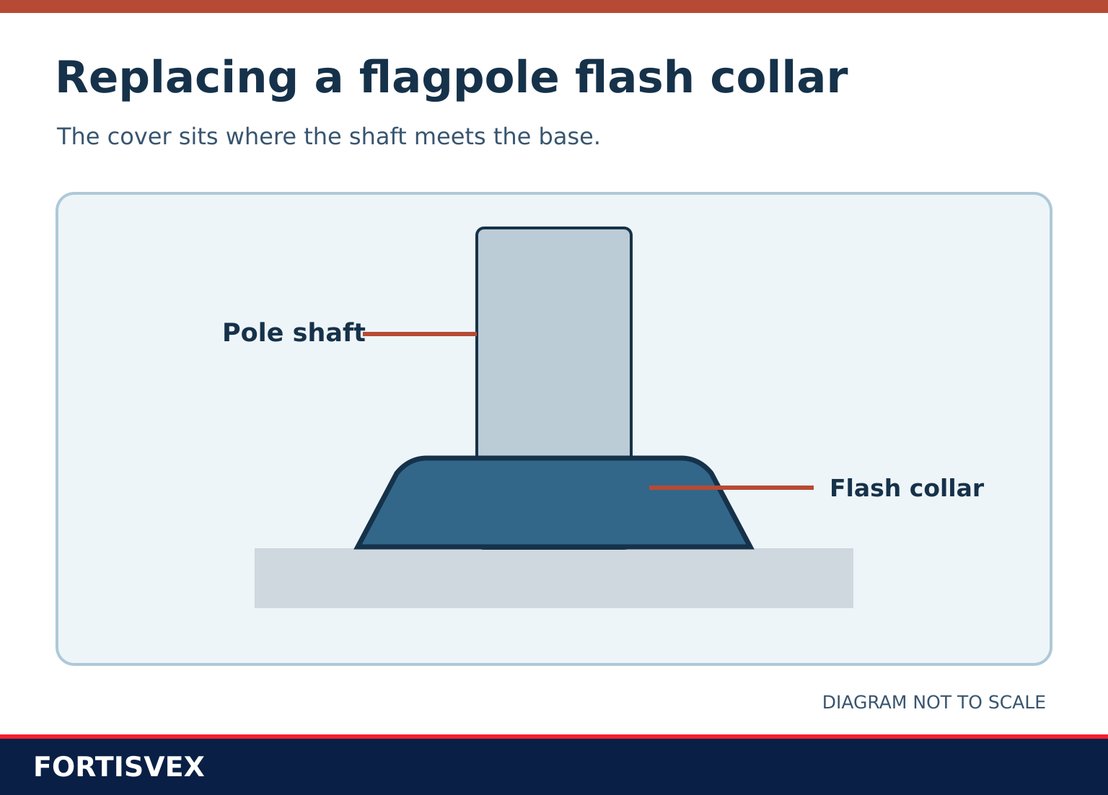
A flash collar covers the exposed transition between the pole and its base. It is not a structural support and does not correct a loose pole, damaged sleeve or anchor problem. On a ground-sleeve mount, check how much of the sleeve and surrounding finish needs covering. On a shoe-base mount, check the base plate and anchor area and consult the pole documentation before selecting a profile. If the pole or base moves or shows damage, have an installer inspect it before replacing the cover.
Split and one-piece collars answer different installation problems
A split collar opens into two sections. Eder’s catalog shows split models with underside mounting tabs and screws, noting that the size and number of tabs vary. Look for the actual assembly drawing rather than assuming all split collars use the same hardware. For a one-piece collar, identify the installation path and obstructions first. Do not assume it will pass over a fitting, a wider weld or a tapered shaft without verified clearance. Leave any pole removal or structural work to a qualified installer.
Measure the pole base and the area to cover separately
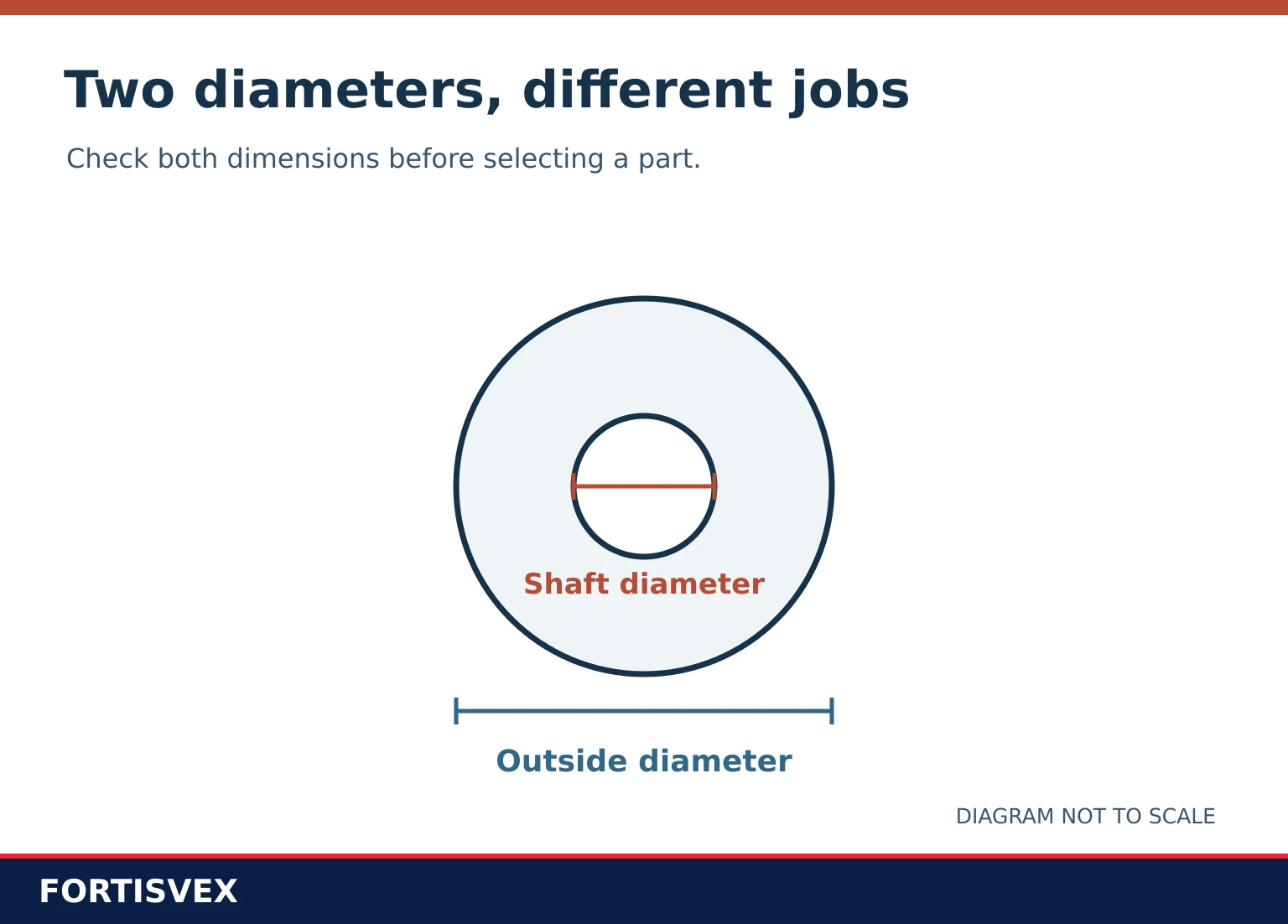
Measure the shaft across the point where the collar will sit, not at an arbitrary point higher up a tapered pole. Next, measure the area you want the collar to cover and the available space around and above it. Outside diameter tells you how far the collar extends across the base; profile height helps you check nearby obstructions and access. Do not use the size of the existing cover to infer the shaft diameter. Use the manufacturer’s drawing if the base is not a simple round sleeve.
Compare the numbers on the actual listing
The 3-inch satin standard-profile collar, 370006, is a one-piece example: the 3-inch number is the nominal pole diameter, while the outside diameter is 12 inches. The white standard-profile collar, 370098, is also one-piece and pairs a 2-inch nominal pole diameter with an 8-inch outside diameter. Neither is the split version. Browse flagpole flash collars for finishes and size examples, and verify the exact model’s construction before ordering.
What to write down before ordering
- Mount type and whether the pole must stay in place.
- Shaft diameter at collar height, required outside coverage and usable profile height.
- Nearby obstructions and any maintenance access that must remain open.
- Exact part number, finish and split or one-piece construction.
For manufacturer examples of split construction, see the Eder Flag split-collar catalog page. These diagrams show principles rather than prescribing a particular installation.
Recent Posts
-

Will a Vinyl Flagpole Snap Cover Fit? Check More Than Length
A vinyl flagpole snap cover can be shorter than the snap it is paired with. The cover sits over the …Nov 25th 2026 -
West Virginia Flags at Half-Staff for Beckstrom and Wolfe, November 26–27, 2026
West Virginia will lower the U.S. and West Virginia flags at the State Capitol Complex and at all st …Nov 25th 2026 -

Weber Charcoal Kettle Carrots With Cumin and Lemon Yogurt
The hardest part about grilling carrots is not finding enough heat. It is keeping the thin ends from …Nov 25th 2026