
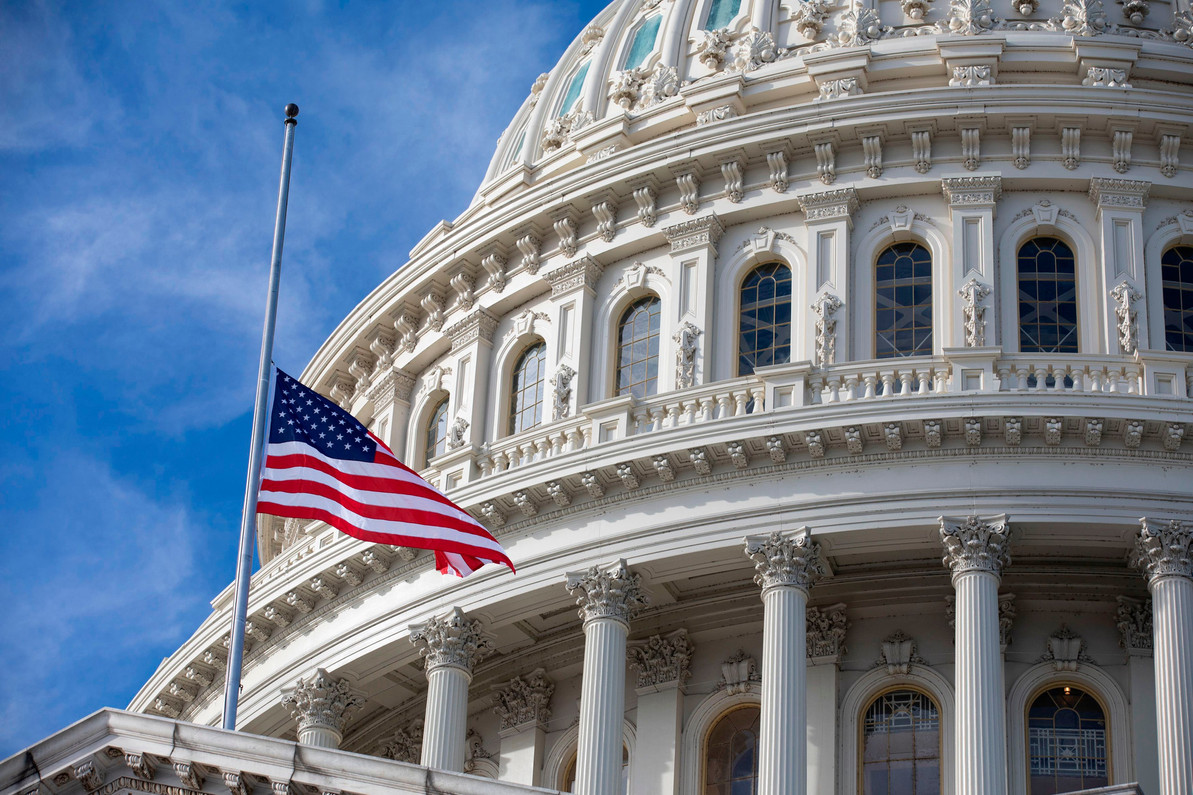
HOW TO FLY YOUR FLAG AT HALF-STAFF
Flying the American flag at half-staff is a visible expression of mourning and remembrance. The essential sequence is simple: raise the flag to the peak first, lower it to half-staff, and return it to the peak before taking it down for the day. The timing depends on the occasion and the applicable official notice.
Half-staff at a glance
- Check the notice: confirm the dates, times and locations it covers.
- Raise first: hoist the flag briskly to the peak for an instant, then lower it to half-staff.
- Before taking it down: raise it to the peak again, then lower it ceremoniously.
- Memorial Day: display at half-staff until noon, then raise it to the top for the rest of the day.
1. Confirm when and where the observance applies
Start with the actual presidential proclamation, governor's order or agency notice. Read the issuing authority, the reason for the observance, the affected buildings or geographic area, and the beginning and ending times. Check for an amendment or extension before returning the flag to full-staff.
An order for particular government facilities is not automatically an instruction covering every private home nationwide. Private displays can participate in remembrance, while public facilities should follow the directives that apply to them. A headline or social-media image may omit the limits that appear in the original notice.
The Flag Code provides the display framework; individual orders supply details for particular observances. Do not assume every half-staff period runs from sunrise to sunset or lasts the same number of days. The Department of Veterans Affairs also explains that federal agency heads may direct half-staff display at facilities under their jurisdiction.
2. Raise the flag to the peak, then lower it
- Prepare the display. Check the flag's attachments and your equipment's operating instructions. Keep the fabric clear of the ground, water and objects beneath it.
- Hoist to the peak. Raise the flag briskly to the top of the staff and pause there for an instant.
- Lower to half-staff. The Flag Code defines half-staff as the position one-half the distance between the top and bottom of the staff. Use a pole and attachment arrangement that can make that display properly.
- Secure the equipment. Follow the pole manufacturer's instructions for the halyard, cleat or other operating mechanism.
If the flag is already flying at the peak when an observance begins, lower it to half-staff at the stated time. Plan the change around the actual notice rather than guessing from a nearby display.
3. Return to the peak before lowering for the day
At the end of the day's display, raise the flag from half-staff to the peak again before lowering it ceremoniously. Keep it from touching anything beneath it as you bring it down.
Under the Flag Code, sunrise-to-sunset display is customary. A flag may remain displayed around the clock when properly illuminated during darkness. That general provision does not change the ending time specified in an applicable half-staff order.
What changes on Memorial Day?
Memorial Day has a specific half-day observance: the flag is displayed at half-staff until noon only, then raised to the top of the staff. For a customary sunrise-to-sunset display, that means half-staff in the morning and full-staff from noon until sunset. Do not leave it at half-staff all afternoon simply because the holiday continues.
What about telescoping poles and fixed house brackets?
Equipment designs differ. There is no universal instruction to move a flag to a second set of rings on every telescoping pole. Check the instructions for your exact model to establish whether it supports half-staff display and how its attachments should be used.
A flag fixed to a short house-mounted staff may not have room or a mechanism to lower correctly. Do not improvise a mounting change that conflicts with the equipment instructions or lets the fabric drag. For an institutional display, ask the responsible office how it wants a fixed display handled.
How should other flags be arranged?
For a U.S. flag sharing a halyard with a state, city or society flag, the U.S. flag belongs at the peak of that group. On adjacent staffs, the Flag Code calls for the U.S. flag to be hoisted first and lowered last, with those other flags no higher than it. If your arrangement cannot maintain the proper relationship during half-staff display, consult the applicable protocol before changing it.
Flags of other nations have a separate rule: they are displayed on separate staffs of the same height, with flags of approximately equal size. Do not apply a blanket instruction to lower every foreign national flag simply because the U.S. flag is at half-staff; follow the protocol governing the event or institution.
A practical final check
Know the occasion, confirm the schedule, and make both trips to the peak. Those three checks help turn a familiar gesture into a deliberate act of respect. This guide explains general display practice; use the original order for a current observance and the equipment instructions for your particular pole.
Official sources
- U.S. Flag Code, Title 4, sections 6–8: display times, half-staff sequence, Memorial Day, other flags and respectful handling.
- U.S. Department of Veterans Affairs: Flying the American Flag at Half Staff: official observances and the Memorial Day schedule.
If your display needs a replacement flag, compare American flags at FORTISVEX. Choose the size and attachment finish that match your pole's specifications.
Recent Posts
-
South Korea’s Taegeukgi: Check the Four Trigrams and Artwork Orientation
The South Korea flag, known as the Taegeukgi, is a good example of why artwork review should go beyo …Nov 2nd 2026 -
Brazil Flag Artwork: Check the Star Map Before Approving the Proof
The blue globe on a Brazil flag rewards a closer look. When buying a flag or reviewing a production …Nov 2nd 2026 -
Mexico Flag: The Eagle Is Part of the Design, Not an Optional Logo
A Mexico flag can look familiar at a glance while still needing a closer artwork check. When compari …Nov 2nd 2026