
Freezing Rain and Your U.S. Flag: What to Do Before the Storm and After the Thaw
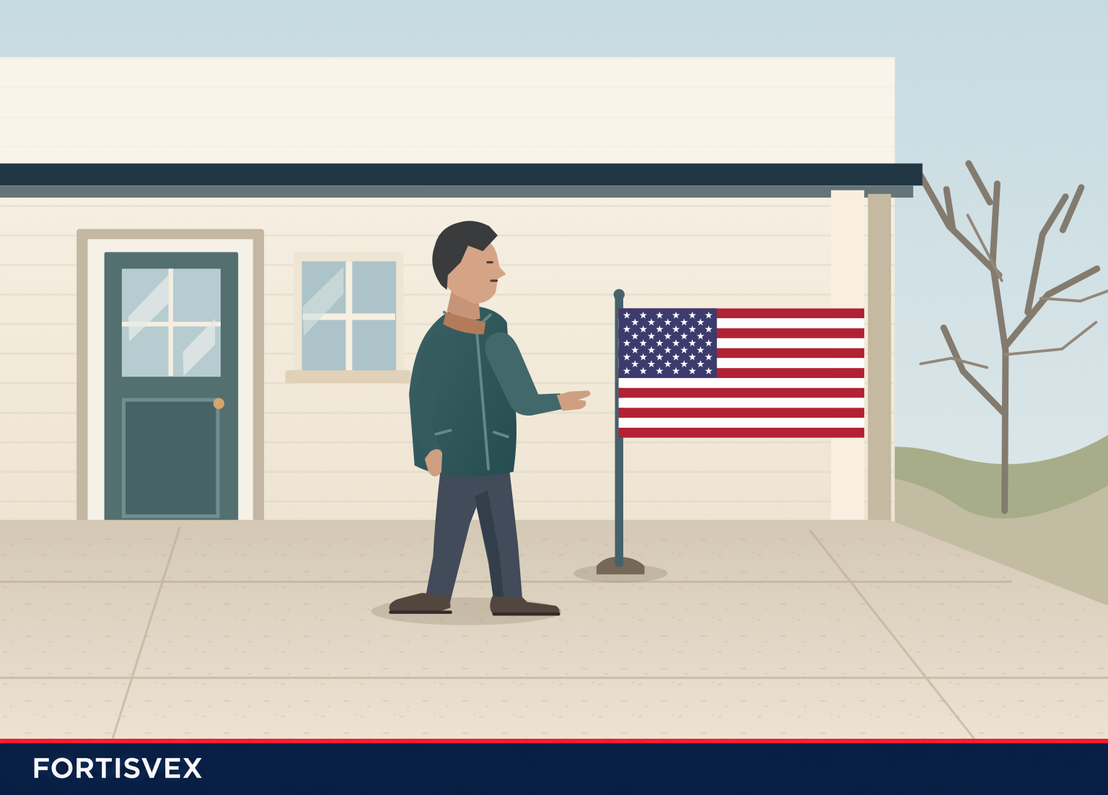
If freezing rain is forecast, take the flag down before ice forms, but only if the setup is safely reachable from dry ground. If the flag or hardware is already frozen, leave it alone. Once the ice has melted and the area is safe, dry the flag and look for damage before putting it back up.
1. Before the storm: Bring it in if you can do it safely
Check the local forecast so you can act while the path and footing are still dry. For a porch flag, remove it only if you can reach it while standing on stable ground. For a pole with an external rope, lower the flag using the normal ground-level control. If reaching either setup requires a ladder or leaning over a railing, leave it for qualified help.
The U.S. Flag Code advises against displaying the U.S. flag in inclement weather unless it is an all-weather flag. That exception is about display etiquette. It does not tell you what a particular flag, bracket, or pole can withstand or make an icy retrieval safe.
2. During the storm: Leave frozen hardware alone
If the cloth is stiff with ice, the clip won't open normally, or the rope won't move with its ordinary pull, stop. Don't tug on the flag, force the rope, chip off ice, or try to thaw the setup with hot water, a heat gun, or a flame. Don't use a ladder or walk onto an icy porch just to retrieve it.
The National Weather Service's winter safety guidance advises staying off ice-covered outdoor surfaces during an ice storm. Keep clear of places where ice or branches may fall, even if it has stopped raining. If you see a downed power line or a line touching the flagpole, stay away. Don’t touch the pole, the line, or anything in contact with it. Call 911 from a safe place and report it to the electric utility.
Electrical safety: See the National Weather Service’s downed-power-line guidance and post-storm electrical hazard guidance.
3. After the thaw: Dry the flag and check what you can reach
Wait for good footing and no overhead hazard. If the fabric and hardware move freely, bring the flag inside. Spread it out on a clean surface and let it dry completely before folding or storing it. If the pole, bracket, or rope still looks unsafe or won't move normally, stop and have a qualified installer inspect it.
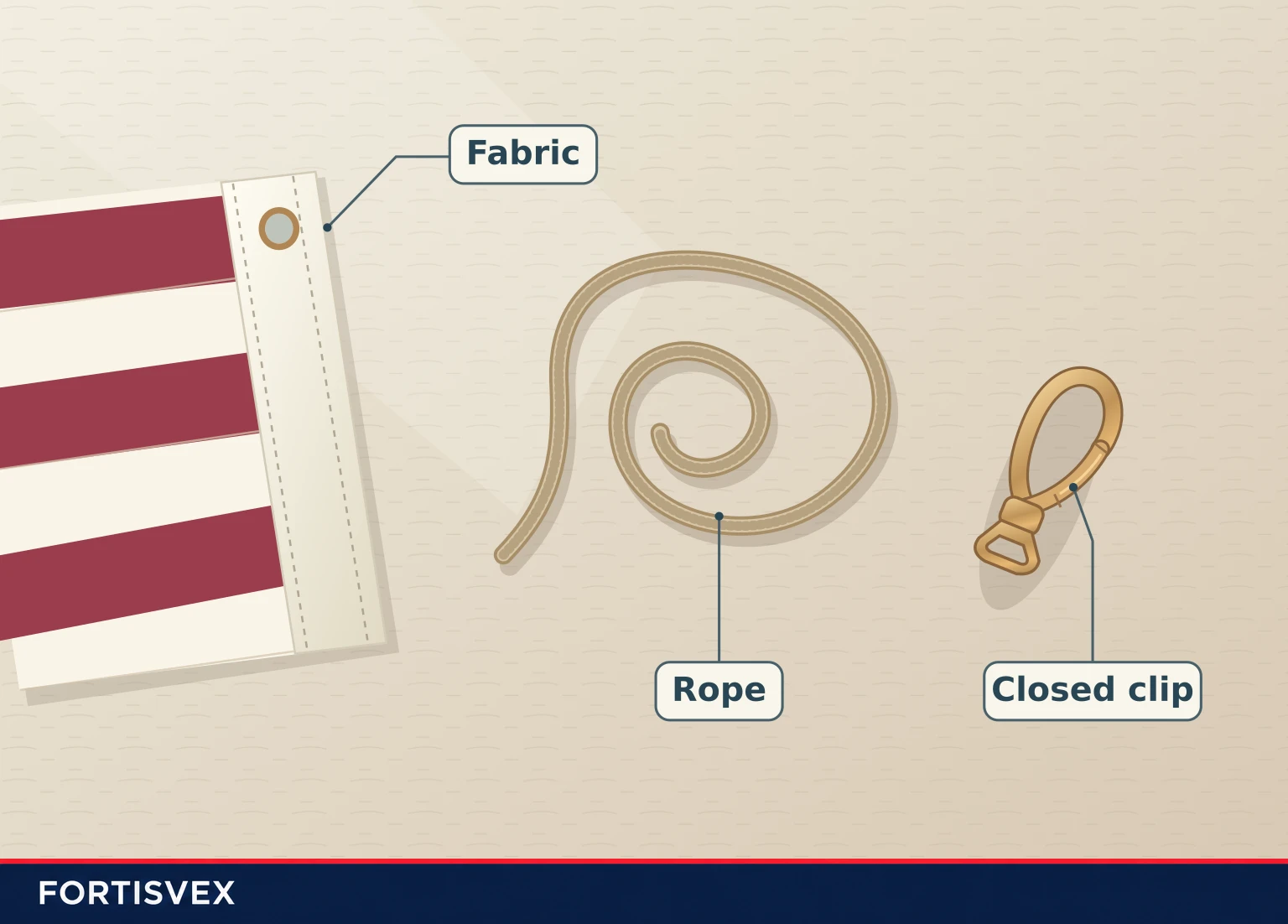
- Flag: Look for torn stitching at the free end, fabric pulled loose at the hoist, or a grommet pulling out. Don't rehang a flag with a loose attachment.
- Rope: Where you can see it from the ground, look for new fraying, cuts, or exposed core. If the rope needs replacement, use the pole maker's specifications for diameter and length before comparing flagpole rope and halyard. Don't size a replacement from a stretched or damaged section.
- Clips: With the flag down, check that the accessible clips close normally and aren't cracked or bent. If one is damaged, match the rope attachment and the flag-grommet opening when comparing replacement flag snaps and clips.
- Porch setup: If the hardware looks intact and the flag starts wrapping again in dry weather, use the porch flag wrapping checklist to check clearance and attachment fit. A frozen flag alone isn't a reason to replace the setup.
If everything is dry, secure, and working normally from the ground, rehang the flag when conditions permit.
Recent Posts
-
West Virginia Capitol Flags at Half-Staff for Jay Rockefeller on November 23, 2026
Governor Patrick Morrisey ordered the U.S. and West Virginia flags at the State Capitol Complex in C …Nov 23rd 2026 -
Freezing Rain and Your U.S. Flag: What to Do Before the Storm and After the Thaw
If freezing rain is forecast, take the flag down before ice forms, but only if the setup is safely …Nov 23rd 2026 -

Wild Rice–Stuffed Acorn Squash with Leeks and Hazelnuts
Roasted acorn squash halves make their own serving bowls. Fill them with nutty wild rice, tender le …Nov 23rd 2026