
Fort Sumter Had Two Flags: Following the Storm Flag and Garrison Flag
“The Fort Sumter flag” sounds like the name of one object. The fort's history is clearer when you follow two: the large garrison flag and the smaller storm flag. Both were United States flags with 33 stars. They served different purposes, and only one flew during the bombardment that began the Civil War.
The distinction is useful whenever you encounter a museum photograph, a commemorative ceremony or a modern reproduction. A caption that says only “Fort Sumter, 1861” can leave out the very detail that identifies the object.
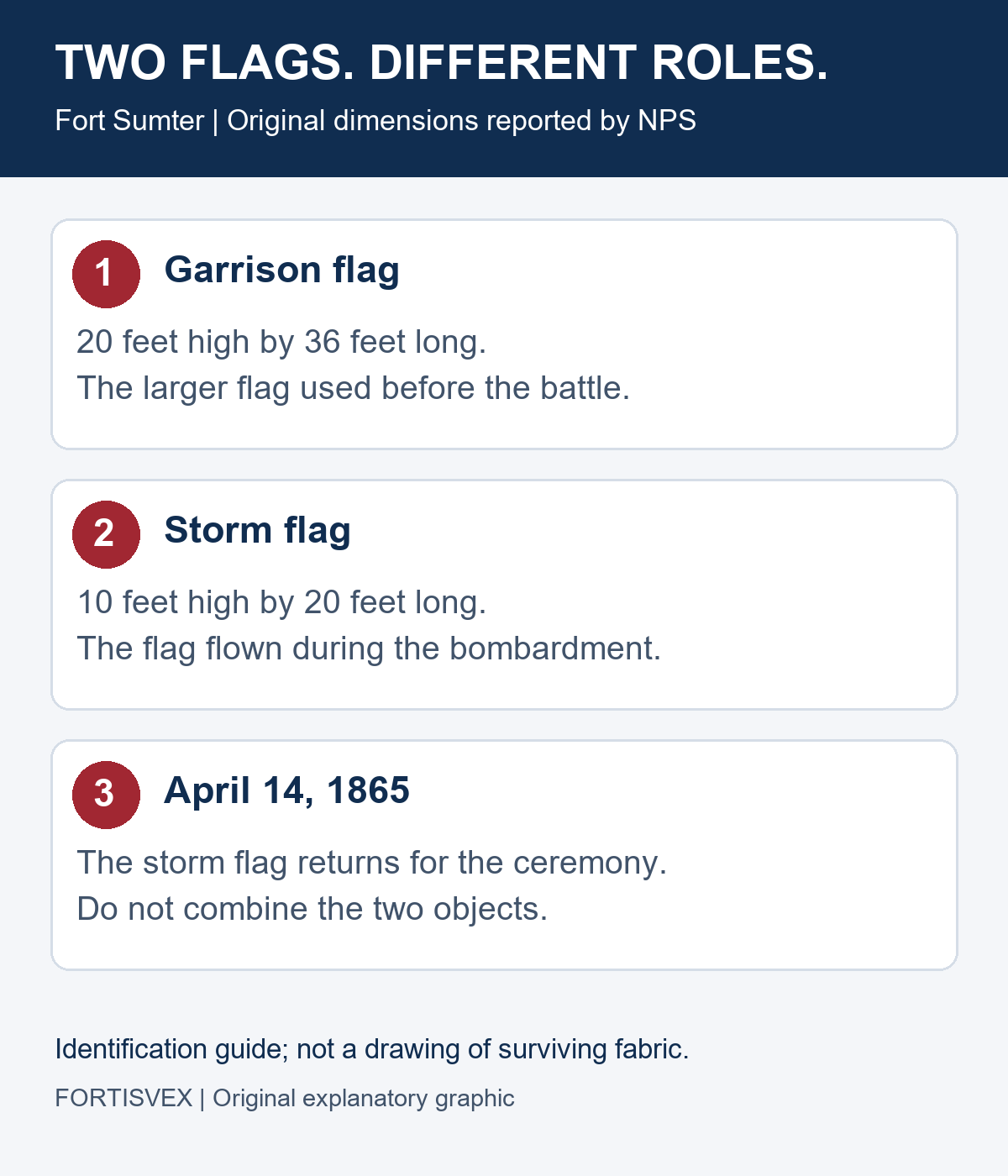
Two objects at a glance
| Feature | Garrison flag | Storm flag |
|---|---|---|
| Original size | 20 feet high by 36 feet long | 10 feet high by 20 feet long |
| Usual role | Larger, primary flag | Smaller flag for bad weather and high winds |
| Star count | 33 | 33 |
| Key distinction | Flew before the battle | Flew during the bombardment |
Read the separate NPS garrison-flag history and NPS storm-flag history with this comparison. “Storm” describes the smaller flag's intended role; it is not a claim that a historic textile was indestructible or equivalent to a modern performance-rated product.
The garrison flag: the months before the first shots
On December 26, 1860, Major Robert Anderson moved his men from Fort Moultrie to Fort Sumter and had the garrison flag raised there. Its scale made the United States presence conspicuous during the standoff in Charleston Harbor. By the time the bombardment approached, the larger flag had a rip. Anderson substituted the storm flag.
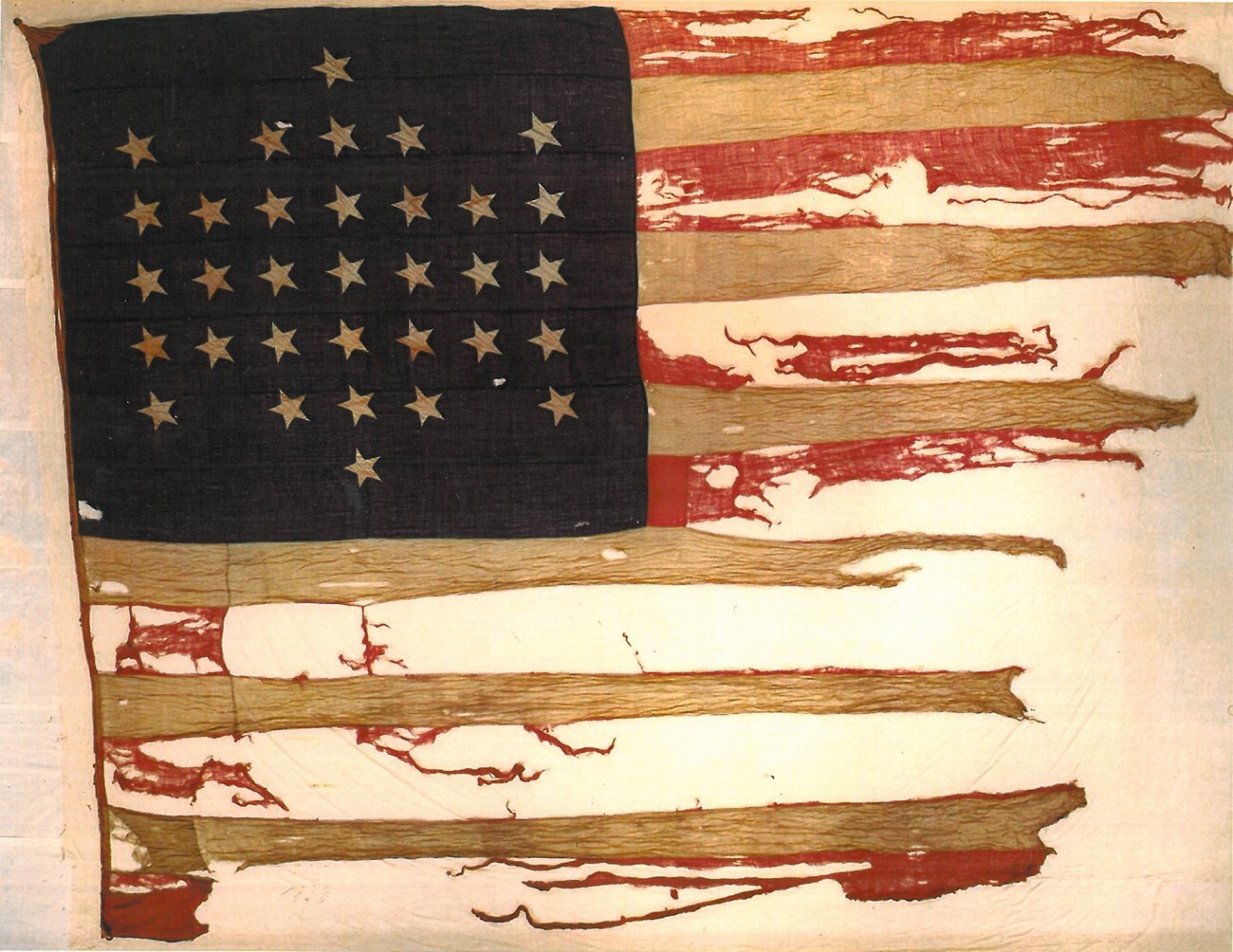
That sequence matters when describing damage. The garrison flag is part of the fort's Civil War story, but calling it the flag that endured the opening bombardment assigns the storm flag's role to the wrong object. Do not infer an individual tear's cause simply from a photograph of old cloth.
The storm flag: bombardment, evacuation and return
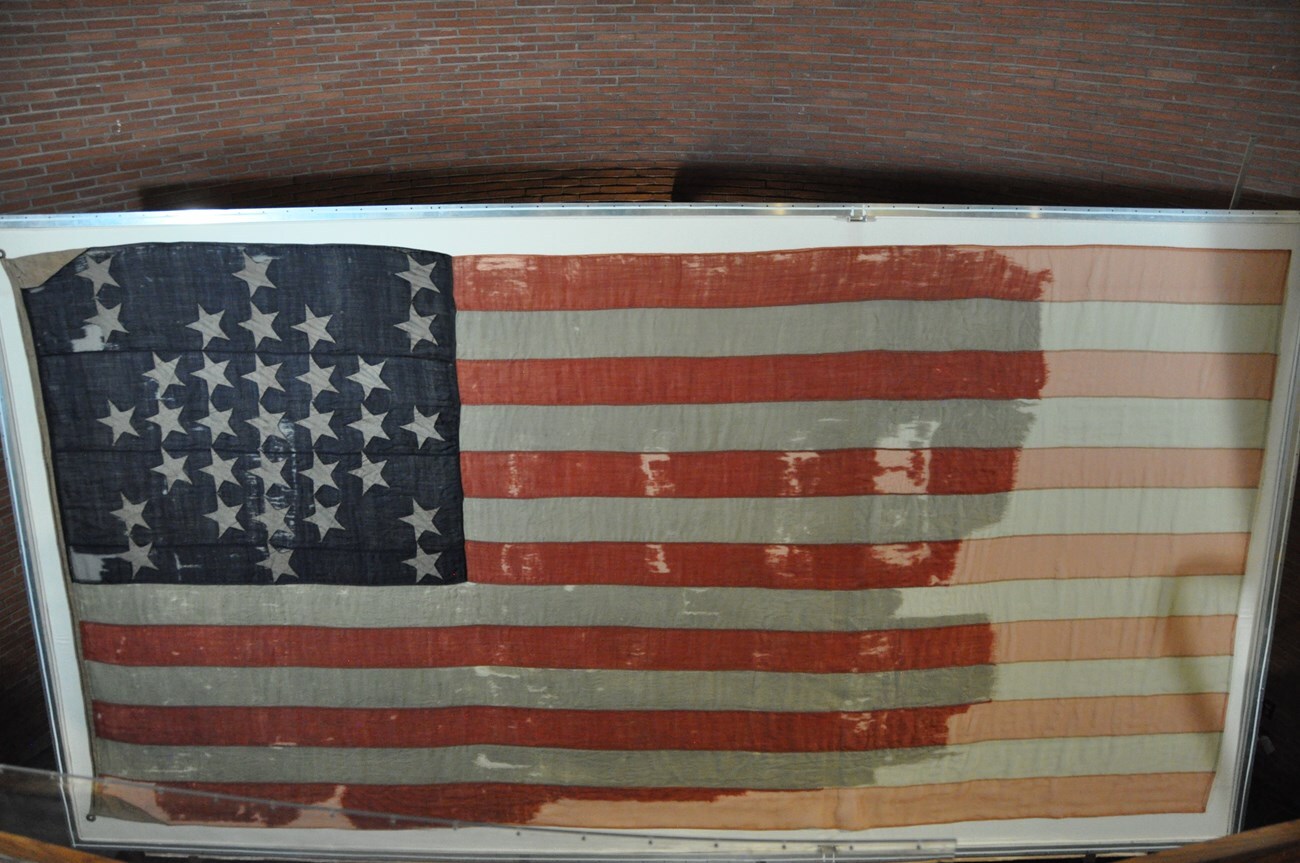
The smaller flag remained aloft during the attack that began April 12, 1861. After the garrison evacuated, the United States soldiers took their flags away. The storm flag appeared at New York City's Union Square rally that April, and Anderson retained it during the war.
On April 14, 1865, Anderson returned to raise the storm flag at Fort Sumter in a ceremony ordered by President Abraham Lincoln. The date marks a specific commemorative return of the same flag, not the introduction of a new garrison flag. NPS traces its later custody through Anderson's family, a 1905 transfer to the War Department, and the National Park Service in 1948.
Why both flags had 33 stars
The star count can seem puzzling because Kansas became the 34th state in January 1861. The NPS histories explain the timing: its star did not enter the official flag until July 4. The opening battle therefore occurred while the 33-star flag was still official. The two flags' arrangements of those stars were also different; a shared count does not make two patterns identical.
For anyone selecting a teaching example, this is a useful test. Identify the event and date first, then the particular artifact and arrangement. Our historical reproduction guide develops that approach so a display label says what the evidence supports.
Read a museum photograph as a record of an object
A museum photograph has at least two dates worth keeping separate: the period when the flag was used and the time it was photographed. A photograph made in 2023 is a modern record of an older artifact. It is not a photograph of the 1861 battle, nor does it reconstruct the flag's complete original condition.
Likewise, original dimensions and surviving dimensions answer different questions. The table above reports the original sizes given by the NPS histories. Missing fabric, repairs, mounting and the photographic viewpoint mean that measuring the pictured rectangle on your screen cannot recover the original cloth's dimensions reliably.
Preservation is part of the story
The NPS conservation announcement from September 2023 explained why these fragile flags were leaving display for a period of rest. Long exposure to light can irreversibly damage textiles, and changes in humidity also need control. The article is an archived announcement, not a current visitor schedule; the later NPS artifact histories likewise describe the flags resting from display. Check the park's current information before planning a visit around seeing either original.
For a display at home or an event, the lesson is to distinguish the original artifact from a replaceable modern flag. Do not experiment with cleaning, flying or remounting an old textile merely because a newer outdoor flag can be used that way. An inherited object with historical significance deserves advice from a qualified textile conservator.
Continue from the object to the setting
Fort Sumter's story belongs to the history of Charleston Harbor and South Carolina, but a state anniversary and the outbreak of war are different events. Our South Carolina statehood article offers that earlier state context. Keep its May 23, 1788 date separate from the April 1861 battle.
For a current everyday display, browse the FORTISVEX American flag collection. Check the individual listing's size, material and attachments; modern products should not be described as either original Fort Sumter artifact.
Sources and image credits
Historical facts are linked to the separate NPS artifact histories and conservation notice above. The comparison graphic is original FORTISVEX explanatory artwork. The two photographs retain their NPS credits; no protection is claimed in original U.S. Government works. NPS's ownership and reuse guidance was reviewed for these credited images.
Recent Posts
-
South Korea’s Taegeukgi: Check the Four Trigrams and Artwork Orientation
The South Korea flag, known as the Taegeukgi, is a good example of why artwork review should go beyo …Nov 2nd 2026 -
Brazil Flag Artwork: Check the Star Map Before Approving the Proof
The blue globe on a Brazil flag rewards a closer look. When buying a flag or reviewing a production …Nov 2nd 2026 -
Mexico Flag: The Eagle Is Part of the Design, Not an Optional Logo
A Mexico flag can look familiar at a glance while still needing a closer artwork check. When compari …Nov 2nd 2026