
Memorial Day 2001: President Bush’s Prayer for Peace and Half-Staff Proclamation
Historical notice: this observance has ended. This independent FORTISVEX archive explains President George W. Bush's Memorial Day proclamation for 2001.
Memorial Day in 2001 fell on May 28. President George W. Bush's Proclamation 7444 brought together remembrance, prayer for peace and a request for half-staff flag display. Those observances had distinct times: an hour of prayer beginning at 11 a.m. in each locality, half-staff display until noon, and the National Moment of Remembrance at 3 p.m. local time.
Three dates, three different meanings
- May 25, 2001: the formal proclamation date, also stated in its closing attestation.
- May 28, 2001: Memorial Day and the date of the observances described here.
- May 31, 2001: publication in the Federal Register, pages 29445 and 29446.
The Federal Register publication followed the observance. Its issue date should not be substituted for either the proclamation's formal date or the day on which people were asked to participate.
Read the original proclamation
Open or download the official two-page proclamation from GovInfo. The published second page contains the attestation and a signature reproduction.
What the half-staff request covered
Bush requested that governors of the United States and Puerto Rico, together with appropriate officials of all units of government, direct half-staff display until noon on Memorial Day. The passage names all buildings, grounds and naval vessels throughout the United States and in all areas under its jurisdiction and control. It separately asks people to display the flag at half-staff at home for the customary forenoon period.
No numerical starting hour or named time zone is supplied for flag display. The noon endpoint belongs to the half-staff request; the 11 a.m. prayer and 3 p.m. remembrance do not extend that endpoint. This historical document is not a current lowering notice.
For the practical sequence of raising and lowering the flag, see our guide to flying the flag at half-staff. That general handling guidance is separate from this proclamation’s historical schedule.
Prayer and remembrance
The proclamation designates the hour beginning at 11 a.m. in each locality as a time to unite in prayer for permanent peace. It also asks Americans to observe the National Moment of Remembrance beginning at 3 p.m. local time. In its explanation of the congressional basis, it describes that moment as the minute beginning at 3 p.m.
The proclamation's historical perspective
Bush opens with words attributed to Dwight D. Eisenhower after Germany's surrender in 1945, using them to connect public recognition with the sacrifices of those who served. The document also marks the 60th anniversary of the bombing of Pearl Harbor and the 10th anniversary of Operation Desert Storm. Those are the anniversary references made in 2001, not descriptions of the current year.
The text invites both public ceremony and quiet reflection at a grave. Its historical service and casualty totals are preserved below as statements in the 2001 proclamation, not presented as updated statistics.
Full text of Proclamation 7444
Prayer for Peace, Memorial Day, 2001
By the President of the United States of America
A Proclamation
The transcription preserves the complete proclamation text with normalized punctuation and joined line breaks; it is not typographically identical to the published pages.
‘‘Humility must always be the portion of any man who receives acclaim earned in the blood of his followers and the sacrifices of his friends.’’
These words, spoken by General Dwight D. Eisenhower following Germany’s surrender in 1945, paid tribute to his fallen comrades as he humbly acknowledged that their ultimate sacrifice gave occasion for recognition of his leadership.
Similarly, we stand as a Nation that is strong and deserving of praise. Yet we are humbled, because we remember that the wealth of this Nation’s heritage, the strength of its ideals, and the extent of its freedom came with a tremendous price. These treasures were purchased with the lives of American service men and women, a cost borne prominently by several generations. We are humbled because so many bright futures, hopes, and dreams were sacrificed for the abundance of opportunities we now freely pursue.
Through the course of our Nation’s history, more than 41 million Americans have served the cause of freedom and more than a million have died in its name. On this noble American holiday, we solemnly pause to remember the men and women who gave their lives in service to our Nation. We honor those generations and individuals who fought for liberty and in defiance of tyranny that this unique experiment in self-government might long endure.
At a bridge at Concord, in the muddy trenches of Europe, the rugged mountains of Korea, the dense forests of Asia, or across the burning sands of the Persian Gulf, America’s heroes have advanced democracy around the globe and defended the liberties we hold dear. We are particularly mindful of our fallen patriots as we mark the 60th anniversary of the bombing of Pearl Harbor and the 10th anniversary of Operation Desert Storm.
We honor the final sacrifice of our service men and women by dedicating our own lives to peace and the defense of freedom. For these ideals they fought, and for these ideals we continue to strive. May we stand with diligence and with humility on the broad shoulders of those whose brave deeds and sacrifice we memorialize today. Let all of us commit this day, whether in public ceremony or in quiet reflection over a single grave, to remember them in fitting tribute.
In respect for their devotion to America, the Congress by a joint resolution approved on May 11, 1950 (64 Stat. 158), has requested the President to issue a proclamation calling on the people of the United States to observe each Memorial Day as a day of prayer for permanent peace and designating a period on that day when the people of the United States might unite in prayer. The Congress, by Public Law 106–579, has also designated the minute beginning at 3:00 p.m. local time on that day as a time for all Americans to observe the National Moment of Remembrance.
NOW, THEREFORE, I, GEORGE W. BUSH, President of the United States of America, do hereby designate Memorial Day, May 28, 2001, as a day of prayer for permanent peace, and I designate the hour beginning in each locality at 11:00 a.m. of that day as a time to unite in prayer. I also ask all Americans to observe the National Moment of Remembrance beginning at 3:00 p.m. local time on Memorial Day. I urge the press, radio, television, and all other media to participate in these observances.
I also request the Governors of the United States and the Commonwealth of Puerto Rico, and the appropriate officials of all units of government, to direct that the flag be flown at half-staff until noon on this Memorial Day on all buildings, grounds, and naval vessels throughout the United States and in all areas under its jurisdiction and control. I also request the people of the United States to display the flag at half-staff from their homes for the customary forenoon period.
IN WITNESS WHEREOF, I have hereunto set my hand this twenty-fifth day of May, in the year of our Lord two thousand one, and of the Independence of the United States of America the two hundred and twenty-fifth.
Arlington in 2001 and across the years
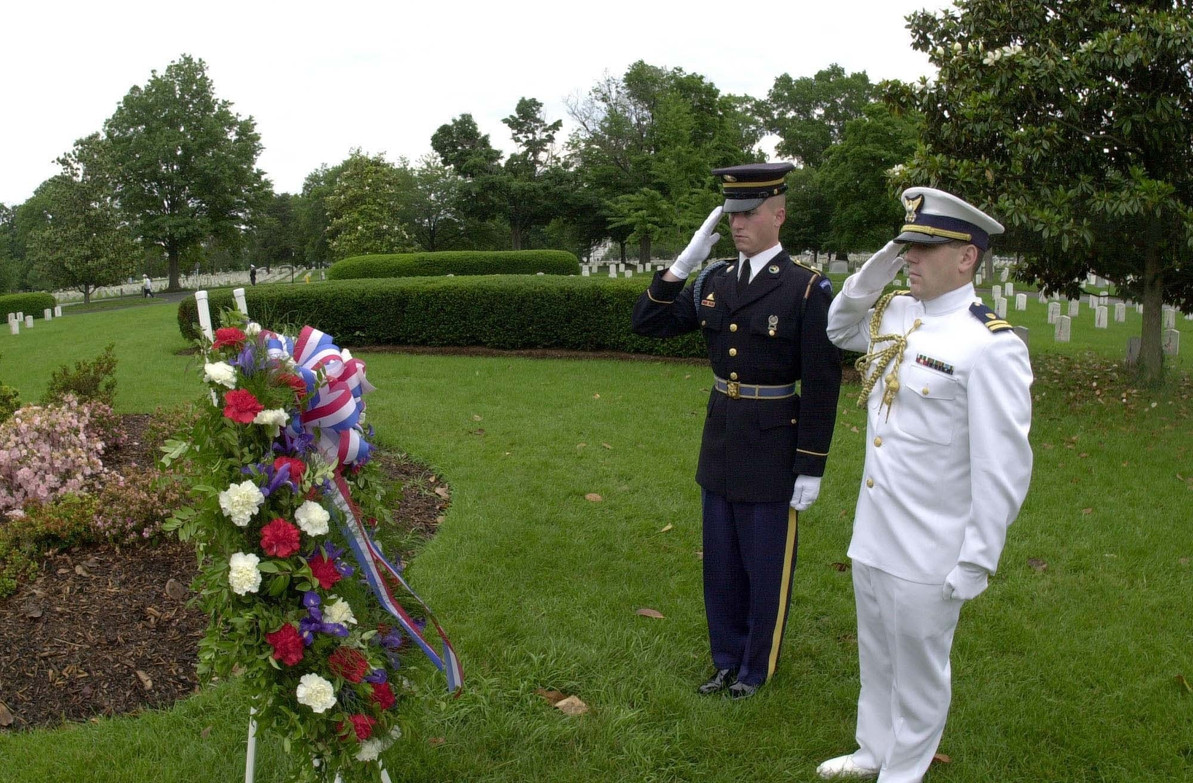
Cover photograph: May 28, 2001: A Coast Guard officer and a tomb guard salute after laying a wreath at a memorial site at Arlington National Cemetery. U.S. Coast Guard photo by Telfair Brown, DVIDS 1081964.
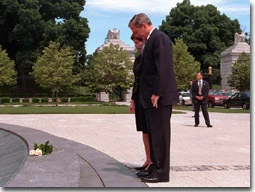
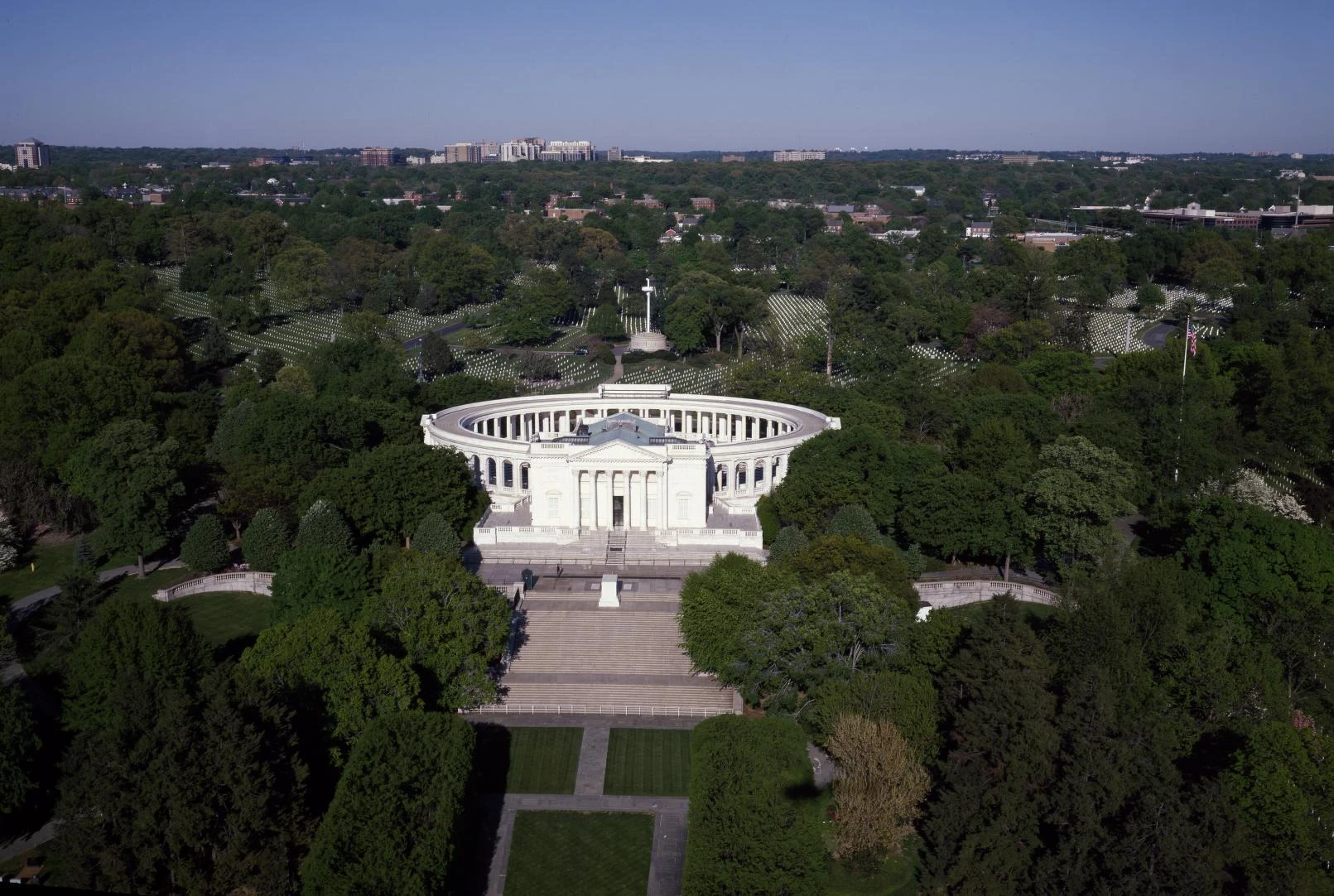
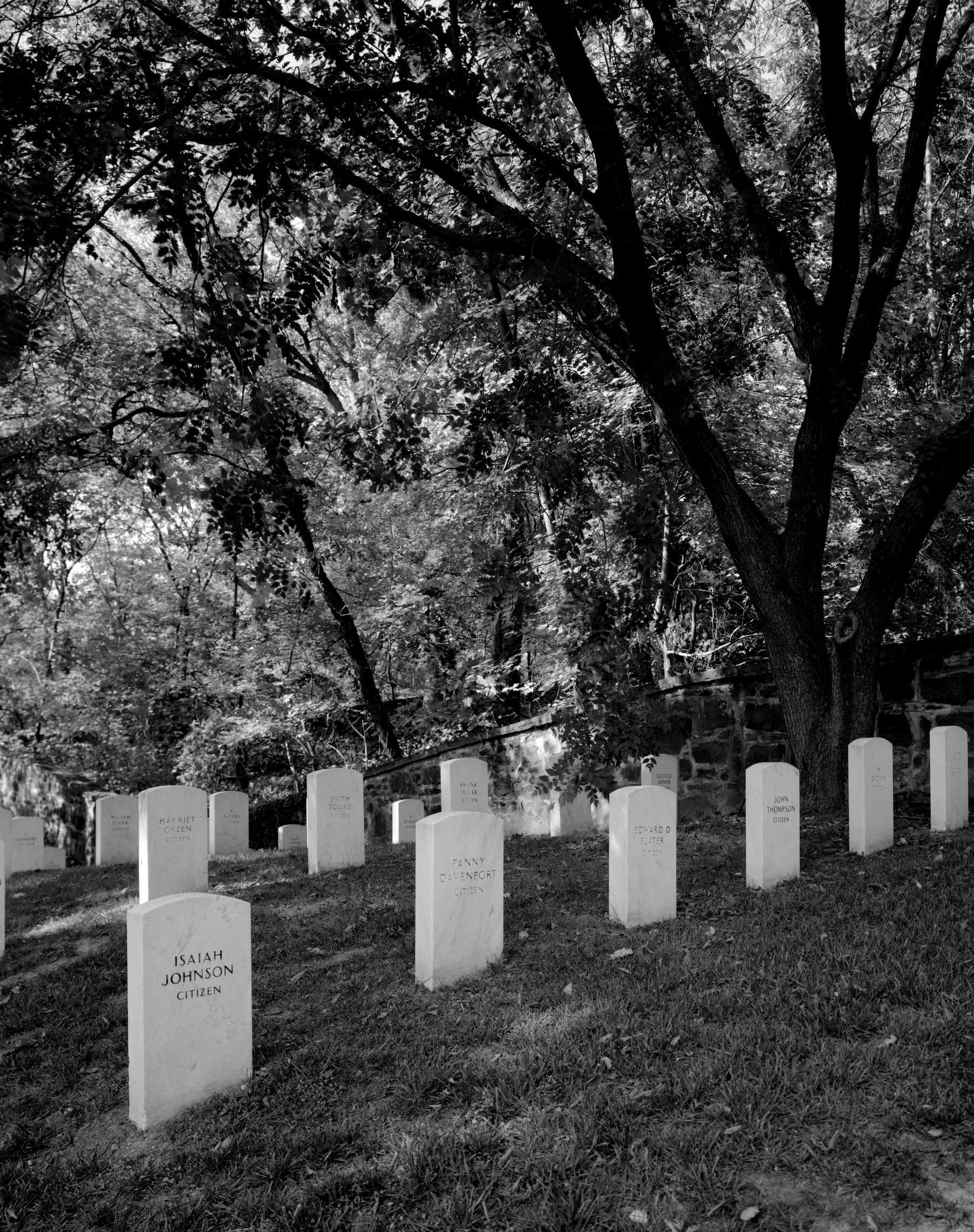
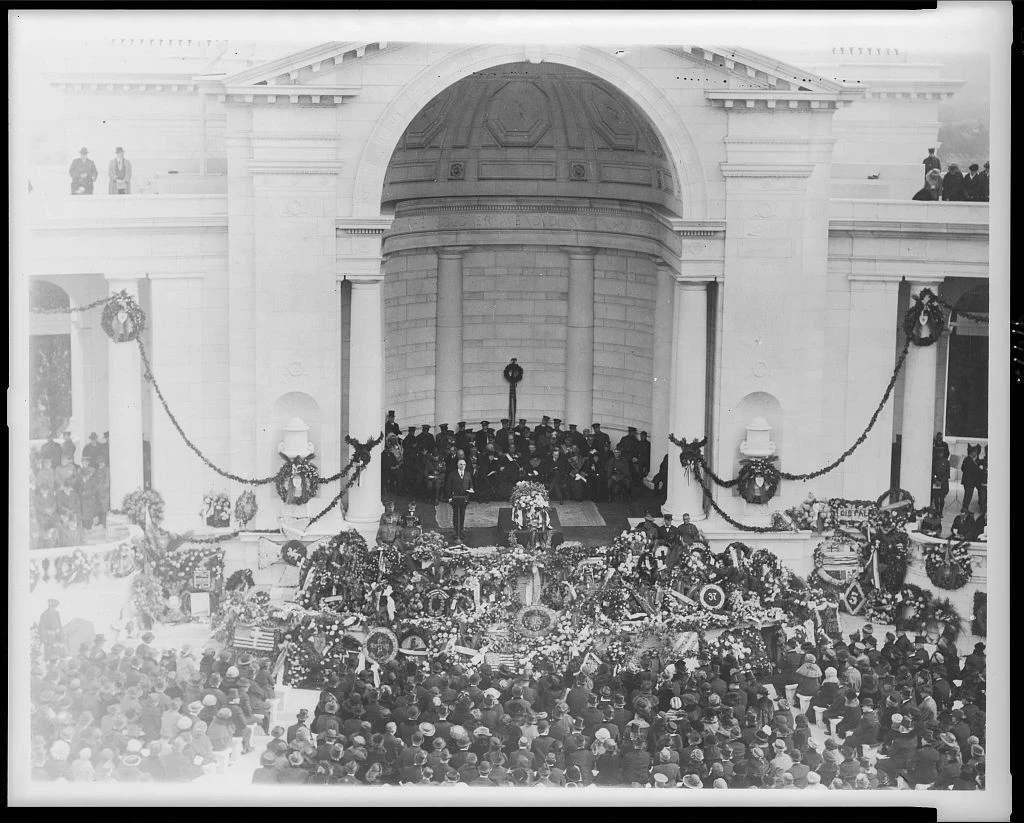
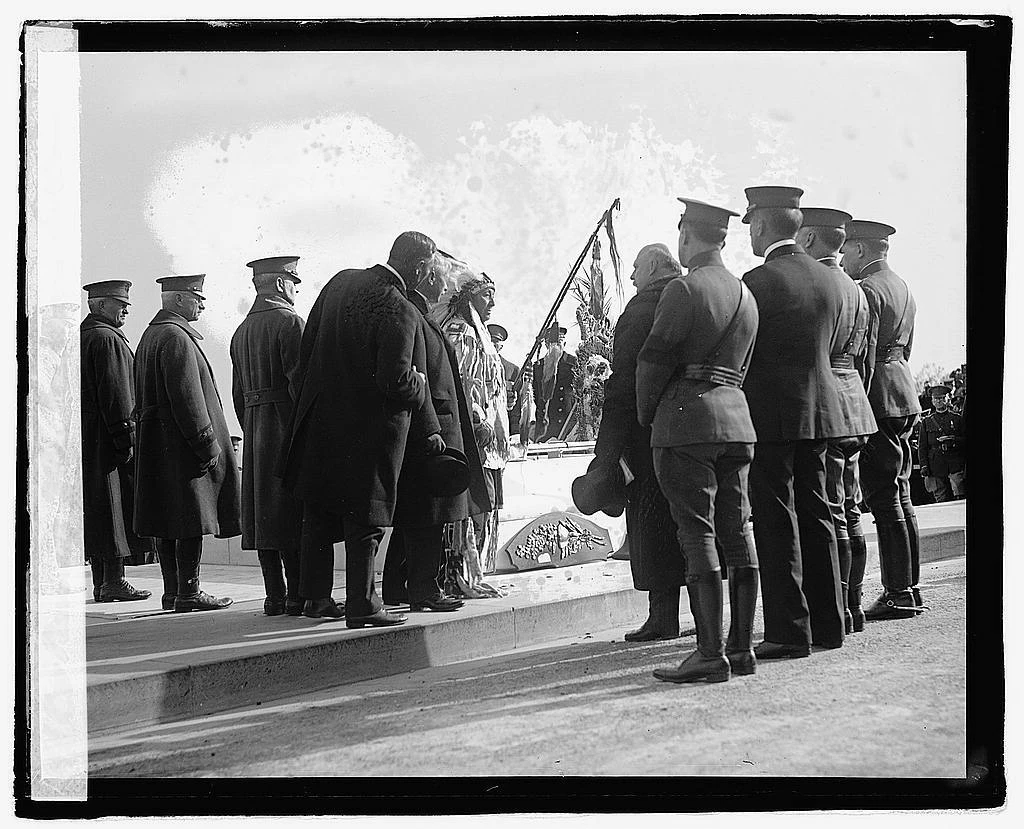
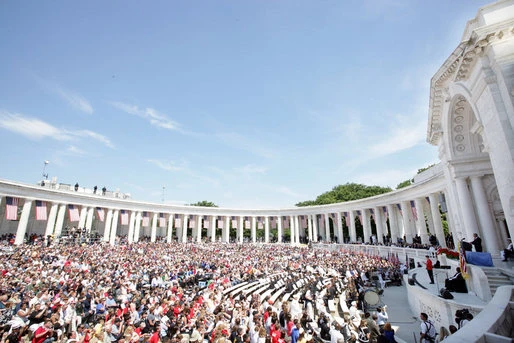
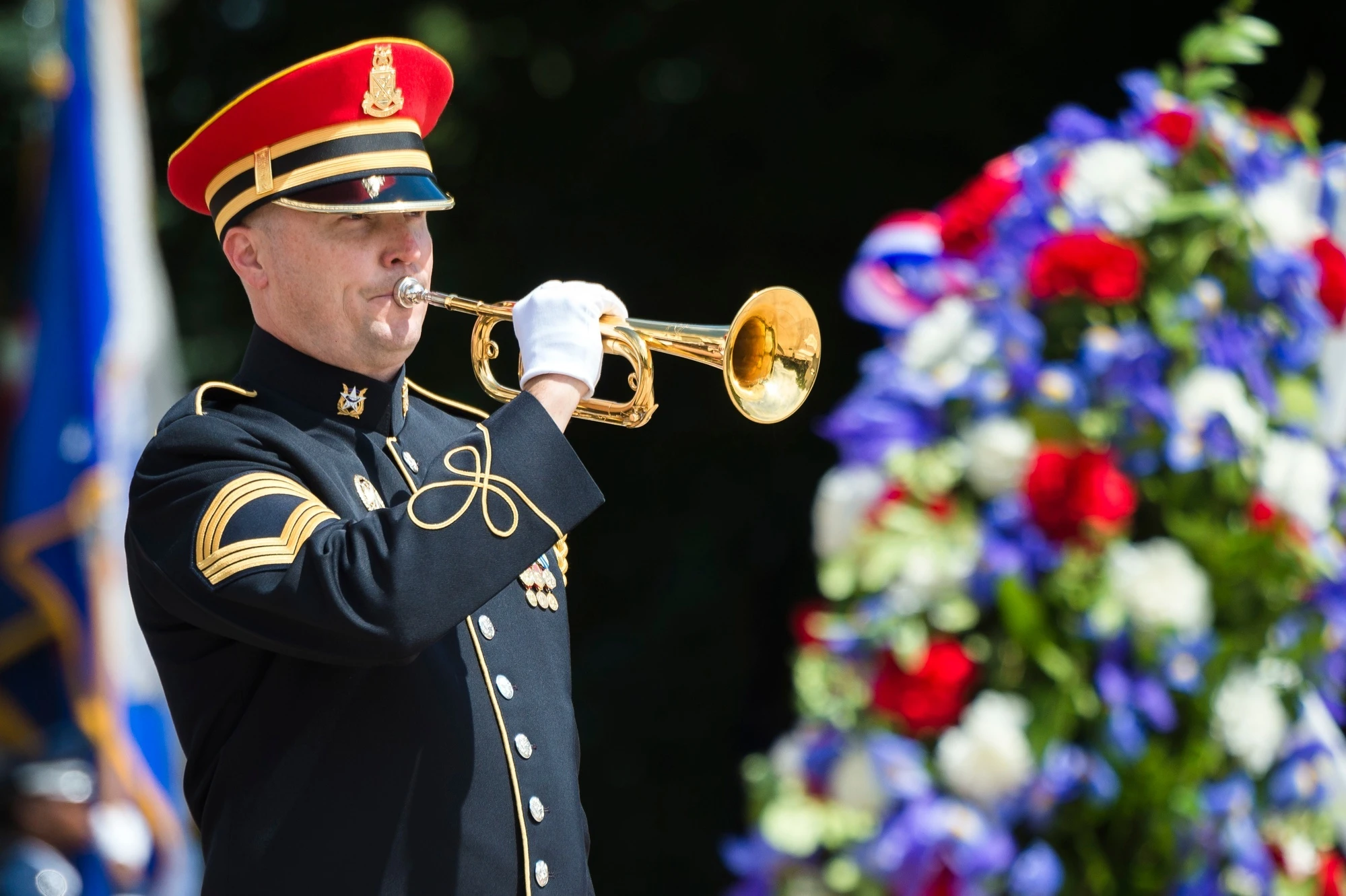
The images below show the May 28, 2001 observance and separately dated Arlington context. They do not show the proclamation signing or establish flag height or timing in 2001.
The appearance of U.S. Department of War (DoW) visual information does not imply or constitute DoW endorsement.
Related historical sources
For other individual historical observances, explore the FORTISVEX presidential half-staff archive or compare Obama’s 2016 Memorial Day proclamation. Compare the exact dates and instructions in each document rather than applying this 2001 notice to another year.
Recent Posts
-
National Pearl Harbor Remembrance Day, 2001: George W. Bush Proclamation 7511
On December 5, 2001, President George W. Bush signed Proclamation 7511 for National Pearl Harbor Rem …Nov 27th 2026 -

Peace Officers Memorial Day and Police Week, 2016: Obama Proclamation 9448
On May 13, 2016, President Barack Obama signed Proclamation 9448. It designated Sunday, May 15 as Pe …Nov 27th 2026 -
National Pearl Harbor Remembrance Day, 2023: Biden Proclamation 10683
On December 6, 2023, President Joe Biden signed Proclamation 10683 for the 82nd anniversary of the a …Nov 26th 2026