
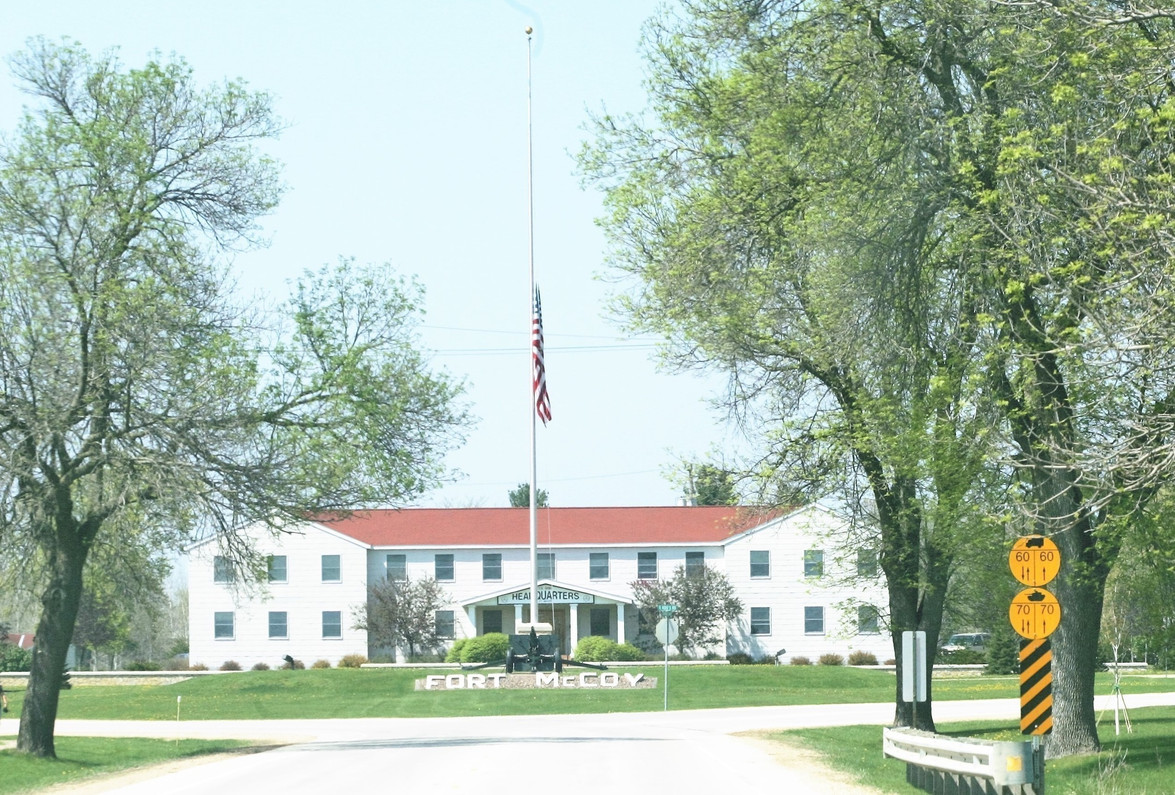
Peace Officers Memorial Day 2001: President Bush’s Proclamation and Half-Staff Observance
Historical notice: this observance has ended. This is an independent FORTISVEX historical resource about President George W. Bush’s 2001 proclamation.
Peace Officers Memorial Day and Police Week share a purpose, but they are not the same span of time. In Proclamation 7435, President George W. Bush designated May 15, 2001, as Peace Officers Memorial Day and May 13–19 as Police Week. The proclamation’s half-staff language applies to May 15. It does not extend that observance across the entire week.
Cover photograph: A later observance at Fort McCoy, Wisconsin, on May 15, 2018. The U.S. flag is at half-staff for National Peace Officers Memorial Day. U.S. Army photo by Scott T. Sturkol, DVIDS 4440504. This is not a photograph from 2001.
Read the official document
Open or download Proclamation 7435 from GovInfo (two-page PDF). Its formal date is May 8, 2001; the Federal Register issue containing it is dated May 11, 2001.
What the proclamation asked people to do
Bush called on people throughout the United States to observe the day with appropriate ceremonies and activities. He called upon governors of the United States and Puerto Rico, together with appropriate officials of all units of government, to direct half-staff display on Peace Officers Memorial Day. He separately encouraged Americans to display the flag at half-staff at home that day.
The proclamation does not give a starting clock hour, an ending clock hour or a time zone. Its language should not be read as a direction to lower flags for all seven days of Police Week. Nor is this archived 2001 document a current half-staff notice.
Why the day and the week are observed together
The proclamation describes Police Week as an opportunity to recognize the dedication of law enforcement officers, with Peace Officers Memorial Day paying particular tribute to officers who died while performing their duties. Its discussion moves from daily public service to the losses borne by families and communities.
Bush cited a congressional joint resolution approved October 1, 1962, establishing the annual designation of May 15 and the week in which it falls. He also cited the law directing half-staff display on Peace Officers Memorial Day. Those references explain the observance’s recurring foundation; this particular proclamation identifies the dates for 2001.
The document reports that 150 law enforcement officers died in the line of duty in 2000, attributing that figure to the National Law Enforcement Officers Memorial Fund. That is the figure and attribution in this historical proclamation, not a current statistical total.
The May 15, 2001 memorial service
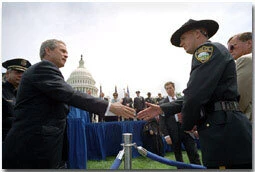
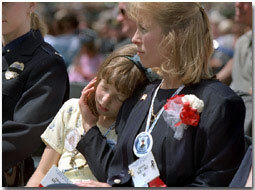
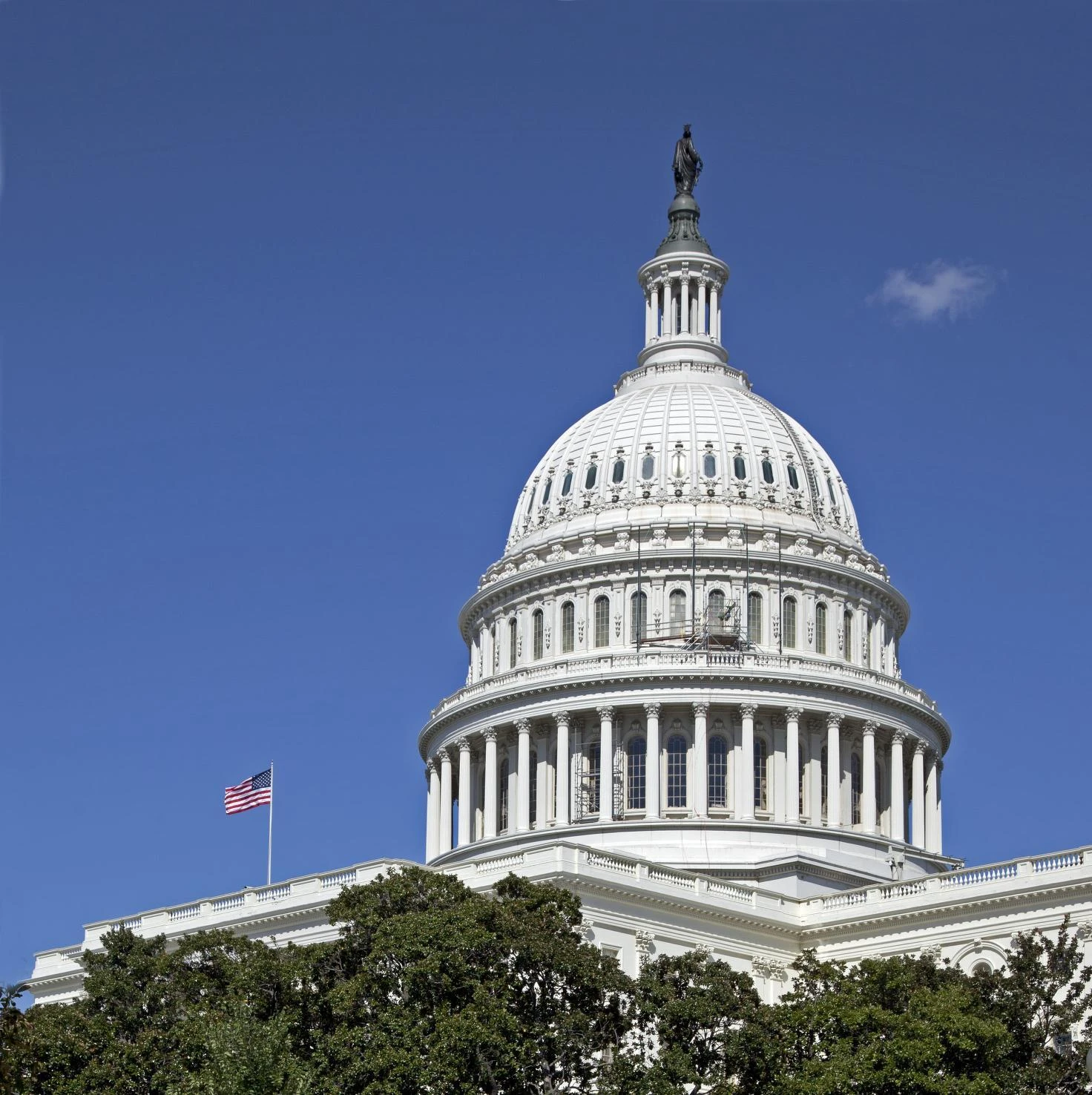
President Bush spoke at the U.S. Capitol on the day of the observance. These two White House photographs show the ceremony, not the May 8 signing.
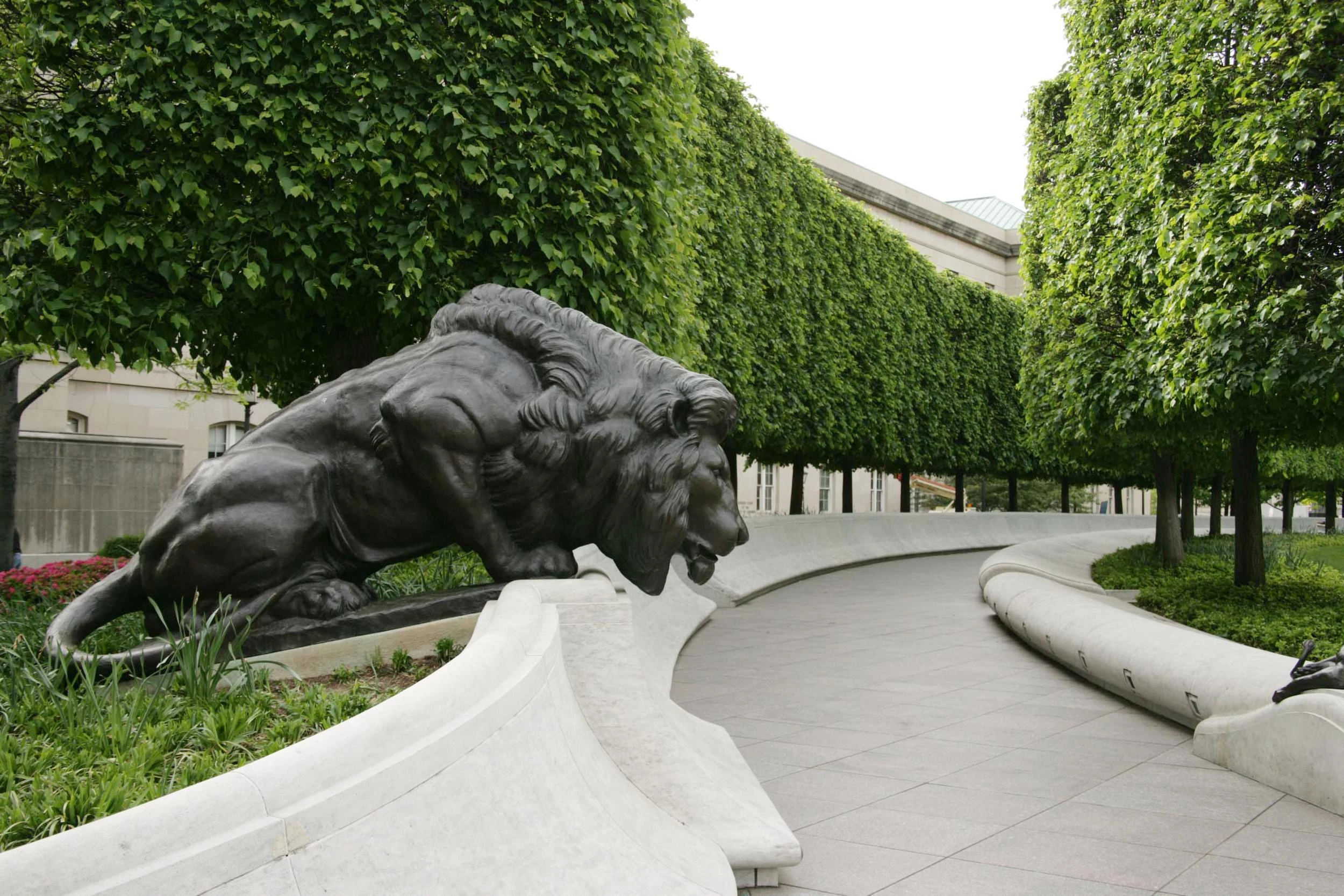
The places connected with the service
Full text of Proclamation 7435
Peace Officers Memorial Day and Police Week, 2001
By the President of the United States of America
A Proclamation
Each day, law enforcement officers encounter grave risk to protect the rights and freedoms we enjoy as Americans. Their commitment and sacrifice make our streets safer, our neighborhoods stronger, and our families more secure. Police Week provides an opportunity to recognize the selfless dedication of the brave men and women who devote their lives to protecting and serving our communities.
This Nation owes a considerable debt of gratitude to all law enforcement officers who protect the lives and property of their fellow Americans. From patrolling our highways, to investigating crime, to protecting victims’ rights, these committed professionals make a valuable difference in our communities. We look to them to uphold the principle that no one is beyond the protection or reach of the law. These men and women, through their patriotic service and dedicated effort, have earned our gratitude and respect.
We pause during Police Week, and in particular on Peace Officers Memorial Day, to honor those officers who made the ultimate sacrifice while performing their sworn duty. I urge all Americans to use this occasion to pay tribute to these fallen heroes by recalling their devotion, celebrating their lives, and honoring their service.
Tragically, making America safer often requires great sacrifice. According to the National Law Enforcement Officers Memorial Fund, 150 law enforcement officers lost their lives in the line of duty in 2000. Although we can never repay the debt we owe these valiant officers and their families, we pay tribute to their memory by committing ourselves to being law-abiding citizens, working to lower crime in our communities, and investing time and love in our Nation’s young people.
By a joint resolution approved October 1, 1962 (76 Stat. 676), the Congress has authorized and requested the President to designate May 15 of each year as ‘‘Peace Officers Memorial Day’’ and the week in which it falls as ‘‘Police Week,’’ and, by Public Law 103-322 (36 U.S.C. 136), has directed that the flag be flown at half-staff on Peace Officers Memorial Day.
NOW, THEREFORE, I, GEORGE W. BUSH, President of the United States of America, by virtue of the authority vested in me by the Constitution and laws of the United States, do hereby proclaim May 15, 2001, as Peace Officers Memorial Day and May 13 through May 19, 2001, as Police Week. I call upon all the people of the United States to observe this day with appropriate ceremonies and activities. I also call upon Governors of the United States and the Commonwealth of Puerto Rico, as well as appropriate officials of all units of government, to direct that the flag be flown at half-staff on Peace Officers Memorial Day. I also encourage all Americans to display the flag at half-staff from their homes on that day.
IN WITNESS WHEREOF, I have hereunto set my hand this eighth day of May, in the year of our Lord two thousand one, and of the Independence of the United States of America the two hundred and twenty-fifth.
The official published document includes a reproduction of President George W. Bush’s signature on its second page.
How later observances remembered fallen officers
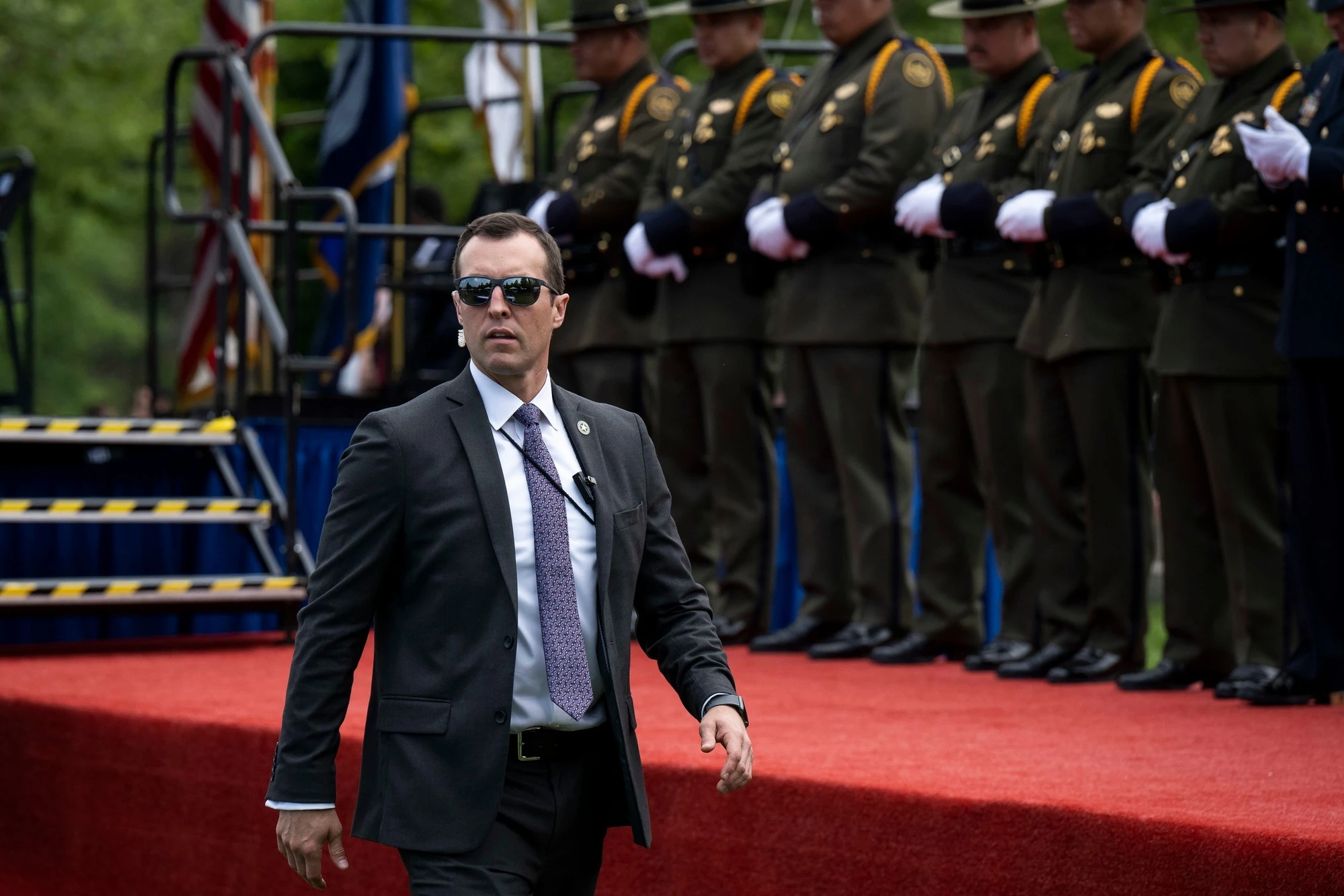
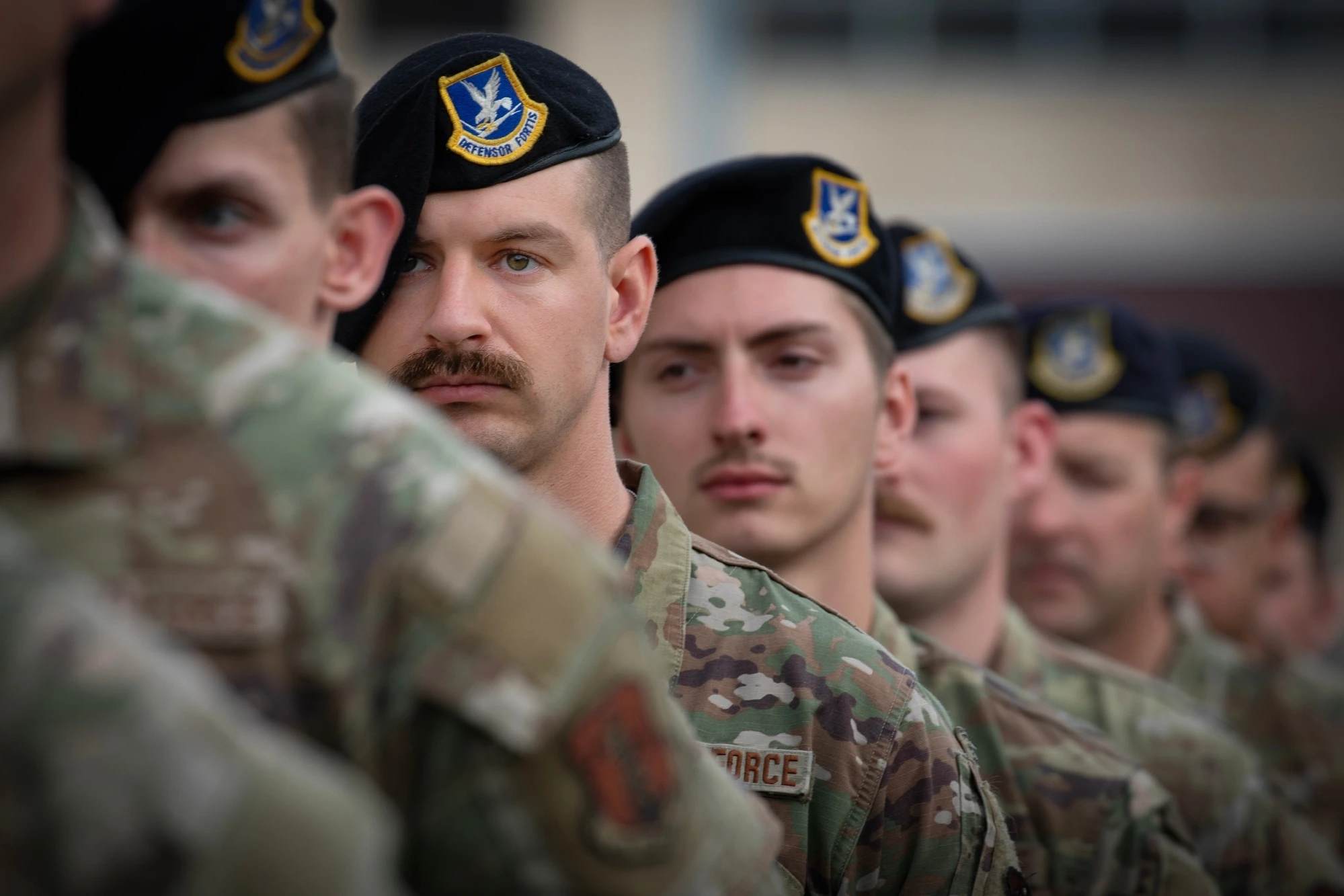
These photographs show separate National Police Week observances. They do not depict the 2001 ceremony or determine when the 2001 proclamation asked that flags be lowered.

The appearance of U.S. Department of War (DoW) visual information does not imply or constitute DoW endorsement.
Continue exploring flag observances
The FORTISVEX presidential half-staff archive brings individual historical notices together so readers can distinguish their dates and circumstances. Read each notice’s actual scope before applying it to a particular occasion.
For display mechanics, see how to fly your flag at half-staff. The guide to recurring half-staff observances separates calendar occasions from orders for a particular year.
The archived White House proclamation release and the official May 15 ceremony remarks distinguish the release from the observance.
Recent Posts
-
National Pearl Harbor Remembrance Day, 2001: George W. Bush Proclamation 7511
On December 5, 2001, President George W. Bush signed Proclamation 7511 for National Pearl Harbor Rem …Nov 27th 2026 -
Peace Officers Memorial Day and Police Week, 2016: Obama Proclamation 9448
On May 13, 2016, President Barack Obama signed Proclamation 9448. It designated Sunday, May 15 as Pe …Nov 27th 2026 -
National Pearl Harbor Remembrance Day, 2023: Biden Proclamation 10683
On December 6, 2023, President Joe Biden signed Proclamation 10683 for the 82nd anniversary of the a …Nov 26th 2026