
Bloomington, Idaho: Family Records in Town, a Distinctive Landscape Beyond
Bloomington offers two different starting points for learning about a place: records kept by a community and the landscape around it. The city's history pages point toward family research and a photograph of a former chapel. A Forest Service account explains the unusual plant habitat at nearby Bloomington Lake. These subjects belong together as ways to explore the area, but they should not be collapsed into one story: the lake is in the national forest, not proof of the town's founding.
Start with the people in the records
A city notice identifies a Family Legacy Room at the Bloomington City Office for researching local ancestors. The notice establishes a local research resource. It does not provide a current opening schedule or guarantee that a particular family is represented. Before arranging a visit, use the city's current information to check access.
For a family-history project, bring a focused question: a person's residence, a building's use or the date of a move. Keep names, approximate dates and what is already known together. A specific question makes it easier to distinguish an identification supported by a record from a resemblance or a family recollection.
An old chapel photograph with an unfinished date
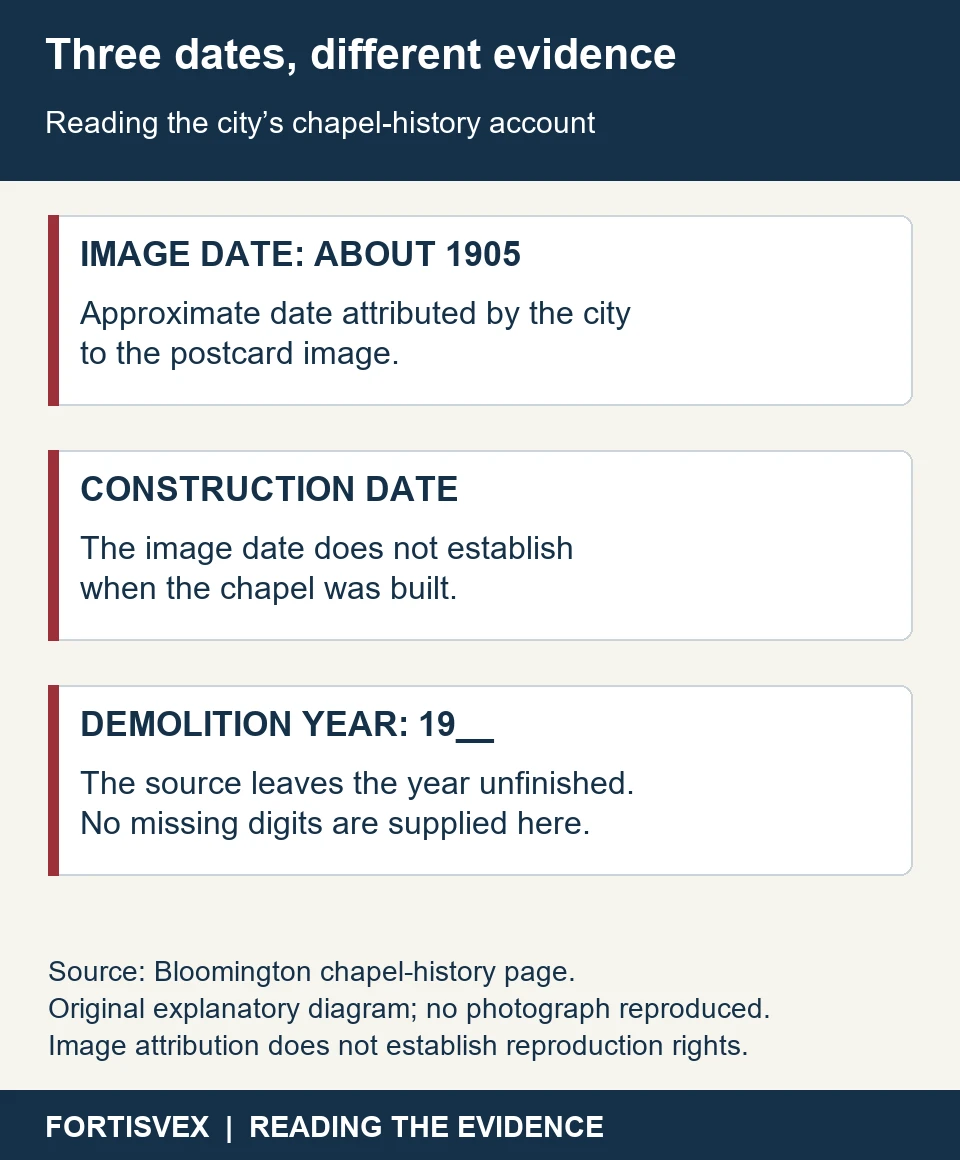
The city's chapel-history page describes a postcard image of the early ward chapel as dating to about 1905 and associates it with the Michael L. Jex archives. Its text leaves the demolition year unfinished. That gap matters: the page supports an approximate image date, not a precise date for the building's removal.
A caption should preserve those limits. The date of a photograph, a building's construction and its demolition are three separate facts. None can safely substitute for the others. An approximate image date can be informative without pretending to settle the building's whole chronology.
Read the lake through its habitat
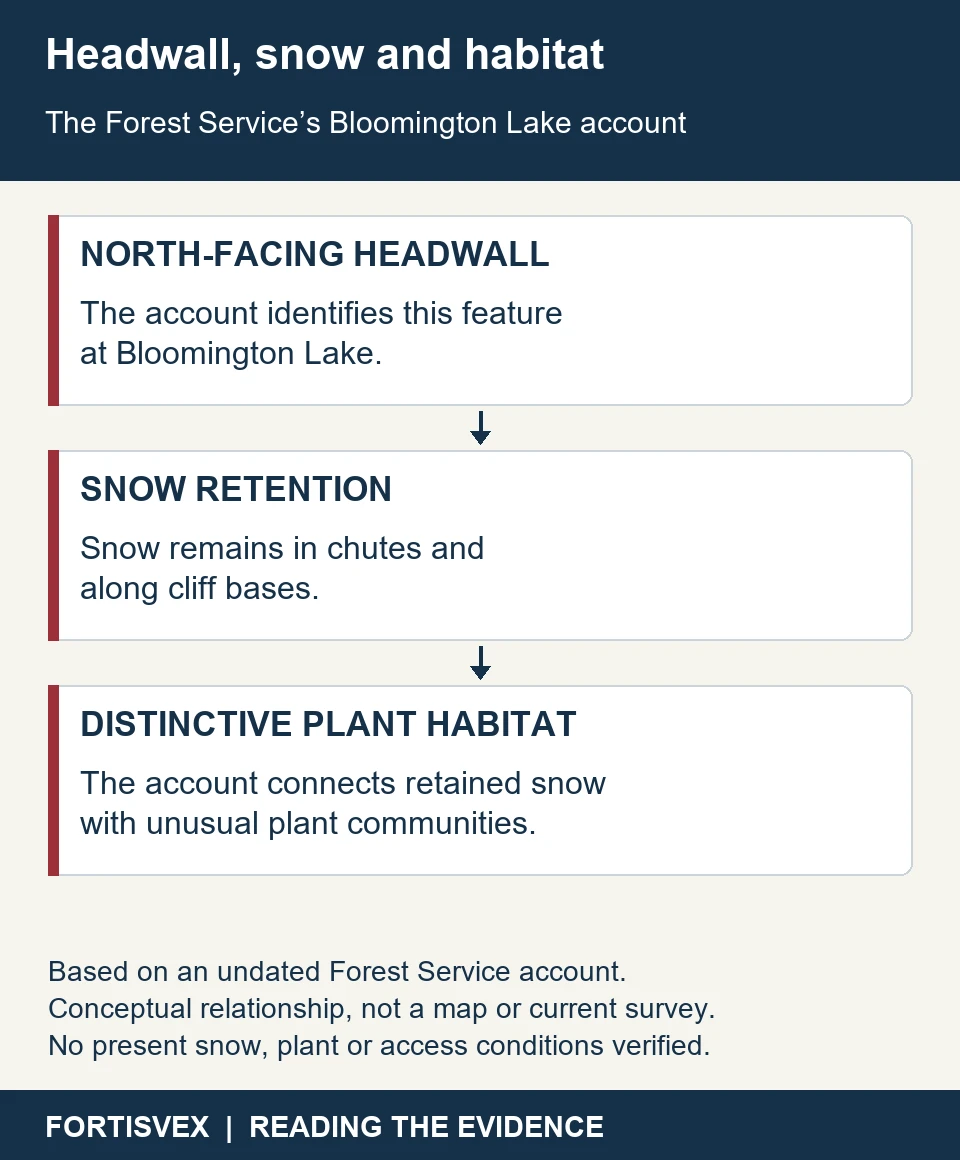
The Forest Service's Bloomington Lake account identifies a north-facing headwall that retains snow in chutes and along cliff bases. It connects those conditions with unusual plant communities, including green spleenwort and Rydberg's musineon. This is a more informative way to look at the setting than treating the lake only as a scenic stop.
The agency places the lake near Bloomington in the Caribou-Targhee National Forest and describes the area as managed for distinctive natural-resource values. Its viewing guidance recommends observing the headwall plants from a distance. The municipal community and the forest destination require different sources for practical arrangements: consult the city for city facilities and the Forest Service for the forest route and conditions.
Share the research without blurring the evidence
For a reunion or community exhibit, group family material by source: photographs, documents and recollections. Attribute each item and obtain permission before reproducing it. If a contemporary Idaho flag belongs in the display, compare the FORTISVEX Idaho state flag collection and label the flag separately from historical material. Its presence should not imply that it appeared in the chapel photograph or that the city endorses the display.
For that contemporary display, check the 3-by-5-foot Idaho flag against your available space and mounting arrangement. If the reunion also calls for a U.S. flag, browse American flags by material before choosing the individual product. Keep these modern display choices separate from the dates and provenance of the family records.
Sources reviewed November 1, 2026. No current road opening, room availability or photo-reuse permission is implied.
Recent Posts
-
Bloomington, Idaho: Family Records in Town, a Distinctive Landscape Beyond
Bloomington offers two different starting points for learning about a place: records kept by a comm …Nov 4th 2026 -
New Meadows, Idaho: The Depot That Kept Finding a Purpose
A railway depot can explain more than a train route. In New Meadows, the Pacific & Idaho Northern de …Nov 4th 2026 -
Bellevue, Idaho: A Fire Cart, a Town Hall and a Territorial Charter
The old town hall at 206 Main Street offers a compact way into Bellevue's history. It began as a pl …Nov 4th 2026