
American Falls: The Idaho Town That Moved for a Reservoir
American Falls moved before the reservoir covered its original townsite. County history describes an eighteen-month relocation in 1925 and 1926; the state archives preserve records of both moving and demolition. Together, they show how a community continued while its physical setting changed.
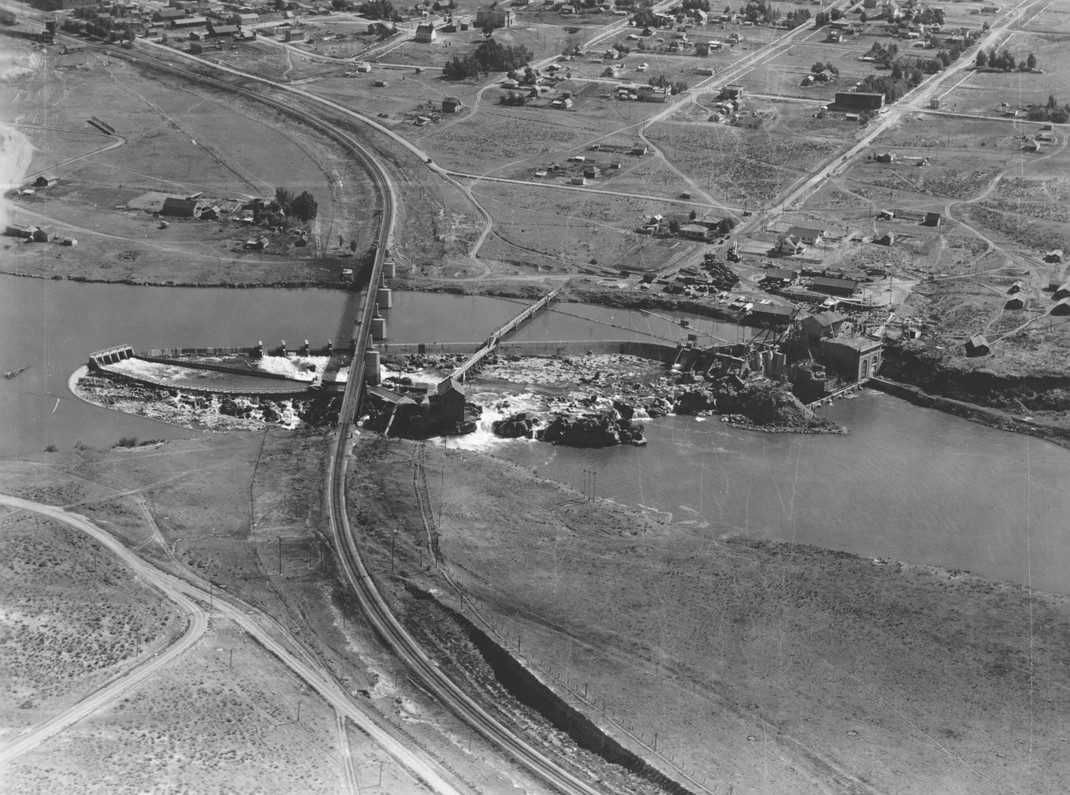
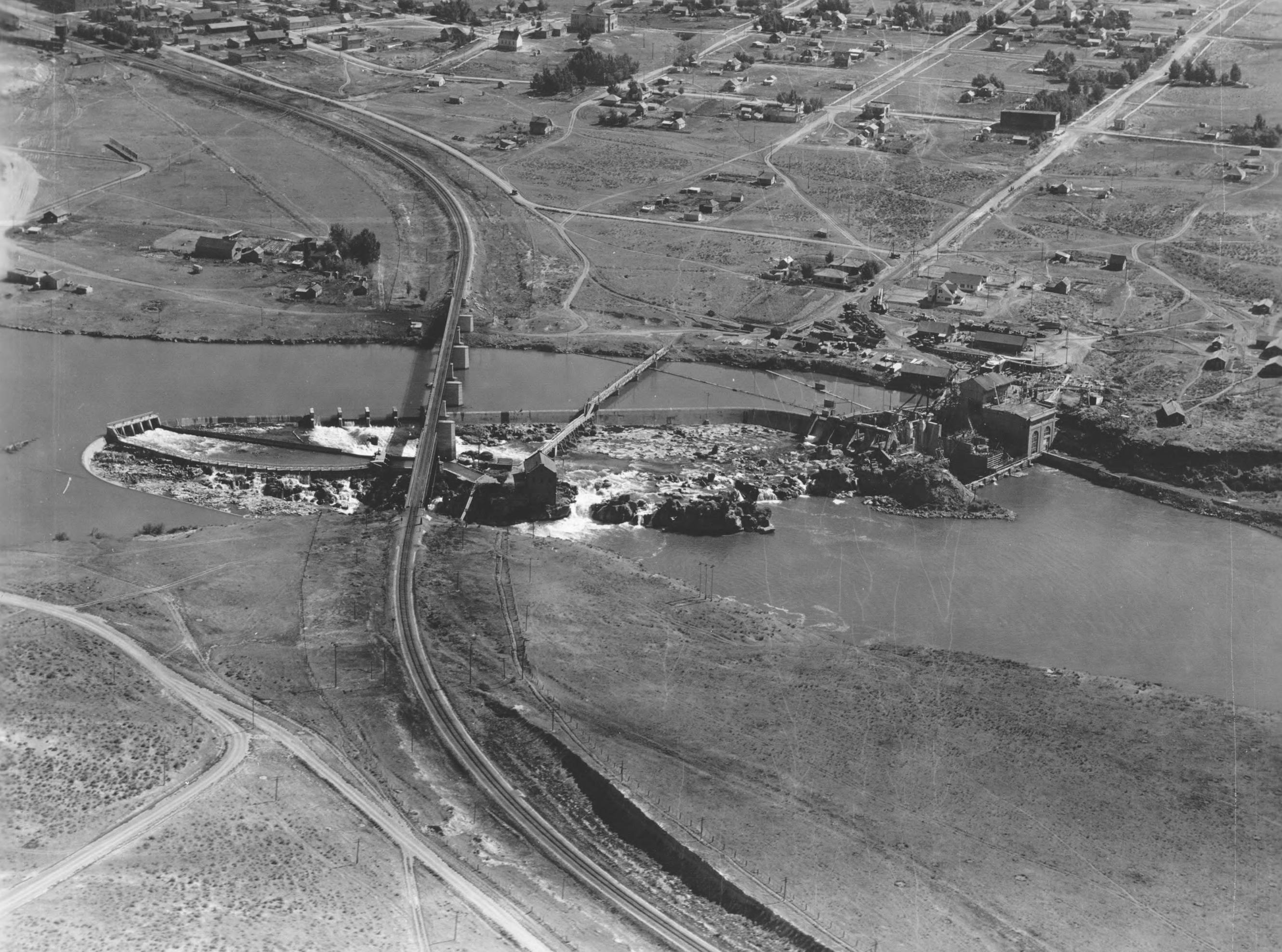
American Falls dam site looking southeast in 1923. Photograph credited to Capt. A. W. Stevens by University of Idaho Library Digital Collections. This view predates the 1925–1926 relocation and the dam completed in 1927. Open full-resolution image. Source and rights.
The move before the water
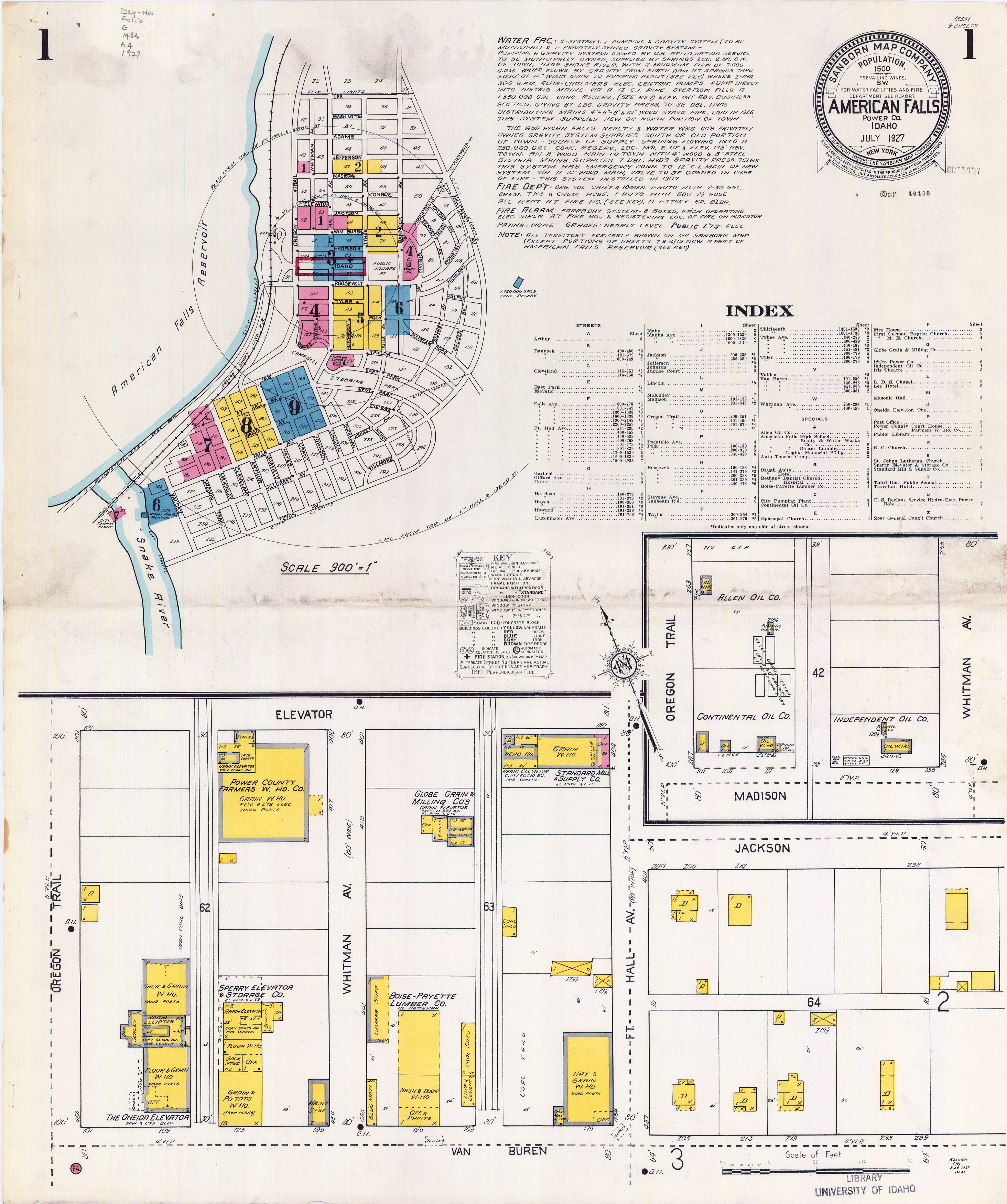
Power County's historical account dates the original town to 1888 and places it in the area later occupied by the reservoir. It describes the relocation as an eighteen-month undertaking in 1925 and 1926, using steam engines and gasoline tractors to move buildings. Its list includes homes, businesses, hotels, churches and a school: the working parts of a community, not simply a row of empty houses.
The county dates completion of the dam to 1927. Keeping the relocation period separate from that completion date explains why photographs of moving buildings can predate the finished reservoir. Power County itself had been established in 1913, with American Falls as its seat; the community's governmental identity did not begin with the relocation.
What the state archive preserves
The Idaho State Archives catalog record for a 1920 view of American Falls belongs to the Bureau of Reclamation photographs of Southern Idaho dam projects, collection P1977-127. The collection description identifies 112 black-and-white photographic negative copies and says much of the material documents relocation and demolition connected with the dam. It also identifies 1927 as the year the original townsite was inundated.
The 1920 item offers a research starting point for the town before the move. Its catalog description is not the same as an inspected photograph: it supplies the title, date and collection context, but cannot establish which individual buildings are visible without examining the image. For a family or property history, pair the catalog identifier with a specific address or building name before drawing conclusions.
Remembering a community, not just an engineering project
The distinction between relocation and demolition matters when tracing a particular building. Match its name or address to a dated record before assuming it survived at the new site. The archive’s collection identifier provides a concrete starting point for that investigation.
For an American Falls heritage event, a 3-by-5-foot Idaho state flag from FORTISVEX can mark the present-day state setting. Keep historical photographs and relocation records labeled separately from modern display materials.
Keep a local relocation timeline separate from state admission: the state birthdays reference supplies that different statewide context. For a present-day heritage display, compare the Idaho flag collection when choosing a display size.
Recent Posts
-
New York Half-Staff Notice: Ron Canestrari, November 14, 2026
New York Governor Kathy Hochul has directed flags on all State government buildings to be lowered to …Nov 13th 2026 -
Maryland Flag Half-Staff for Dennis C. McCoy on November 12, 2026
The Maryland flag is to be flown at half-staff from sunrise to sunset on Thursday, November 12, 2026 …Nov 12th 2026 -
Cord-and-Tassel Rings: Wood or Aluminum Pole, Same Outside Diameter
Two cord-and-tassel rings can share the same listed outside diameter without being the same replacem …Nov 9th 2026