
FORTISVEX
Maine 10x15 Feet Nylon State Flag Made in USA

- MPN:
- FPAMSTMENYL10x15D
- Availability:
- Free Shipping*
- Shipping:
- Calculated at Checkout





Description
A 10x15 foot flag is a large installation flag. A hundred and fifty square feet reads from a considerable distance, which is the reason to fly it, and it needs a flagpole and hardware built to match.
This is the Maine state flag at 10x15 Feet (150 square feet) in nylon, made in the United States and finished with a sewn rope and plated steel thimbles.
Built to the Maine flag specification
The Maine flag is set out in Maine Revised Statutes, Title 1, Section 206. It is the state coat of arms on a blue field.
Adopted February 23, 1909.
Maine says it in the statute itself. Title 1, Section 206 gives a fly of five feet six inches and four feet four inches on the staff with knotted yellow silk fringe, and then directs that a flag made to that description be kept in the office of the Adjutant General as a model. The law is describing one reference flag, not every flag sold.
This flag reproduces the design faithfully, built to the standard outdoor sizes used across the industry and bought by the states themselves. The colors, the seal and the emblems are the part that has to be right on an outdoor flag, and they are right here.
The law that defines it, in its own words
Maine Revised Statutes, Title 1, Section 206, State flag reads:
The flag to be known as the official flag of the State shall be of blue, of the same color as the blue field in the flag of the United States, and of the following dimensions and designs; to wit, the length or height of the staff to be 9 feet, including brass spearhead and ferrule; the fly of said flag to be 5 feet 6 inches, and to be 4 feet 4 inches on the staff; in the center of the flag there shall be embroidered in silk on both sides of the flag the coat of arms of the State, in proportionate size; the edges to be trimmed with knotted fringe of yellow silk, 2 1/2 inches wide; a cord, with tassels, to be attached to the staff at the spearhead, to be 8 feet 6 inches long and composed of white and blue silk strands. A flag made in accordance with the description given in this section shall be kept in the office of the Adjutant General as a model.
This is the operative text. A 2023 amendment to a pine tree design was contingent on a referendum, and voters rejected it as Question 5 on November 5, 2024, so the coat of arms flag remains the law.
You do not have to take our word for any of that. Read Maine Revised Statutes in full at the Maine Legislature, and check what we sell against it.
It is the real flag we produce, not a simplified version.
What is on it and what it means
The arms carry a farmer, a seaman, a moose, a pine tree, the North Star and the motto Dirigo, meaning I Lead.
What most listings get wrong
The buff Pine Tree flag you see on merchandise everywhere is not the official state flag. A referendum on November 5, 2024, Question 5, proposed restoring a version of it and failed, 55.71 percent against to 44.29 percent for. The 1909 coat of arms design remains the law. Maine also has a separate merchant and marine ensign from 1939, which is a third distinct thing.
Where the Maine flag flies
The widely publicized Flagpole of Freedom Park in Columbia Falls, a proposed one thousand four hundred and sixty one foot pole with a proposed three hundred and sixty by two hundred and eight foot flag, is an unbuilt and stalled proposal halted by a local moratorium.
Fly it on Maine’s birthday
Maine became the 23rd state on March 15, 1820. Under the United States Flag Code as amended July 7, 1976, a state flag flown on the state’s birthday takes its place beneath the United States flag, and that day is the one date every year the Maine flag has an official reason to go up.
Order it ahead of the date and it is ready to fly that day. Every state’s birthday is listed on our state birthdays page.
Nylon or polyester in Maine
Nylon inland. Polyester on the rugged coast at Portland for salt, wind and freeze cycling.
At a hundred and fifty square feet, on the exposed sites above, nylon is not a serious option. Confirm the flagpole and truck rating before ordering either material.
You are looking at the nylon here, the right pick for the sheltered and moderate wind sites named above, for any house bracket, and for anywhere the flag gets brought in during storms. Two things make that case. It is light enough to move on the breeze most yards actually get rather than hang limp, and it dries fast, which keeps mildew away in a humid climate. What it trades away is ultraviolet durability — nylon’s amide bonds break down under ultraviolet light, losing strength and color faster than polyester, and it loses roughly a tenth of its strength while wet. For one of the exposed sites named above, the polyester version is the better fit.
There is one more factor, and most people only discover it after buying the wrong material once: a nylon flag moves on days a polyester flag stays limp. If it matters to you that the flag is actually flying on a still morning, a holiday, at a funeral, at a ceremony, that favors nylon even where polyester would outlast it. A flag hanging motionless has failed at its job too.
The benchmark institutions generally lean on comes from the American Legion: the federal government's own expectation is about ninety days for a daily sunrise-to-sunset flag, and roughly a quarter of that flying around the clock. Retailers report three to six months for nylon flown daily, four to eight months for polyester, and one to three years for occasional flying. Treat those as working estimates rather than a warranty, since exposure can shift them a great deal.
How the 10x15 Feet is built
Six rows at the fly end, zig zag stitched corners: at this area the wave traveling out to the tip moves fast enough that corner seams are the first place wind tests the flag.
The math comes to 150 square feet of nylon at roughly two ounces a square yard. In a thirty mile an hour wind, the fly end moves faster than the wind that is driving it, since the wave headed for the tip speeds up as it travels — which explains why the tip wears out first and why fly-end stitching count is worth checking on any listing.
This size needs a plan in place before delivery: two coordinated people, a calm day, and the halyard already sorted for a hundred and fifty square feet of flag.
Each lock stitch knots into the one beside it, so a broken thread stays broken right where it snapped instead of unraveling the whole seam. 6 rows is not 6 times the strength — it is 5 backups. Two plated steel thimbles finish a nylon rope sewn the length of the heading. At a hundred and fifty square feet, a grommet has no chance of holding.
This flag is commercial grade nylon, light enough to move in a gentle breeze, and it sheds water instead of soaking it up, drying fast — which matters, since a wet flag is a heavy flag that works its own seams harder. UV resistant, field tested ink is what stands between the flag and the sun, since sun is what fades a flag over time.
Why this flag is harder to make than most
Two human figures, a moose, a pine tree and a motto, all on blue. A seal-on-blue design at the expensive end of the range.
For what it is worth, the North American Vexillological Association surveyed 72 state, provincial and territorial flags in 2001 and rated them from zero to ten. The Maine flag placed 60, at 3.39 out of 10.
Will it fit my flagpole?
Fifty to sixty feet of in-ground flagpole, with truck and halyard rated for the load, is the right pairing.
Questions about the 10x15 Feet
What size flagpole for a 10x15 foot flag? Fifty to sixty feet, and the truck and halyard must be rated for a hundred and fifty square feet in a gust.
Is a 10x15 foot flag too big for my flagpole? If the flagpole was not specified for it, yes. An oversized flag damages the flagpole before it damages itself.
How is a 10x15 foot flag shipped? Rolled where possible, folded where it must be. Creases from folding relax within days of flying.
Check the flagpole before the flag
A hundred and fifty square feet can load a flagpole past what it was engineered for. Confirm the flagpole and truck rating before ordering this size — an oversized flag on an undersized pole damages the pole first, the flag second.
Specifications
- Size: 10x15 Feet
- Area: 150 square feet
- Material: 100 percent nylon
- Fly end: 6 rows of lock stitching
- Heading: heavy duty white, reinforced, 2 inch
- Finish: Rope and Thimbles
- Ink: UV resistant, field tested
- Made in the United States by FORTISVEX
Which size do I need?
Underneath both tables is a single ratio: a flag a quarter to a third the flagpole’s height. When you land between two rows, that is a real choice, not a rounding error — smaller flies more often, bigger reads further.
If you know your flagpole height, start here.
- 6 Feet house bracket: 2x3 Feet or 3x5 Feet
- 15 to 20 Feet flagpole: 3x5 Feet or 4x6 Feet
- 20 to 25 Feet flagpole: 4x6 Feet or 5x8 Feet
- 25 to 35 Feet flagpole: 5x8 Feet or 6x10 Feet
- 35 to 45 Feet flagpole: 6x10 Feet or 8x12 Feet
- 45 to 60 Feet flagpole: 8x12 Feet or 10x15 Feet
- 60 to 80 Feet flagpole: 10x15 Feet or 12x18 Feet
- 80 to 100 Feet flagpole: 12x18 Feet or 15x25 Feet
- 100 to 120 Feet flagpole: 15x25 Feet or 20x30 Feet
- 120 to 150 Feet flagpole: 20x30 Feet or 20x38 Feet
- 150 to 200 Feet flagpole: 20x38 Feet or 30x50 Feet
- 200 to 240 Feet flagpole: 30x50 Feet or 30x60 Feet
- 240 Feet and above: 30x60 Feet or 50x80 Feet, engineered to the flagpole
If you know your flag size, start here.
- 2x3 Feet: 4 to 8 Feet bracket or garden flagpole
- 3x5 Feet: 6 Feet bracket, or 15 to 20 Feet in-ground flagpole
- 4x6 Feet: 18 to 25 Feet in-ground flagpole
- 5x8 Feet: 25 to 35 Feet flagpole
- 6x10 Feet: 30 to 40 Feet flagpole
- 8x12 Feet: 40 to 50 Feet flagpole
- 10x15 Feet: 50 to 60 Feet flagpole
- 12x18 Feet: 60 to 80 Feet flagpole
- 15x25 Feet: 80 to 100 Feet flagpole
- 20x30 Feet: 100 to 120 Feet flagpole
- 20x38 Feet: 120 to 150 Feet flagpole. This is the garrison size under Executive Order 10834, at a one to one point nine ratio rather than the two to three of the commercial sizes, and it is the size flown at the White House and the Capitol
- 30x50 Feet: 150 to 200 Feet flagpole
- 30x60 Feet: 200 to 240 Feet flagpole. This is the largest standard commercial size
- 50x80 Feet: 240 Feet and above, engineered to the flagpole
The rule keeps holding above a hundred feet of flagpole, but the buying decision does not stay simple: the flag, the truck, the halyard, the foundation and the wind load now have to be specified as one engineered system, and a flag chosen without checking the flagpole rating puts the pole at risk before the flag. Some of the most recognizable flags in the country deliberately run larger than the rule, always with an engineer behind that call.
The website does not show every size we can supply. If yours is missing from the listing, the full range above is still available to order.
About the back of the flag
Hold a printed flag up to the light and the reverse side shows the design in mirror image. That is not a defect — it is how nearly every flag flown in America is made. A flag correct on both sides is a double sided flag, two flags sewn together around a liner, and it runs roughly double the price and double the weight. Unless a state’s own statute calls for it, single sided is standard and it is the right call.
Flying it with the United States flag
Section 7 of Title 4, the United States Flag Code, addresses this directly: the United States flag is never outranked in position, staying above every other flag and to the right at the same level, which reads as the viewer’s left. Same-height flagpoles put the United States flag on the viewer’s left with matching flag sizes; different heights put it on the taller pole; one flagpole with two flags puts it at the top. There is no legal penalty for civilians under the Flag Code, but it is what every institution follows anyway.
Buy two and they both last longer
Two flags, alternated month to month, beat three flags flown until they fall apart, because the material recovers on its days off and the fly end is not worked in the same place every day. Severe weather is the one time to take it down; a real windstorm can cost more in one night than six ordinary months of flying. Fraying starts at the fly end, not the middle, and a few minutes with a needle there adds a season.
For cities, counties, schools and agencies
Cities, school districts, fire and police departments, courthouses and state agencies buy state flags from us as a matter of routine. The tax exempt page is where a tax exempt account is set up; the contact page is where quantity orders, replacement schedules, and sizes not shown here get handled.
Why buy it from us
We are a small company based in America, and we keep in stock what we sell. Every flag is made domestically, printed in UV resistant ink, and finished to the construction described above rather than scaled down to a price. Selling a flag that lasts matters more to us than selling three that don’t. Orders over twenty five dollars ship free.
Videos
View AllClose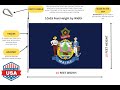
Additional Information
Material Type: |
Commercial Nylon |
Flag Size: |
10x15 Feet |
Made in: |
USA |
Finish: |
D-Rings |
Related Products
Related Products

Texas 10x15 Feet Nylon State Flag Made in USA
FORTISVEX

Wyoming 10x15 Feet Nylon State Flag Made in USA
FORTISVEX


Nevada 10x15 Feet Nylon State Flag Made in USA
FORTISVEX


Colorado 10x15 Feet Nylon State Flag Made in USA
FORTISVEX


Alaska 10x15 Feet Nylon State Flag Made in USA
FORTISVEX