

Richfield, Idaho: Irrigation and the Buildings Made of Basalt
Richfield, Idaho, grew from an irrigation project into a town where local basalt went into shops, farm buildings and even the pump house. The former Lemmon Hardware Store and the James H. Lane barn show how builders used the same material for very different jobs.
Cover photograph: USDA National Agriculture Imagery Program, via USGS The National Map; Public domain.
Why was Richfield first called Alberta?
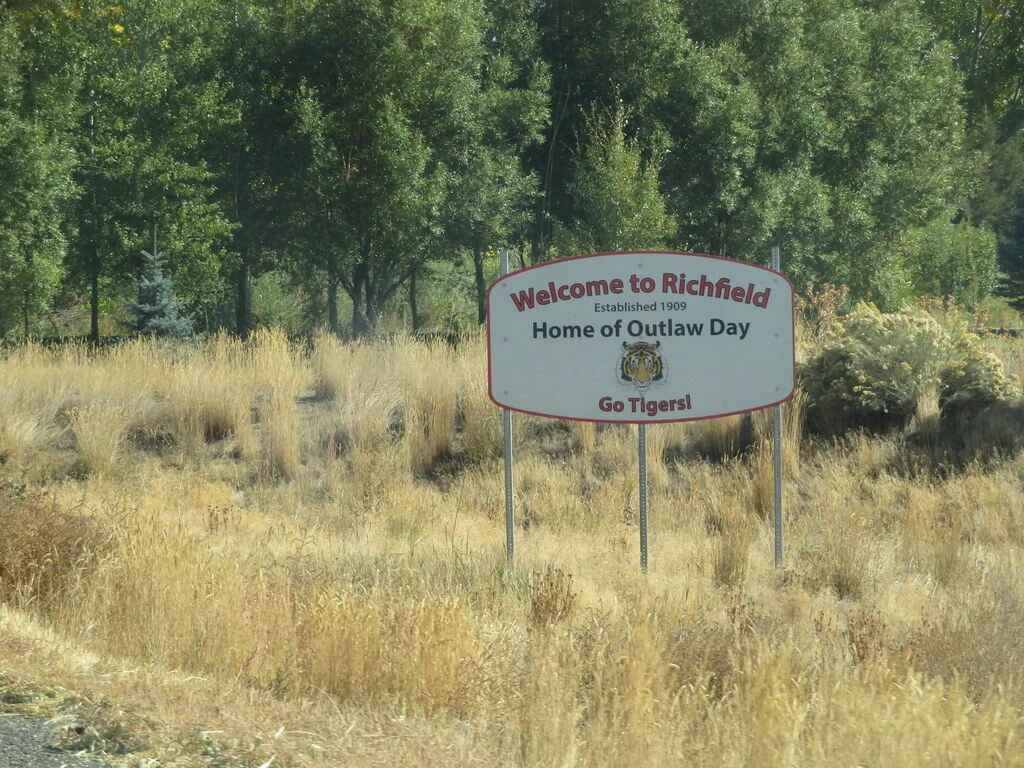
The U.S. Census Bureau’s municipal map (original PDF) places Richfield in Lincoln County along U.S. 26, with the Little Wood River south of the town’s street grid. According to the City of Richfield’s history, the Idaho Irrigation Company held its land opening in 1907 in a settlement called Alberta. The town changed its name to Richfield in October 1908 and incorporated in 1909.
One water project for farms, another for town
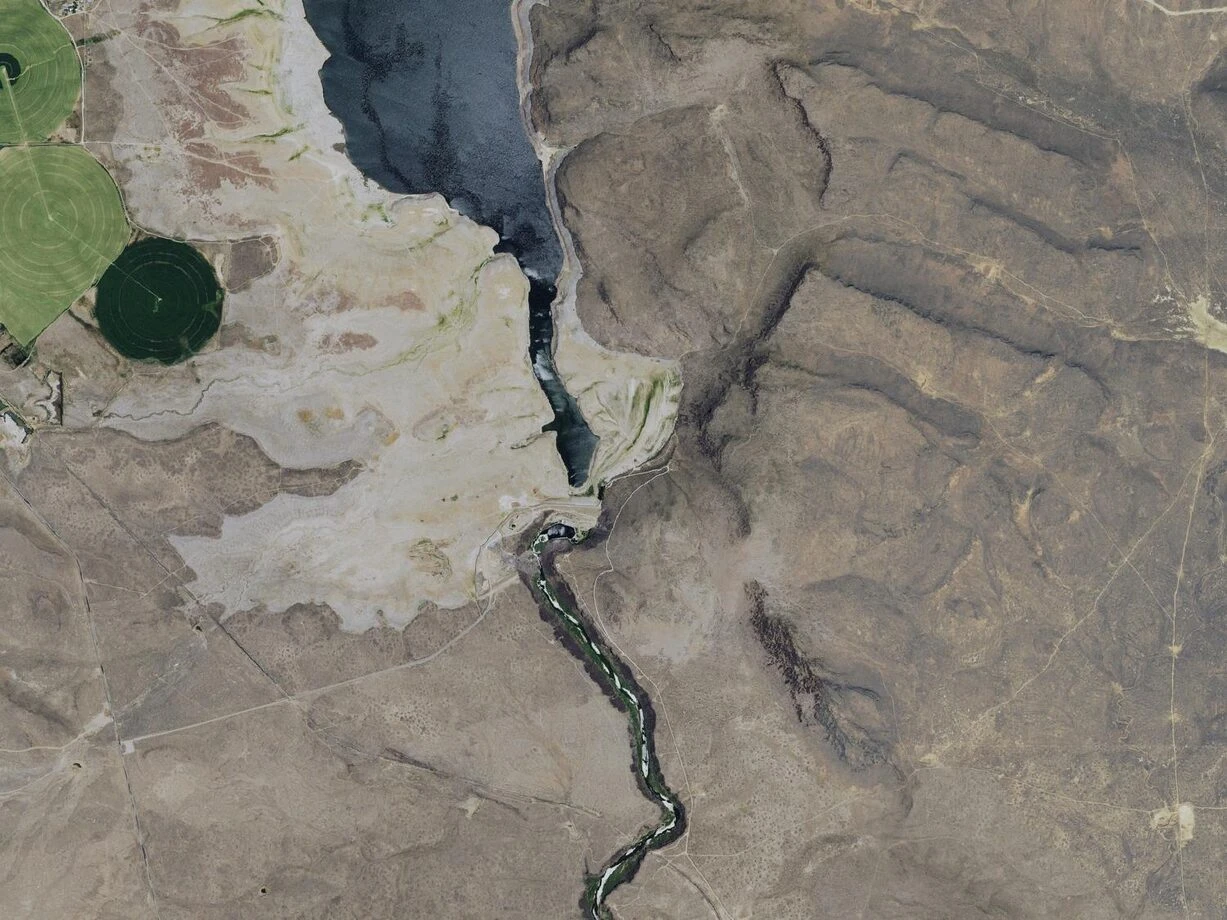
The city’s account says water from Magic Dam reached the Richfield Tract’s canals in April 1910. An Idaho Fish and Game account of the water system describes the Richfield Canal’s route from the Big Wood River below Magic Dam to the Little Wood River near town. It is not the same site as the town’s early pump house on the Little Wood River.
The Richfield Pump House nomination (original PDF) dates the building to 1909 and describes a pump driven by an oil engine that sent river water uphill into town mains. The city records a 500-foot well dug in 1913. Farm irrigation and water for households both mattered to early Richfield, but they were different systems.
A hardware store built for a farm town
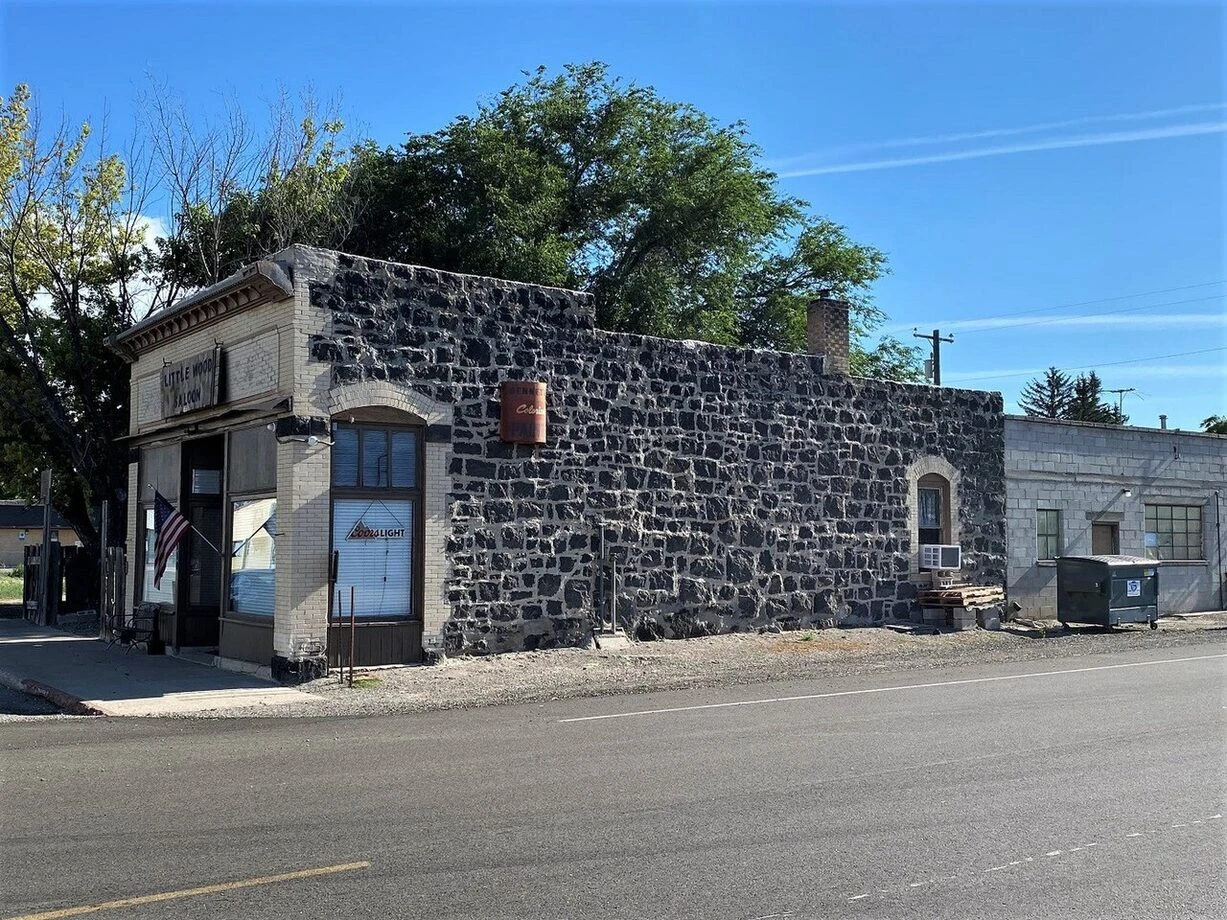
The Lemmon Hardware Store nomination (original PDF) says the Lemmon brothers opened their business in 1908 in a wood-frame building and built the stone shop in 1911. The store supplied homes and farms with tools, stoves, machinery and building materials. The dark basalt side wall, lighter trim around the storefront and broad display windows show that a utilitarian building could still have a carefully designed street face.

What the Lane barn photographs show
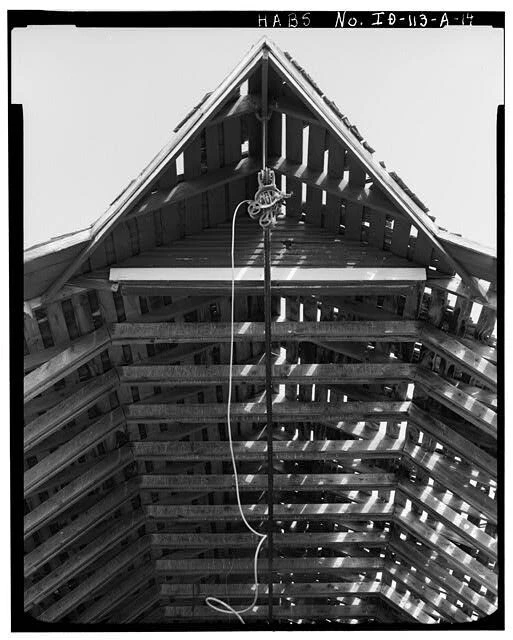
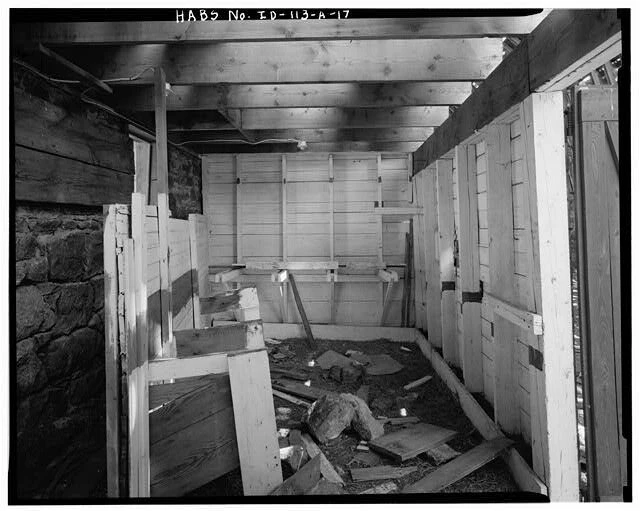
The Historic American Buildings Survey report (original PDF) describes the Lane barn south of town beside the Little Wood River. Builders used native basalt for the side walls and timber in the roof and loft. The same survey records the ranch barn in relation to the old pump house, then moves inside to document how feed and milking spaces worked.
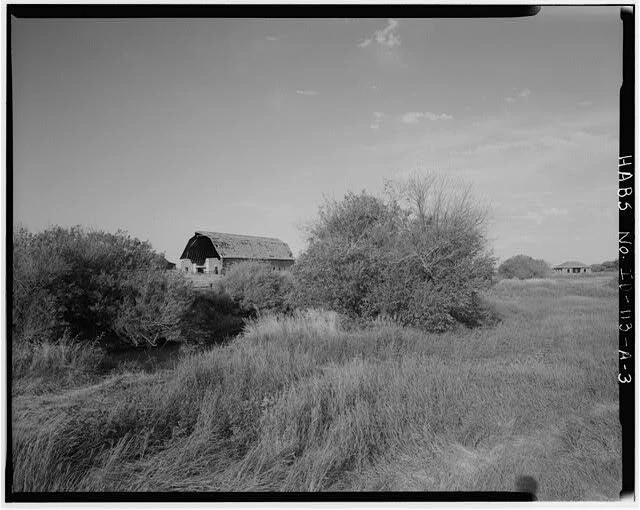
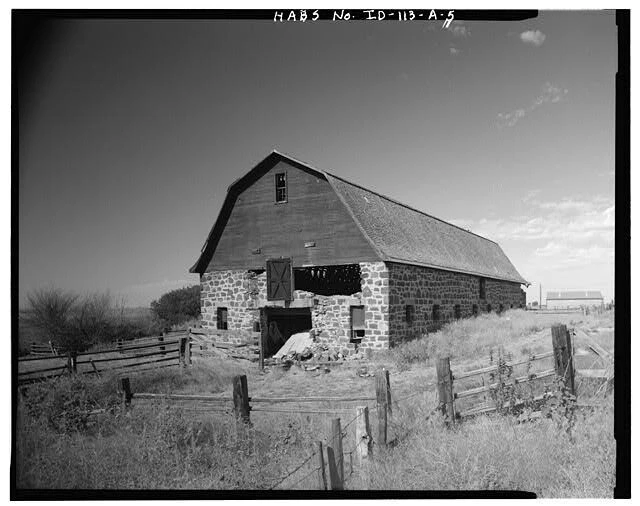
The original HABS photograph index (PDF) identifies a pulley and cable for bringing hay into the loft and a separate milking room. The images document the buildings in 1995; they do not establish their present condition or invite entry to the ranch.
More Idaho history
Browse the FORTISVEX History Reference, find Idaho’s admission date in the U.S. statehood dates guide, or explore the Idaho state flag collection.
Recent Posts
-

Clinton's Memorial Day 1996 Half-Staff Proclamation (6901)
President Bill Clinton requested that U.S. flags fly at half-staff on Monday, May 27, 1996, for Memo …Nov 27th 2026 -
Richfield, Idaho: Irrigation and the Buildings Made of Basalt
Richfield, Idaho, grew from an irrigation project into a town where local basalt went into shops, fa …Nov 27th 2026 -
National Fallen Firefighters Memorial Weekend 2024: Biden Proclamation 10751
President Joe Biden signed Proclamation 10751 on May 3, 2024, designating May 4–5 as National Fallen …Nov 27th 2026