
Retainer Ring or Counterweight? How to Identify the Part on an Internal-Halyard Flagpole
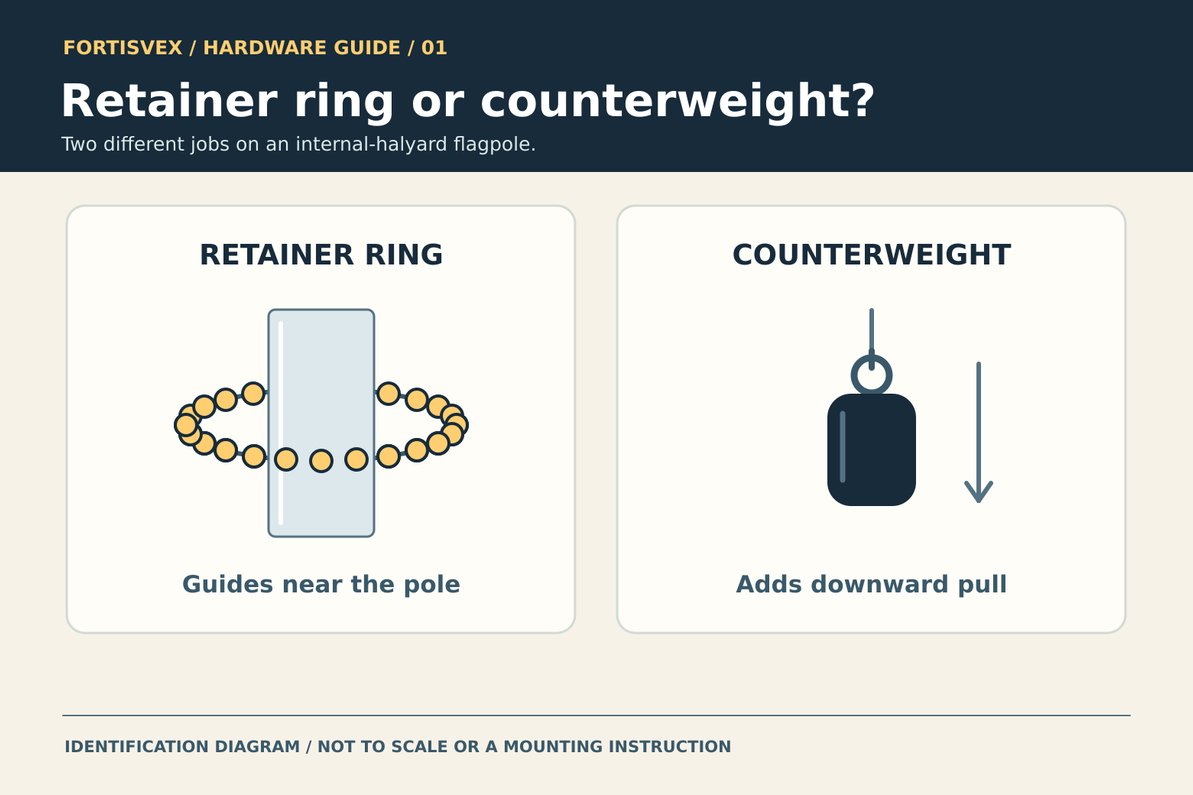
A retainer ring and a counterweight can appear together on the same internal-halyard flagpole. They are not interchangeable. The ring goes around the pole and helps keep the lower end of the flag near it. The weight hangs from the arrangement and supplies downward pull as the flag is lowered. If only one part is damaged, identify that part before you order. If both are missing, check the flagpole maker’s assembly drawing instead of rebuilding the layout by guesswork.
Which part are you looking at?
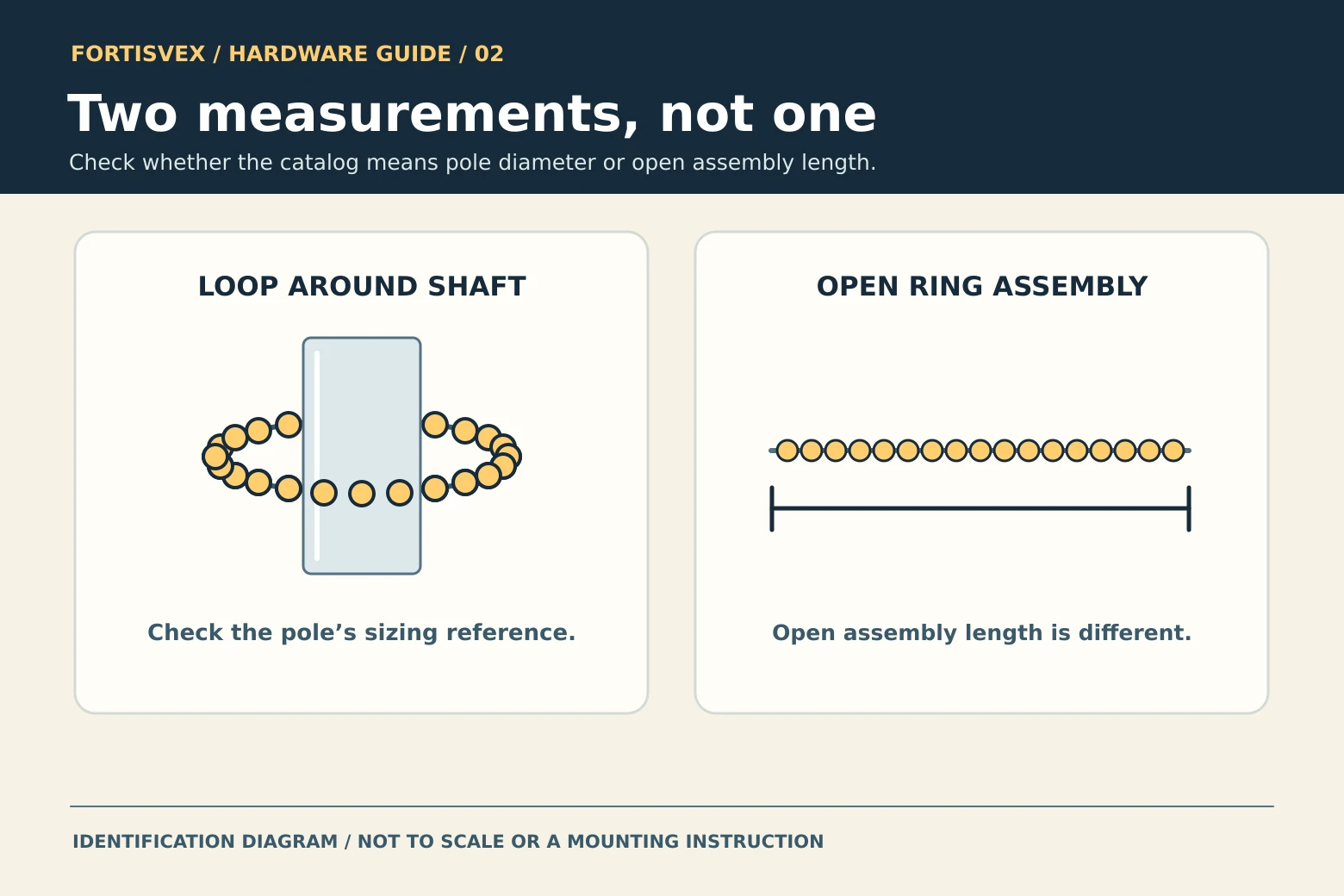
A beaded retainer ring looks like a loop of beads around the shaft. The loop moves along the outside of the pole as the flag is raised or lowered. A listing's pole diameter is not necessarily the length of the open ring hardware. For example, compare the white retainer ring listed for a 10-inch pole with the white ring listed for a 20-inch pole. Those are different sizing examples, not substitutes.
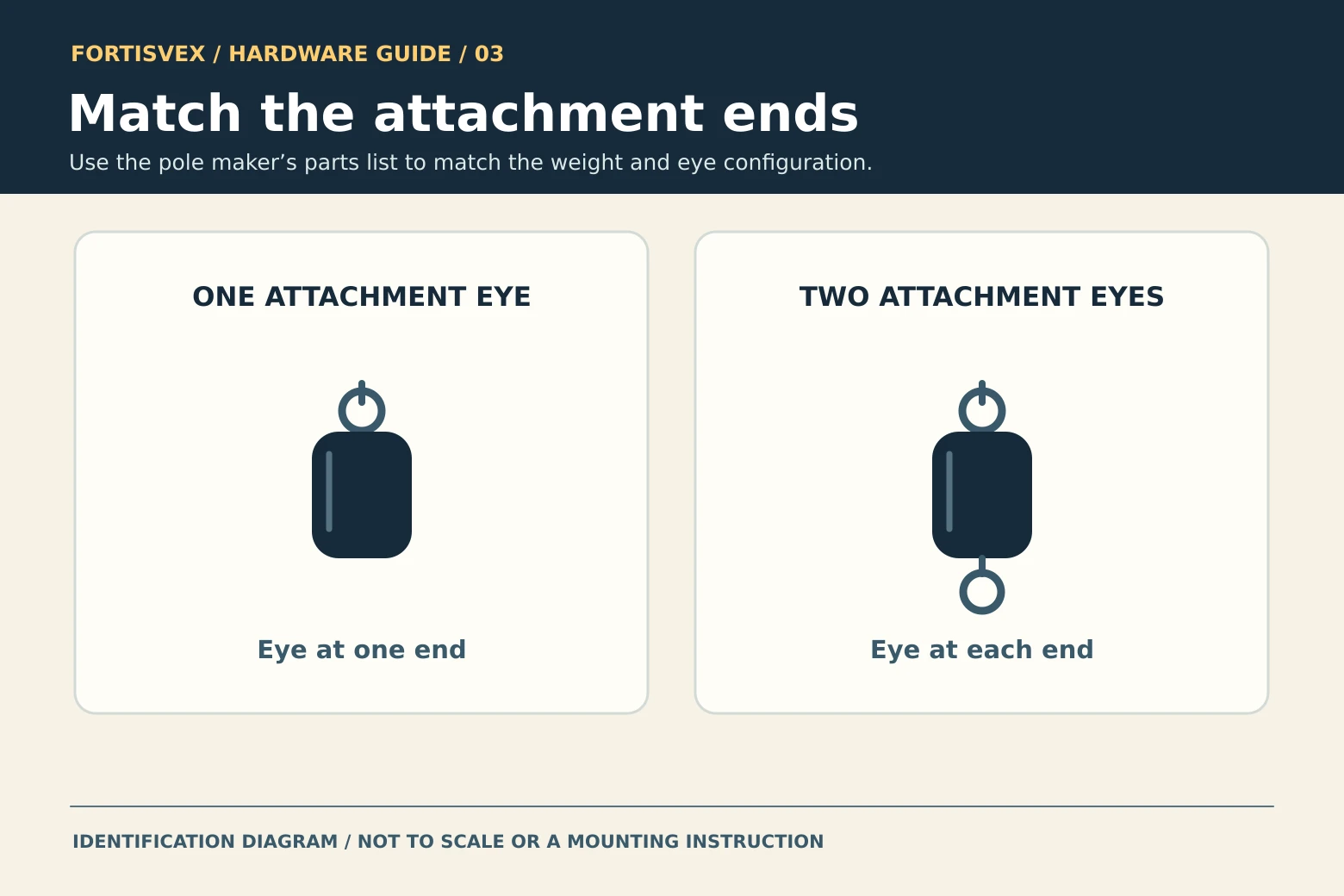
A counterweight is the hanging weight, not the loop that travels around the shaft. Check the existing part number or specified weight and compare the number and location of the attachment eyes. Manufacturers may use different ends for different models. The counterweight selection shows why the listing details matter more than the color or an approximate length.
What should you confirm before ordering?
- Start with the pole model and system. Find the pole identification and instructions, then confirm the internal-halyard arrangement and whether it uses rope or cable. Look for the original parts drawing before assuming that a similar-looking setup is the same.
- For a ring, match the manufacturer’s diameter designation and connections. Use the sizing reference named in that manufacturer’s guide. A pole may taper, so an arbitrary measurement farther up the shaft may not match the catalog's reference.
- For a weight, match the prescribed weight and attachment ends. One eye and two eyes are different configurations. Do not move up a weight class to compensate for a binding ring or a problem you have not identified.
- Check the original layout from ground level. Compare the sequence of the parts against the pole drawing. If the hardware is stuck up the pole or the system cannot be safely lowered from the ground, stop and consult a qualified flagpole service provider.
Is a counterweight enough if the flag pulls away from the pole?
Not by itself. A weight supplies downward pull; it does not replace the loop that guides the lower part of the flag near the shaft. Conversely, a new ring does not replace a missing or incorrect weight. Identify which function is missing, then match the parts specified for the pole.
Recent Posts
-
Retainer Ring or Counterweight? How to Identify the Part on an Internal-Halyard Flagpole
A retainer ring and a counterweight can appear together on the same internal-halyard flagpole. They …Nov 24th 2026 -
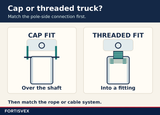
Cap or Threaded? How to Match a Replacement Internal-Halyard Truck
Two replacement trucks can both be labeled for a 3½-inch rope-style internal-halyard pole, yet atta …Nov 24th 2026 -
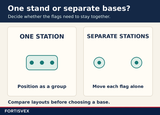
One Three-Hole Stand or Separate Bases for an Indoor Flag Display?
Choose a three-hole floor stand when up to three indoor flags will stay together at one display poin …Nov 24th 2026